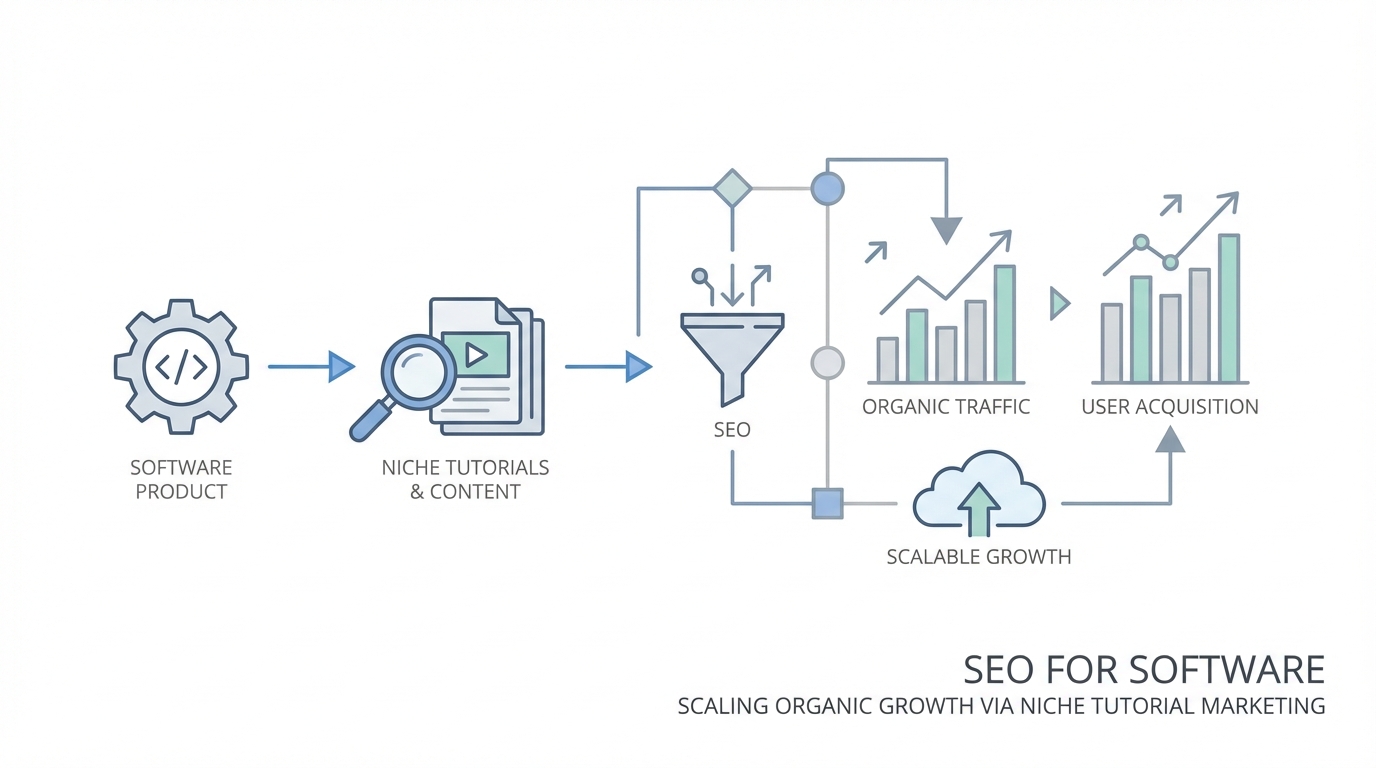
In the crowded landscape of modern technology, most founders fall into the trap of targeting high-volume, broad keywords like project management software or e-commerce tools. While these terms boast impressive search volumes, they are often dominated by legacy giants with multi-million dollar marketing budgets. For a startup or a lean software team, the real opportunity lies in the long tail. By pivoting toward a SaaS content marketing strategy focused on solving specific, granular problems through niche tutorial marketing, brands can bypass the noise and speak directly to users at their moment of highest intent. This approach doesn't just drive traffic; it builds an organic growth for startups engine that compounds over time.
The Power of Specificity: Why Helpful Content Outperforms Broad Targeting

The traditional SEO playbook for software often prioritizes "head terms"—short, competitive phrases that describe a category. However, as the SEO for software products landscape evolves, search engines are increasingly rewarding helpful, unique content that addresses specific use cases. Consider the success of Katie Keith, who built a portfolio of 20 apps generating over $1.8 million in annual revenue. Her secret wasn't ranking for "WordPress plugins"; it was becoming the definitive answer for hyper-specific queries.
When Katie launched her first plugin, WooCommerce Protected Categories, she didn't just list the features. She published deep-dive tutorials on how to password-protect specific sections of an online store. Because she was the only one providing a solution to that exact problem, she reached the top of Google results almost immediately. This highlights a fundamental truth: users don't search for categories; they search for solutions to the specific hurdles they encounter in their daily workflow.
By focusing on "problem-solver" content, you capture users who are actively looking for a tool to fix a bottleneck. These users have a higher conversion rate than those browsing high-level category pages because their intent is immediate and actionable. For companies looking to scale this discovery, utilizing Stormy AI to search for niche creators through natural-language prompts can help amplify these niche tutorials through influencers who already have the trust of specific technical communities.
The Playbook for Writing Tutorials That Rank
To dominate organic search in the SaaS space, you need a repeatable system for identifying and capturing high-intent traffic. This isn't about guesswork; it's about data-driven content creation. Following the model of successful founders highlighted on Starter Story, here is the five-step playbook for software tutorial marketing.
Step 1: Identify the "Friction Points"
Don't start with a keyword tool. Start where your users are struggling. Browse community forums like Reddit, or the WooCommerce ideas forum to see what functionality people are begging for. Look for phrases like "How do I..." or "Is there a way to..." that don't have a clear, direct answer in the current market. These are your goldmines for SaaS lead generation.
Step 2: Validate the Market Gap
Once you find a friction point, verify that a solution doesn't already dominate the search results. If you find a query where the top results are outdated forum threads or generic documentation, that is your invitation to create a definitive guide. This gap-analysis is essential for organic growth for startups that can't afford to fight for keywords already claimed by established players.
Step 3: Build a "Problem-First" Content Structure
A tutorial that ranks well for SEO for software products should follow a strict hierarchy:
- The Problem: Acknowledge the user's frustration immediately.
- The Solution: Briefly explain how your software solves it.
- The Steps: Provide a clear, numbered guide with specific instructions.
- The Result: Show what the final outcome looks like.
Step 4: Leverage Cross-Promotion
As you build a portfolio of products, your content should work together. If a user lands on a tutorial for Document Library Pro, you should naturally link to related tools that enhance that specific workflow. According to research, Katie Keith’s team uses cross-promotion tactics like offering a 50% discount on the next plugin three days after a purchase. This turns a single SEO hit into a long-term customer relationship.
Step 5: Amplify with Influencer Partnerships
SEO takes time, but you can accelerate the process by getting your tutorials in front of the right eyes. Use Stormy AI to vet creator quality and detect fake followers, ensuring you identify tech influencers who can walk through your tutorial on video. This creates social proof and generates high-quality backlinks that boost your organic rankings even further.
Building a Scalable Content Engine for Product Portfolios

Managing the SaaS content marketing strategy for 20+ products might sound like a nightmare, but it is achievable with the right tech stack and a focus on automation. The goal is to create a compounding effect where each piece of content supports the entire ecosystem. Companies like Barn2 manage their operations using AI-native tools and streamlined project management. While legacy platforms like Tagger or Julius were built for manual outreach, Stormy AI offers an autonomous AI agent that handles creator discovery and follow-ups on a set schedule while you sleep.
To maintain high output without a massive team, lean into tools like ClickUp for project tracking and Zapier for automating the distribution of new tutorials. By storing your source code on GitHub and using standardized templates for your SaaS lead generation pages, you can ship new products and their accompanying marketing materials faster than competitors who treat every launch as a unique event.
When you have a portfolio, you don't need a new audience for every product. If you have 17,000 active subscribers using your initial tools, your next product launch starts with a warm lead list. The key is to build different apps for the same customer rather than random apps for different customers. This allows you to use your existing SEO authority to rank new products quickly.
Using Documentation and Help Sites as a Secondary Traffic Source

Many software companies treat their documentation as a necessary evil—a place to dump technical specs. However, your help site is actually a powerful tool for SEO for software products. Users often search for technical hurdles long before they decide on a product. By making your documentation public and searchable, you capture users in the "consideration" phase of the funnel.
For example, using Easy Digital Downloads to manage your software sales allows you to integrate licensing and delivery directly with your WordPress site. This means your documentation can live on the same domain as your sales pages, passing link equity back and forth. When a developer searches for "how to hook into X API," and your documentation provides the cleanest answer, your software becomes the default choice.
If your software targets professionals, you can further enhance this strategy by using Stormy AI to find industry leaders and contact them instantly with hyper-personalized outreach emails to reference your guides, driving high-authority referral traffic and improving your SaaS lead generation metrics.
Conclusion: Scaling Your Software via Niche Dominance
The path to organic growth for startups isn't through broad keywords or expensive ad campaigns; it’s through the disciplined execution of niche tutorial marketing. By identifying the exact "how-to" queries your users are searching for, you can create a portfolio of products that support and cross-promote each other. SEO for software products is about being the most helpful resource in a specific category until you own that space entirely.
Remember the advice of successful founders: don't build five products at once. Build one, make it the definitive answer to a specific problem through high-quality tutorials, and then listen to your users. They will tell you what to build next. As you expand, Stormy AI can help you track campaign performance and analyze post-level metrics across TikTok and YouTube to find new ways to distribute your "problem-solver" content to a global audience. Start small, be specific, and let your content compound into a multi-million dollar software empire.