In 2026, the gap between traditional SEO and high-performance organic growth is defined by one thing: agentic automation. The release of Claude Code in early 2025 marked a paradigm shift, moving the industry from simple "chat-based" AI to a robust command-line interface (CLI) that builds, audits, and executes marketing strategies in real-time. Anthropic has seen its enterprise LLM API expenditure skyrocket to a 65% market share, largely due to the sheer efficiency of agentic tools. This guide explores how to transform your terminal into an SEO Command Center using Claude Code and the Model Context Protocol (MCP).
"Claude Code isn't just a chatbot; it's a development environment for marketers that turns natural language into executed code and live data insights."
Connecting the Stack: Integrating MCP Servers for Real-Time Data
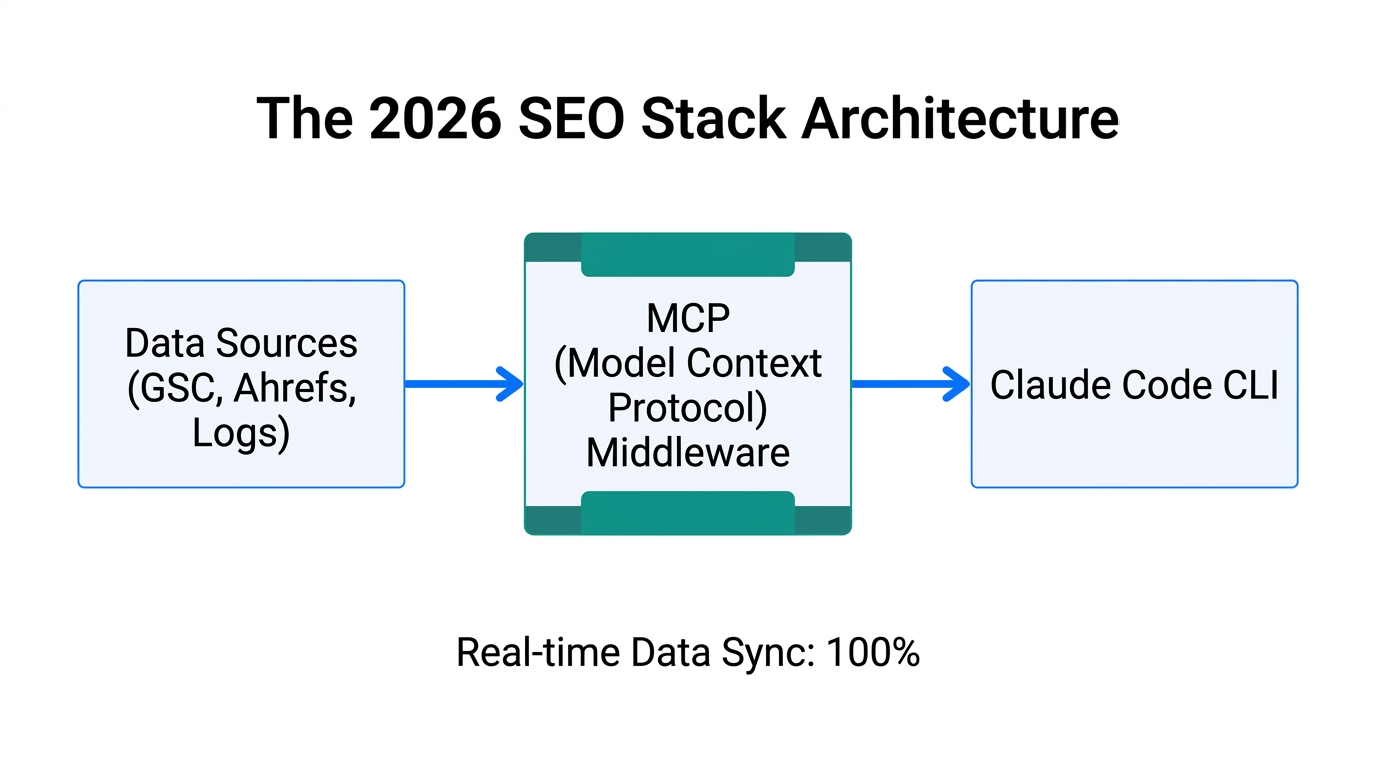
The secret sauce of modern search optimization is the Model Context Protocol (MCP). This standard allows Claude Code to move beyond its training data and interact directly with your live toolset. By connecting the Ahrefs MCP server and the Google Search Console (GSC) MCP, you eliminate the need for manual CSV exports and fragmented analysis. Teams using these agentic integrations have reported a 45% increase in productivity compared to manual workflows.
To set this up, technically-inclined marketers are utilizing Visual Studio Code as their primary IDE, running Claude Code as a persistent background agent. This setup allows the AI to monitor your root directory and external APIs simultaneously, creating a unified environment for search analytics.
Running the 'SEO Command Center' Query: Identifying Opportunities
Once your stack is connected, you can perform high-level analysis that previously took hours in spreadsheets. The 2026 standard for high-growth teams is the "Command Center Query," which identifies pages with high visibility but poor user engagement. Instead of hunting through tabs, you simply prompt Claude: "Identify all pages with >1000 impressions but <1% CTR and suggest three new title tags for each based on current ranking keywords."
| Workflow Component | Traditional Method (2024) | Claude Code Method (2026) |
|---|---|---|
| Data Collection | Manual CSV exports from GSC/Ahrefs | Live API stream via MCP |
| Opportunity Mapping | VLOOKUPs and manual filtering | Natural language agentic queries |
| Execution | Manual CMS updates | Automated git-push via CLI |
This approach has been validated by industry leaders like Will Scott, who notes that Claude Code allows marketers to ask complex cross-platform questions, such as identifying keywords where paid search and organic rankings overlap inefficiently, as noted in Search Engine Land. For startups looking to scale content alongside these technical insights, using platforms like Stormy AI helps source UGC creators who can generate the visual content needed to bolster these underperforming pages.
Automated Technical Audits: Beyond the Surface
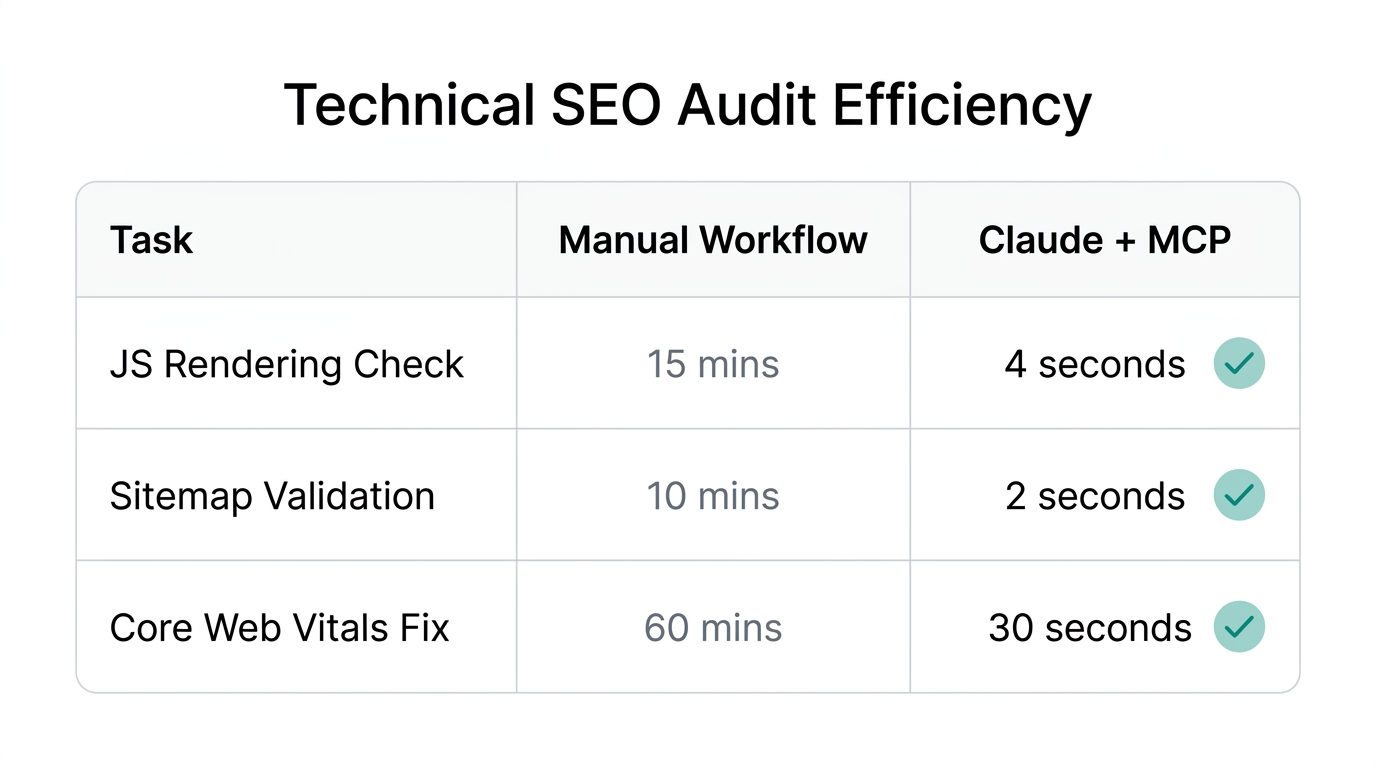
Technical SEO is no longer about checking boxes; it's about real-time health monitoring. By leveraging the Claude SEO Skill on GitHub, marketers can automate deep technical audits directly in their repository. This skill allows Claude to perform:
- Schema Validation: Ensuring JSON-LD structured data is valid across thousands of pages instantly.
- Sitemap Consistency: Comparing live crawl data against sitemap entries to find orphan pages.
- Mobile Usability: Using the CLI to run headless browser checks for CLS and LCP issues.
"The trend has shifted from one-off prompts to reusable 'Skills'—persistent files like SEO_AUDIT.md that give Claude specific domain expertise." — Strategic Nerds
According to Digital Applied, 92% of developers and technically-inclined marketers now use AI coding assistants, with many startups reporting that their marketing infrastructure is over 95% AI-generated. This level of automation ensures that your technical foundation is never the bottleneck for organic growth.
Generative Engine Optimization (GEO): The 2026 Frontier
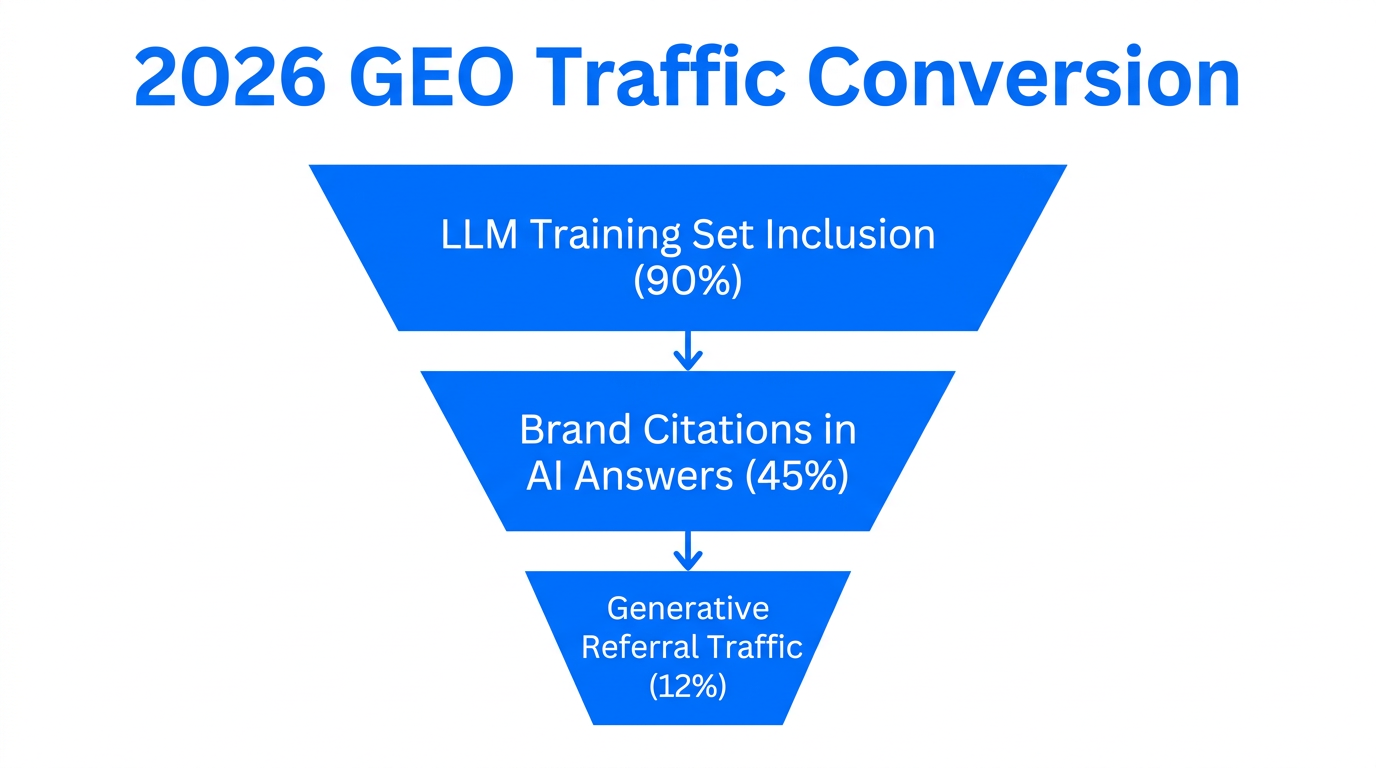
In 2026, ranking on Google is only half the battle. Generative Engine Optimization (GEO) focuses on making your content the preferred source for AI-driven answers in search results, a strategy extensively detailed in recent research papers on AI optimization. AI search analytics 2026 requires understanding how LLMs parse and cite information. Claude Code can perform automated competitive analysis by scraping the responses of various search engines and identifying the specific citations they prefer. To further boost authority for GEO, brands often integrate influencer marketing via Stormy AI to ensure widespread brand mentions across social platforms like TikTok and YouTube, which AI models frequently index as credible signals.