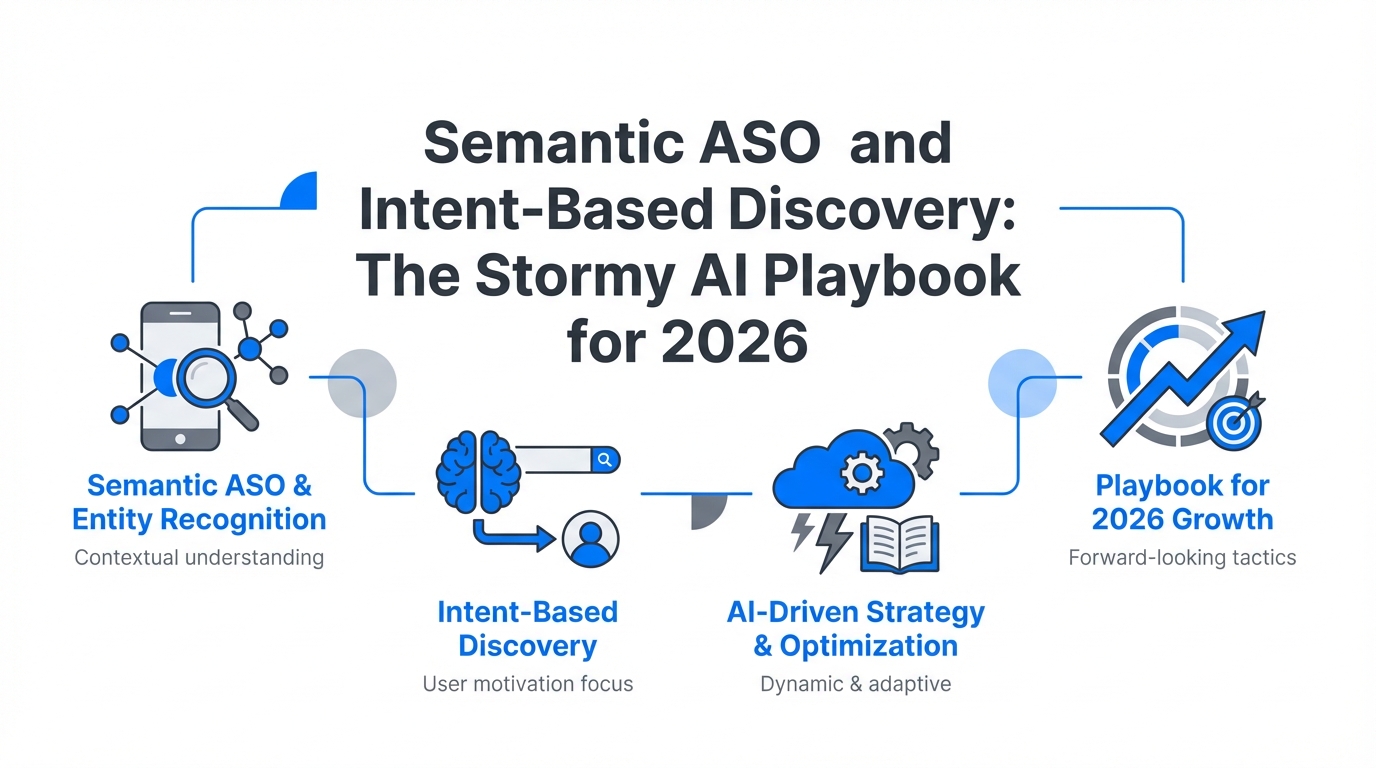
The era of keyword stuffing and exact-match indexing is officially over. As we head into 2026, the App Store algorithms have evolved from simple libraries into sophisticated semantic engines that understand human intent. For app developers and growth marketers, this shift represents both a massive challenge and a golden opportunity. Approximately 70% of App Store visitors now use search to find new apps, and 65% of all downloads occur immediately after a search query. To capture this traffic, you must stop thinking about individual words and start thinking about thematic clusters and intent-based discovery.
The Death of Exact Match: Understanding Semantic Clusters
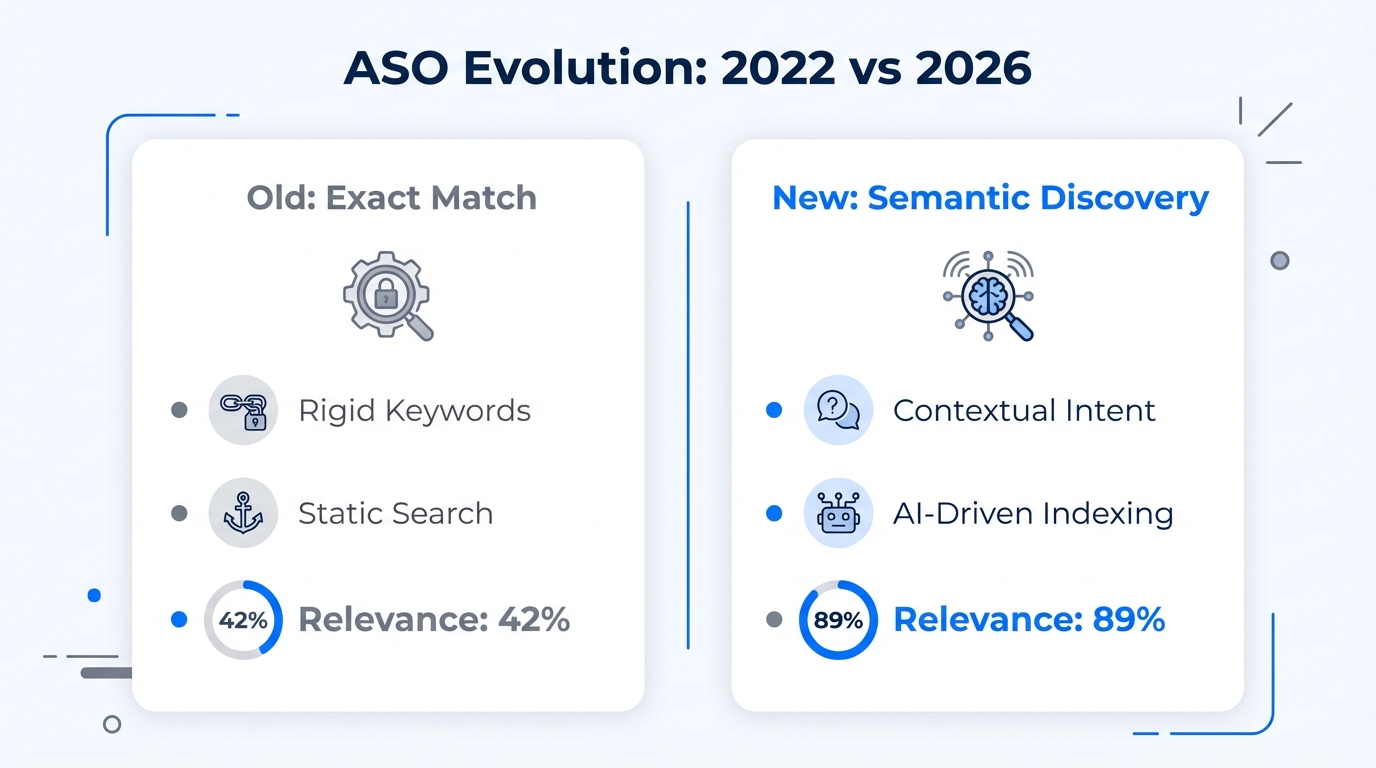
In the past, if you wanted to rank for "meditation," you had to use that exact word repeatedly. Today, AppTweak highlights that App Store algorithms are moving away from lexical matching in favor of semantic indexing. This means the algorithm recognizes that an app optimized for "meditation" is inherently relevant to users searching for "mindfulness," "mental health," or "stress relief."
This shift requires a total overhaul of keyword research. Instead of a linear list, you should be building a "Keyword Galaxy." By establishing thematic relevance across your metadata, you can rank for high-volume terms even if they aren't explicitly in your title. For instance, Practical Logix notes that AI-driven intent now cross-references in-app data with broader social trends to predict what users actually want when they type a vague query.
"In 2026, relevance is determined by the company you keep. If your app is frequently downloaded alongside top-tier mindfulness tools, the algorithm will grant you authority in that cluster, regardless of your character count."
The SAP Crash: Why Your Data Strategy Must Change
In September 2025, the industry experienced what many call the "SAP Crash." Apple shifted its Search Ads Popularity (SAP) API from a daily report to a Monthly Search Term Rank Report. The result? A perceived 77% drop in keywords showing high popularity scores. Marketers who were used to chasing daily spikes suddenly found themselves flying blind.
To succeed in this new environment, you must prioritize 30-day averages over daily fluctuations. This volatility is why Stormy AI recommends a comprehensive metadata audit every four weeks to maintain rankings. Relying on outdated daily data leads to reactive, rather than proactive, optimization. You need tools that can smooth out this noise and reveal the true underlying trends in user behavior.
The Hidden Index: App Store Screenshot OCR Strategy
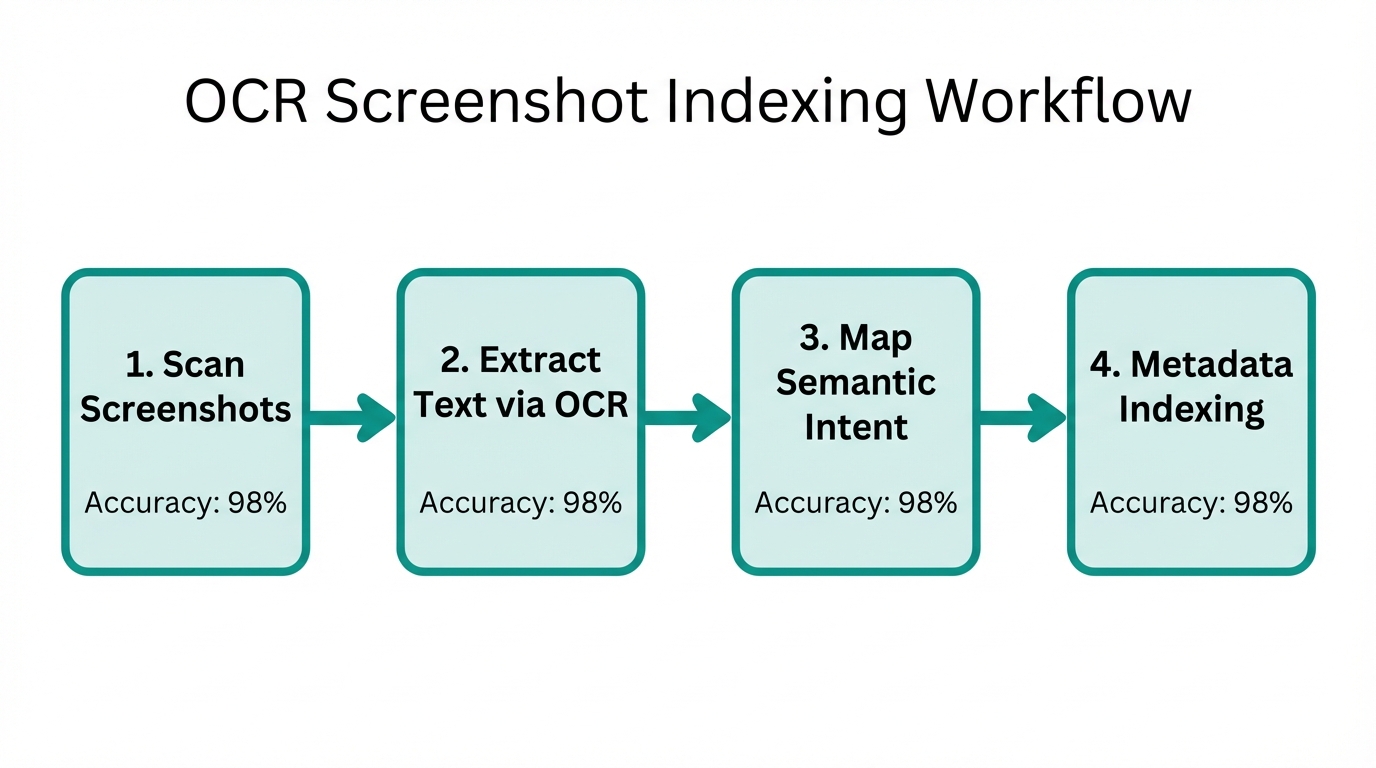
One of the most significant changes in recent ASO history is the implementation of Optical Character Recognition (OCR) for visual assets. According to Appfigures, Apple now actively indexes text contained within your screenshots. This means your captions are no longer just for conversion—they are for organic search visibility.
Designing for the Algorithm
To leverage OCR indexing, you cannot simply slap text on a busy background. The algorithm needs high-contrast, keyword-rich captions. Follow these design principles to ensure your screenshots contribute to your ranking:
- High Contrast: Use dark text on light backgrounds or vice versa to help the OCR engine read the letters.
- Thematic Keywords: Place your secondary keywords (those that didn't make it into your Title/Subtitle) in large, legible fonts within the first three screenshots.
- Font Clarity: Avoid overly stylized or cursive fonts that might confuse the indexing engine.
| Asset Type | Primary Function | Algorithmic Weight (2026) |
|---|---|---|
| App Title | Brand & Core Keyword | High |
| Subtitle | Value Prop & Secondary Keywords | Medium-High |
| Screenshot OCR | Thematic Context & Intent | Medium |
| Keyword Field | Back-end Indexing | High (Hidden) |
Predictive ASO: Finding 'Rising Star' Keywords
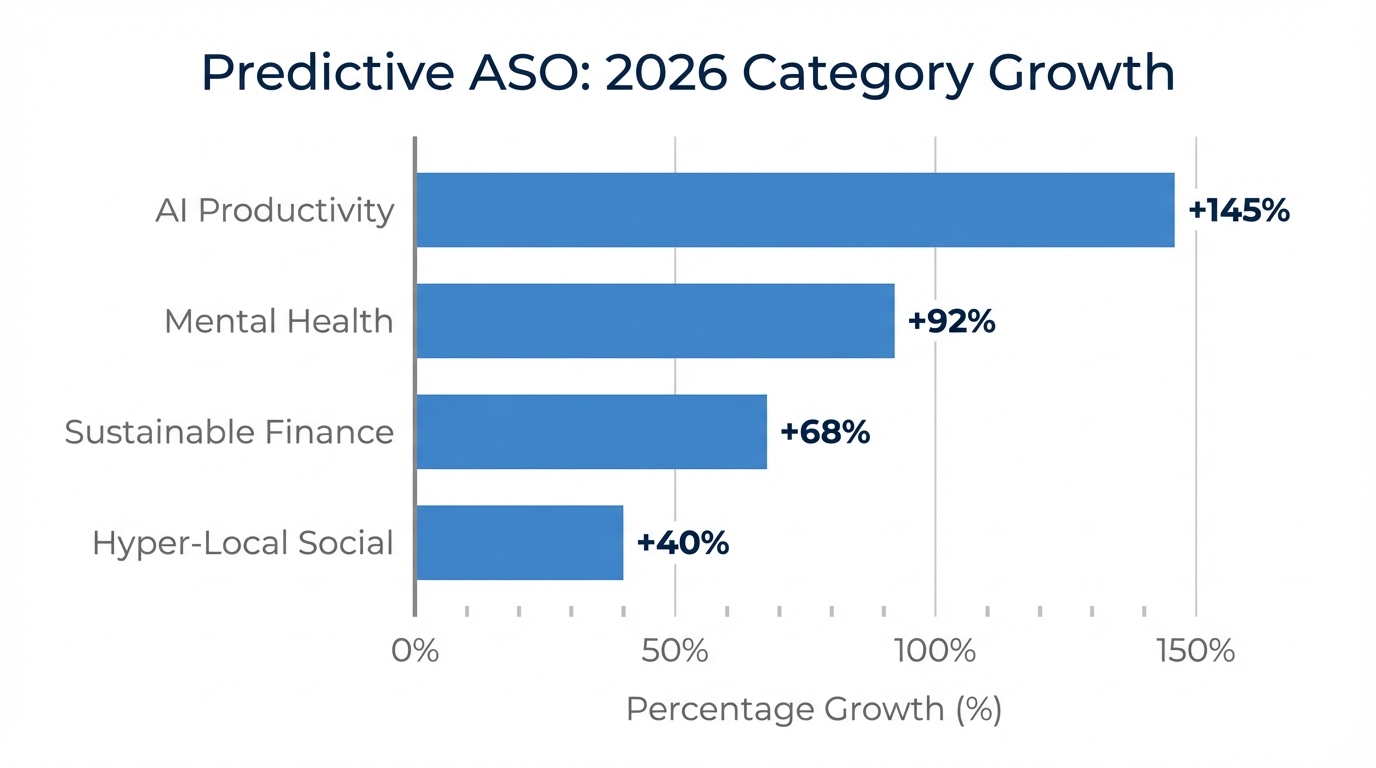
Waiting for a keyword to show 90+ popularity is a recipe for expensive failure. The most successful apps in 2026 are those that identify "rising star" keywords before they reach peak competition. A classic example is the "AI headshot generator" trend. Developers who identified this rising volume early and built features around it secured #1 ranks before the category leaders could react.
Using predictive AI for keyword research allows you to spot these trends by analyzing broader web data and social media sentiment. This is where intent-based discovery truly shines. If you see a surge in TikTok creators discussing a specific pain point—like "hair product scanners"—you can optimize your ASO metadata to capture that intent before your competitors even wake up to the trend. ASOTools.io reports that developers using this "trending keyword" method often secure thousands of organic installs with zero marketing spend.
"Don't build an app and find keywords. Find keywords with rising volume and low competition, then build the features that satisfy that intent."
The Mid-Tier Trap: Stop Chasing Giants
A common mistake in competitor keyword analysis ASO is trying to copy the strategy of category leaders like Uber or Instagram. These apps derive their ranking power from brand equity, not metadata. If Uber removes the word "taxi" from its title, it will still rank #1 for "taxi." You, however, will not.
Instead, analyze apps ranked #10 through #50 in your category. These are the "hustlers" of the App Store—apps that are winning through smart ASO rather than pure brand dominance. By identifying the keywords that sustain these mid-tier apps, you find attainable high-volume terms with manageable difficulty scores. Targeting keywords with a difficulty score greater than 70 often leads to zero traffic for newer apps; it is always better to rank #1 for a medium-volume term than #150 for a high-volume one.
The Tactical Playbook: 30-30-100 Metadata Rule
While the algorithm is getting smarter, it still relies on the fundamental metadata structure. Mastering the 30-30-100 rule for iOS is non-negotiable for anyone serious about growth.
- Title (30 Characters): This is your most powerful asset. Lead with your #1 high-volume generic keyword. For example: "Sleep Tracker – Relax Melodies."
- Subtitle (30 Characters): Use this to define your value proposition while weaving in secondary keywords from your cluster.
- Keyword Field (100 Characters): This is a comma-separated list of terms that don't appear in your title or subtitle. Never repeat words across these three fields—it’s a waste of precious character real estate.
For those looking to gain an edge in the US market, don't overlook the Secondary Locale Hack. Apple indexes keywords from the Spanish (Mexico) locale for the US App Store. By filling that metadata with a completely different set of keywords, you effectively double your keyword real estate in the United States. Modern growth stacks use tools to manage localized visual content and creator relationships that resonate with these specific audience segments.
Conclusion: The Future of Discovery
The transition to semantic App Store Optimization and intent-based discovery marks the end of the "gaming the system" era. To win in 2026, you must align your app's metadata with the actual needs and search behaviors of your users. From leveraging screenshot OCR to targeting the smart keywords used by mid-tier competitors, success requires a data-driven, holistic approach.
As you build your ASO strategy, remember that search is just one piece of the puzzle. Platforms like Stormy AI can help you discover and vet the creators who will drive the external traffic and engagement signals that the App Store now values so highly. Audit your metadata every four weeks, keep an eye on rising trends, and always design for intent.