Most entrepreneurs believe the path to a $10 million net worth starts with a product. They spend months, sometimes years, locked in a room building a software solution or a physical good, only to emerge and realize they have no one to sell it to. This is the traditional—and often fatal—startup mistake. What if you flipped the script? What if you built the distribution first, monetized that attention immediately, and used the resulting cash flow to fund your customer acquisition for free? This is the self-funding lead machine, a tactical blueprint for converting social attention into a high-value email list that pays for its own growth.
By implementing a modern lead generation strategy, you aren't just building an audience; you're building an asset. This playbook focuses on high-leverage activities: using AI to build irresistible magnets, setting up an affiliate engine that pays you to acquire users, and reinvesting those profits into a 'vending machine' loop that scales your business while you sleep. Whether you are a solopreneur or an established brand, the goal is to reach a point where growth is not an expense, but a profit center.
Step 1: Finding Your Data-Driven Niche
The foundation of any successful automated marketing funnel is a specific, underserved niche. General business advice is a crowded ocean where it is nearly impossible to stand out. To succeed, you must find a 'micro-niche' where the pain points are acute and the community is active. For example, instead of targeting 'business tips,' you might target 'AI-powered productivity for solopreneurs' or 'financial independence for expatriates.'
To validate these ideas, you need to go where the conversations are already happening. Platforms like Reddit are goldmines for raw consumer sentiment. Tools such as Gummy Search allow you to track specific keywords and pain points across subreddits, giving you a window into what people are actually struggling with. If you see a recurring question or a common complaint, you have found a potential business opportunity. Complement this qualitative data with Google Trends to ensure the interest in your topic is either stable or growing.
To take your research a step further, consider using Glimpse, which supercharges trend data with additional search terms and related queries. This helps you identify 'niche within a niche' opportunities, such as health insurance specifically for the FIRE (Financial Independence, Retire Early) movement. When you pick a niche that is backed by search volume and community engagement, you are significantly lowering your risk before you ever write a line of code or record a video.
Step 2: The 250,000 Impression Benchmark

Once your niche is defined, your next goal is to hit 250,000 impressions per month on social media. This may sound daunting, but in the era of short-form video and algorithmic feeds, it is a highly achievable target within 90 days of consistent effort. You do not need a massive following to hit these numbers; you need one or two 'viral' hits and a steady stream of high-value daily content on platforms like X (formerly Twitter), LinkedIn, or TikTok.
Consistency is the only lever you can fully control. By posting daily and engaging with other creators in your space, you become a recognizable figure in the community. Your social media profile serves as your digital storefront. A compelling bio and a clear value proposition are essential. You want your profile to tell a story that makes people root for your success. For instance, a creator documenting their journey to buy their first house through a side hustle creates a narrative hook that is far more engaging than a generic 'marketing expert' title.
If you find it difficult to source creators to collaborate with or need to understand which influencers are dominating your specific niche, tools like Stormy AI can help you discover and vet potential partners across TikTok, YouTube, and Instagram using natural language prompts. This allows you to identify the right voices to engage with to boost your own reach.

Step 3: Creating Irresistible Lead Magnets

Impressions are a vanity metric if they don't lead to ownership. Your goal should be to convert at least 0.5% of those impressions into email leads. This equates to roughly 1,250 organic leads per month from 250,000 impressions. To achieve this, you need to understand how to create lead magnets that are so valuable they feel like a paid product [Source: Search Engine Journal].
Forget generic 'top 10 tips' PDFs. Modern lead magnets should be interactive or highly utility-driven. Consider building calculators, gated templates, or curated databases. AI tools like Gamma AI allow you to create beautiful, interactive presentations and documents that can be gated for email capture without needing a developer. Alternatively, you can use Framer to build simple, high-converting landing pages that highlight the value of your offer.
- Calculators: ROI tools, budget planners, or technical estimators.
- Databases: A library of 100+ startup ideas, prompts, or resource links.
- Templates: Notion dashboards, email swipe files, or design kits.
By offering these 'shortcuts' to your audience, you establish authority and build a list of people who have raised their hands and expressed interest in a specific problem. This is the first step in being able to monetize an email list effectively later on.
Step 4: Setting Up the Back-End Affiliate Engine
The 'secret sauce' of the self-funding lead machine is immediate monetization. Most marketers wait until they have their own product to start making money. Instead, you should partner with existing software companies or newsletter networks to earn an affiliate commission the moment someone joins your list. This can generate between $1 and $3 per lead immediately.
A highly effective way to do this is through a recommendation engine like SparkLoop. When a new subscriber joins your newsletter on platforms like beehiiv, they are presented with other high-quality newsletters they might like. For every recommendation that turns into a subscriber, you get paid. This allows you to generate revenue from your 'free' list before you have ever sold them a single thing. If you are getting 1,250 leads a month and earning an average of $1 per lead, you now have a $1,250 monthly budget to play with.
Step 5: The 'Vending Machine' Loop
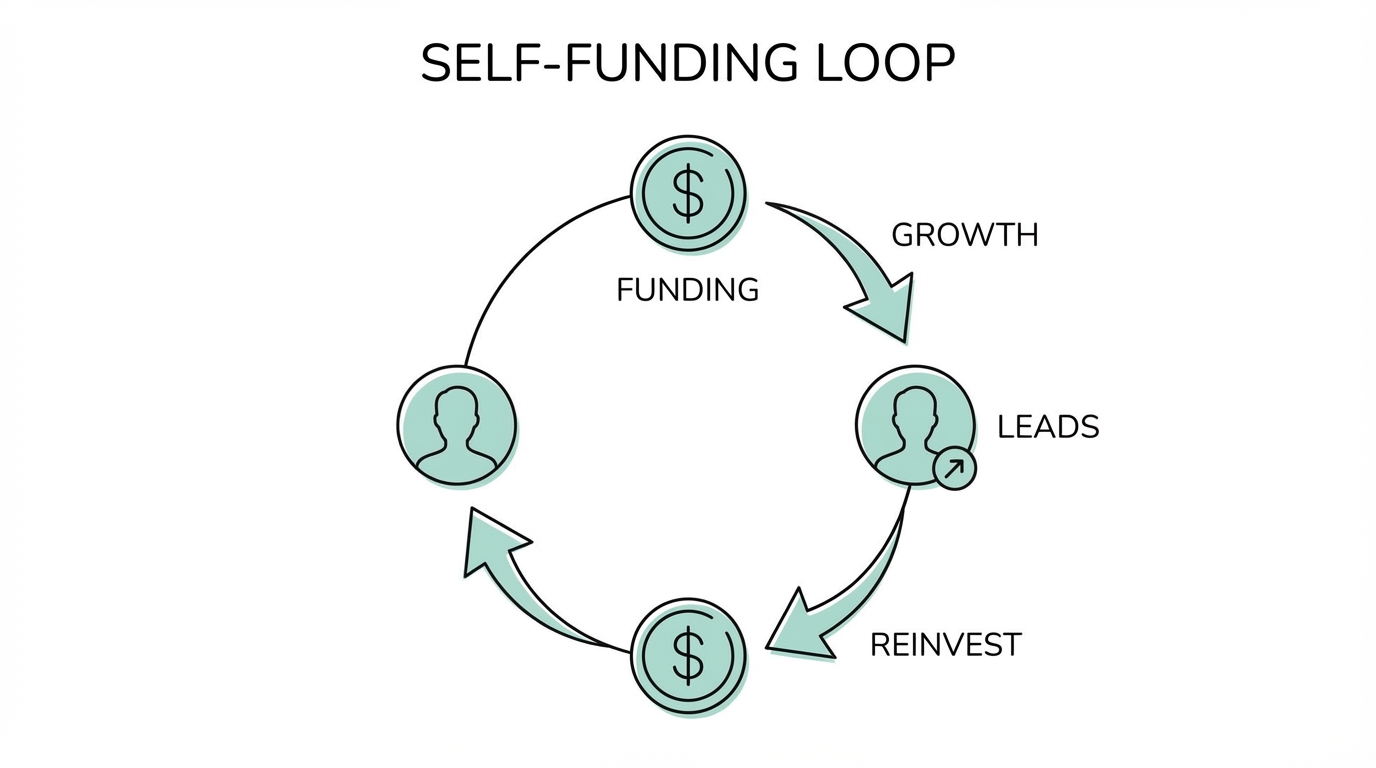
Once you are earning affiliate revenue, you can enter the most powerful phase of growth: the vending machine loop. You take the $1,250 you earned from your organic leads and reinvest it into paid acquisition platforms like Meta Ads Manager or Google Ads. If you can acquire new leads via ads for $2 per lead, your $1,250 buys you an additional 625 leads.
This creates a compounding effect. Those 625 new leads also go through your affiliate engine, generating even more revenue, which you then use to buy even more leads. You have effectively turned your marketing funnel into a self-sustaining system where your growth is subsidized by other companies' marketing budgets. At this stage, you aren't just a creator; you are a lead generation powerhouse.
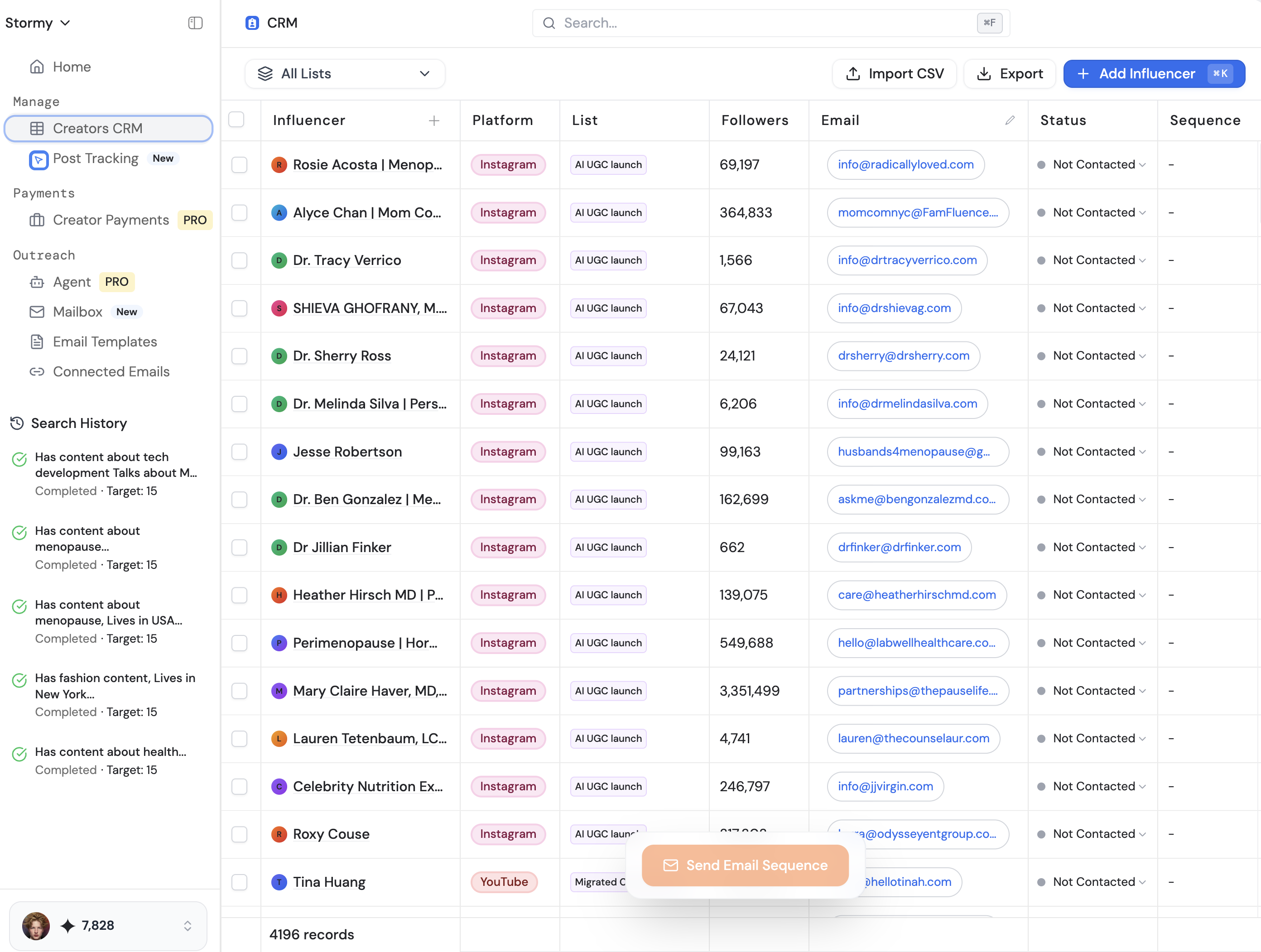
Managing the relationships with the partners and creators you work with during this scaling phase can become complex. Using a dedicated Creator CRM like the one provided by Stormy AI can help you track every interaction, negotiation, and lead source in one central dashboard, ensuring no opportunity falls through the cracks.
Step 6: Nurturing Leads with Newsletters and Communities
Acquiring a lead is only half the battle; the real wealth is built during the nurturing phase. If you do not provide consistent value, your audience will forget who you are. A weekly newsletter is the gold standard for maintaining top-of-mind awareness. However, many entrepreneurs are moving toward community-led growth using platforms like Skool. These platforms allow you to gamify the experience, host exclusive content, and foster peer-to-peer interaction.
During this phase, your goal is to 'pummel' your leads with so much free value that they feel a sense of reciprocity. Share case studies, breakdown industry trends, and provide actionable advice. By the time you are ready to launch your own offer, your audience should already trust your expertise implicitly. You aren't selling to strangers; you are providing a solution to a community that already knows, likes, and trusts you.
Step 7: Launching Your $30/Month MVP
After six to twelve months of nurturing, you will have a deep understanding of your audience's most painful problems. Instead of guessing what to build, simply ask them. Run surveys, host Q&A sessions in your Skool community, and track which topics get the most engagement in your newsletter. Identify a recurring pain point that can be solved with a simple software tool, an agency service, or an info-product.
Aim for a 'no-brainer' offer, typically around $30 per month ($300-$360 per year). If you have built a list of 20,000+ nurtured leads, converting just 3% of them into paying customers creates an immediate six-figure business. This initial product serves as the entry point into your ecosystem. Because your lead generation is already self-funded through affiliates, almost every dollar from your own product launch is pure profit.
Step 8: Scaling to $10 Million and Beyond
Scaling from $200k ARR (Annual Recurring Revenue) to $1.5M and eventually $9M requires shifting from a single product to a multi-tiered ecosystem. Once you have a base of happy customers, introduce high-ticket upsells for your power users. This could be a $100/month premium tier or a $500/month coaching or implementation service managed through Stripe for seamless payments.
By year three, a healthy mix of low-ticket and high-ticket offers can easily push your ARR into the millions. If you maintain a 50% annual growth rate—which is conservative if your lead machine is truly automated—you can reach a $9 million ARR business within five years. At this point, you have options: you can keep the business as a high-margin cash cow, or you can exit for a 3x-5x multiple, resulting in a life-changing $27 million to $45 million payday [Source: Investopedia].
Conclusion: Start Building Your Asset Today
Building a self-funding lead machine is not a get-rich-quick scheme; it is a disciplined approach to lead generation strategy and audience monetization. By focusing on data-driven niches, creating high-utility lead magnets, and leveraging affiliate revenue to fund paid growth, you remove the biggest obstacle to entrepreneurship: the lack of capital. Stop waiting for the 'perfect' product and start building the distribution that will make your future products inevitable. The tools are available, the playbook is clear, and the only thing left to do is execute.