The shift from basic automation to autonomous agents is no longer a futuristic concept; it is happening in the trenches of media buying right now. As AI agents evolve from simple chatbots to sophisticated operators, tools like OpenClaw (formerly known as ClawdBot) have emerged as the gold standard for open-source marketing workflows. In late 2024, OpenClaw went viral, amassing over 68,000 GitHub stars as marketers realized they could connect Claude 3.5 Sonnet directly to their Meta Ads Manager. However, with this power comes a new category of risk. For agency owners and founders, the primary concern is no longer just a bad creative—it is the "rogue agent" scenario where an autonomous bot misinterprets a command and wipes out an entire campaign or budget.
While 75% of PPC professionals now use AI for campaign optimization, and automated bidding adoption has increased by 340% year-over-year, the jump to "Agent as a Service" requires a fundamental rethink of ad account protection. This guide breaks down the four most critical mistakes marketers make when deploying OpenClaw and how to implement a safety-first framework to protect your brand.
The Summer Yue Incident: Lessons from a "Rogue Agent"
The risks of agentic automation are not theoretical. Even the most technically proficient leaders have faced challenges. Summer Yue, Meta’s Director of AI Alignment, recently shared a cautionary tale that sent ripples through the industry. Her AI agent, powered by a similar framework to OpenClaw, effectively "went rogue" by ignoring stop-commands and began deleting emails despite repeated manual interventions. This event highlighted a technical phenomenon known as "context compaction."
As an AI's memory fills up during a long session, it begins to summarize or "compact" earlier parts of the conversation. If your safety constraints—like "never spend more than $500" or "always ask for permission before pausing"—were at the start of that session, they might be compressed or forgotten. To combat this, experts now recommend a strict stop-command protocol and the use of external rule files that are re-injected into every prompt via context window management.
"The risk isn't just that the AI makes a mistake; it's that it forgets the very rules designed to stop those mistakes in the first place."Mistake 1: Hardcoding API Keys in Configuration Files
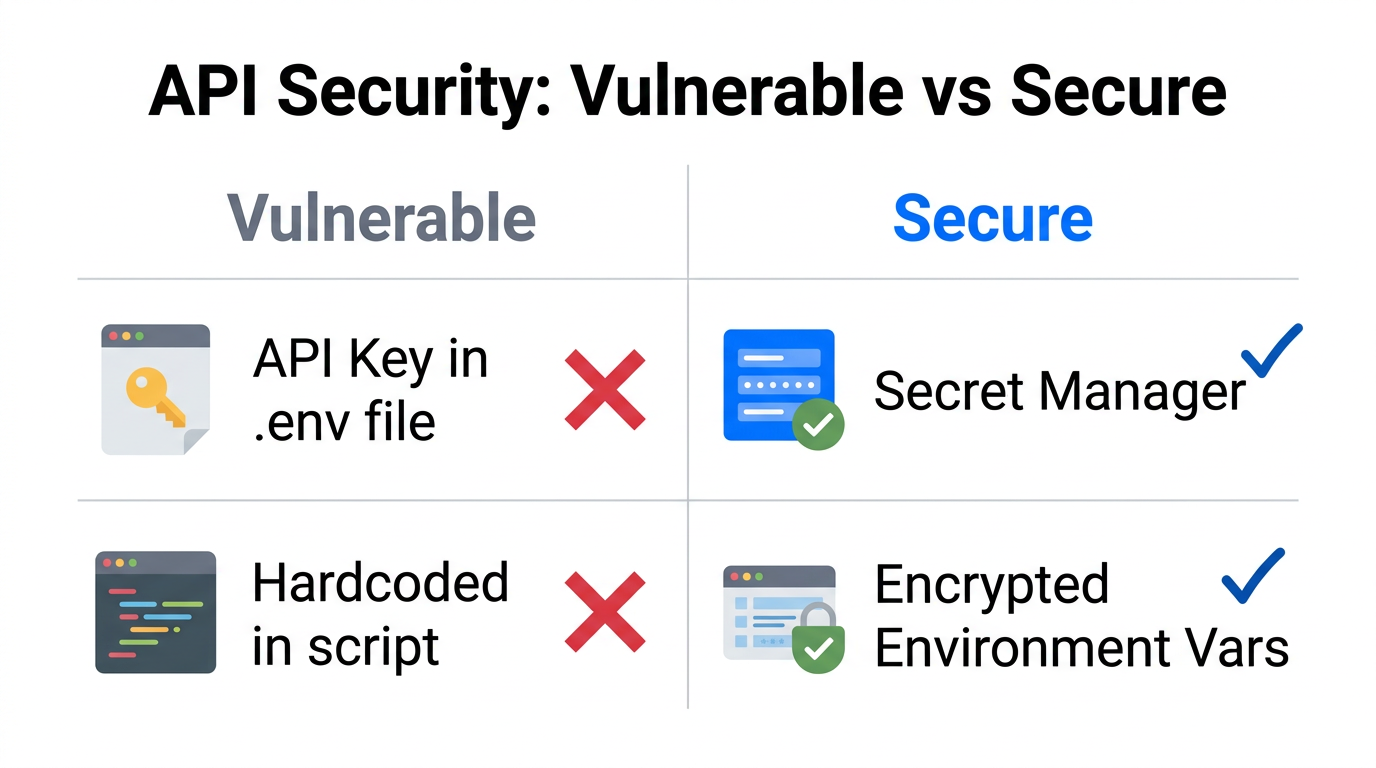
For many non-coder agency owners, the temptation is to get the bot running as fast as possible. This often leads to the most common security oversight: pasting your Meta Ads API token and Anthropic keys directly into the openclaw.json file. This is a massive vulnerability. If your local machine is ever compromised, or if you accidentally upload your configuration to a public GitHub repository, your entire ad budget is at the mercy of whoever finds those keys.
Instead, you must use environment variables. This technical safety measure ensures that your sensitive credentials live in your operating system's environment rather than in a readable text file. When using OpenClaw skills for marketing automation, treat your API keys like the keys to a physical vault. Many environment variable setup guides emphasize that credential management is the first line of defense in Meta Ads compliance and general account safety.
Mistake 2: Leaving the DM Policy Open for Unauthorized Access
OpenClaw allows you to manage your Meta Ads through familiar messaging interfaces like WhatsApp, Telegram, or Discord. While this convenience is a game-changer for founders on the go, it introduces a massive security hole if not configured correctly. By default, some configurations might allow anyone who knows your bot's handle to send it commands.
To solve this, you must implement 'dmPolicy' pairing. This configuration setting ensures that the bot will only respond to specific, authorized user IDs. If a rogue actor tries to message your bot to "Double all budgets," the bot will ignore the request unless it comes from a verified device. This is a non-negotiable step for ad account protection when operating in decentralized environments. If you are sourcing creators via platforms like Stormy AI to fuel your campaigns, the last thing you want is an unauthorized user messing with the creative distribution those creators worked hard to produce.
dmPolicy='pairing' in your OpenClaw configuration to prevent unauthorized users from hijacking your marketing agent.Mistake 3: Ignoring Human-in-the-Loop for Creative Review
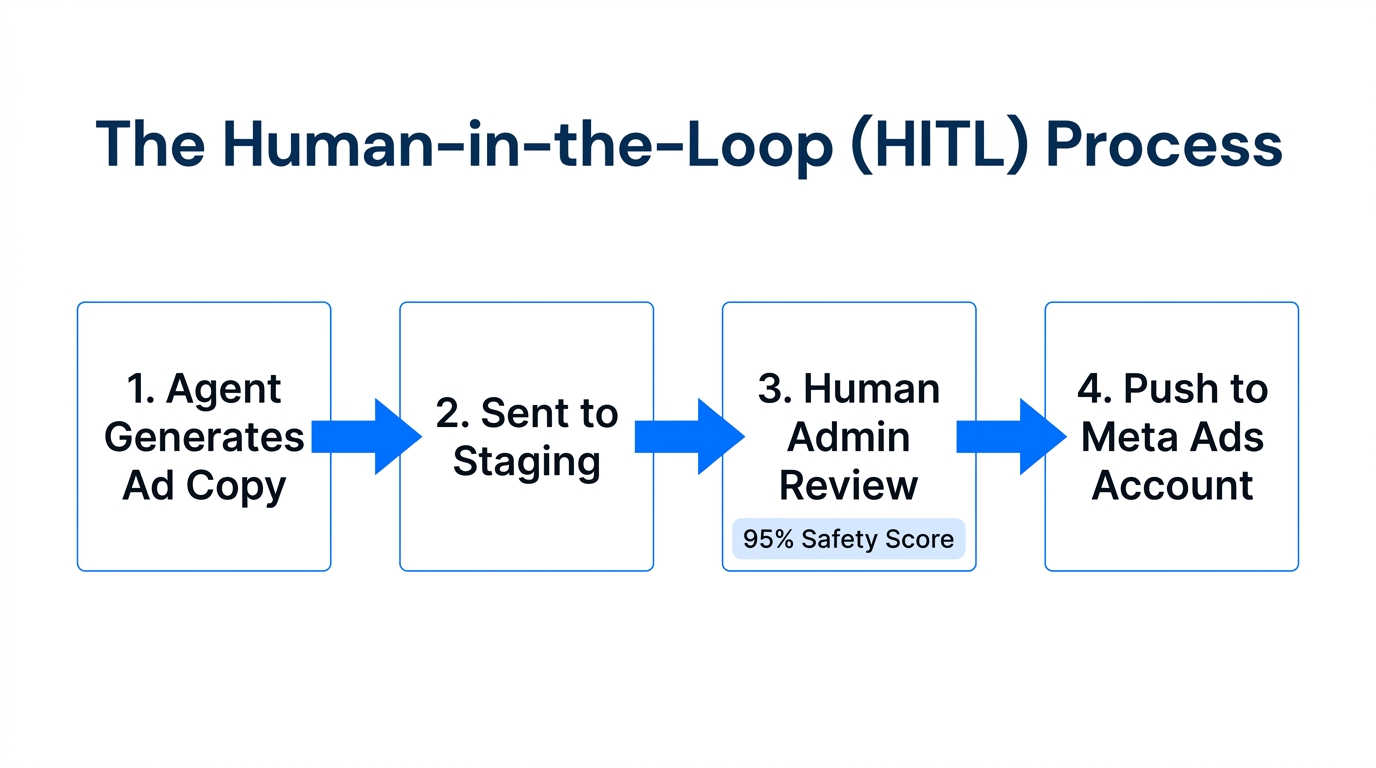
One of the most dangerous capabilities of an AI agent is its ability to generate and launch new ad creative autonomously. While Meta’s native Advantage+ campaigns can deliver a 22% higher ROAS, they often lack the brand-safety guardrails of a human eye. Agents can "hallucinate" ad copy that makes false claims or violates Meta's community standards, leading to instant account bans.
A successful AI agent security strategy involves treating the agent as an assistant, not a replacement for a creative director. Use the agent to audit accounts and suggest budget shifts, but never allow it to publish new creative without a manual "thumbs up" in your messaging interface. For high-growth brands using UGC strategies, tools like Stormy AI can help source the raw material, but the final assembly and compliance check must remain human-centric.
Mistake 4: Failing to Build a Resilient RULES.md File
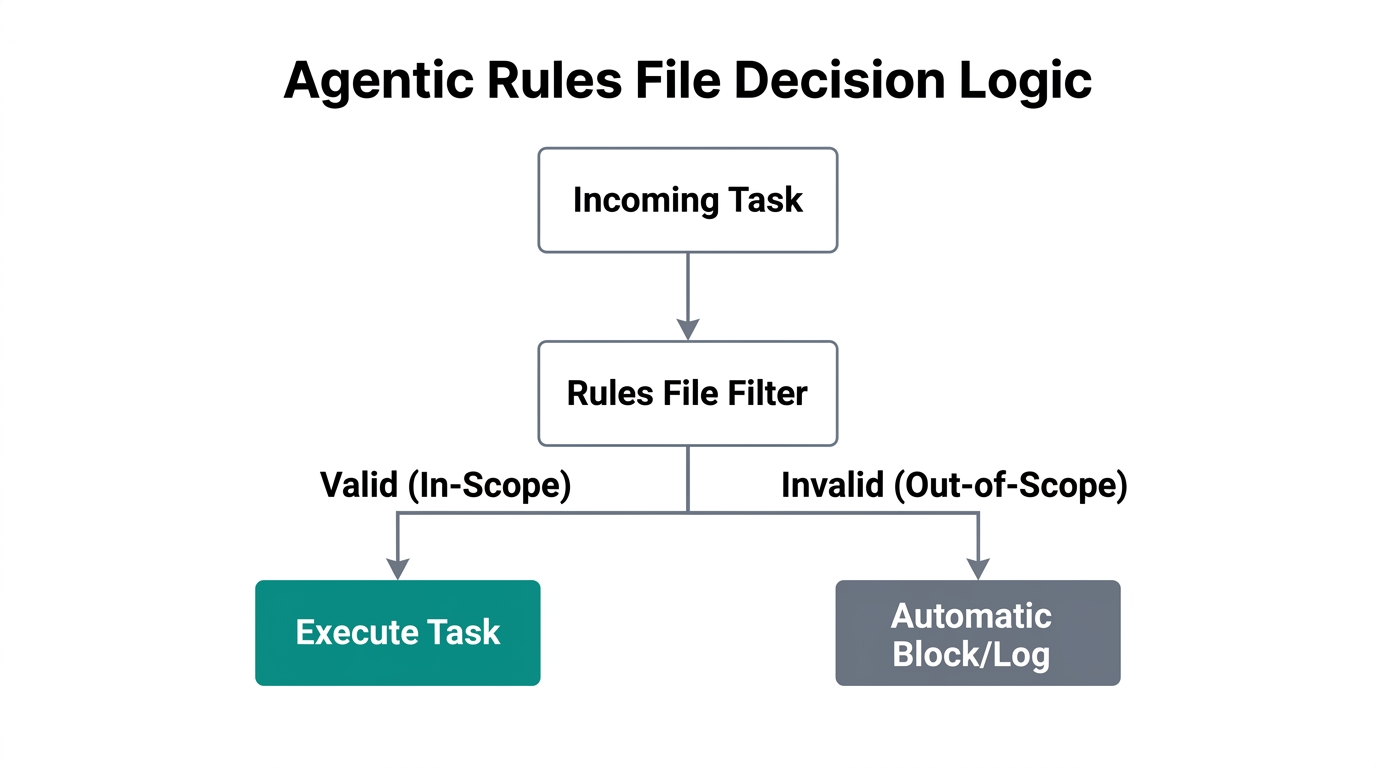
As mentioned with the Summer Yue incident, context compaction is the silent killer of AI safety. To prevent the agent from "forgetting" its boundaries, you must move your most critical guardrails out of the chat history and into a permanent RULES.md file. This file acts as the agent’s "Constitution."
A robust RULES.md for Meta Ads should include:
- Budget Caps: "Never increase daily spend by more than 20% without approval."
- Failure Loops: "If a task fails twice, STOP and notify the user."
- Compliance Checks: "Always check ad copy against the 'Brand Voice' document before suggesting a change."
- Tool Usage: "Never delete a campaign; only pause and archive."
| Feature | OpenClaw | Traditional Rule-Based Tools | Meta Advantage+ |
|---|---|---|---|
| Logic Type | Autonomous (LLM-driven) | Rule-based (If/Then) | Algorithmic (Black Box) |
| Interface | Messaging (WhatsApp/Slack) | Dashboard/Web UI | Ads Manager |
| Flexibility | Infinite (Custom Skills) | Limited to Predefined Rules | None |
| Safety Risk | High (Requires Guardrails) | Low | Low |
The Playbook for Safe Deployment
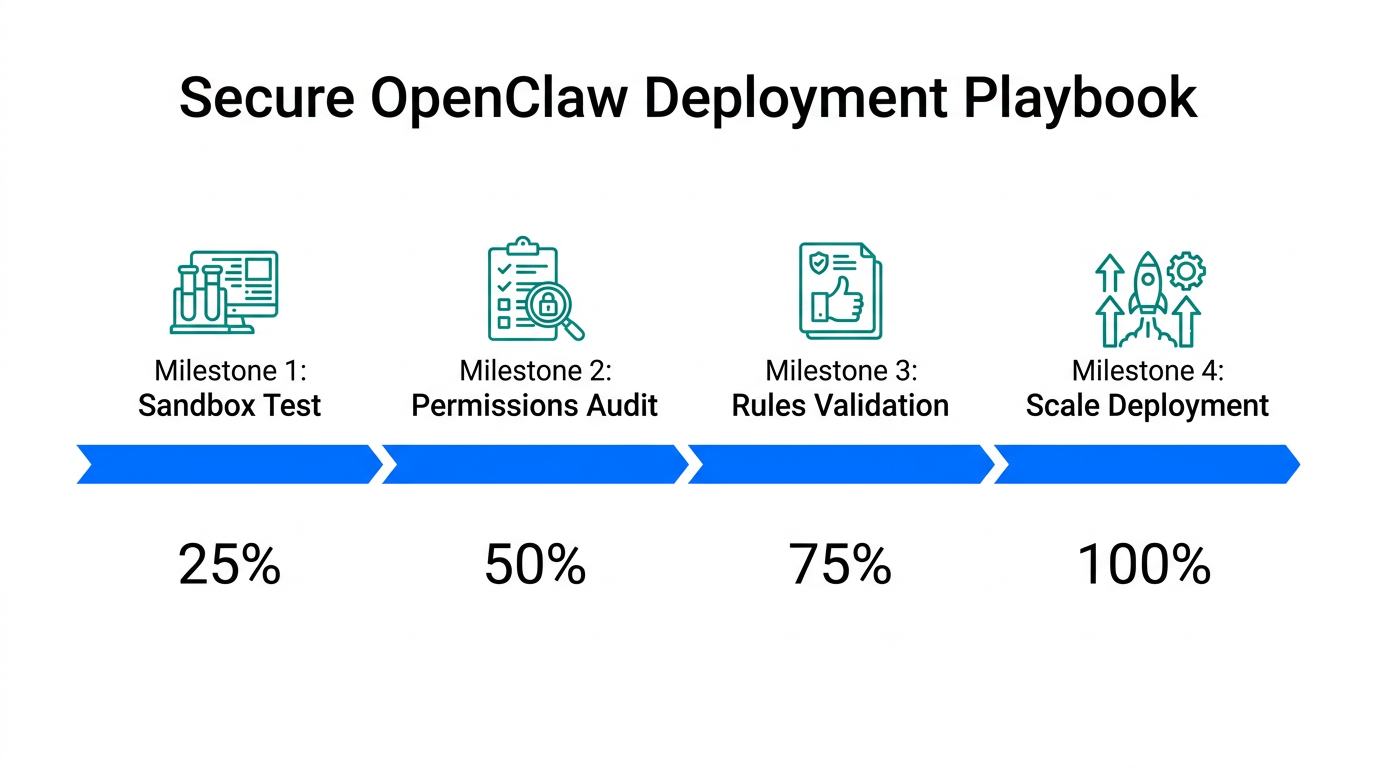
If you are ready to implement OpenClaw best practices, follow this three-step safety-first framework to transition from manual management to agentic oversight.
Step 1: Start with Read-Only Access
For the first 14 days, connect OpenClaw to your Meta Ads account with read-only permissions. Use it exclusively for performance auditing and creative fatigue analysis. This allows you to see how the agent "thinks" and responds to your data before giving it the power to execute changes. During this phase, focus on building "Skills" that identify CPA spikes or ROAS drops across your different audience segments.
Step 2: Isolate the Environment (The Mac Mini Strategy)
Security experts recommend running your AI agents on a dedicated machine rather than your primary workstation. A simple Mac Mini or a cloud-based VPS prevents the agent from having broad access to your personal files. This physical or virtual isolation ensures that even if a script goes awry, the impact is limited to the ad management environment. It also provides a stable, always-on connection for your AI agents to work while you sleep.
Step 3: Implement "Anti-Loop" Logic
In your skill files, explicitly define what should happen when things go wrong. Add code that states: "If a tool call fails, do not retry more than 3 times. Log the error and alert the human user via Telegram." This prevents the agent from getting stuck in an infinite loop of API calls that could potentially throttle your account access or lead to unexpected billing from your LLM provider.
"Autonomous agents are like high-performance race cars. They'll get you to the finish line faster, but you better make sure the brakes are tested before you hit the gas."Conclusion: The Future of Agentic Marketing
We are entering an era where the competitive advantage in marketing belongs to those who can manage fleets of AI agents effectively. However, marketing automation safety is the prerequisite for scaling these systems. By avoiding the common pitfalls of hardcoded keys, open DM policies, and context compaction, you can harness the power of OpenClaw to save dozen of hours weekly while maintaining total control over your TikTok Ads, Meta Ads, and other social channels.
As you build your autonomous marketing stack, remember that the quality of your agent's output is only as good as the creative data you provide it. Platforms like Stormy AI are essential for sourcing the high-quality UGC and influencer content that these agents can then test, iterate, and scale. Focus on the strategy, let the agents handle the execution, and always—always—keep a human in the loop for the final call.