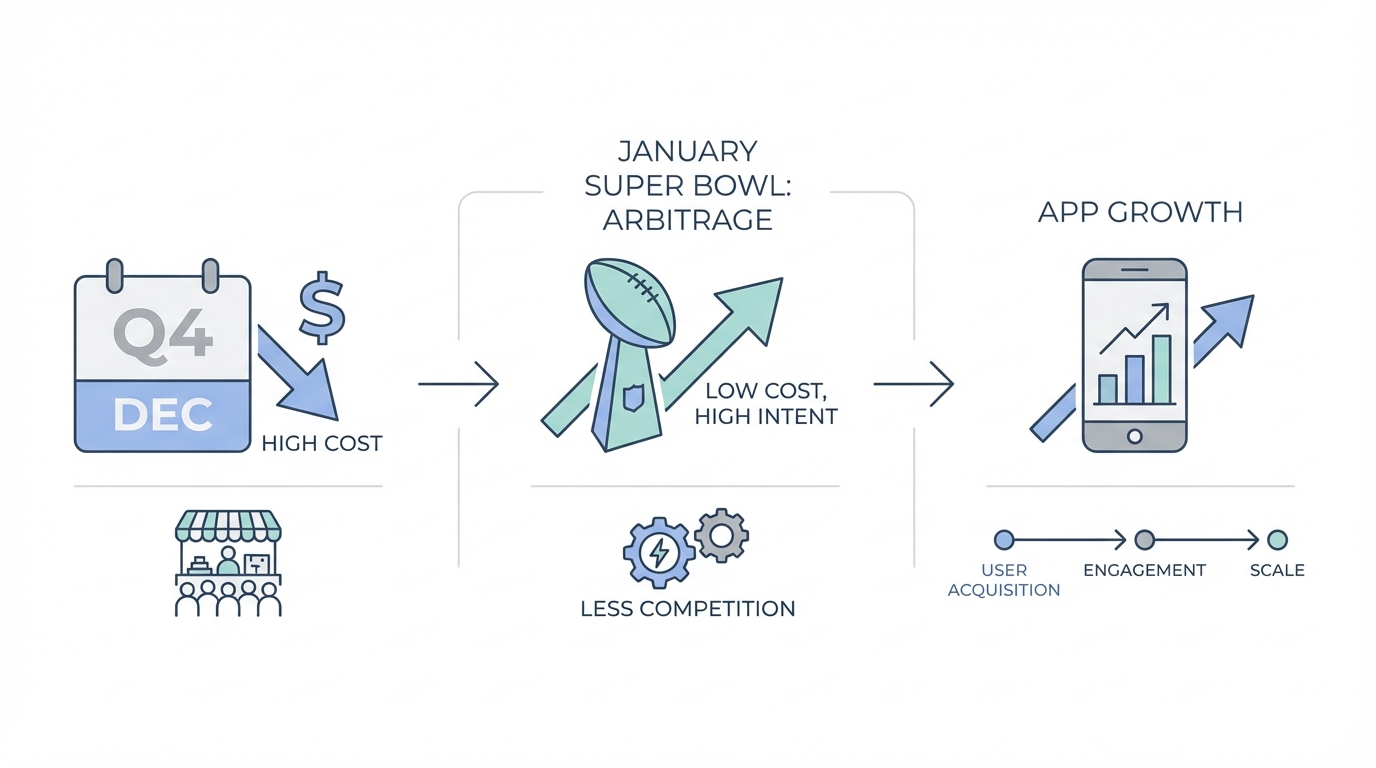
In the high-stakes world of mobile growth, most marketers fight for incremental gains in retention and conversion. But what if you could change the physics of the market itself? For a brief window every year, the usual rules of user acquisition costs are suspended, creating a phenomenon known as the January Super Bowl. During this period, market tailwinds align so perfectly that the cost to acquire a high-value subscriber can drop by as much as 50% compared to the rest of the year. This isn't just about New Year's resolutions; it is a masterclass in seasonal ad buying arbitrage that allows savvy founders to spend 75% of their annual budget in a single month to establish a new, permanent baseline for Monthly Recurring Revenue (MRR).
The January Arbitrage: Why Month One Matters
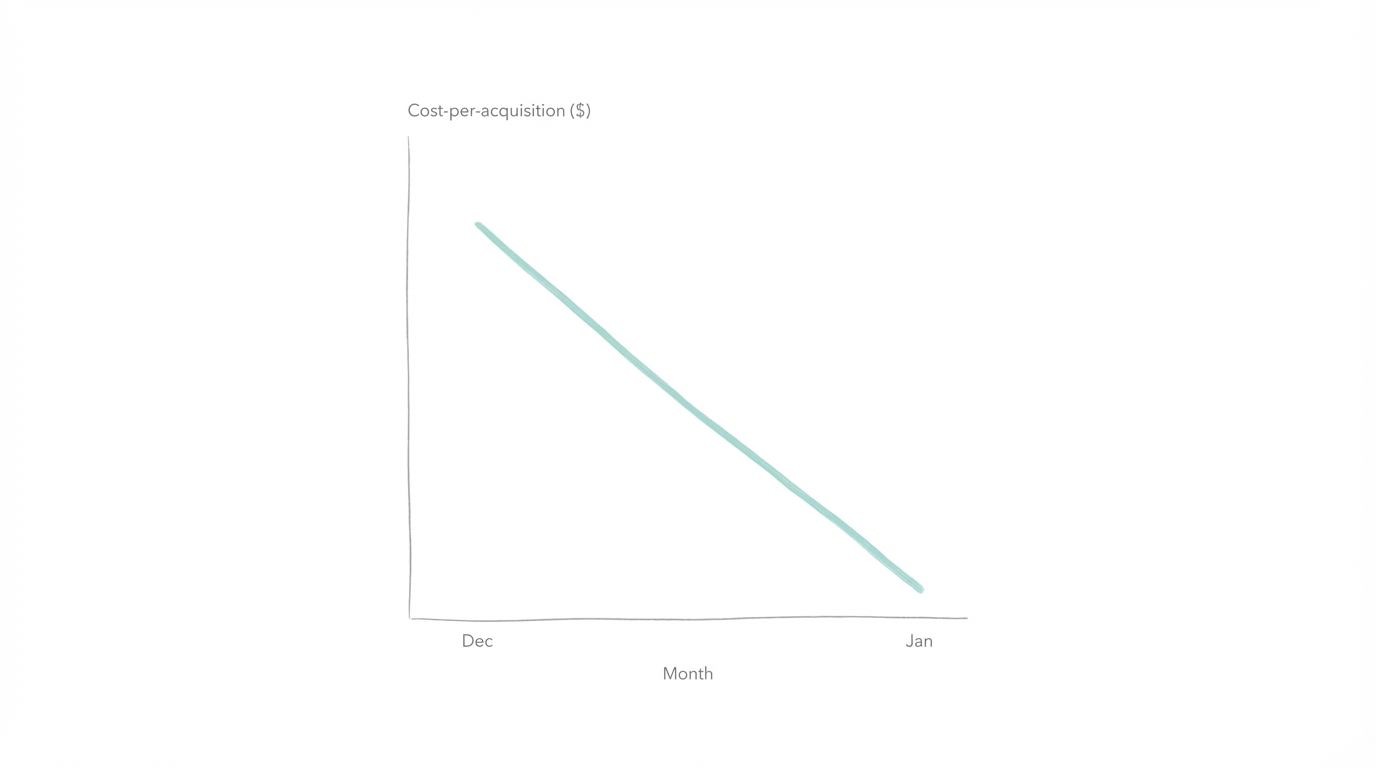
The logic of mobile app budget allocation typically suggests a steady, spread-out spend across twelve months. However, top-tier operators have discovered that ad spend optimization is most effective when concentrated during periods of maximum psychological receptivity. In January, specifically the first week, user intent for self-improvement, health, and productivity peaks just as major brand advertisers (who flooded the market in December) pull back their budgets. This creates a massive supply-demand imbalance in the ad auction.
By shifting the majority of your capital—sometimes up to 75% of your annual ad budget—into January, you aren't just buying cheap downloads; you are buying a new MRR baseline. Because subscription apps benefit from long-term retention, a user acquired at a 50% discount in January continues to pay full price in July, August, and September. This front-loading of capital creates a compounding effect that sustains the business through quieter quarters. To manage this effectively, many teams use Meta Ads Manager, TikTok Ads Manager, and Stormy AI for finding UGC creators and influencers to capitalize on these shifting auctions.
Weekly Cycle Optimization: The Sunday/Monday/Tuesday Peak
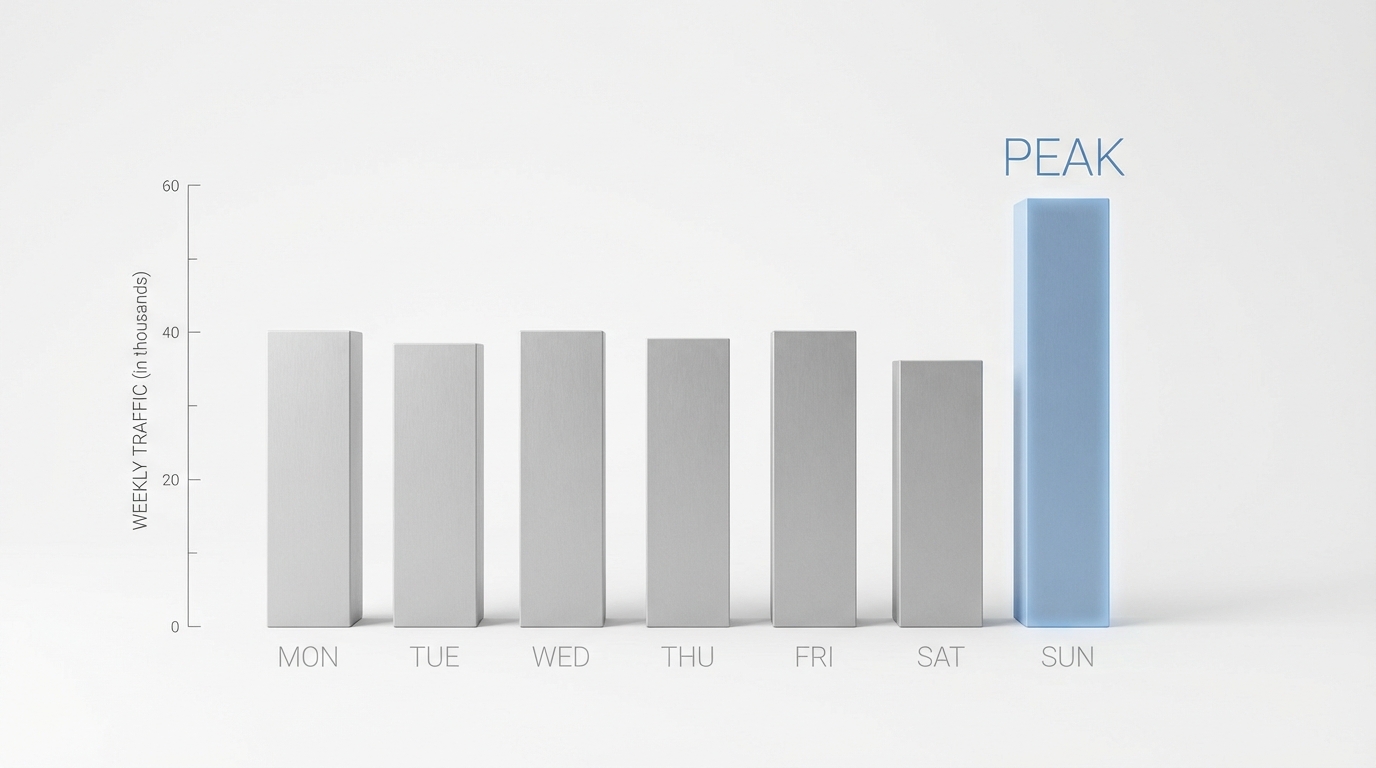
Successful seasonal ad buying requires more than just picking the right month; it requires understanding the weekly psychological cycles of your target audience. In the categories of health, fitness, and productivity, user behavior follows a rigid internal clock. People "clock in" to their self-improvement goals on Sunday evenings and Monday mornings. Consequently, Sunday, Monday, and Tuesday represent the peak periods for ad performance.
Conversely, interest tends to wane on Wednesday, Thursday, and Friday as the "weekend mindset" takes over. If you are scaling a wellness app, pushing aggressive budgets on a Friday is often a recipe for wasted spend. Instead, sophisticated media buyers wait for that Sunday night surge to 10x their spend. This strategy ensures you are appearing in front of users exactly when their motivation is at its highest, leading to significantly higher conversion rates on paywall experiments.
The Mental 'Clock-In' Timing: Why January 1st Varies
A common mistake in app store marketing trends analysis is assuming January 1st is always the best day to spend. In reality, the effectiveness of New Year's Day depends heavily on which day of the week it falls on. If January 1st lands on a Thursday or Friday, the "mental clock-in" is often delayed. People may view the remaining days of the week as a "write-off" and wait until the following Monday to truly start their new routines.
The ultimate tailwind occurs when January 1st falls on a Sunday. This aligns the yearly cycle with the weekly cycle, creating a massive explosion in intent. For years where the calendar is less favorable, marketers should look toward the first full Monday of the month as their true "North Star" for scaling. Monitoring these trends requires robust data; many founders look at tools like Apple Search Ads to see how keyword volume shifts day-by-day during this transition.
Pre-Season Testing: The December Creative Playbook
You cannot start testing your creatives on January 1st. If you do, you've already lost the arbitrage. The most successful user acquisition costs are achieved by finding the "winners" during a pre-season testing phase in late December. From December 25th to December 30th, while the rest of the world is offline, growth teams should be running low-budget tests to identify the top 10 creative concepts for the New Year's push.
The Three-Tier Scaling System
- Level 1 (Testing): Every new video or ad creative gets a $20 to $40 test. This is a "fair whack" to see if the hook resonates.
- Level 2 (Graduation): Assets that hit target metrics graduate to a campaign with $100 to $500 daily spend. Here, platforms like TikTok test the video at a new scale to see if the metrics hold.
- Level 3 (Evergreen): The top 1% of creatives become "evergreens," receiving 90% of the total ad budget. These are the videos that can sustain hundreds of thousands in spend during the January rush.
To find these winning formats without manual scrolling, many developers use Spytok to identify viral outliers in their niche. By the time January 1st arrives, you should already have your level 3 evergreens ready to fire.
Building a Creator Army for UGC

Authenticity is the currency of modern ad spend optimization. The days of polished, high-production graphic ads are being replaced by raw, User-Generated Content (UGC). To fuel a massive January push, you need a high volume of content—sometimes thousands of videos across a portfolio. This is where building a "creator army" becomes essential.
When sourcing talent, focus on content creators rather than "influencers." You aren't paying for their follower count; you are paying for their ability to follow a brief and create a compelling hook. Ideal creators often have between 2,000 and 20,000 followers—enough to prove they understand the algorithm, but small enough to be professional and affordable. Utilizing platforms like Stormy AI can help streamline the discovery process. Stormy AI is an all-in-one search engine across TikTok, Instagram, and YouTube that allows you to find matching creators using natural-language prompts like "fitness creators in LA." For those looking to scale quickly, it provides AI-powered vetting to detect fake followers and engagement fraud instantly.
Capital Allocation Strategy: New Assets vs. Aggressive Ad Spend
For founders managing a portfolio of apps, the ultimate question is always: where do I allocate my next dollar? Should you acquire a new app asset or double down on seasonal ad buying? While acquiring under-monetized apps is a proven way to grow, the January arbitrage often provides a better immediate Return on Ad Spend (ROAS).
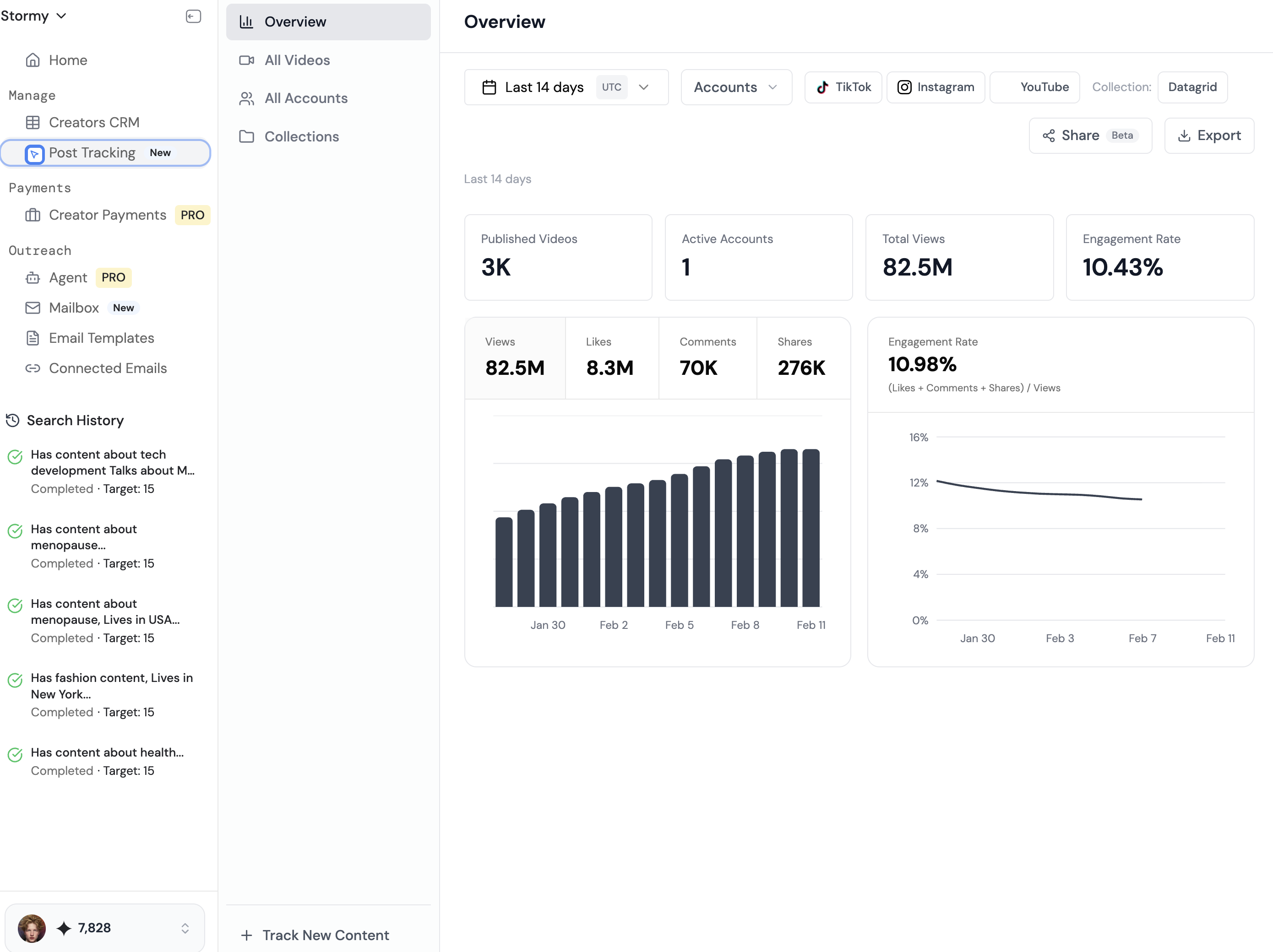
Aggressive ad spend during peak tailwinds doesn't just grow your user base; it improves your App Store Optimization (ASO). The massive influx of downloads in January signals to the App Store algorithms that your app is trending, which can lead to a "number one" ranking in your category. This organic boost provides a "halo effect" that lowers your blended CAC even further. By using Stormy AI to track individual videos and monitor campaign performance across platforms, you can ensure that this surge of cheap traffic actually converts into long-term profit.
The Future of Growth: AI Agents and Automation

As we move toward 2025, mobile app budget allocation is becoming increasingly automated. The next era of app growth involves AI agents that monitor 180+ countries, adjusting prices and ASO keywords in real-time. Instead of a human media buyer manually checking Google Ads every hour, platforms like Stormy AI enable you to set up an autonomous AI agent that discovers, outreaches, and follows up with creators on a daily schedule—fully automated while you sleep.
This shift allows founders to move away from the operational "trench work" and focus on high-level strategy and app store marketing trends. Whether it's through custom product pages or AI-driven creative briefs, the goal remains the same: building an industrial app growth factory that thrives on systematic testing rather than lucky viral hits.
Conclusion: Your January Playbook
Mastering the January Super Bowl is about more than just spending money; it's about timing, creative volume, and rigorous testing. To win this season, you must identify your winners in late December, understand the Sunday-to-Tuesday psychological peak, and be prepared to front-load your mobile app budget allocation to capture the 50% discount on user acquisition costs.
Actionable Next Steps:
- Audit your creative library and find your top-performing hooks from the past year.
- Start outreach to 10-20 micro-creators to produce variations of those hooks.
- Set your ad spend optimization filters to increase budgets starting December 28th.
- Use tools like Stormy AI to find fresh UGC talent for your next campaign.