In the high-stakes world of corporate growth, the transition from a services-led agency to a productized SaaS engine is often described as the "Holy Grail" of entrepreneurship. Most founders find themselves stuck in the "Consultancy Trap," where revenue is tied directly to billable hours and human capital. However, Scott Galloway—NYU Stern professor, serial entrepreneur, and provocateur—demonstrated a better way with the sale of his company, L2. By moving from bespoke strategy consulting to a recurring revenue business model based on digital benchmarking, he secured a massive 8x revenue exit to Gartner.
This transition isn't just about changing how you bill; it is a fundamental shift in B2B growth strategy. It requires moving from high-touch, custom solutions to automated, data-driven products that provide value while you sleep. Whether you are running a marketing agency or a tech firm, the goal remains the same: decouple your earning potential from your calendar. By leveraging aggregate data and productized insights, you can move from a low-multiple service business to a high-valuation asset.
The Consultancy Trap: Why Time is Your Enemy
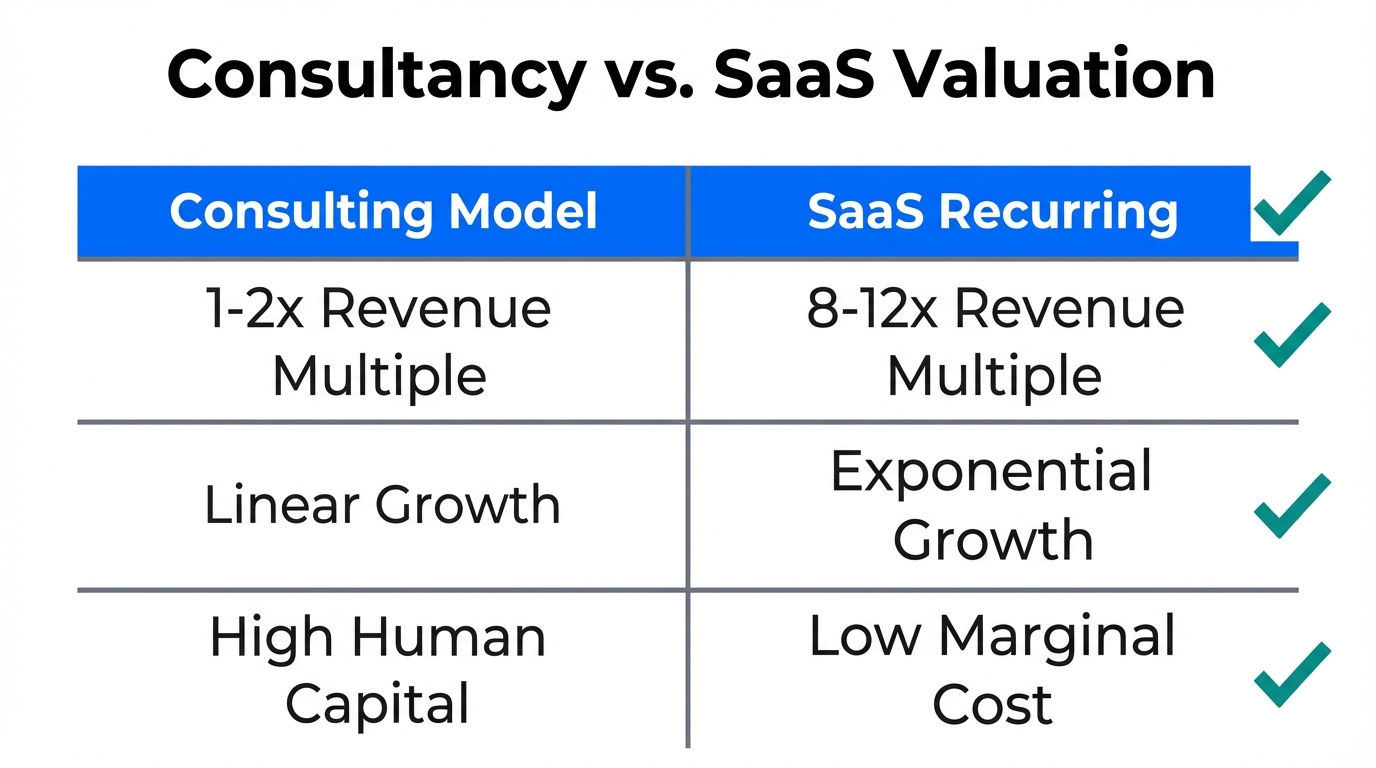
The primary hurdle for any service-based founder is the inherent lack of scalability. When you charge for time, your growth is limited by your headcount. Galloway notes that in his early days of strategy consulting, he would charge brands like Levi’s or Williams-Sonoma upwards of $500,000 for a single internet strategy engagement. While the margins were high, the business model was flawed. To grow, he needed more consultants, more meetings, and more "new problems" to solve for the client.
In a traditional agency model, you are constantly on the hunt for the next big project. This creates a feast-or-famine cycle that prevents long-term stability. To break this cycle, firms must adopt a SaaS marketing mindset—even if they are still providing services. This involves standardizing your offerings so they can be delivered with minimal manual intervention. Tools like Google Ads and Meta Ads Manager have already productized the "ad buy"; your job is to productize the strategy behind it.
Galloway explains that in his consulting days, the goal was often to find a new problem halfway through an engagement so the client would keep paying. While profitable in the short term, this does not build a business exit strategy that attracts institutional buyers. Acquirers aren't looking for a talented founder; they are looking for a machine that produces predictable cash flow.
The L2 Playbook: Building a Recurring Revenue Engine
The pivot for Galloway came when he founded L2, a company that specialized in digital benchmarking. Instead of writing a custom strategy for every client, L2 used software and scraping tools to collect over 1,200 data points on how brands performed across the digital landscape. This data was then aggregated into reports that ranked brands against their peers. Suddenly, the service was no longer a one-off project; it was a subscription to a platform that provided ongoing competitive intelligence.
This shift to a recurring revenue business model changed the company's valuation overnight. When L2 was eventually sold to Gartner, it commanded a multiple of 8x revenue. In contrast, most service-based agencies struggle to sell for more than 1x or 2x EBITDA (Earnings Before Interest, Taxes, Depreciation, and Amortization).
"The recurring revenue model is the difference between a practice and an enterprise. It’s what allows you to create real wealth by finding outstanding people to leverage your talent."To replicate this, businesses need to identify the "boring" data points their clients crave. For L2, it was digital shelf space and social media engagement metrics. For a modern growth agency, it might be tracking UGC (user-generated content) performance or influencer ROI. Modern platforms like Stormy AI can help source and manage UGC creators at scale, effectively productizing the discovery and outreach process that used to take teams of people hundreds of hours.
Digital Benchmarking: The Un-Sexy Moat
One of Galloway’s most contrarian takes is that the best businesses are often the ones that sound the least exciting. While many entrepreneurs chase "sexy" lifestyle businesses like members' clubs or fashion brands, the real money is in un-sexy analytics and benchmarking. He argues that your return on invested capital is often inversely correlated to how cool an industry sounds.
Consider the following comparison of business models:
| Feature | Service-Based Agency | Productized Benchmarking |
|---|---|---|
| Revenue Type | Project-based / Retainer | Recurring Subscription |
| Scalability | Low (tied to headcount) | High (automated data) |
| Valuation Multiple | 1-2x EBITDA | 5-10x Revenue |
| Customer Retention | Variable | High (data dependency) |
By focusing on "boring" sectors—like healthcare maintenance scheduling or B2B analytics—you face less competition from "ego-driven" founders. These industries are ripe for B2B growth strategies that utilize aggregate data to provide value. When you own the data, you own the market's attention. Companies like Klaviyo or Salesforce have built massive empires by providing the infrastructure for "boring" but essential tasks like email automation and CRM management.
Boring is Better: Where to Invest for Growth
If you are looking for your next venture or investment, Galloway suggests looking away from the bright lights of Davos or South by Southwest. Instead, look toward software-as-a-service platforms for healthcare, supply chain logistics, or financial compliance. These are the "testicles of the economy"—the soft tissue that keeps everything running but rarely gets the spotlight.
For example, investing in retail shopping centers might seem dead in the age of e-commerce, but due to supply constraints and the rise of