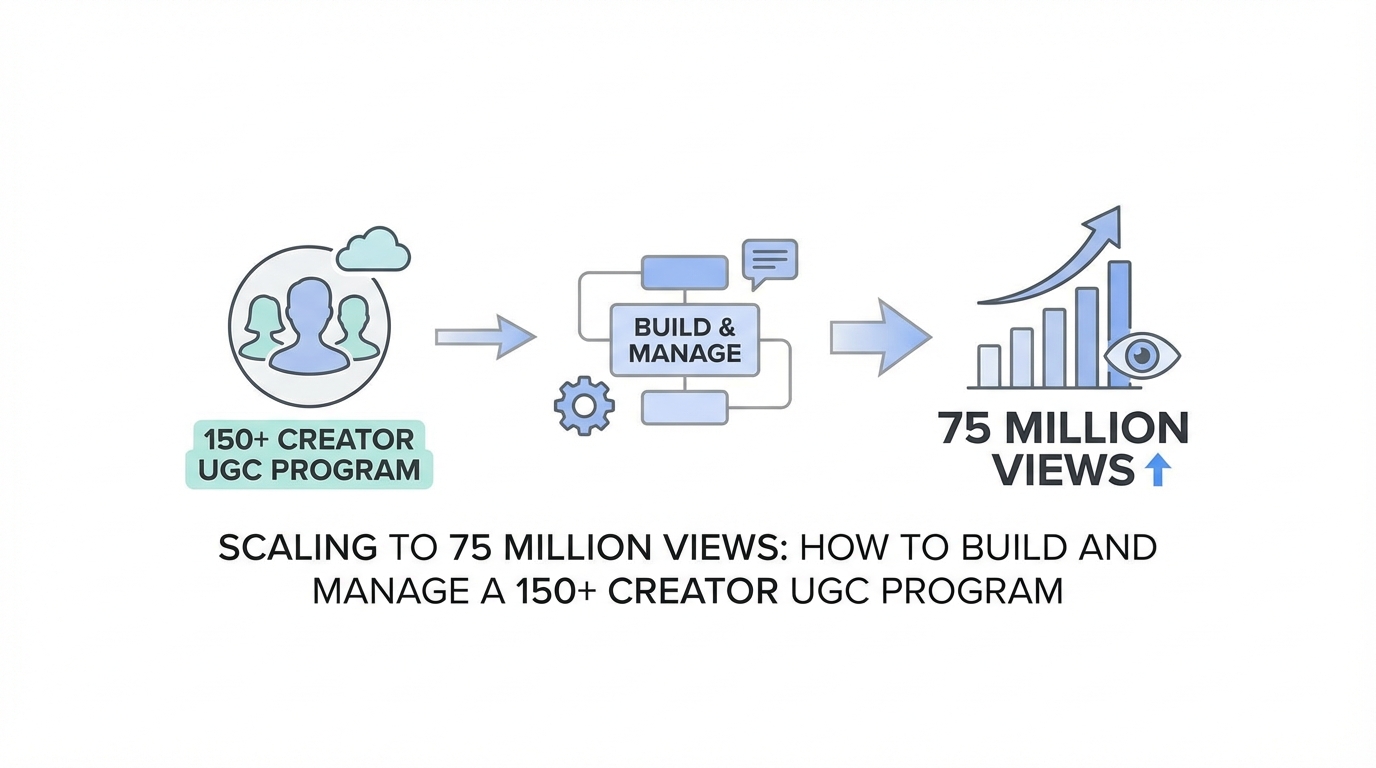
Building a successful marketing engine for a consumer app is no longer just about bidding on keywords or tweaking your App Store Optimization. In the current landscape, the most effective way to scale is through short-form social growth. But how do you go from zero to 75 million views in just a few months? According to Matt, the growth lead behind Jenni AI, the secret isn't in high-production values or expensive influencers. Instead, it lies in a principle he calls a "violent amount of effort" and a laser focus on finding creators with "camera charisma" rather than massive follower counts.
By managing over 150 creators and maintaining low CPM marketing costs of under $2 per thousand views, Matt has helped propel Jenni AI toward monthly recurring revenue (MRR) of $775,000 and over 5 million users. This article breaks down the exact playbook used to build this high-performance UGC engine, from the first cold DM to the performance-based bonus structures that keep top talent loyal.
The Principle of 'Violent Effort': Moving from 0 to 80 Creators


When most brands start a UGC program, they dip their toes in the water by hiring two or three creators. To scale a UGC program to the level of Jenni AI, you have to move at a pace that feels uncomfortable. Matt’s target was to hit 80 creators in his first 30 days. Achieving this required a grueling schedule, often working 16 hours a day, seven days a week. There is simply no shortcut to the initial manual grind required to find, vet, and onboard a high volume of talent.
This level of output is what separates mediocre programs from viral ones. While many marketers look for automated short-cuts on outdated legacy platforms, the real "alpha" is found in using Stormy AI's natural-language search to find "hidden gems"—creators who have the raw potential but haven't yet been discovered by other brands. You cannot speedrun the process of finding these creators manually, but you can type a prompt like "expressive creators in lifestyle niche" and instantly surface matching talent across TikTok and Instagram.
Identifying 'Camera Charisma' and Viral Sense
The most common mistake in influencer management at scale is prioritizing follower counts or historical engagement rates. Matt argues that stats are often misleading because they are at the mercy of platform algorithms. Instead, look for camera charisma—a set of intangible traits that make a viewer want to keep watching. When platforms like Stormy AI are used to source talent, you can paste any creator profile URL and get an AI-powered quality report in seconds to detect fake followers and engagement fraud, allowing you to focus your energy on evaluating these three specific traits:
- Emotive Energy: Is the creator naturally expressive? You want someone who is not monotonous, whose face and tone move up and down with the story they are telling.
- The Aesthetic First Frame: If you pause the video at the one-second mark, does it look appealing? Natural viral sense manifests in a creator’s ability to frame themselves well, use good lighting, and choose an interesting background without being told.
- The "Yapper" Factor: The best creators are often "extroverted yappers"—people who can sit down and tell a story so engagingly that you forget you’re watching an ad.
By focusing on these raw skills, you can hire creators who are not yet influencers. This allows for significantly lower CPMs and better deal structures. One of Jenni AI's top-performing creators was a beauty niche creator who had never done UGC before. It took her 25 videos to find her stride, but once she did, her content exploded, earning her over $5,000 in a single month through performance bonuses.
The Cold DM Playbook: Overcoming Skepticism with Social Proof
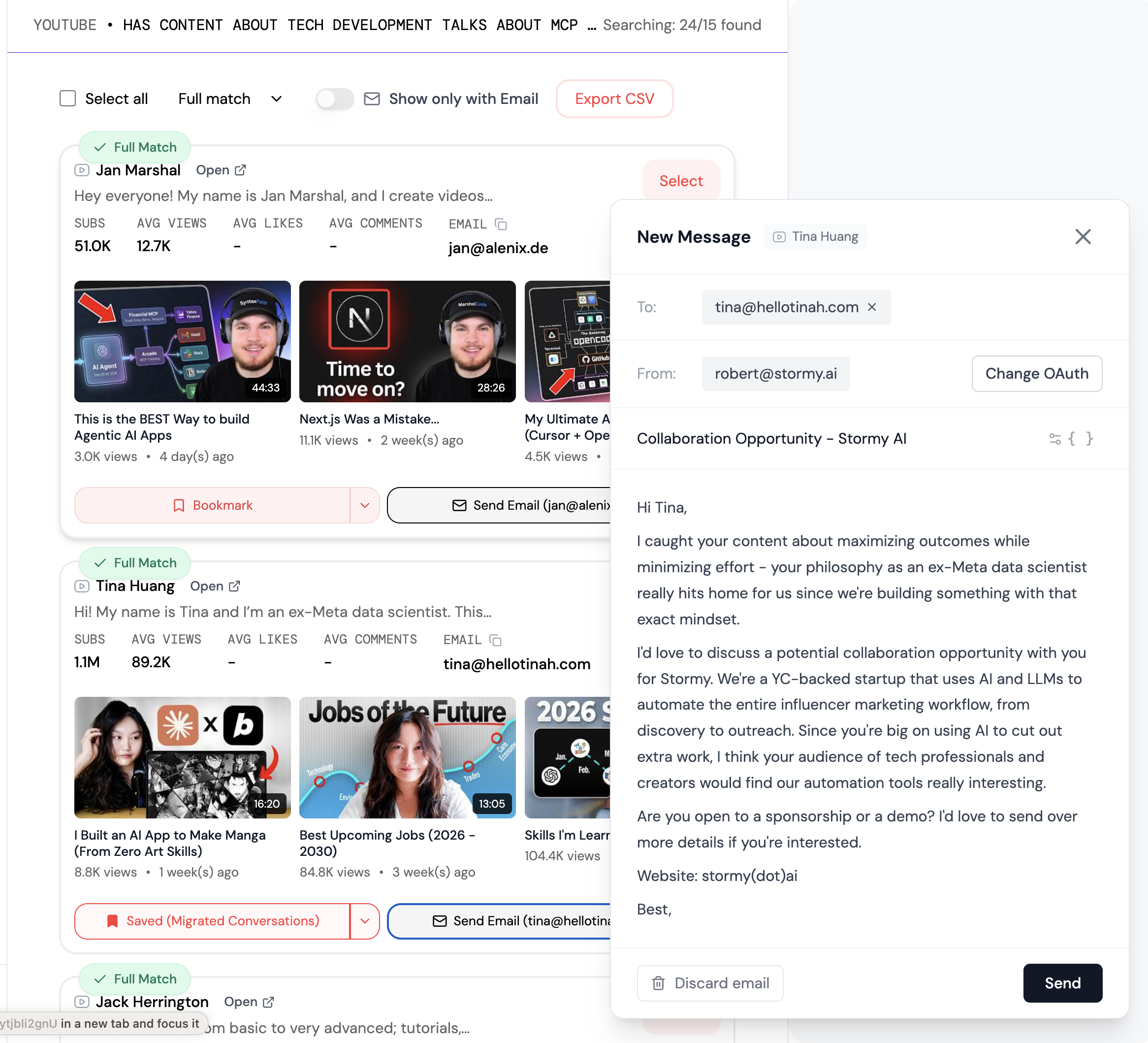
Reaching out to non-influencers presents a unique challenge: extreme skepticism. These creators aren't used to getting brand deals, so they often mistake outreach for spam or shipping scams. To overcome this, the outreach strategy must be casual, personable, and packed with specific social proof. Use lowercase text and a relaxed tone to fit into the creator’s inbox naturally.
Instead of a formal proposal, try something like: "hey, love your style! we have 5m users and our creators are crushing it right now. would love to talk about a partnership." If you don't have millions of users yet, start with founder-led content on platforms like TikTok. Matt suggests that founders should pick up their phones and make the first 10-20 TikToks themselves. Not only does this build the initial social proof needed to recruit others, but it also ensures you understand the format well enough to coach your creators later. Stormy AI can help bridge this gap by setting up an autonomous AI agent that discovers, outreaches, and follows up with creators on a daily schedule, using hyper-personalized emails that find creator addresses automatically.
The Art of Content: Engagement Bait vs. Rage Bait
To hit 75 million views, your content needs to do more than just explain a product; it needs to spark a conversation. Matt distinguishes between "rage bait" (which is purely negative) and "engagement bait" (which polarizes the audience). The goal is to land in the middle of a debate where half the people agree with the creator and the other half are confused or slightly annoyed.
A perfect example is a video by a creator named Ruby that garnered 30 million views on X (Twitter). The video featured a simple 5-second clip with a text overlay about a student in a library who wasn't using any tabs, music, or AI tools, calling her a "psychopath." This sparked a massive debate: some users defended the student’s focus, while others agreed that studying without music or Jenni AI was indeed "crazy." This polarization drives comments, and comments drive the algorithm. When managing creators, encourage them to find these "middle-ground" topics that force viewers to take a side in the comments section.
Lowering CPMs to Under $2: The Financial Playbook
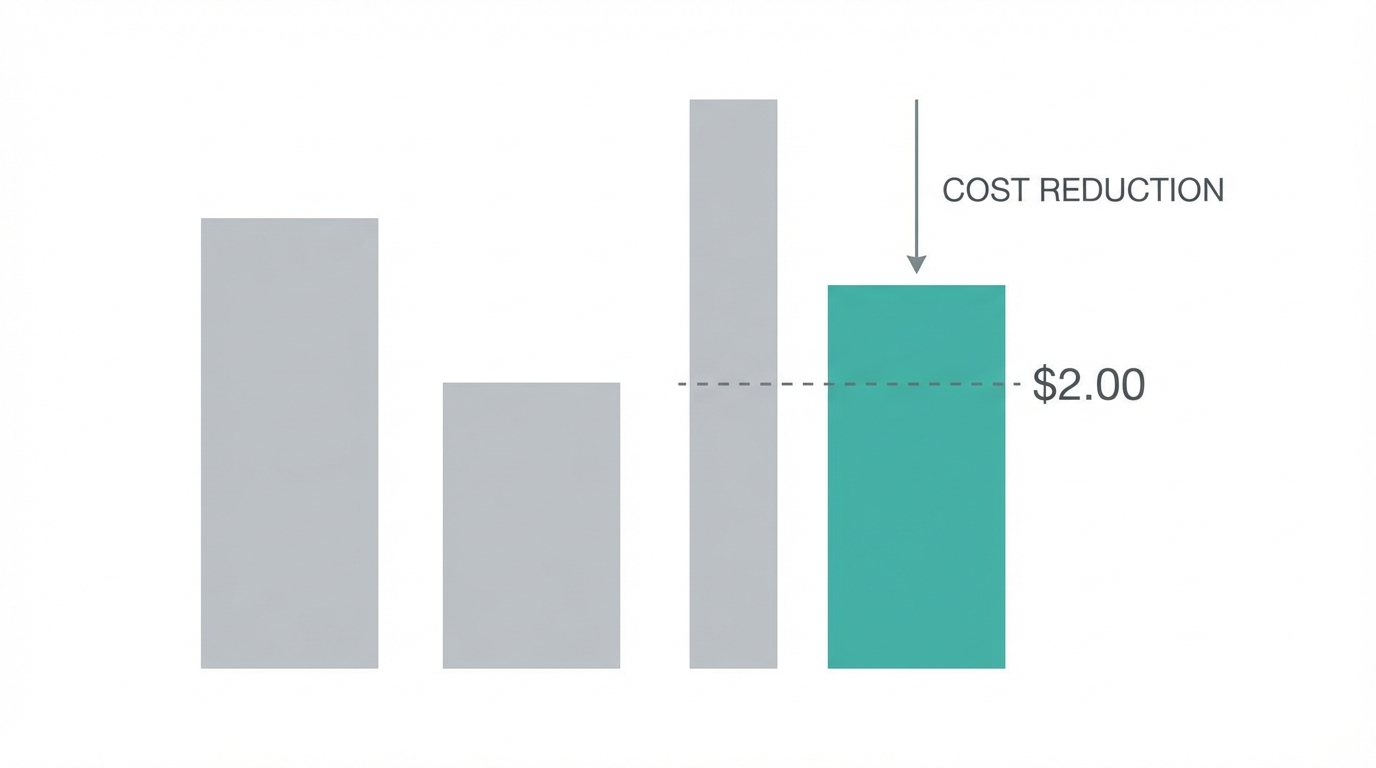
One of the primary goals of any ugc management platform approach is to outperform traditional paid acquisition. While Apple Search Ads or Google Ads can be effective, they are often expensive for consumer apps. By building a massive network of organic-focused creators, Matt achieved a CPM of under $2, which is unheard of in most competitive niches.
The secret to these economics is the performance bonus structure. Instead of paying a massive upfront fee, pay a fair base rate and offer significant upside for views. For example, if a video hits 100k views, the creator gets a bonus. If it hits 1M, the bonus scales. This aligns the creator’s incentives with the brand's goals. When a creator like Ruby sees that she can earn $5,000+ per month by simply making high-quality, engaging content, she becomes a long-term partner rather than a one-off contractor. This loyalty is critical for retention, especially when other brands inevitably try to poach your top performers.
A 4-Step Playbook for Managing UGC at Scale

If you are looking to replicate this success, you need a repeatable system. You can’t rely on lightning striking twice; you need a factory that produces lightning. Here is the 4-step scale ugc program playbook:
Step 1: Prescribed Doom Scrolling
Spend 30 minutes a day scrolling in your niche and 30 minutes scrolling completely outside of it. You want to develop a "viral sense"—the ability to look at a video and understand why it’s working. Use tools like TikTok Creative Center to find outliers and winning formats, but don't just look at the view counts. Analyze the dimensions of the video: the lighting, the hook, the speed of the cuts, and the emotional delivery.
Step 2: Adapt, Don't Just Copy
Copying a video frame-for-frame rarely works because the algorithm values novelty. Instead, understand the principles behind a viral format and adapt them to your product. If a "storytime" format is working in the fitness niche, how can you adapt that same emotional hook for a productivity app? The goal is to iterate on the format and make it 1% better than the original.
Step 3: Build Deeper Rapport
Transactional deals lead to high churn. To manage influencer management at scale, you must treat your creators as team members. Coach them, give them feedback, and celebrate their wins. When a creator knows you are invested in their growth, they are much less likely to leave for a slightly higher offer from a competitor. To organize this, Stormy AI provides a full Creator CRM for managing creator relationships, deal stages, and collaboration history in one centralized dashboard.
Step 4: Product-Led Growth and Feedback Loops
The most advanced stage of this strategy is working backwards from the content to the product. If a certain feature is going viral in your videos, prioritize that feature in your development roadmap. You can monitor these trends by using the Post Tracking section in Stormy AI to track accounts, individual videos, and monitor views and engagement across all your campaigns. When product and growth are this tightly aligned, conversion rates on your paywalls and landing pages will naturally skyrocket.
Conclusion: Building Your Own UGC Engine
Scaling to 75 million views and $775k MRR isn't the result of a single viral video; it's the result of a violent amount of effort and a sophisticated management system. By focusing on non-influencers with "camera charisma," prioritizing long-term relationships over transactional deals, and mastering the art of engagement bait, any consumer app can achieve low CPM marketing and explosive growth. Don't wait for the perfect influencer to find you—go out, pick up the phone, and start building your creator factory today.