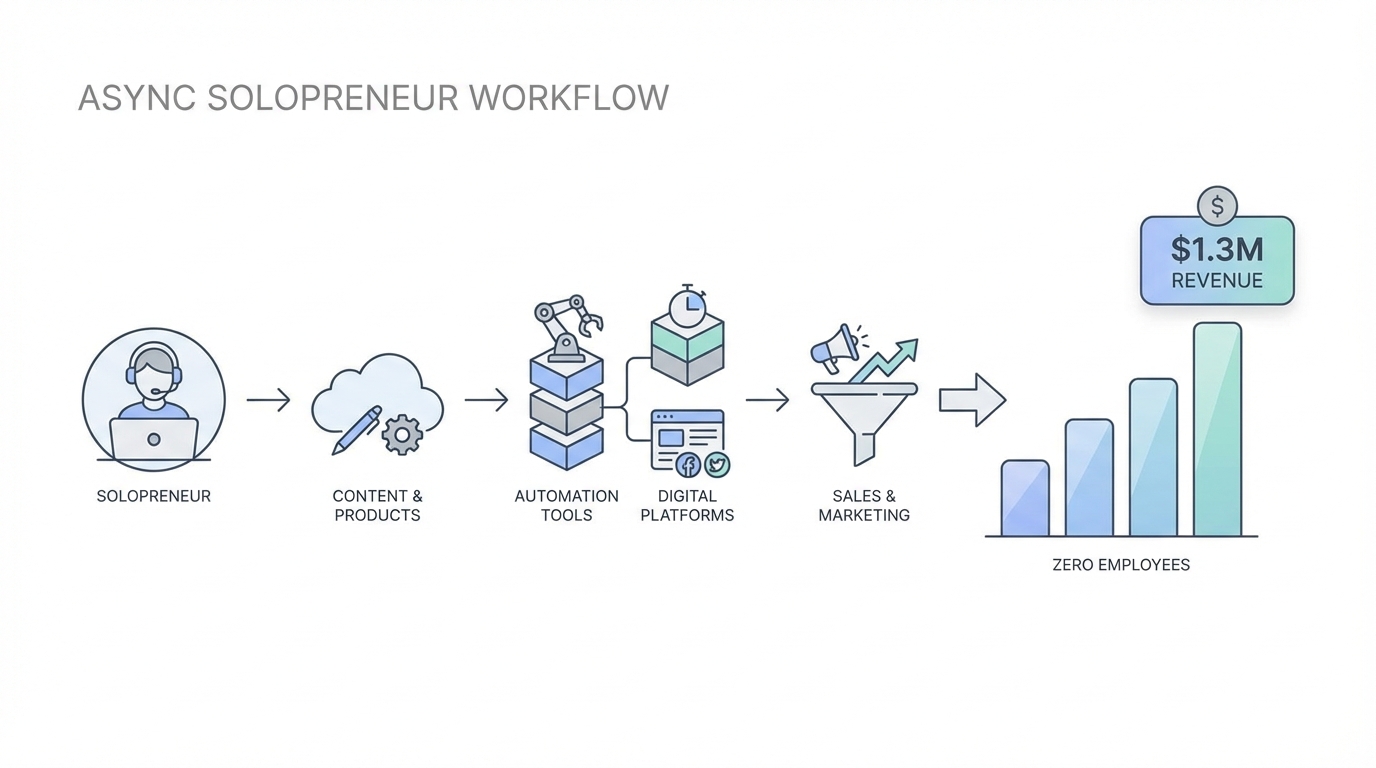
In the traditional world of digital agencies, scaling to seven figures usually requires a sprawling office, a bloated payroll, and a calendar packed with back-to-back Zoom calls. But a new breed of entrepreneur is shattering this model. Brett, the founder of Designjoy, has built a business generating $1.3 million in annual recurring revenue (ARR) with exactly zero employees. He doesn't have a manager, a virtual assistant, or a sales team. He has a workflow. By embracing a productized service model and radical async communication for business, he has created one of the most efficient one-person operations on the planet. This isn't just about working hard; it's about productivity for one-person businesses through extreme architectural simplicity.
The Productized Service: The "Netflix of Design"


The foundation of this $1.3M success story is the productized service model. Most agencies operate on a project-by-project basis, spending weeks on custom proposals, hourly billing, and scope-creep negotiations. Brett flipped the script by offering design as a subscription. For a flat fee of roughly $5,000 per month, clients get unlimited design requests. There are no quotes, no invoices, and no hourly tracking.
This model creates predictable recurring revenue and eliminates the "feast or famine" cycle that plagues most freelancers. According to the MBO Partners State of Independence report, more professionals are shifting toward this model to gain autonomy. Because the service is standardized, the fulfillment process can be optimized to the second. When you learn how to be a solopreneur at this level, you realize that your biggest enemy isn't the competition—it's the friction of administrative overhead. By removing the need to estimate hours, Brett can focus 100% of his energy on the actual output. It is essentially a high-ticket version of the software-as-a-service (SaaS) model, but with human talent as the engine.
Scaling this requires finding the right market fit. Just as Brett identified a gap for high-end landing pages and branding, many modern entrepreneurs use Stormy's AI search to discover niche opportunities and analyze what successful creators are doing across TikTok and YouTube. Having the right discovery tool allows you to see where the demand is before you ever launch your first subscription tier.
The 'No Meetings' Rule: Death to the Zoom Call
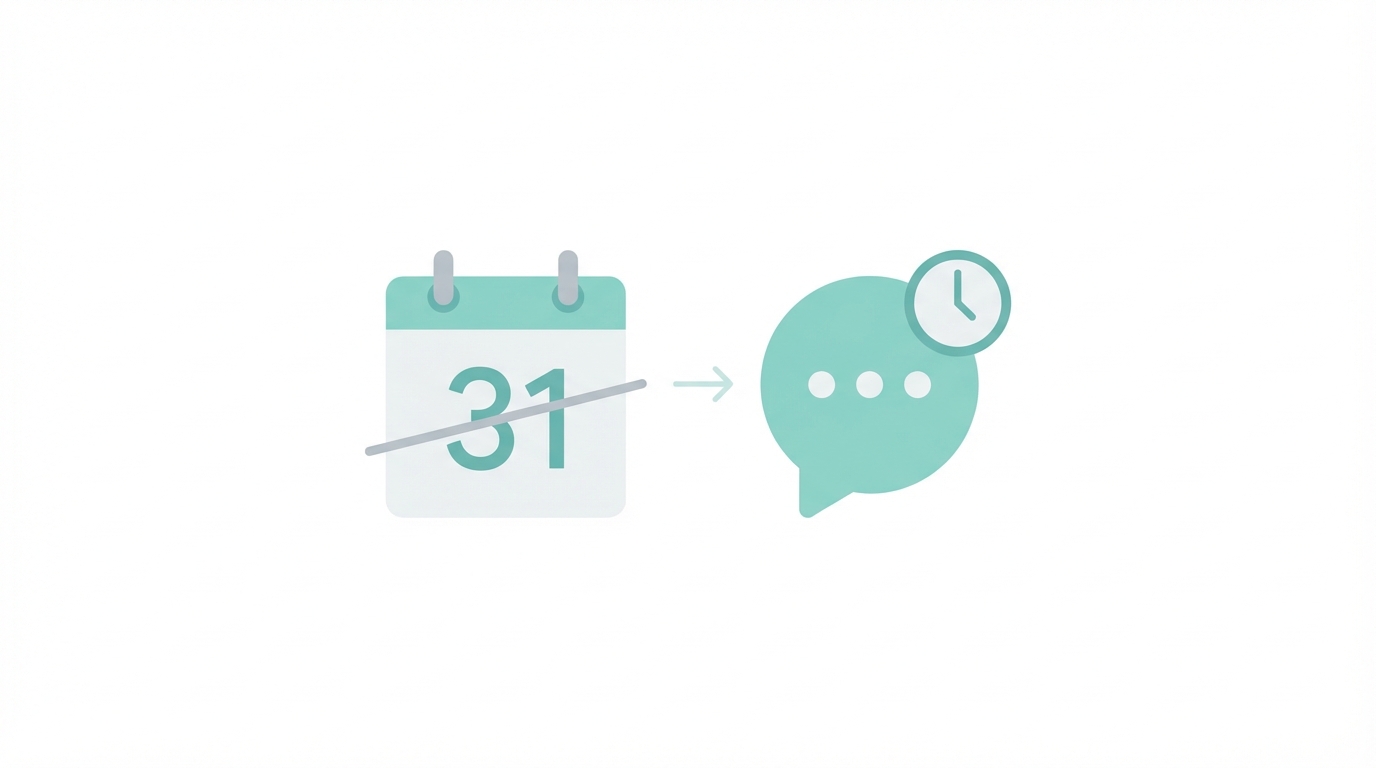
If there is a single "holy grail" of productivity for one-person businesses, it is the total elimination of meetings. Brett’s workflow is almost entirely asynchronous. Once a client is onboarded, there are no weekly syncs, no discovery calls, and no Slack channels filled with "just checking in" messages. All communication happens within the project management tool. This allows for deep work—uninterrupted blocks of 3-4 hours where a solopreneur can achieve a state of flow that is impossible in a corporate environment.
The logic is simple: A 30-minute meeting isn't just 30 minutes. It's the 15 minutes of preparation before, the 15 minutes of recovery after, and the mental fragmentation that occurs when you have to stop a creative task to jump on a call. By moving to async communication for business, you reclaim your most valuable asset—your attention. For clients, this is often a relief; they don't want another meeting on their calendar either. They want the design work finished. Brett’s system proves that high-level professional services can be delivered through a request-queue system rather than a conversational one.
The $176 Tech Stack: Minimalist Power
Many entrepreneurs believe they need complex agency automation tools or expensive enterprise software to scale. Brett runs a million-dollar empire on just $176 per month. His minimalist business tech stack is a masterclass in using free and low-cost tools to their maximum potential. Instead of a custom-built portal, he uses Trello. Instead of a complex CRM, he uses Airtable and the free versions of various utilities.
Here is a breakdown of the core components:
- Figma: For the primary design work and collaboration with clients.
- Webflow: To host the one-page site that serves as the storefront.
- Trello: The central hub where clients drop requests into a queue.
- Stripe: To handle the $5,000/month subscriptions without manual invoicing.
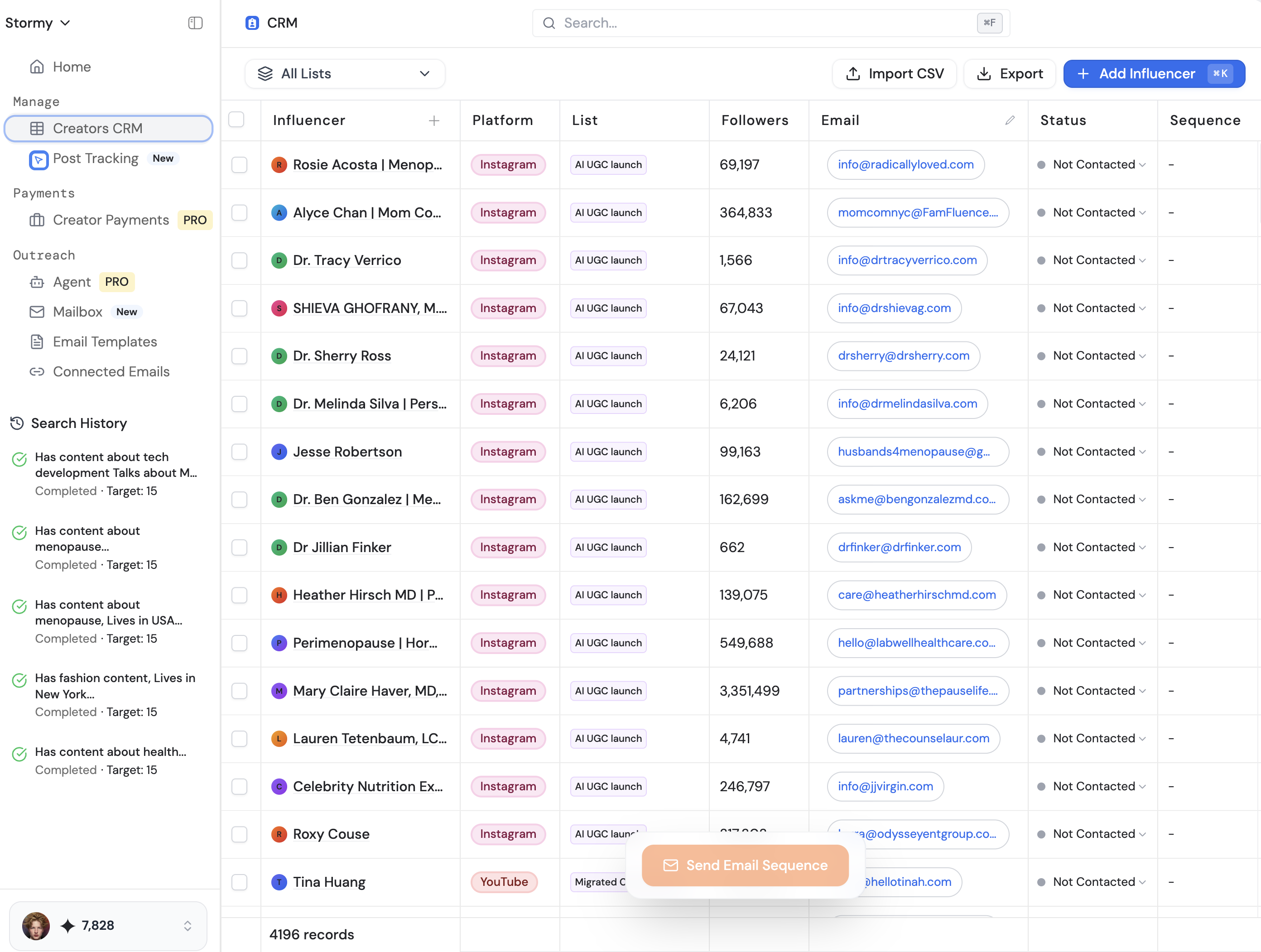
The brilliance of this stack is that it requires almost zero maintenance. There are no servers to manage and no complicated integrations to break. When you are a solo operator, every tool you add is a liability. By sticking to a minimalist business tech stack, you ensure that your time is spent on revenue-generating activities rather than troubleshooting your own internal systems. For those managing creator relationships rather than design requests, Stormy's creator CRM offers a similarly streamlined experience, keeping all collaboration history and deal stages in one unified view without the bloat of traditional CRMs.
Managing 20+ Clients Solo Through Request-Queues
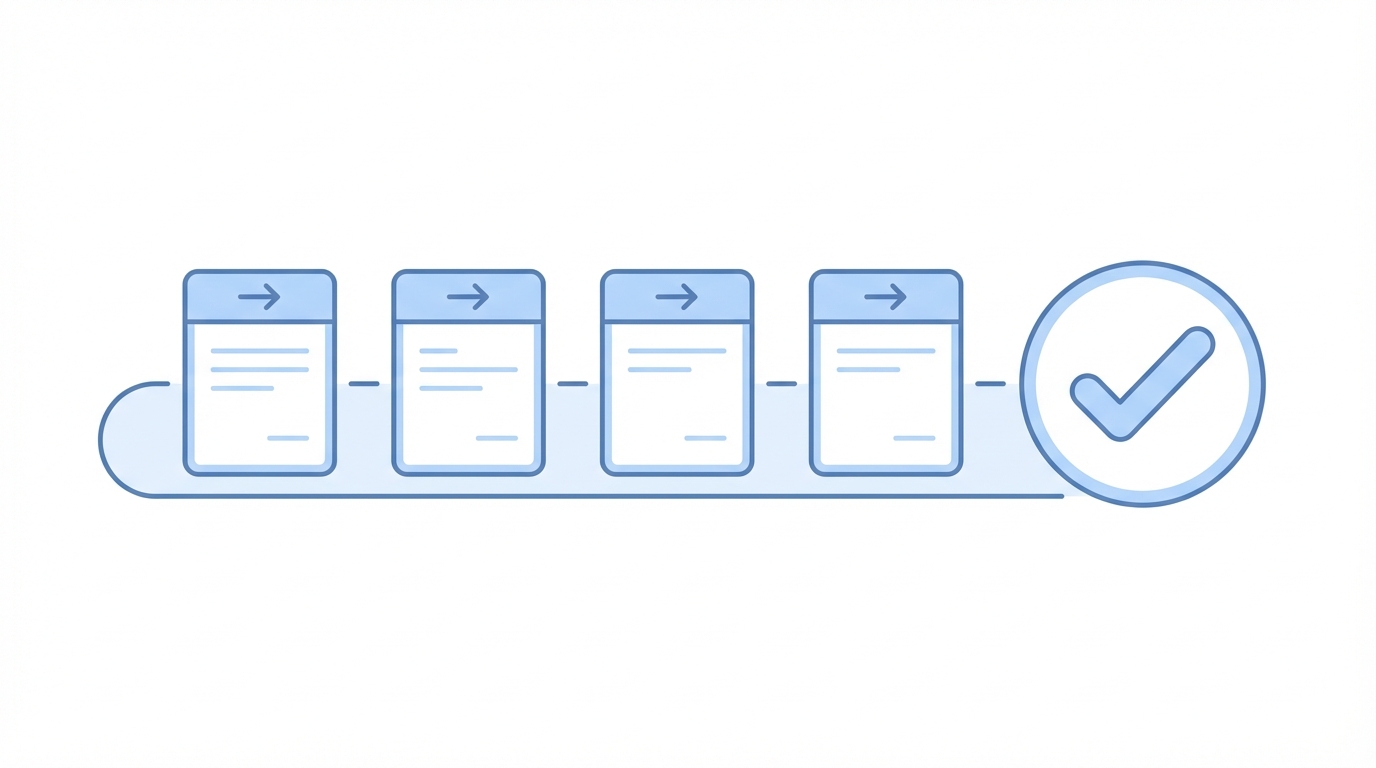
How does one person handle the demands of 20+ high-paying clients simultaneously? The answer lies in the request-queue architecture. Clients are instructed to add their tasks to a "To-Do" column in Trello. Brett works on these requests one by one, typically delivering a turnaround every 24-48 hours. This system manages expectations automatically. Clients know exactly where their request stands in the line, and Brett never has to wonder what he should be working on next.
This approach transforms the agency from a chaotic "reactive" environment into a "predictable" manufacturing line. It is the ultimate form of agency automation tools—not through code, but through process. To maintain this level of volume, you must have an ironclad vetting process. You cannot afford to work with high-friction clients who refuse to follow the async rules. Successful solopreneurs often use Stormy AI for influencer vetting and fake follower detection to vet potential collaborators, ensuring they are working with professional partners who value efficiency and have a track record of high-quality engagement.
The Philosophy of 'Minimally Viable' Launches
One of the most striking aspects of Brett’s journey is how quickly he moves from idea to execution. He built the original Designjoy site on Webflow in a single day. He launched it on Product Hunt immediately. He didn't wait for a perfect brand identity or a complex backend. This "minimally viable" philosophy is a core tenet of how to be a solopreneur in the creator economy.
Brett’s advice is to find what you are fast at and double down on it. He doesn't offer every type of design; he offers the design he can do in his sleep. By nitching down, he ensures that his speed remains a competitive advantage. This speed-to-market allows you to test ideas without the risk of wasting months on a project that doesn't "bite." If a project like his side-venture Scribbbles takes only six hours to launch, a failure is merely a data point, not a financial disaster. This rapid-fire execution is why staying on top of trends on platforms like X/Twitter is essential for lead generation.
Time Management for Solopreneurs: Childcare and High-Output Windows
Contrary to the "hustle culture" narrative of 16-hour days, Brett’s schedule is remarkably balanced. He spends his mornings with his children, not starting work until midday. His actual work window is only 4-5 hours long. However, because those hours are 100% focused and free of meetings, he produces more than a traditional team of five could in a week. This is the true power of productivity for one-person businesses: when you own your time, you don't need a lot of it to be successful.
To support this lifestyle, automation is non-negotiable. While Brett automates his design workflow, many solopreneurs in the marketing space use Stormy's AI outreach to handle the heavy lifting of business development. Instead of manual emailing, you can set up an autonomous AI agent that discovers and contacts creators daily while you sleep or spend time with your family. This allows the business to grow in the background, mirroring Brett’s ability to generate $80,000 a month while still working his 9-to-5 job during the early days.
The Solopreneur Scaling Playbook
- Identify your "Speed Zone": What can you do 10x faster and better than the average professional? This is your product.
- Productize the pricing: Move away from hourly rates and create a "subscription" or "flat-fee" package to ensure predictable revenue.
- Enforce Async Rules: Remove meetings and move all communication to a centralized queue like Trello or Notion.
- Strip the Stack: Use the absolute minimum number of tools. If it costs more than $200/month or requires a developer, rethink it.
- Build in Public: Use platforms like X/Twitter to share your process and generate organic leads.
Conclusion: The Future of the One-Person Empire
Brett’s journey from a 9-to-5 employee to a $1.3M solopreneur is a roadmap for the future of work. By combining a minimalist business tech stack with an uncompromising stance on async communication for business, he has achieved the ultimate entrepreneurial goal: high income with low stress and zero management overhead. The "shooting star" he once feared would dissipate has instead become a stable, life-changing engine of wealth.
Whether you are a designer, a writer, or a marketing consultant, the lesson is clear: Don't build a company; build a system. As the tools for automation and AI continue to evolve, the barrier to becoming a high-paid solopreneur is lower than ever. If you're ready to start tracking your own campaigns and creator collaborations with the same level of precision, explore how Stormy's post tracking can help you monitor your growth and optimize your performance in real-time. The era of the million-dollar solopreneur is here—and it’s entirely asynchronous.