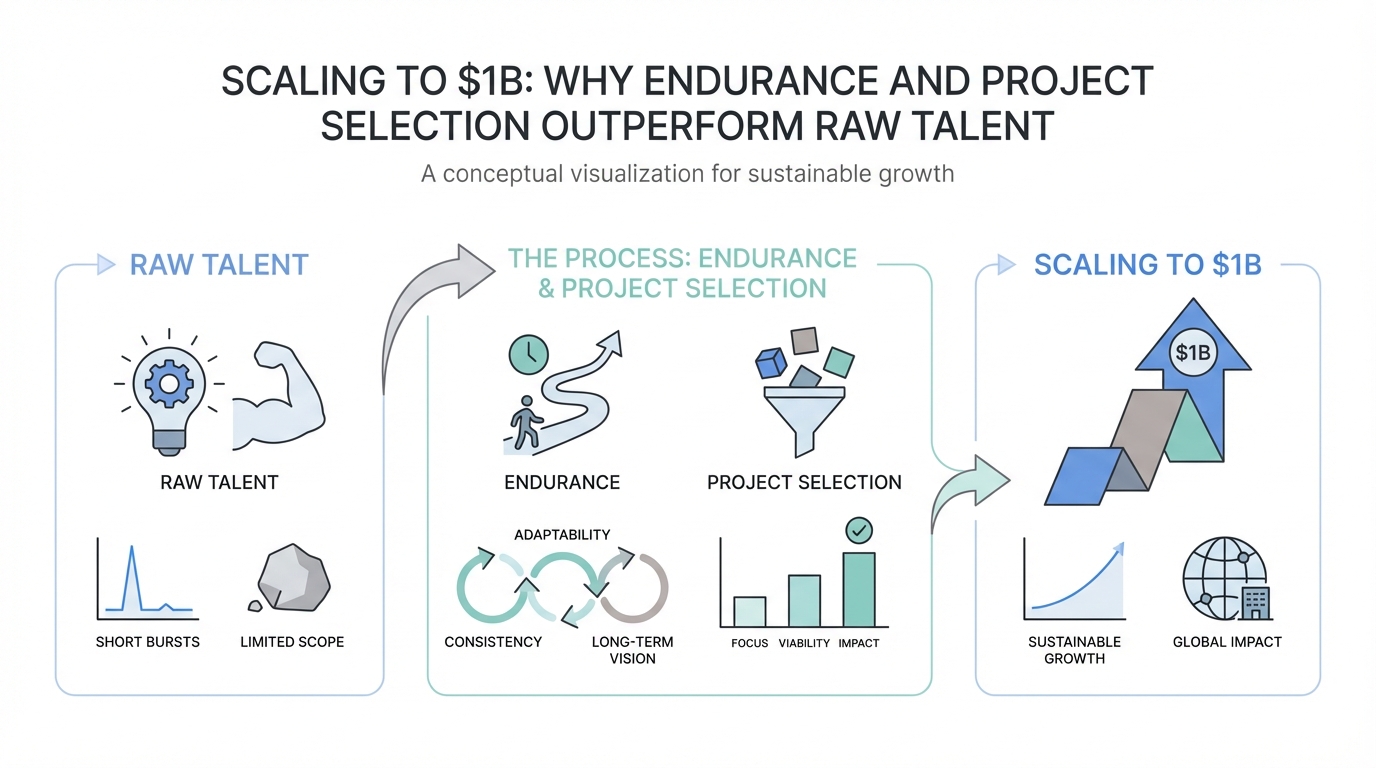
We often treat the journey from a million-dollar startup to a billion-dollar empire as a linear progression of genius. We assume the founder who builds a unicorn must be 100 times smarter, more capable, or more talented than the founder who builds a successful lifestyle business. But the reality, observed from the inner circles of the world’s most successful entrepreneurs, is far more mechanical. The difference between a $100 million exit and a $10 billion legacy isn't always found in a higher IQ; it is found in the variables of project selection, endurance, and the refusal to be 'multiplied by zero.'
The Multiplier Variable: Why Endurance is the Ultimate Competitive Advantage

In the world of mathematics, a gargantuan number is rarely the result of simple addition. It is the result of multiplication. When analyzing Stormy AI, the AI search engine for TikTok, YouTube, and Instagram, and its impact on startup growth stages, you begin to see that success is a set of variables multiplied together: Talent x Market Size x Luck x Endurance. Most founders focus obsessively on the 'Talent' variable, but the highest-leverage variable is often Endurance.
Consider the many founders who exited their companies for $50 million or $150 million. On paper, they are massive successes. However, ten years later, those same companies are often worth $5 billion or more. The founders who reached the billion-dollar mark didn't necessarily have a better initial idea; they simply stayed in the seat longer. They didn't sell early, and they didn't let the fatigue of the grind push them toward an early exit. If you want to scale to a billion, you have to be willing to play the game long after the initial novelty has worn off. This is why tools that help you scale efficiently, such as the ability to use Stormy AI to vet creators and detect engagement fraud to build long-term brand partners, are essential—they reduce the friction that leads to founder burnout.
Avoiding the 'Multiply by Zero' Event: Surmounting Near-Death Moments

Every legendary company has a 'miracle child' story—a moment where the business should have died, but somehow survived. In these moments, the 'Endurance' variable is tested by a Multiply by Zero event. If any part of your business equation becomes zero—zero cash, zero legal standing, zero server uptime—the entire outcome becomes zero, regardless of how high your other variables are.
Take the story of Airbnb. In its early days, the company faced at least five distinct moments where it should have shuttered. Whether it was running out of cash and selling cereal boxes to survive or navigating complex regulatory hurdles that threatened to ban the service entirely, the founders had to perform 'miracles' to stay in the game. To survive these Meta Ads Manager spending spikes or inventory planning disasters, billion-dollar founders develop a psychopathic level of detail-orientation. They don't just hope for survival; they hustle to secure bridge loans, mortgage their homes, or guarantee advertising spends they don't yet have the cash to cover just to seal a retail deal.
Project Selection 101: The James Clear Approach to Market Upside
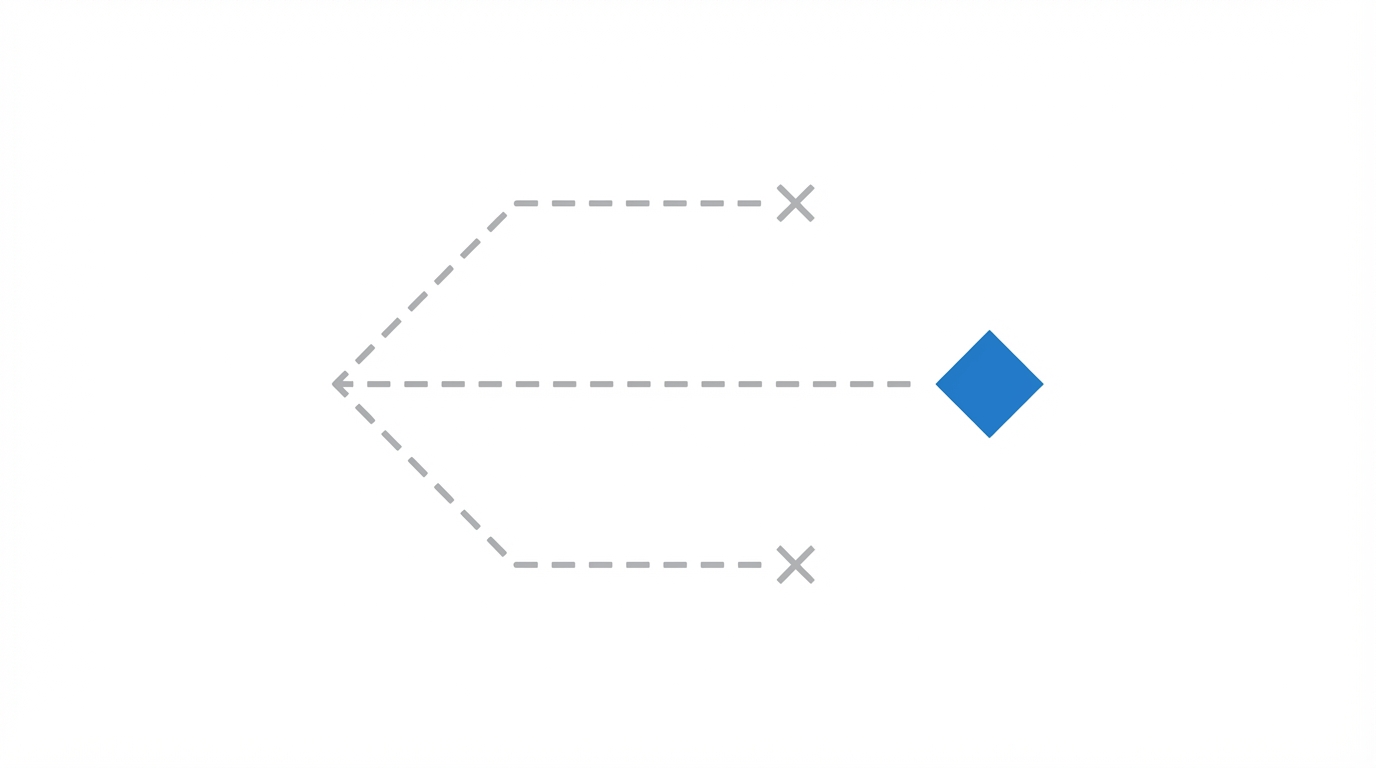
One of the most overlooked billion dollar company secrets is that your ceiling is often determined before you even start. This is known as Project Selection. You can be the most talented operator in the world, but if you are operating in a tiny market, your 'Talent' variable is being multiplied by a very small 'Market' variable.
James Clear, the author of Atomic Habits, provides a masterclass in this. Before his book became the best-selling title in the world, he initially considered writing it about 'deliberate practice.' While the insight was the same, his total addressable market strategy changed everything. He realized that while few people care about 'deliberate practice,' millions of people care about breaking bad habits. By shifting the framing of his project to a larger market need, he ensured his work had the highest possible upside. When you use the Stormy AI search engine to find matching influencers through natural-language prompts to see what topics are trending, you are engaging in this same form of project selection—choosing the mountain that actually has a summit in the clouds.
Intensity as a Strategy: Living in the Details
There is a common misconception that the CEO of a billion-dollar company is a high-level visionary who doesn't get their hands dirty. The opposite is often true. Founders like Matt Ishbia, who built United Wholesale Mortgage into a powerhouse, believe that intensity is the strategy. Ishbia’s approach involves 'walking the floor' and solving three problems every single day.
By solving three bottlenecks a day, 365 days a year, a founder removes over 1,000 obstacles to growth annually. This isn't just management; it's a relentless pursuit of friction. Whether it's an IT bottleneck or a sales process glitch, the 'billion-dollar mindset' requires you to get off your seat and fix the problem on the spot. Even in the world of paid acquisition, you cannot just set a Google Ads campaign and forget it; the winners are the ones tweaking the copy, adjusting the bids, and obsessing over the landing page conversion rates every single day.
The Three Little Pigs Theory: Why You Can’t Top Success with Sequels

Walt Disney once famously said, "You can't top pigs with pigs." This was a reference to his hit short film, The Three Little Pigs. When distributors begged him for a sequel, he realized that true growth doesn't come from doing the same thing again—it comes from business reinvention. If you try to top a massive success with a mere sequel, you are often met with diminishing returns.
The most successful founders are Reinventors. They don't just exploit their current niche; they are willing to go back to the bottom of the mountain and start over as a 'white belt.' This is what separates those who build one successful company from those who build a legacy. For example, Joe Gebbia, after his massive success with Airbnb, transitioned into a role as a design leader for national-scale projects, including re-imagining government user experiences. He took his 'design genius' and applied it to a completely different, much larger 'market'—the United States government. They didn't just want more 'pigs' (more travel startups); they wanted a new category of impact.
Culture is an Action Word: Training for Goosebumps
Most companies treat 'culture' as a list of bland values on a breakroom wall. Billion-dollar companies treat culture as an action. Jesse Cole of the Savannah Bananas demonstrates this by 'plussing' the experience. To train his players to give fans a world-class show, he first gives the players a world-class show. From police escorts for 1,200-foot bus rides to fireworks for employee orientations, he creates 'goosebumps' for his team so they know exactly what they are expected to deliver to the customer.
This level of investment doesn't always show up on an Excel sheet ROI immediately. You can’t easily track the dollar value of a firework display in Apple Search Ads metrics. However, the long-term ROI of a team that actually cares is immeasurable. When your employees feel like they are part of a once-in-a-lifetime ride, they give a once-in-a-lifetime effort. This is particularly true when you are working with external partners; using LinkedIn professional discovery to find partners who align with your cultural intensity is a key growth lever.
The White Belt Mindset: Relearning the World Through AI
Finally, the secret to staying relevant as you scale is maintaining a beginner’s mindset. We see this with founders like Henrique Dubugras of Brex. Even after building a multi-billion dollar company, he is often found 'tinkering' with new technologies like Claude or GPT, relearning how to code through the lens of AI. He isn't resting on his laurels as a 'master'; he is becoming a 'white belt' in a new industry.
This willingness to be 'bad' at something new is the only way to catch the next wave of innovation. Whether it's learning to use Stormy AI to set up an autonomous AI agent that outreaches to creators daily or pivoting your entire product roadmap toward AI, the founders who win are the ones who aren't afraid to go back to the bottom of the mountain. They realize that their past success is not a shield, but a platform that allows them to take bigger risks on their next 'Project Selection.'
Conclusion: Your Billion-Dollar Playbook
Scaling to $1B is not about a single stroke of luck or a moment of unmatched brilliance. It is a founder mindset that prioritizes endurance over early exits, intensity in the details over high-level abstraction, and reinvention over repetition. To apply these lessons to your own journey:
- Audit Your Project Selection: Are you in a market that has the TAM to support your ambitions?
- Solve Three Problems a Day: Remove the bottlenecks that are acting as 'multipliers of zero' in your growth equation.
- Stay in the Game: Understand that endurance is a variable you can control, and it is often the one that determines the final valuation.
- Don't Top Pigs with Pigs: Be willing to reinvent your product and yourself as the market evolves.
The path to a billion is paved with small, intense actions and the grit to stay in the seat when everyone else is looking for the exit. If you’re ready to start scaling your reach and finding the right creators to grow with you, Stormy AI’s creator CRM and tracking suite is waiting for you to start building your own 'miracle child' success story.