In the fast-moving landscape of 2026, the traditional six-week creative production cycle is a relic of the past. Today, performance marketing is no longer about the big-budget production; it is about high-volume programmatic creative testing. With the rise of generative video and AI-powered actors, brands are now able to produce winning user-generated content (UGC) in hours rather than months. If your brand isn't leveraging AI UGC ads to dominate platforms like TikTok Shop and Meta, you are likely overpaying for customer acquisition.
The 'Millisecond Rule': Scroll-Stopping in 2026
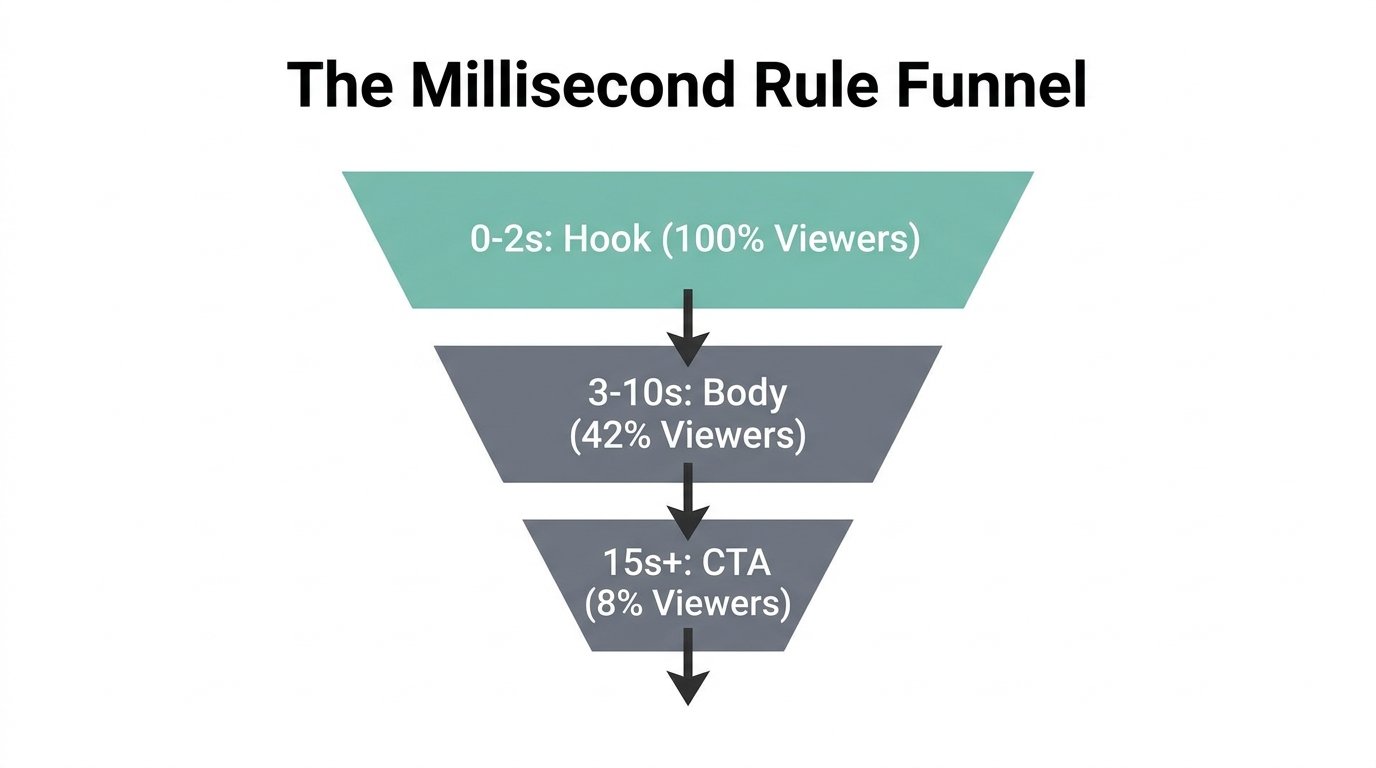
By 2026, consumer attention spans have fragmented further. The 'Millisecond Rule' states that a user decides whether to scroll past an ad in the first fraction of a second. This means your visual hook is just as critical as your script. According to Meta's creative research, visual hooks now account for roughly 50% of an ad's performance. To win, you must test dozens of visual variations for every single script.
To combat this, leading marketers use AI hook generators to draft variations of the first three seconds. Instead of one hook, they generate ten. For example, a language learning app might test a standard "Why I gave up on Spanish" hook against a more aggressive "Stop wasting time on boring apps" hook. This programmatic creative testing allows you to identify the winning combination before scaling your budget. While you focus on the creative strategy, Stormy AI can monitor your Meta Ads Manager in the background, flagging which hook variations are yielding the lowest CPC in real-time.
"The era of the 'idea guy' has arrived. If you can dream of a visual hook, AI can render it in minutes, turning your creative department into a high-speed lab."
The AI UGC Workflow: From Script to Scale
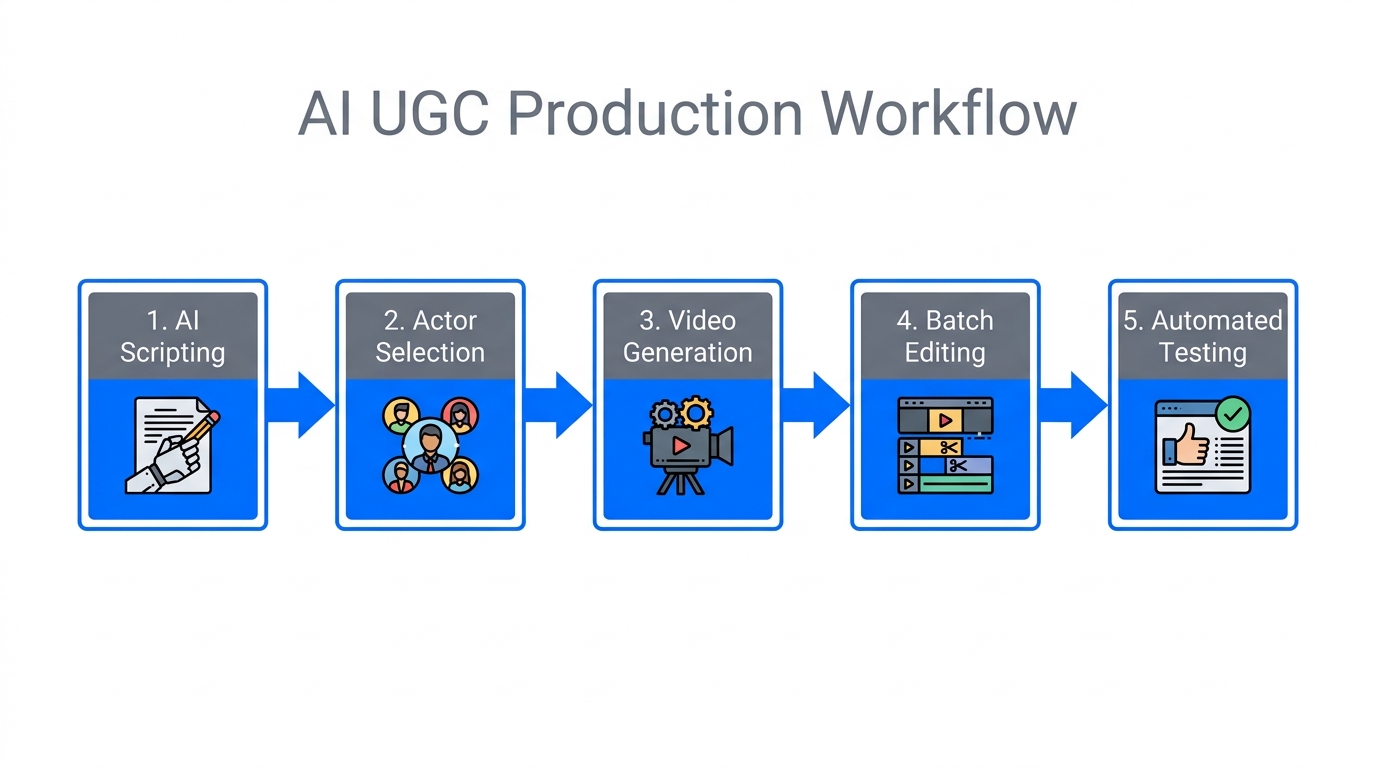
Hiring creators, shipping products, and waiting for edits is too slow for 2026. The new workflow utilizes AI actors—digital avatars from platforms like HeyGen or Synthesia that look, speak, and move exactly like real humans. These actors can be placed in various environments like a gym, a lifestyle setting, or even a professional podcast studio to lend instant authority to your brand.
Step 1: Scripting with Hook Variations
Start by describing your product to an AI writing tool. Generate 5-10 different hooks. Use tools like Octane AI to gather zero-party data from your customers to understand their exact pain points, then feed those into your script generator. A winning script for 2026 often follows a problem-solution-proof-CTA format.
Step 2: Selecting Your AI Actor
In 2026, you have access to thousands of diverse AI actors. You can filter by age, gender, skin tone, and even specific situations. For a supplement brand, you might select an actor in a gym setting. For a B2B SaaS, a podcast-style ad where the actor speaks into a professional microphone often performs best because it mimics organic, high-value content found on YouTube.
| UGC Style | Best For | Conversion Lift |
|---|---|---|
| Podcast Style | Expertise & Authority | +22% |
| Gym/Active | Health & Wellness | +18% |
| Kitchen/Home | Lifestyle & Household | +15% |
Realistic vs. Unrealistic: The Creative A/B Test
A major trend in 2026 performance marketing is the battle between hyper-realistic AI and "unrealistic" scroll-stoppers. While highly realistic actors build trust, sometimes an absurdist visual—like a talking gorilla or a Star Wars-themed selfie—stops the scroll better than a human. Modern brands test both: a realistic testimonial vs. a "weird" AI-generated visual created with Midjourney to see which captures more attention.
This is where Meta ads automation shines. By running these variations through an Advantage+ shopping campaign, you let the algorithm decide which creative to serve to which audience. However, managing these dozens of assets is a heavy operational lift. Stormy AI acts as your teammate here, importing your campaign data into a dynamic spreadsheet and creating charts that show exactly which creative "style" is winning across platforms. This prevents you from wasting budget on "unrealistic" ads that have high CTR but zero conversion.
Integrating AI Ads with TikTok Shop
The shortest path from impression to purchase in 2026 is TikTok Shop. When you pair AI UGC ads with the TikTok Shop checkout, you remove every bit of friction. A user sees an AI actor demonstrating your product, clicks a link, and buys within the app using their stored payment info via Stripe or Apple Pay.
Successful brands are seeing a 4x increase in conversion rates when using assisted shopping agents. In fact, shoppers who engage with an AI agent or a highly targeted UGC ad convert at roughly 12.3%, compared to just 3.1% for unassisted traffic. To stay ahead, use your AI ecommerce employee to track creator affiliate posts on TikTok. Stormy AI can wake up every morning, check which affiliate posts are trending, and send follow-up emails to those creators to offer them higher commissions or exclusive deals.
"2026 isn't about the size of your team; it's about the depth of your AI integration. A single marketer with an AI agent can outperform a 20-person agency."
Reducing Production Cycles from 6 Weeks to 1 Week
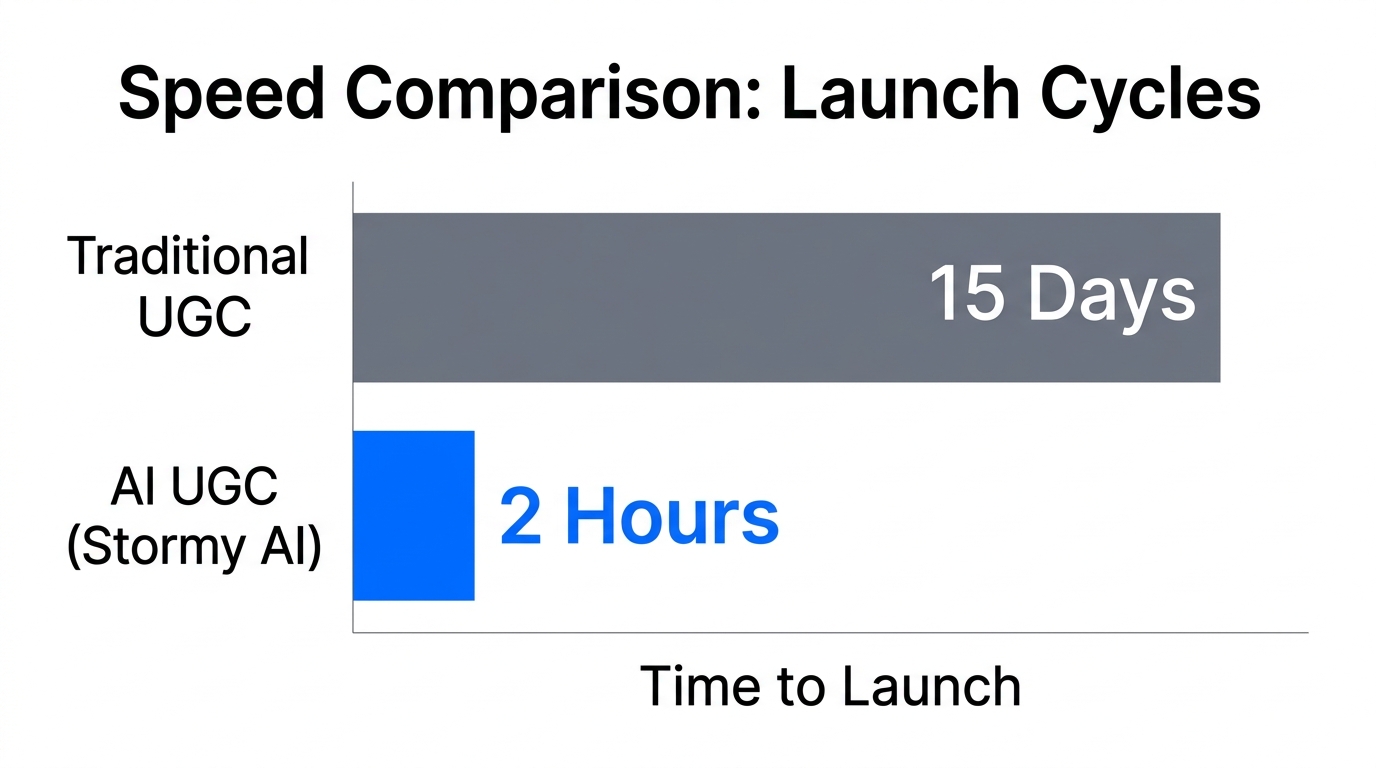
Traditional video production is the bottleneck of ecommerce. Between scouting talent, filming, and editing, you’re looking at over a month of lead time. AI video for ecommerce reduces this to less than seven days. This speed allows for rapid-fire testing: you can launch a trend-based ad while the trend is still peaking on Google Trends, rather than catching the tail end.
When you use AI video for ecommerce, you aren't just saving time; you're saving capital. The cost of a digital worker or an AI ad generator is a fraction of a human production crew. Comparing the 2026 economics:
| Metric | Traditional Production | AI UGC Production |
|---|---|---|
| Turnaround Time | 6 Weeks | 1 Week |
| Cost per Ad | $2,500 - $5,000 | $50 - $100 |
| Scalability | Limited by human hours | Infinite |
The Role of Your AI Ecommerce Employee
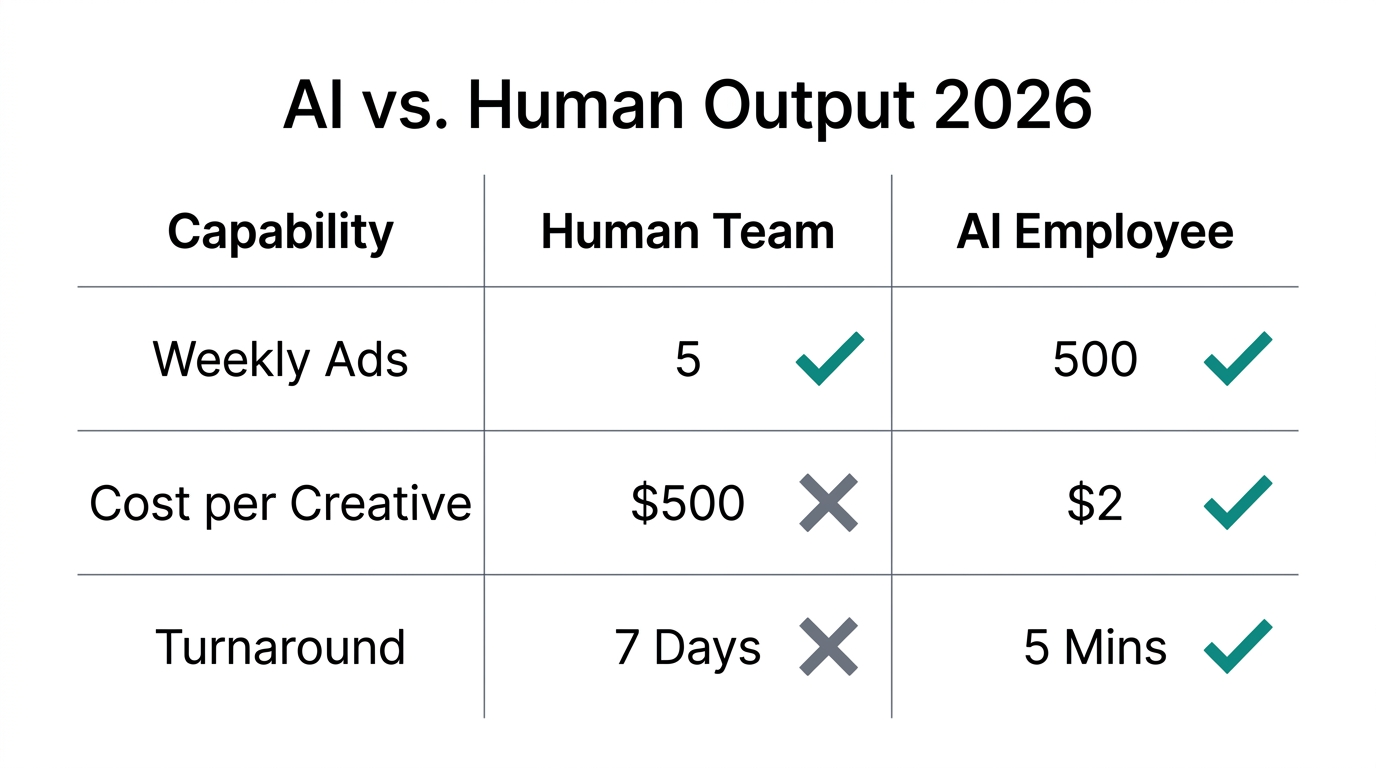
Scaling high-volume ads requires a lot of back-office maintenance. This is where Stormy AI becomes essential. While your AI creative tools are churning out videos, Stormy is the autonomous teammate that makes sure the operation doesn't break. Here’s how an AI employee handles the load:
- Inventory Pulse: Stormy monitors your Shopify stock levels. If an AI UGC ad goes viral and stock drops below a certain threshold, Stormy flags it and can even draft a reorder email to your supplier.
- Performance Reporting: Stormy pulls spend data from Meta and TikTok Ads, matches it against revenue from Amazon or Shopify, and drops a weekly P&L report into your inbox.
- Customer Support Triage: If an ad generates a flood of comments or questions, Stormy can work with tools like Gorgias to triage those tickets and draft on-brand replies.
The 2026 Performance Playbook
To dominate in 2026, you must stop thinking of AI as a tool and start thinking of it as a workforce. By combining the 'Millisecond Rule' with high-volume AI actor production, you can test more, learn faster, and scale harder than ever before. Shorten your production cycles, integrate your creative with TikTok Shop, and let an AI ecommerce employee like Stormy AI handle the messy monitoring and reporting in the background.
The winners of 2026 are those who focus on the strategy and the 'Big Idea' while letting autonomous agents execute the repetitive tasks. Start today by testing your first AI UGC actor and experience the power of programmatic creative at scale.