As we navigate the hyper-competitive landscape of 2026, the global ecommerce market is projected to reach a staggering $6.88 trillion, according to Quantumrun. For high-volume sellers, the challenge is no longer just about getting eyes on a product; it is about managing the logistical chaos of multi-channel operations. With 84% of businesses now ranking AI-driven automation as their top technology priority, as noted by Shopify/EMARKETER, the ability to orchestrate fulfillment across TikTok Shop and Amazon FBA is the difference between scaling and stagnating. This is where an AI ecommerce employee like Stormy AI comes in, working alongside powerhouses like ShipStation to manage the messy back office while you focus on brand growth.
The 2026 Multi-Channel Landscape
The Retail & Ecommerce vertical now accounts for over 35% of the logistics automation market, which is expected to hit $67.14 billion this year, per Coherent Market Insights. Sellers are no longer choosing between platforms; they are everywhere at once. However, each channel comes with its own set of rigid fulfillment protocols. TikTok Shop, for instance, has introduced strict delivery windows and signature requirements to maintain its viral social commerce status, while Amazon continues to tighten the screws on FBA inventory health and FBM (Fulfilled by Merchant) performance metrics.
"2026 is the year of AI enablement. We are moving from manual dashboards to autonomous orchestration where the software is the decision-maker, not just the printer."
To keep up, merchants are leaning on Agentic AI. Unlike the static rules of the past, modern systems like ShipStation and Stormy AI evaluate carrier performance in real-time, switching routes if a hub is congested and flagging stockout risks before they happen. While ShipStation prints the labels, Stormy AI acts as the teammate who monitors the entire operation—tracking creator affiliate posts, following up with suppliers on late shipments, and ensuring your spreadsheet stays updated with live ROAS from TikTok Ads.
Configuring ShipStation for TikTok Shop Integration
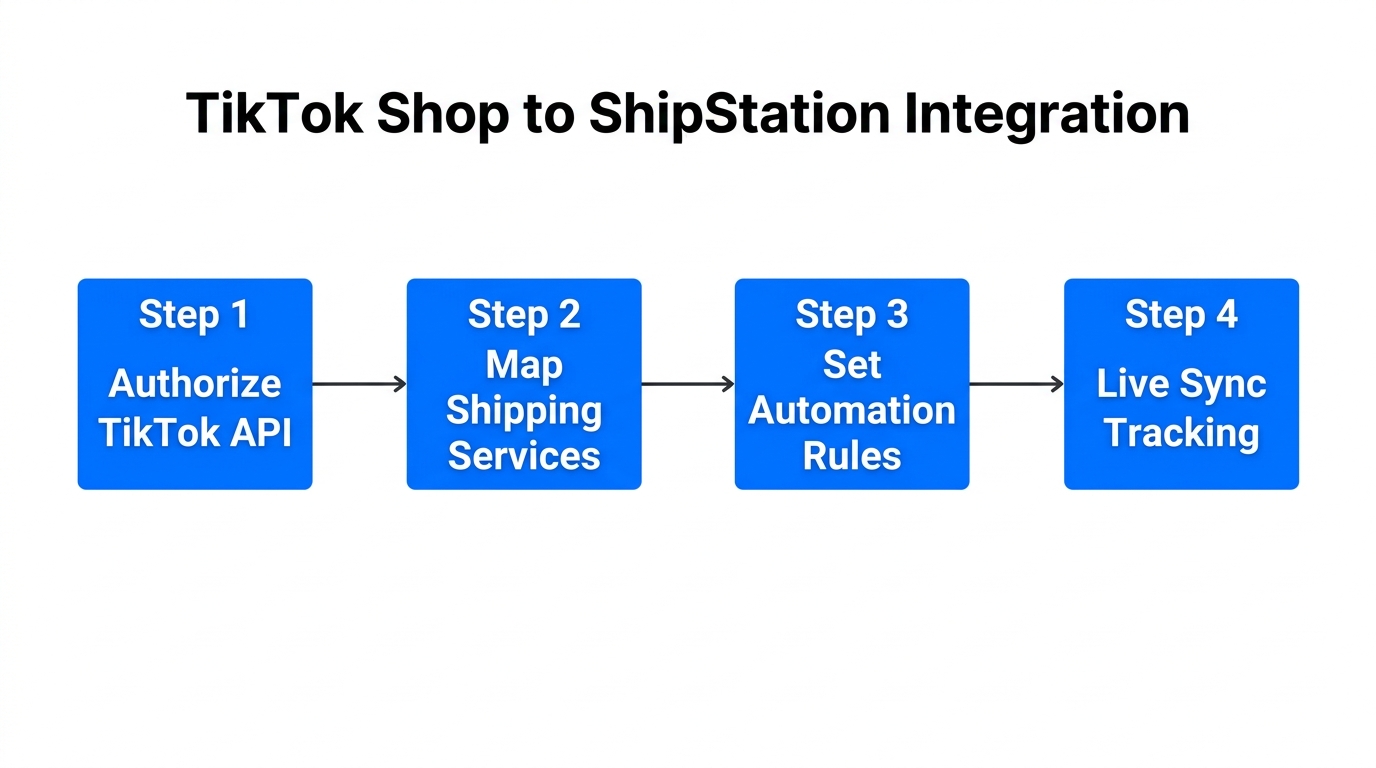
The ShipStation TikTok Shop integration is a cornerstone for any brand leveraging social commerce in 2026. However, TikTok's unique requirements—specifically around signature confirmation for high-value items and rapid fulfillment SLAs—can be a manual nightmare if not automated. Using the "Ask ShipStation" natural language automation engine, you can now build complex rules using plain English prompts.
Step 1: Automating Signature Confirmation
TikTok Shop often penalizes sellers for missing delivery evidence on high-ticket orders. In your ShipStation Automation tab, you can use the AI prompt box to type: "Flag all TikTok Shop orders over $100 for signature confirmation and assign them to UPS Ground." This removes the human error of a warehouse worker forgetting to check a box during a peak rush. [Source: UPS Shipping Services]
Step 2: Managing TikTok's Fulfillment SLAs
TikTok's algorithm prioritizes shops with the fastest 'Ship-to-Carrier' times. You should set up a high-priority "TikTok Express" view in your orders grid. By filtering for Store -> TikTok Shop and Order Date -> Last 24 Hours, you ensure these orders are batched first. While ShipStation handles the labels, Stormy AI can monitor this queue; if a TikTok order stays in 'Awaiting Shipment' for more than 12 hours, Stormy can alert your team via Slack or Telegram to prevent an algorithm penalty.
Managing the Amazon FBA vs. Merchant Fulfilled (FBM) Split
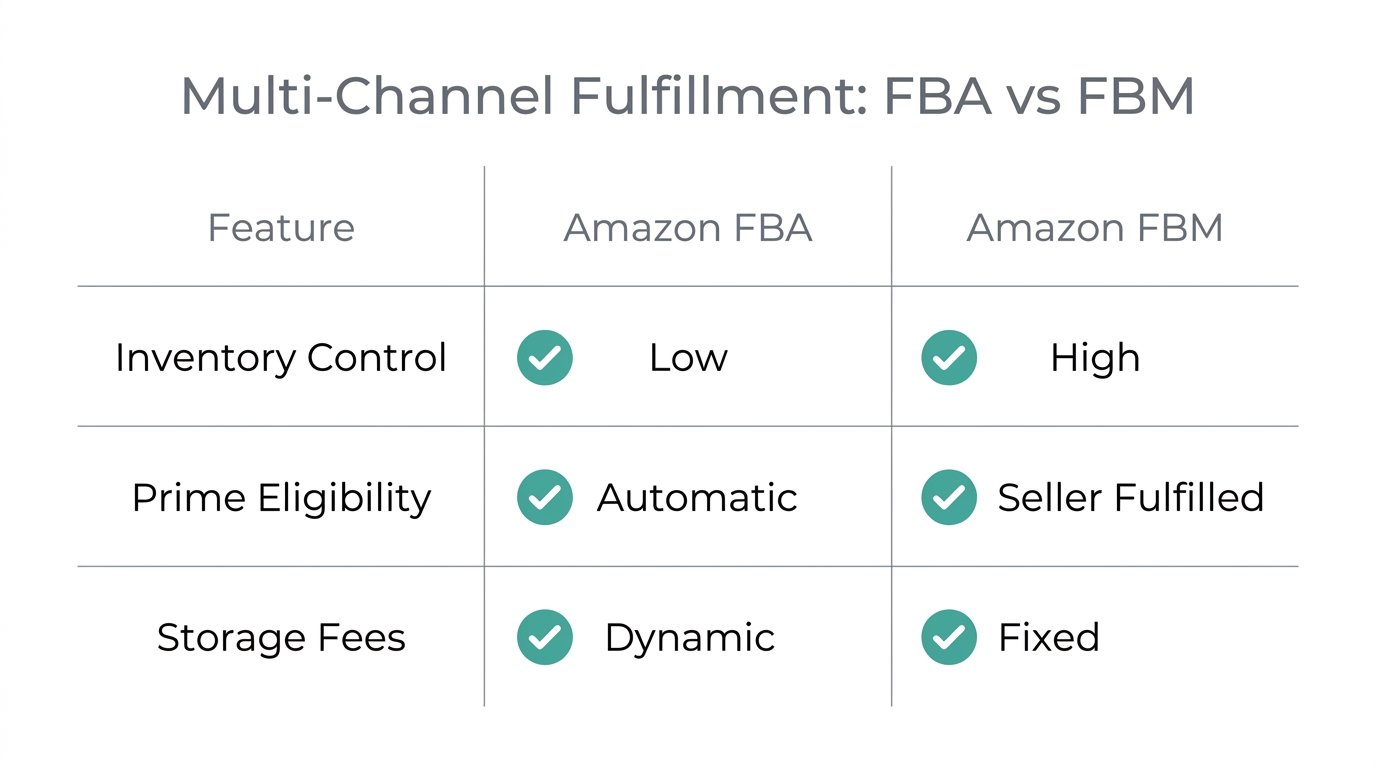
In 2026, the most resilient brands use a hybrid model. Amazon FBA is great for Prime-eligible scaling, but FBM (Fulfilled by Merchant) is your safety net against FBA warehouse delays or inventory limits. ShipStation allows for automated inventory-linked logic that can dynamically toggle between these two based on stock levels.
By connecting your Shopify store and Amazon Seller Central to ShipStation, you can create a rule that states: If SKU Quantity in FBA < 10 AND Merchant Warehouse Quantity > 0 -> Route to FBM. This prevents the dreaded "Out of Stock" status on your listing while you wait for an inbound shipment to clear Amazon’s docks.
Platforms like Veeqo offer free shipping and inventory tools for Amazon-heavy sellers, but for those operating across 3+ channels (Shopify, TikTok, Amazon, and Walmart), ShipStation's advanced automation rules remain the gold standard. Inventory resilience is the primary hedge against lost revenue in 2026.
"The 'Delivery Expectations Gap' is real—60% of consumers want free 2-day shipping, but only 35% of retailers can meet it without losing money. Automation is the only way to close that gap."
ShipStation Intelligence: Identifying Delivery Risks Early
One of the most significant updates this year was the launch of ShipStation Intelligence. This agentic AI layer identifies "delivery risks"—such as weather-related hub delays or regional carrier strikes—before you even print the label. This predictive data is pulled from sources like Calcurates to provide hyper-accurate Estimated Delivery Dates (EDD).
If a major winter storm is hitting the FedEx hub in Memphis, ShipStation Intelligence will flag orders routed through that zone. You can then automatically switch those shipments to UPS or USPS Ground Advantage to ensure the 2-day window is met. This proactive approach has helped brands like Go For Zero reduce fulfillment time by 40% and double their order volume without increasing headcount, as documented in ShipStation's case studies.
Optimizing the Batch-Printing Workflow for High-Volume SKUs
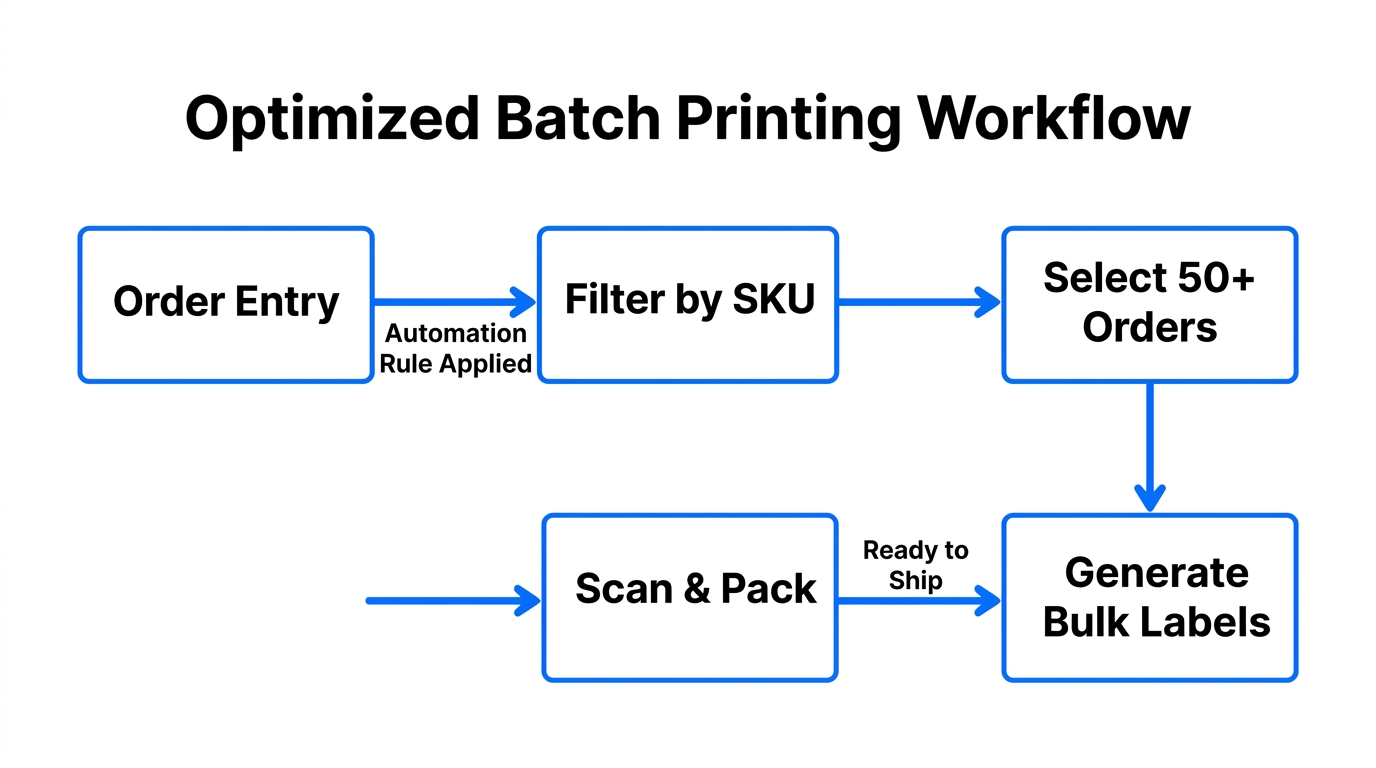
For brands with viral TikTok products, fulfillment speed is a physical bottleneck. ShipStation practitioners report that creating a "Fast Line" batch-printing view can reduce warehouse walking time by 22%. The logic is simple: group orders by the same SKU so that a picker can grab 50 units of the same item in one trip rather than criss-crossing the warehouse.
| Strategy | Metric Improved | 2026 Performance Boost |
|---|---|---|
| Batch by SKU | Walking Time | 22% Reduction |
| AI Rate Shopping | Shipping Cost | 10-20% Savings |
| SMS Tracking | WISMO Tickets | 30% Reduction |
| Branded Returns | Upsell Rate | 112% Increase |
When you use ShipStation's bulk print feature (up to 500 labels at once), you aren't just saving clicks—you're optimizing physical movement. High-volume merchants also benefit from using a dedicated Windows "Print Server" with ShipStation Connect to stabilize the queue for Rollo printers on Mac OS, avoiding the common driver glitches often discussed in practitioner forums.
Managing the 'Auctane Tax' and Carrier Fees
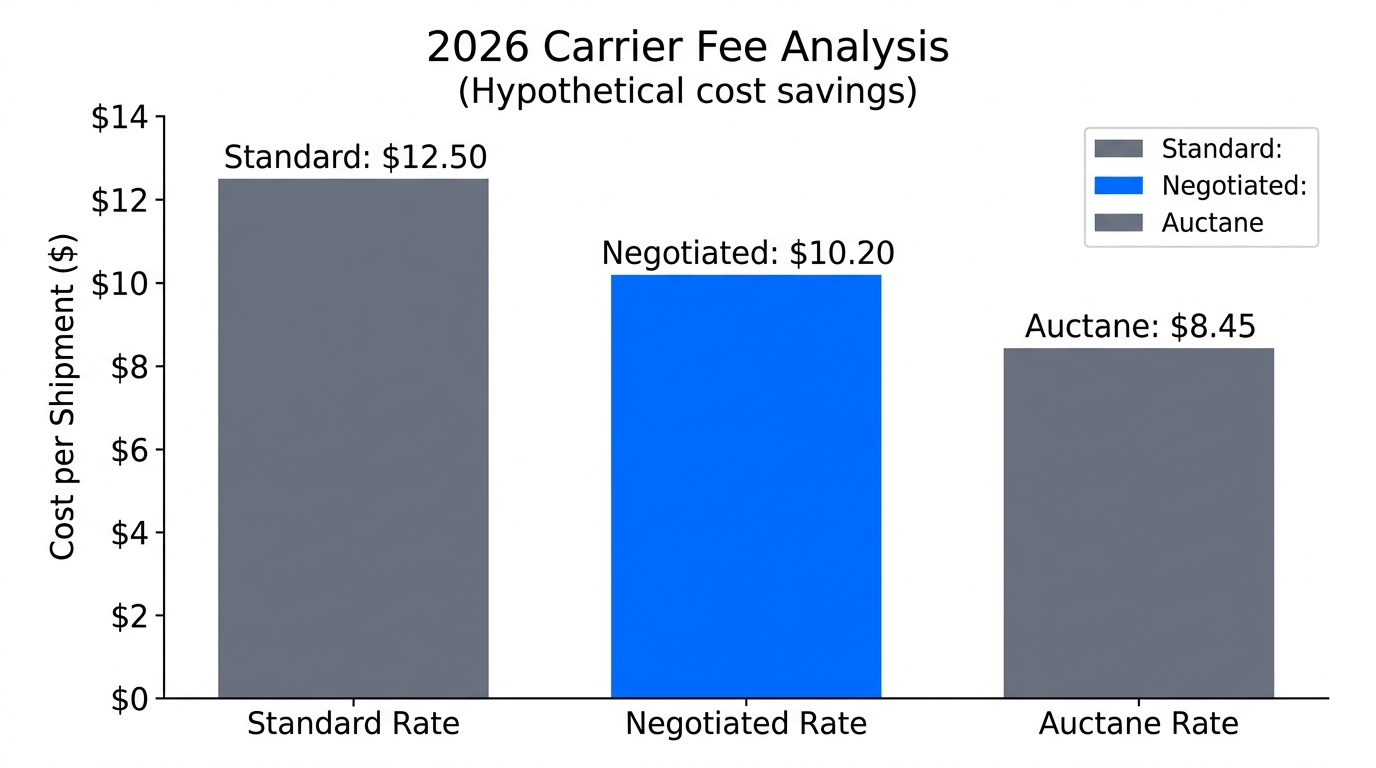
While the automation is powerful, the 2026 pricing landscape has its pain points. The industry often refers to the "Auctane Tax"—ShipStation’s shift toward charging a $0.08 per label fee if you use your own negotiated carrier rates instead of their "ShipStation Carriers" rates. Furthermore, API access is now fenced behind the Scale (Gold) Tier, which starts at $99/mo (and up to $155+ depending on volume).
For high-volume shippers, the workaround is negotiating fee-waivers as part of enterprise-level contracts. If you are shipping more than 7,500 packages a month, you shouldn't be paying the standard per-label fee. Use the ShipStation Pricing comparison feature in the API to prove your ROI to stakeholders and justify the upgrade to the Scale tier. If you find the costs prohibitive, developer-friendly tools like Shippo offer a cleaner API without the heavy subscription paywalls, though they lack the robust automation rules ShipStation provides.
"Intelligence is the new decision layer. It’s no longer about who has the cheapest label, but who has the most resilient data-driven workflow."
Why Stormy AI is Your Fulfillment Teammate
Running a high-volume Amazon FBA and TikTok Shop operation involves more than just printing labels. You need someone watching the stock levels, the creator commissions, and the supplier lead times. Stormy AI acts as an autonomous ecommerce employee that sits on top of your stack.
- Supplier Follow-up: If a shipment to an Amazon warehouse is delayed, Stormy tracks the tracking number and politely emails the supplier for an update.
- Creator CRM: While you scale TikTok Shop, Stormy discovers new creators, drafts personalized outreach, and tracks which affiliate posts are driving the most revenue.
- Inventory Pulse: Stormy monitors your Shopify inventory and warns you if the current TikTok viral trend is going to lead to a stockout in 72 hours.
Conclusion: The 2026 Automation Playbook
Scaling in 2026 requires more than a good product; it requires automated order management that can handle the complexity of multi-channel fulfillment. By integrating ShipStation with your TikTok Shop and Amazon accounts, and employing an AI employee like Stormy AI to handle the messy back-office tasks, you can achieve a level of efficiency that was previously only possible for enterprise-level brands.
Ready to automate the boring parts of your ecommerce business? Hire Stormy AI today and start running your store with an autonomous teammate who never sleeps.