In 2026, the complexity of running a multi-channel DTC brand has reached an inflection point. It is no longer enough to simply 'be' on Shopify, Amazon FBA, and TikTok Shop; the modern ecommerce winner is the brand that can synchronize inventory, demand, and fulfillment across these silos without manual intervention. With the rise of agentic commerce—where AI agents shop on behalf of consumers—being 'In Stock' and offering 'Fast Shipping' are now the primary drivers of discovery, outweighing traditional SEO. To keep up, lean teams are moving away from reactive dashboards and toward autonomous agents. An AI ecommerce employee like Stormy AI now handles the messy back-office inventory monitoring, keeping spreadsheets updated and following up with suppliers while you focus on the brand vision.
The 2026 Multi-Channel Landscape: Preventing the Overselling Trap
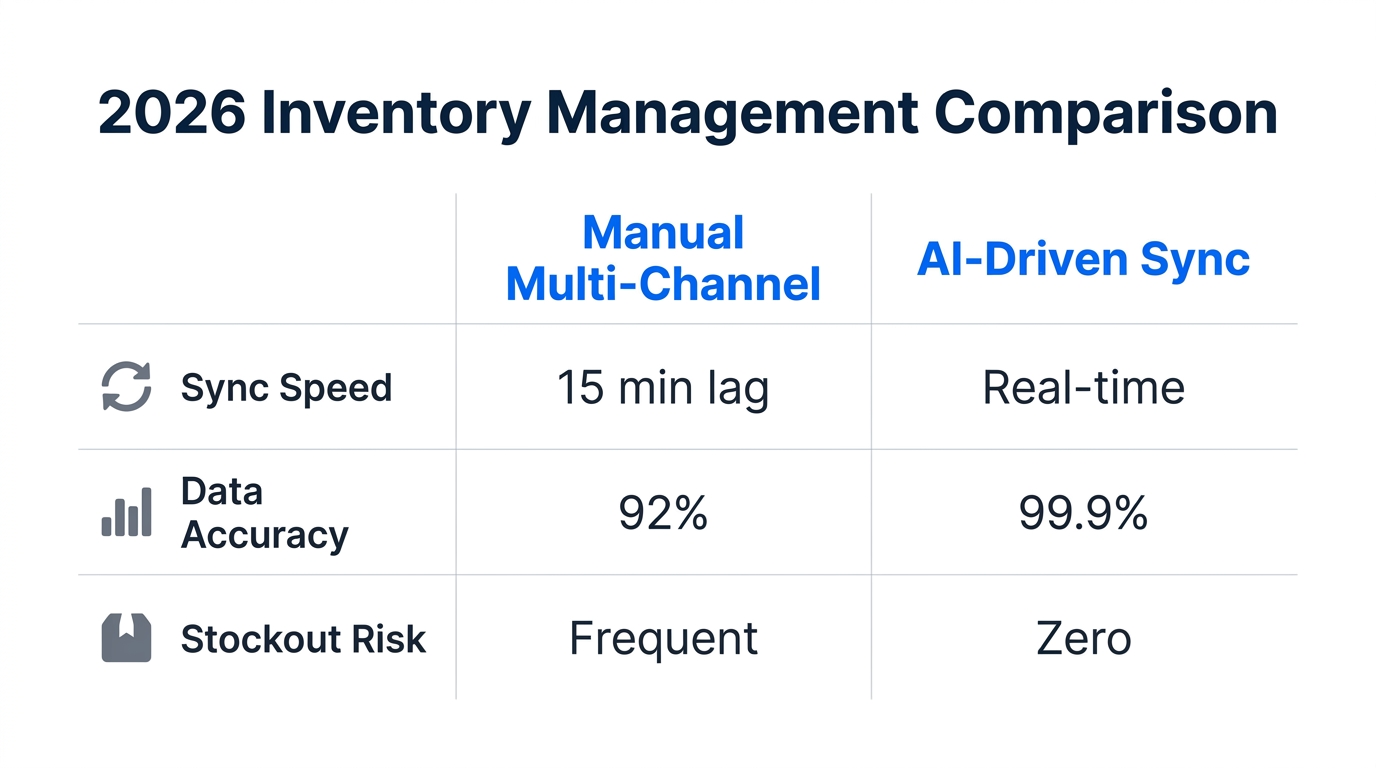
The global AI in supply chain market is projected to reach $13.81 billion in 2026, reflecting a massive shift in how retailers manage their stock (Precedence Research). For brands scaling quickly, the biggest risk isn't a lack of sales—it's overselling. A viral TikTok video can deplete 1,000 units in minutes, and if your Amazon FBA and Shopify inventory aren't synced in real-time, you face suppressed listings and account health penalties.
In 2026, tools like Sumtracker have become the industry standard for real-time sync. Known as the 'multi-channel workhorse,' Sumtracker specializes in maintaining inventory integrity across non-Shopify channels. Meanwhile, Cin7 Omni provides the enterprise-level depth required for brands managing complex warehouse logic and EDI connections. By employing Stormy AI to monitor these platforms, you can ensure that inventory levels are adjusted across every marketplace the second a sale occurs, preventing the dreaded 'ghost SKU' scenario.
Automating Bundles and Real-Time Deductions for Flash Sales
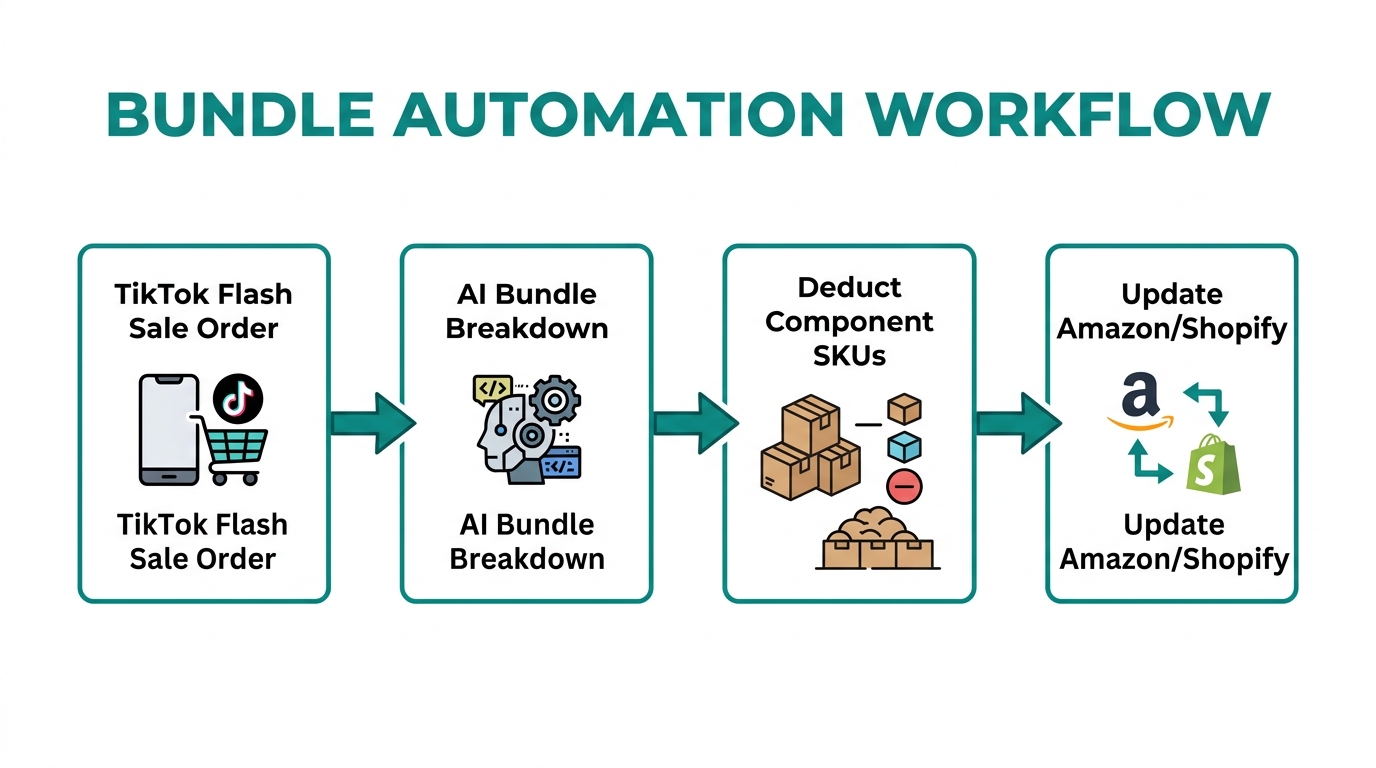
Social marketplaces thrive on high-volume flash sales. In 2026, the tiktok shop inventory sync requires more than just a basic API connection; it requires 'idempotent' architecture. Shopify's latest GraphQL API updates have introduced mandatory @idempotent directives to prevent double-adjustments caused by network lag during high-traffic events. This is critical when selling bundles—where one SKU (a 'Starter Kit') might pull from three different component SKUs.
When a flash sale hits, Stormy AI acts as a proactive monitor. It tracks real-time sentiment on social platforms and, using a Sense-Plan-Execute workflow, detects a potential surge *before* it reflects in your sales reports. If a specific SKU's mentions jump by 20%, Stormy can wake up, check your Cogsy or Prediko forecasting models, and automatically draft a PO for your supplier if the predicted stockout date is within the lead time buffer.
"The difference between winners and losers in 2026 is scaling AI beyond 'pilot purgatory' and into enterprise-wide autonomous operations."
| Platform | Best For | Key 2026 Feature |
|---|---|---|
| Sumtracker | Multi-channel Sync | Real-time bundle deductions across Amazon & TikTok. |
| Cin7 Omni | B2B & Complex Logistics | Native EDI syncing with global manufacturers. |
| Prediko | Production Planning | AI-driven raw material forecasting and PO automation. |
| Cogsy | Profit Optimization | Restock planning based on GMV and margin, not just units. |
Shopify EDI Integration: The 2026 'Renaissance Edition'
The Shopify Winter 2026 Renaissance Edition marked a historic shift by introducing native B2B Electronic Data Interchange (EDI) syncing. This allows Shopify Plus merchants to sync wholesale purchase orders directly into the Shopify Admin as draft orders, bypassing expensive third-party middleware. For amazon fba automation, this means your manufacturer can update shipment statuses that flow directly through Shopify and into your Amazon Seller Central account via native integrations.
This deep integration has led to a 4.1x increase in reorder frequency for B2B merchants (TechnologyChecker). By removing the friction between the factory floor and the digital storefront, brands are running leaner safety stocks. However, this lean approach requires constant vigilance. Stormy AI monitors these EDI feeds 24/7, escalating issues to a human only when a supplier is consistently late or when a 'Lead Time Variance' exceeds safe thresholds.
Case Study: How Chiikawa Market Scaled to 5x GMV
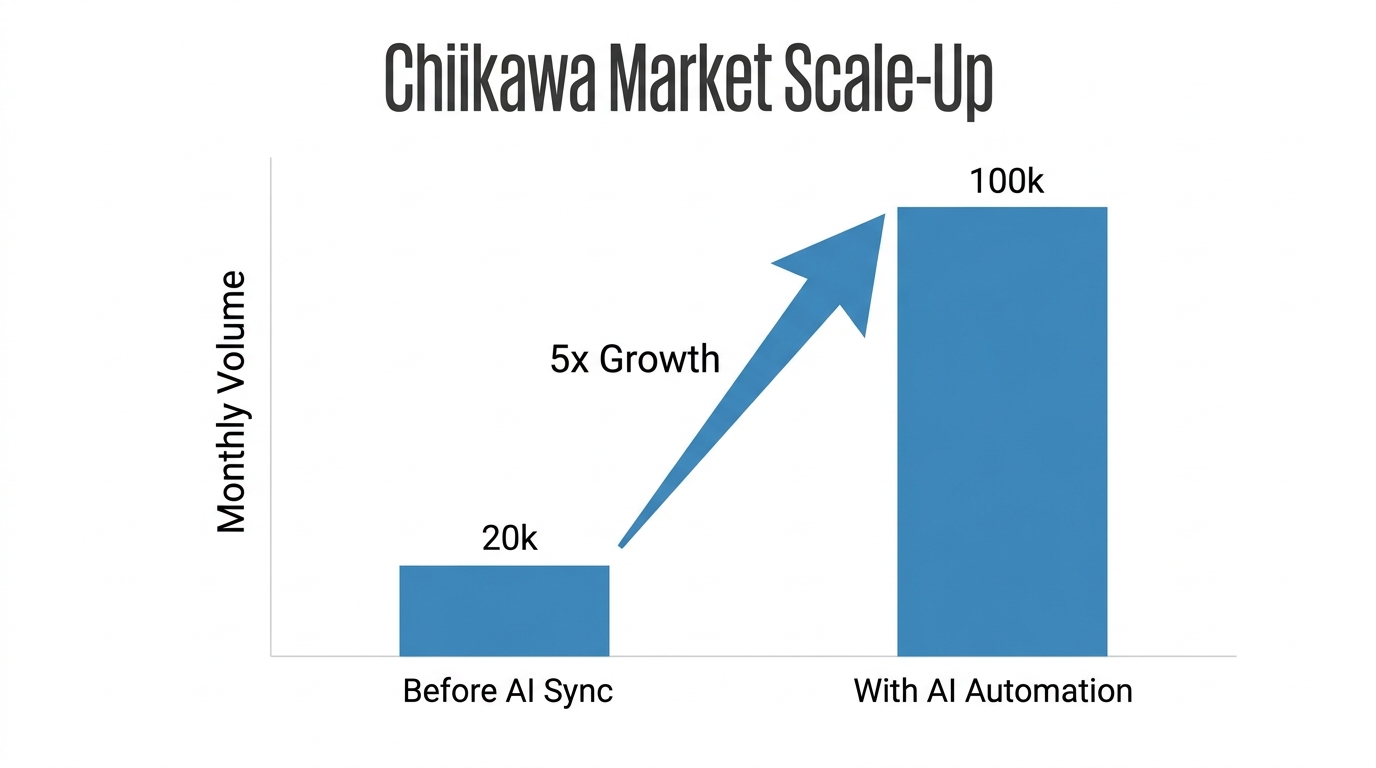
The most compelling proof of AI-driven multi-channel growth comes from brands like Chiikawa Market. By integrating AI to analyze three years of historical sales data alongside real-time warehouse management system (WMS) triggers, they achieved 5x GMV growth without a single fulfillment bottleneck or server crash (Shopify Case Study). They moved from static 'Min/Max' reorder points to adaptive 'Floating' points that adjusted based on social trends and weather patterns.
Similarly, the fashion retailer Incu used AI to automate reordering, resulting in a 300% YoY sales boost by ensuring high-demand items never hit a stockout state. These brands aren't just using software; they are building Active Data Strategies where sentiment analysis from TikTok and Instagram is fed directly into their multi-channel inventory software reorder logic.
Managing the 2048 Variant Limit and Ending 'Ghost SKUs'
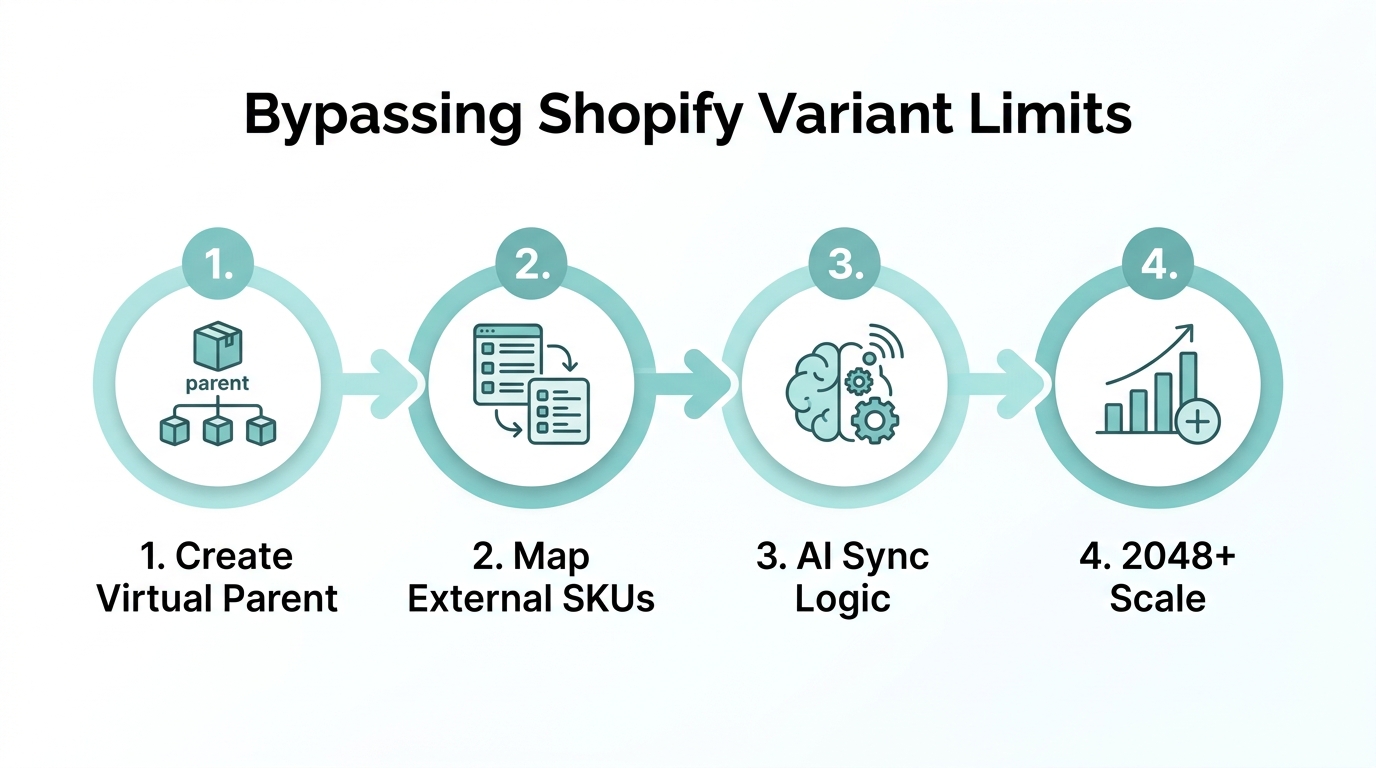
One of the most significant technical updates in 2026 was Shopify officially retiring the legacy 100-variant limit in favor of a 2,048 variant limit per product (Shopify Help Center). This has effectively eliminated the need for complex 'ghost SKU' workarounds for industries like footwear, apparel, and hardware.
However, more variants mean more complexity. Managing 2,000+ variants across TikTok Shop and Amazon requires a robust ecommerce multi-channel growth strategy. You can now use Stormy AI to scaffold internal apps that monitor these variants. For example, you can ask Stormy: "Build an app to alert my Slack when regional warehouse A is 20% lower than regional warehouse B on all size-large variants." Stormy generates the code via Shopify Functions, ensuring your regional stock is balanced before an AI agent tries to buy it.
"AI is like a 'co-founder' for merchants... it knows everything about their business and proactively tells them what to prioritize." — Harley Finkelstein, Shopify President
The 2026 AI Inventory Playbook: Step-by-Step
To implement an amazon fba automation and TikTok sync strategy that actually scales, follow this three-stage playbook used by top-tier 2026 merchants:
- Connect the Stack: Integrate your Shopify Admin with Sumtracker for marketplace sync and Cin7 Omni for manufacturer EDI.
- Deploy Stormy AI: Give Stormy AI access to your inbox, Shopify Flow, and your inventory spreadsheets. Stormy will begin monitoring lead times and supplier performance.
- Set 'Pulse' Triggers: Use Sidekick Pulse (Shopify's proactive AI monitor) to identify demand spikes on social channels. Link these triggers to your reorder logic.
- Automate the PO: Configure a rule: "If predicted stockout date < lead time + 5 days, have Stormy AI generate a PO and email the supplier."
- Audit & Escalate: Every Friday, Stormy generates a polished XLSX report summarizing what changed, highlighting risks, and flagging any supplier delays that need human intervention.
Conclusion: Building a Resilient Back Office
Scaling a multi-channel brand in 2026 is no longer about working harder; it’s about deploying smarter agents. By combining the tiktok shop inventory sync capabilities of Sumtracker, the EDI power of Cin7, and the autonomous execution of Stormy AI, you can run a global operation with a lean team. AI-driven forecasting achieves 90%+ accuracy compared to the 70% average of manual methods (Medium), freeing up hundreds of thousands of dollars in working capital. Don't let your back office become a bottleneck—let your AI employee handle the spreadsheets while you build the future of commerce.