In 2026, the barrier between a side hustle and a global brand has officially dissolved. We have entered the era of the "Billion-Dollar Solopreneur," a phenomenon predicted by tech leaders like Sam Altman where a single operator uses autonomous agents to run an entire enterprise. According to data from SoloBusinessHub, there are now 29.8 million solopreneurs in the U.S. alone, contributing a staggering $1.7 trillion to the economy. The secret to this explosive growth isn't just working harder; it is the orchestration of an AI Creative Factory.
For ecommerce founders, the messiest part of the back office has always been creative production. In previous years, you needed a fleet of creators, a studio, and weeks of editing to find one winning ad. In 2026, that entire pipeline is automated. By the end of this tutorial, you will know how to use Poppy AI for trend analysis and Creatify AI to generate hundreds of high-converting UGC variations without ever picking up a camera.
The Shift to Agentic Commerce in 2026
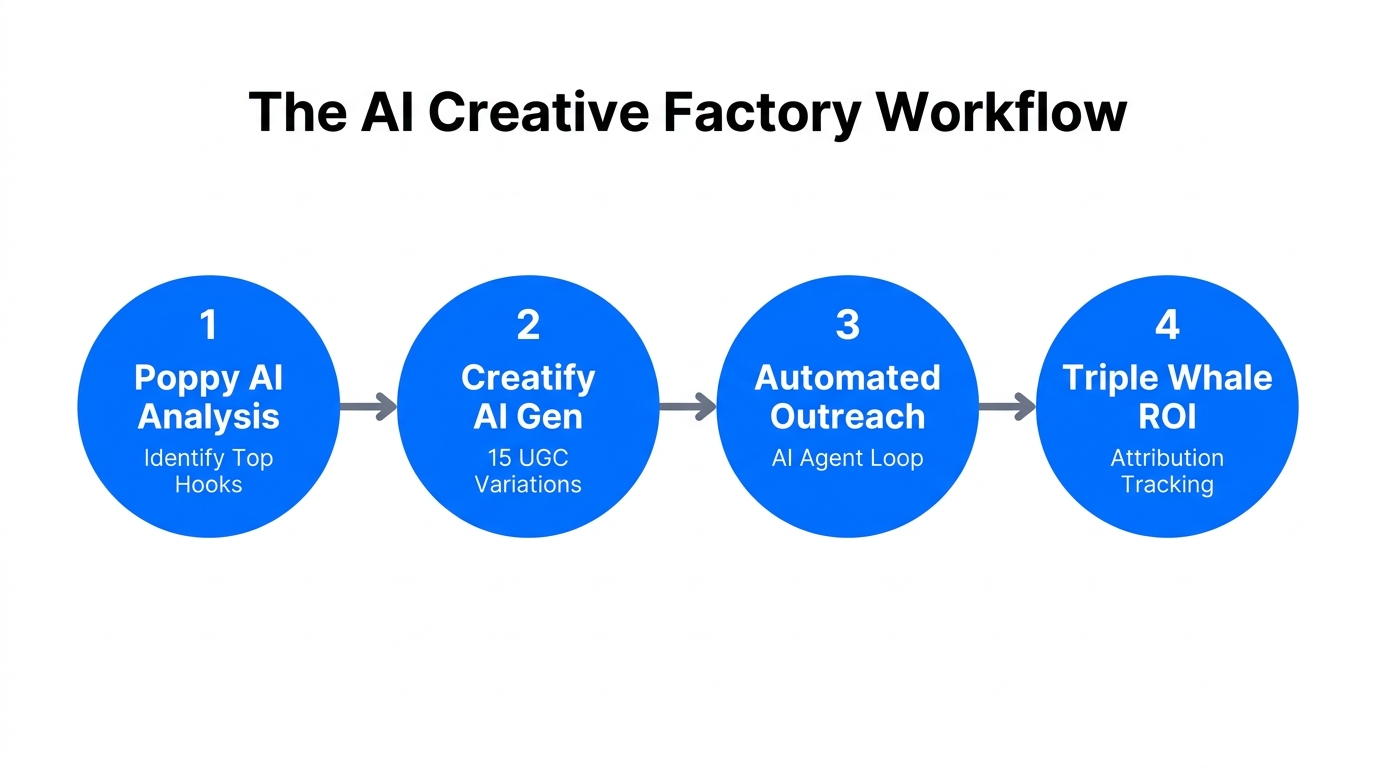
The global AI in ecommerce market has hit $9.9 billion this year, driven by a shift from simple automation to "Agentic Commerce." As noted by Commercetools, AI agents are no longer just recommending products; they are transacting, negotiating, and creating content autonomously. For the solo merchant, this means your focus must move from performing tasks to managing the "Agentic Stack."
While you focus on the big picture, an AI ecommerce employee like Stormy AI handles the repetitive backend operations—monitoring inventory across Shopify and Amazon, and flagging stockout risks before your ads scale too far.
"The first billion-dollar solopreneur will emerge this year, made possible by autonomous customer service and agentic creative factories."
Step 1: Analyzing Viral Hooks with Poppy AI
The success of TikTok Ads and Amazon video listings depends entirely on the first three seconds. Traditionally, you would spend hours scrolling through the TikTok Creative Center to find what works. In 2026, we use Poppy AI to do the heavy lifting.
The Poppy AI Workflow
- Identify the Sentiment Gap: Use Helium 10 to find competitor products with 3-star reviews. Copy the text of what customers "hate."
- Prompt Poppy: Feed those complaints into Poppy AI's visual canvas. Ask it to generate 5 "Problem/Solution" hooks that directly address those pain points.
- Analyze Viral Patterns: Poppy scans real-time viral videos to identify trending visual motifs—such as "ASMR unboxing" or "green screen reaction" styles—and suggests how to integrate them into your script.
By starting with data-backed hooks, you ensure that your AI-generated creative is grounded in human psychology and market demand, avoiding the "AI slop" that often leads to consumer backlash.
Step 2: From URL to 15 UGC Video Variations
Once you have your hooks, it is time to build the actual ads. This is where Creatify AI and Arcads.ai come into play. These tools allow you to transform a Shopify product URL into a fully-realized video ad featuring hyper-realistic AI actors.
The Step-by-Step Playbook
- Import the Product: Paste your product URL into the Creatify AI dashboard. The tool will automatically scrape your images, pricing, and features.
- Select Your Persona: Choose an AI avatar that matches your target demographic. For example, if you are selling to "middle-aged moms," select an avatar that looks and sounds relatable.
- Apply the Hooks: Paste the hooks you generated in Poppy AI into the script editor. Pro tip: Generate 3 scripts for every 1 hook to test different tones (e.g., educational vs. high-energy).
- Batch Export: Hit generate. For approximately 20 credits (about $10-$15 per video depending on your plan), you will have 15 different variations ready for testing.
| Feature | Creatify AI | Arcads.ai | Traditional Agency |
|---|---|---|---|
| ~$10 - $20 | ~$15 - $30 | $500 - $2,500 | |
| 5 Minutes | 10 Minutes | 2-4 Weeks | |
| Unlimited | Unlimited | Limited by human hours |
As you scale these creatives, remember that data hygiene is the solo founder's new superpower. You must ensure your product metadata is "machine-readable" so that platforms like Google Ads and TikTok Ads can properly categorize your content for LLMs.
Step 3: Automated Creator Programs
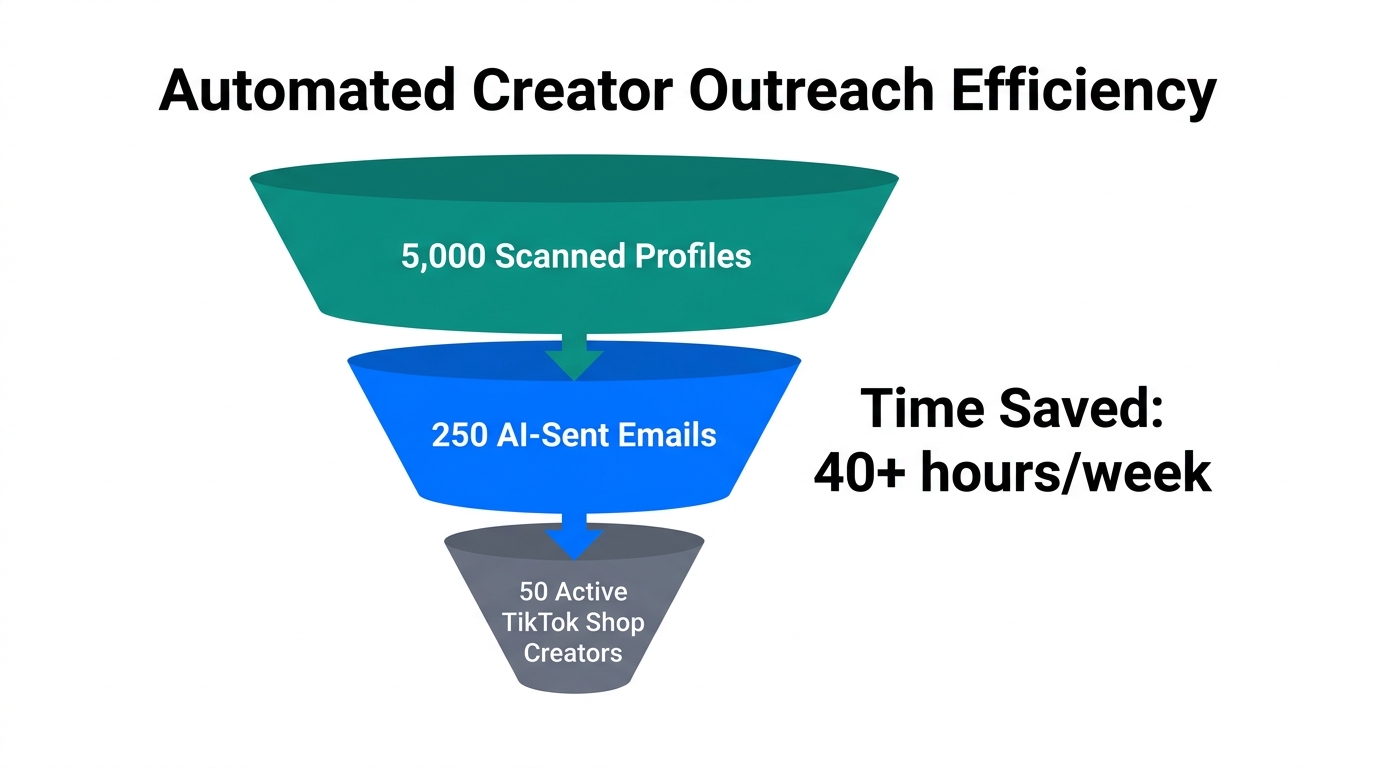
Even with 100% AI creative, the TikTok Shop algorithm rewards variety. You should complement your AI ads with a swarm of real affiliate creators. However, managing 500+ creator conversations is a nightmare for one person.
This is where you deploy Stormy AI. You can ask Stormy to:
- Monitor your TikTok Shop affiliate inbox for new applications.
- Send personalized follow-up emails to creators who have received samples but haven't posted.
- Update a central CRM (like Stormy's spreadsheet engine) with post links and performance data.
By delegating the follow-ups to an AI agent, you maintain a 24/7 presence without the overhead of a virtual assistant. This allows you to scale your automated creator programs to thousands of affiliates simultaneously.
"The goal is to build an ambient business—one that identifies opportunities and executes follow-ups while you sleep."
Step 4: Managing Attribution via Triple Whale
Scaling across TikTok Shop and Amazon Ads creates a massive attribution headache. You need to know which AI-generated creative is actually driving sales on which platform. We use Triple Whale for this level of intelligence.
In 2026, Triple Whale provides AI-powered predictive attribution. It can tell you, with high confidence, that a specific hook from Poppy AI that went viral on TikTok is responsible for a 15% lift in "branded search" on Amazon. When Stormy AI sees these underperforming creatives through its reporting tools, it can automatically notify you to swap them out for the next batch from your Creative Factory.
Case Study: $929k Revenue with 100% AI Creatives
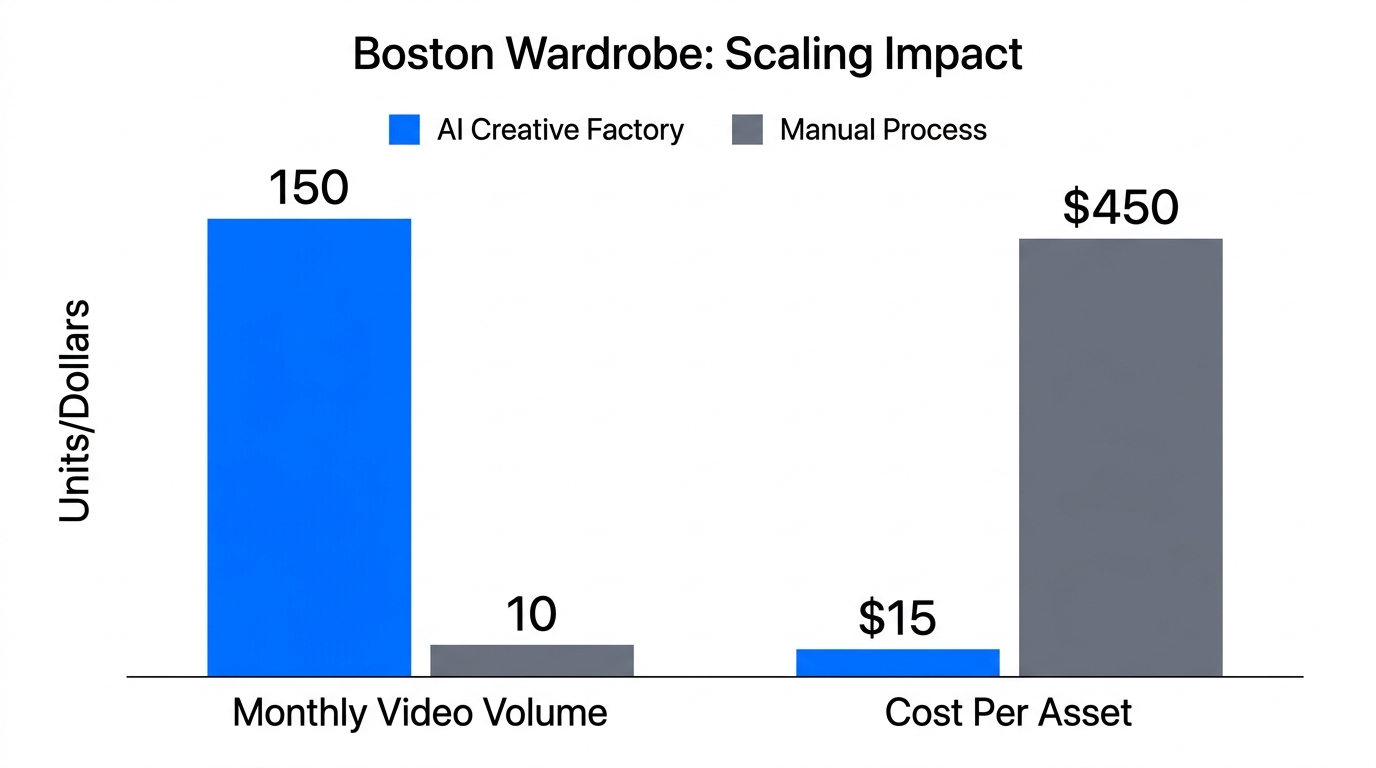
The power of the AI Creative Factory is best illustrated by Boston Wardrobe. In a recent study documented by Ecom Knockout, the brand generated $929,000 in revenue with $565,000 in profit—all without hiring a single photographer or model. Their top three AI-generated images alone drove over $200k in sales.
Their workflow followed the same principles: using AI to bridge the "Sentiment Gap" and churning out hundreds of variations until the data identified a winner. They avoided the "creepy" factor often associated with AI by ensuring the avatars were high-fidelity and the scripts focused on solved pain points rather than generic marketing fluff.
Conclusion: Your AI-First Operating Model
The "One-Hour Company Stack" is no longer a dream. By setting up an AI Creative Factory with tools like Poppy, Creatify, and Stormy AI, you are moving toward an ambient business model. The complexity of running a high-volume store is now handled by systems, not people.
To start your factory today:
- Validate: Use Poppy AI to find the hooks your competitors are missing.
- Produce: Generate your first 15 UGC variations using Creatify AI.
- Automate: Hire Stormy AI to handle the creator outreach and monitor your cross-channel reporting.
- Iterate: Pivot your creative weekly based on Triple Whale attribution.
In 2026, the winner is not the person with the biggest team, but the one with the most efficient agentic factory. It is time to open the door and turn on the lights.