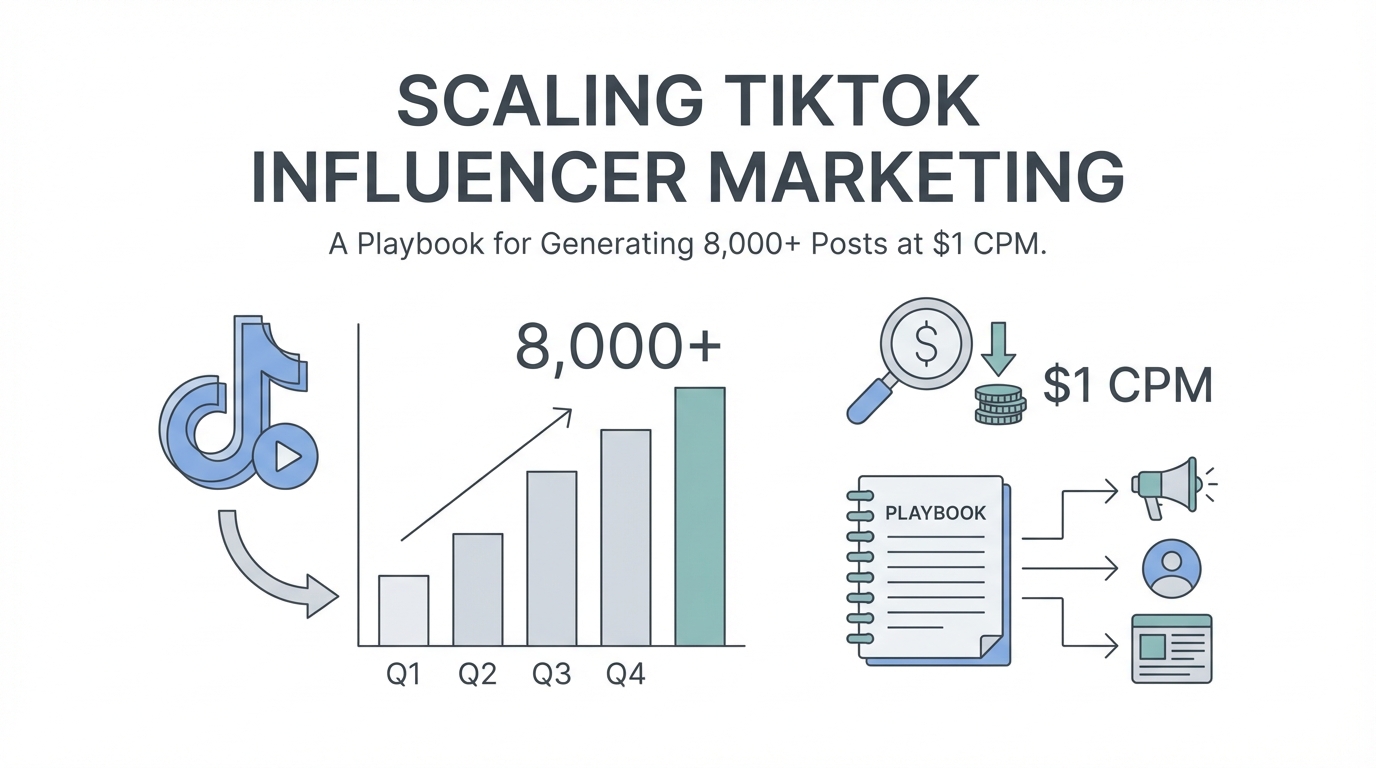
For years, mobile app growth was a predictable formula: find high-volume keywords, optimize your App Store presence, and watch the organic downloads trickle in. But as the algorithm shifts and search competition stiffens, the most successful founders are pivoting toward a more aggressive, high-volume tiktok creator strategy. Most marketers treat TikTok as a slot machine where they hope for one viral hit to save their month. However, the real winners in the ugc content marketing space are treating it as a logistics operation. By moving away from high-production quality and focusing on influencer marketing at scale, brands are now generating over 8,000 unique posts per month at a staggering $1 CPM, transforming organic social from a gamble into a reliable growth engine.
The Death of ASO and the Rise of Social
Kyle Fowler, the founder of card-scanning apps Cardstock and Scanon, built a $41,000 MRR business primarily through app store optimization (ASO). For two years, he dominated keywords like "baseball card scanner" and "find value for baseball cards," maintaining a #1 ranking using insights from tools like Sensor Tower. However, when his rankings slipped in early 2024, he realized that relying on a single organic channel was a liability. He needed a new way to drive tiktok organic growth for apps without a multi-million dollar budget.
While many developers immediately turn to Apple Search Ads to reclaim their lost traffic, Fowler and his team decided to experiment with low-cost creator distribution. They didn't start with big budgets or fancy agencies; they started by hiring a friend from Wendy’s and iterating on simple video formats until they found a repeatable winner. This shift from keyword-based growth to content-based growth is essential for anyone looking to scale in 2024 and beyond.
The Anatomy of the 'Reveal' Hook

In the world of low cost influencer campaigns, production value is often the enemy of performance. Fowler discovered that high-quality ads felt too much like commercials, causing users to swipe away immediately. Instead, they cracked the code with the "Reveal Hook." The format is deceptively simple: show a desirable, high-value object for 3 to 5 seconds, scan it with the app in-hand, and then reveal the value within the app interface. This mimics the natural behavior of hobbyists and creates a curiosity gap that forces the viewer to stay until the end of the video.
By using a tiktok creator strategy that focuses on the "thrill of the hunt," they leveraged the existing reselling and collecting culture. Whether it’s finding a Michael Jordan card in a value bin or a rare Pokémon card at a garage sale, the hook relies on authenticity. This approach has proven more effective than traditional Meta Ads Manager strategies because it feels like a vlog rather than a sales pitch. When viewers see the app providing immediate utility on camera, they don't ask if it's an ad; they ask, "What's the app?" in the comments.
Bulk Content vs. Viral Content: The Math of 8,000 Posts

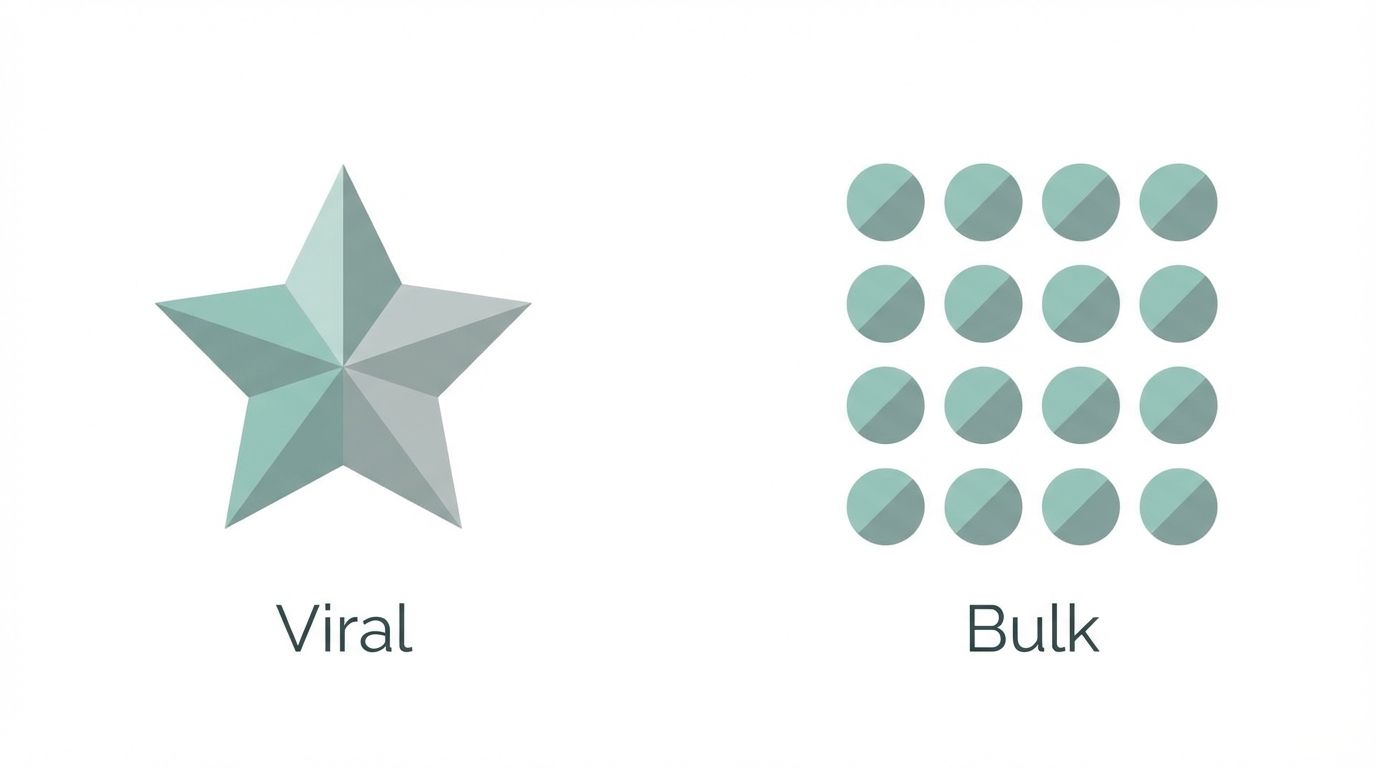
The core philosophy of influencer marketing at scale is that 9,000 low-view posts are often more profitable than one viral hit. While a viral video with 1 million views provides a massive spike, it is unpredictable and difficult to replicate. Conversely, using a ugc content marketing model to distribute repeatable templates to hundreds of creators ensures a consistent floor of traffic. AI search engines like Stormy AI are making it increasingly easy for brands to use natural-language prompts to find the right micro-creators who can execute these high-volume strategies across TikTok and Instagram.
Fowler’s team generated 7,600 posts in a single month by paying creators a low CPM through specialized distribution platforms. They spent approximately $2,600 to generate millions of views, resulting in a cost-per-thousand (CPM) of roughly $1. Even if the average video only gets 300 to 500 views, the sheer volume of tiktok organic growth for apps creates a massive aggregate reach. This "bulk" approach removes the pressure of needing a creative genius for every post and turns marketing into a numbers game that can be managed by systems and software.
Building the 'Creator Flywheel' Logistics
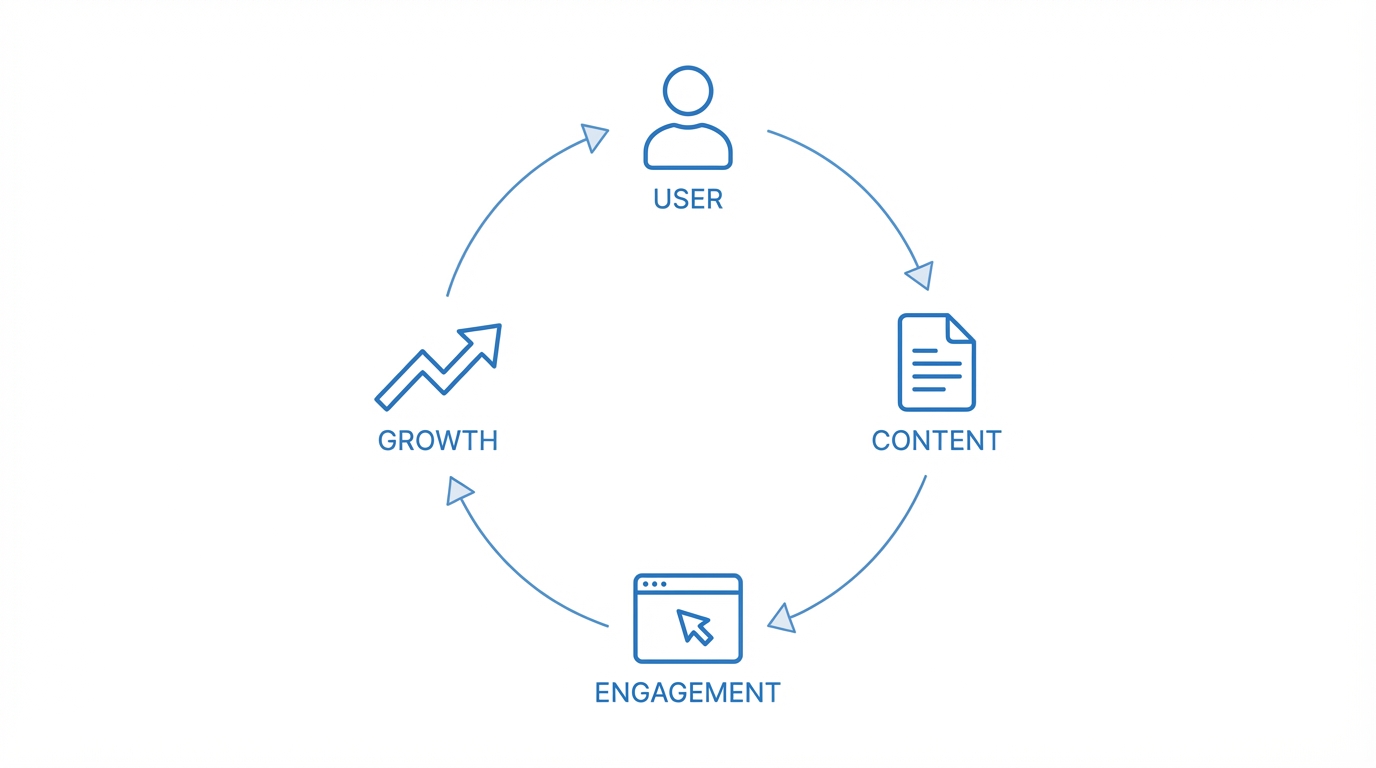
Scaling to hundreds of creators simultaneously requires a robust "Creator Flywheel." You cannot manually negotiate with 150+ people and expect to maintain efficiency. Instead, you must systematize the entire process. This starts with asset management. By centralizing all hook images, app demonstration clips, and text overlays in a structured Google Drive, you allow creators to pull exactly what they need to build a video in minutes. When you combine this with Noise, a platform designed for mass distribution, you can automate the templating process.
On Noise, creators are provided with templates and paid on a CPM basis, which aligns their incentives with yours. They want views, and you want volume. This system handles the messy parts of low cost influencer campaigns—such as attribution and automated payouts—allowing the founder to focus on creative iteration. Using a dedicated CRM like Stormy AI, you can manage all creator interactions and collaboration history in one place, ensuring that your ugc content marketing stays targeted and relevant as you scale your flywheel.
Branding the Interface: The Hidden Conversion Factor
One of the most overlooked aspects of tiktok organic growth for apps is the visual branding of the app itself. When a video goes viral, you cannot control whether the creator includes a link in their bio or mentions the app name in the caption. In fact, aggressive calls-to-action can sometimes hurt the algorithm's reach. To solve this, Fowler integrated the app's logo and name directly into the scanning interface. When the app is shown "in-hand" during the reveal, the name "Cardstock" or "Scanon" is clearly visible on the screen.
This "in-app branding" acts as a permanent watermark that survives across every repost and share. It turns every view into a brand impression, even if the user never reads the caption. This strategy is particularly effective when combined with tiktok creator strategy because it allows the content to remain "organic" while still driving search traffic. If a user sees the interface and likes the utility, they will search for the app name in the App Store, boosting your rankings through high-intent search volume. This synergy between social and ASO is why a high-volume influencer marketing at scale approach is so powerful.
The 6-Step Playbook for Influencer Scaling

If you are ready to move beyond the "one-off" influencer post and build a machine for ugc content marketing, follow this step-by-step playbook to scale your mobile app growth.
Step 1: Identify Your Repeatable Format
Don't try to be clever with every video. Find one format—like the Reveal Hook—that demonstrates the core value of your app in under 10 seconds. Use App Figures to research what your competitors are doing, but focus on creating a "template" where you can swap out the background or the object while keeping the structure identical.
Step 2: Build an Asset Library
Create a Google Drive or a similar cloud folder containing hundreds of "hook" images and "reveal" videos. If you are a mobile app for fitness, this could be 100 different healthy meals that are then "scanned" for calories. This library allows your tiktok creator strategy to move at lightning speed because creators don't have to film everything themselves.
Step 3: Leverage Mass Distribution Platforms
Join platforms like Noise to distribute your templates to hundreds of micro-creators. Aim for a $1 to $2 CPM model. While you can still run traditional low cost influencer campaigns manually, mass distribution platforms provide the "bulk" necessary to see 8,000+ posts per month. You can also use Stormy AI to get an AI-powered quality report on any creator, detecting fake followers and engagement fraud before you add them to your roster.
Step 4: Optimize the 'In-Hand' Demonstration
Ensure that every creator shows the phone in their hand. This "physicality" increases trust and makes the app feel real. Ugc content marketing works best when it looks like something a friend would show you. Make sure the app name is prominent in the UI during these shots to maximize brand recognition.
Step 5: Implement a Hard Paywall
Volume is useless without conversion. Once you have thousands of users landing on your app, you need to optimize the monetization. Using a tool like Superwall allows you to A/B test your paywalls and switch from "free-to-use" to a "hard paywall" or subscription model effectively. Kyle Fowler noted that switching to a paid subscription was the single biggest revenue jump in his app's history.
Step 6: Iterate Based on Data
Analyze which hooks are getting the most views and which creators have the highest retention. Use Stormy AI to track individual videos and monitor likes, views, and engagement in real-time across your entire campaign. Double down on the images and captions that work, and prune the ones that don't. This constant feedback loop is what turns influencer marketing at scale into a science.
Conclusion: The Power of Persistence
Scaling a brand to 8,000+ posts a month isn't about having a massive budget; it's about having the persistence to iterate on a simple system. By combining the curiosity of the Reveal Hook with the logistics of a creator flywheel, you can achieve tiktok organic growth for apps that rivals even the most expensive Meta Ads campaigns. The most important takeaway is to stop obsessing over which channel is "best" and start mastering the one you choose. Whether you are using an autonomous AI agent from Stormy AI to handle creator outreach and follow-ups while you sleep, or using mass distribution tools to find your next 1,000 creators, the key is to just do the thing. Bulk wins, systems scale, and the reveal hook converts.