In 2026, the days of looking at a single platform's ROAS and calling it a day are officially over. For the modern Shopify founder, the challenge isn't just generating traffic; it's understanding the complex dance between high-top-of-funnel discovery on TikTok and the high-intent capture on Google. You might see a mediocre 1.5x ROAS in your TikTok Ads Manager, but if your organic search volume on Google doubles during that same period, you aren't failing—you're winning. This is the 'Halo Effect' of modern ecommerce marketing.
To scale a one-person store today, you need a robust Shopify growth framework 2026 that prioritizes profit over vanity metrics. This guide will walk you through the operational playbook for balancing Google Ads and TikTok spend, calculating your true Marketing Efficiency Ratio (MER), and using an AI ecommerce employee like Stormy AI to automate the messy back-office reporting that usually eats up your Sunday nights.
The TikTok Halo Effect: Driving Search Volume in 2026
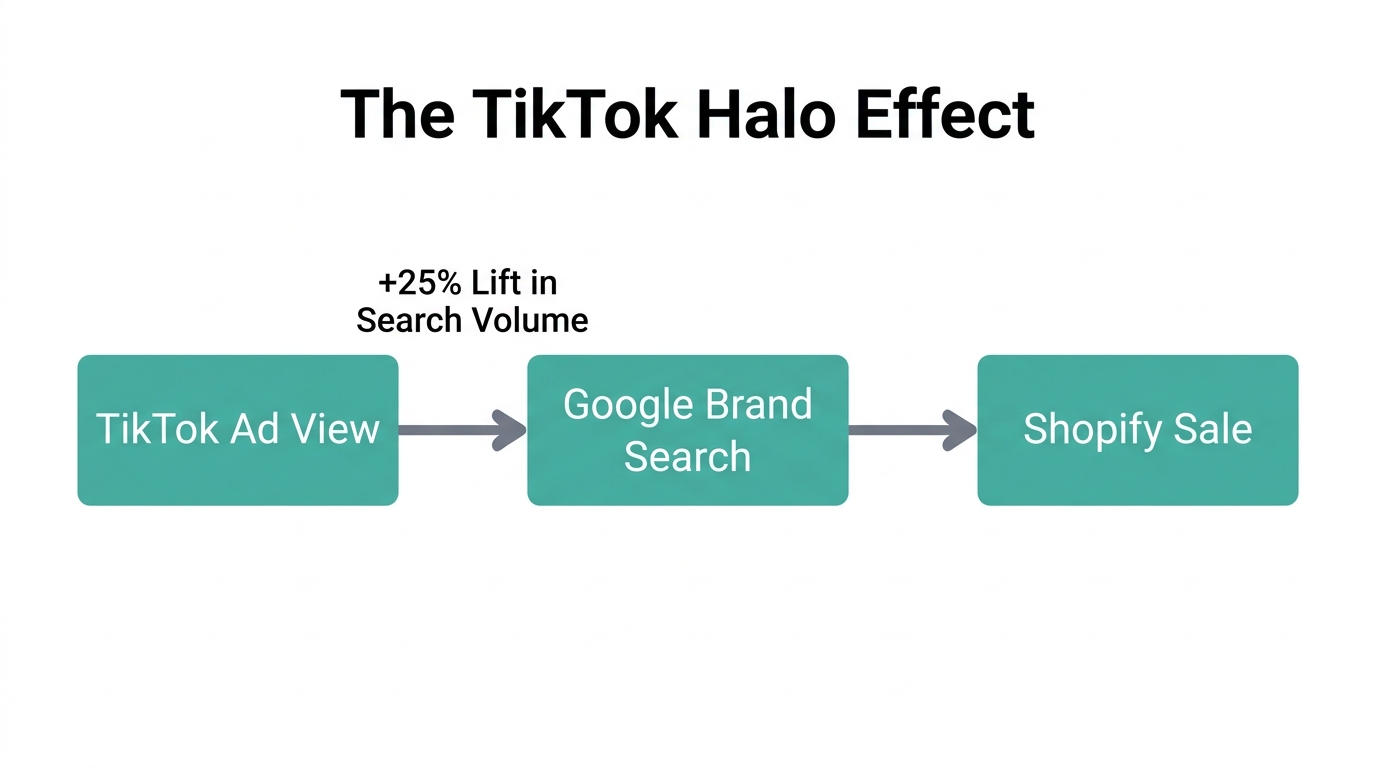
By 2026, the consumer journey is no longer linear. A customer sees a creator's video on TikTok, ignores the 'Shop' button, and instead types your brand name into Google three hours later. If you are only looking at your TikTok dashboard, that sale looks like a 'miss.' In reality, TikTok acted as the catalyst for a high-intent Google search.
Many merchants see a great ROAS in their ads dashboard and assume that this means their business is growing, but often profit margins haven't changed at all. This is because platforms like Google Ads cannot see your full Shopify revenue; they only measure the sales they attribute to themselves, which often includes modeled or duplicated conversions. To truly understand your TikTok Ads Shopify strategy 2026, you must track how TikTok spend correlates with 'Branded Search' lift in your Google Ads account [source].
Understanding MER: The Only Metric That Actually Matters
 0:48
0:48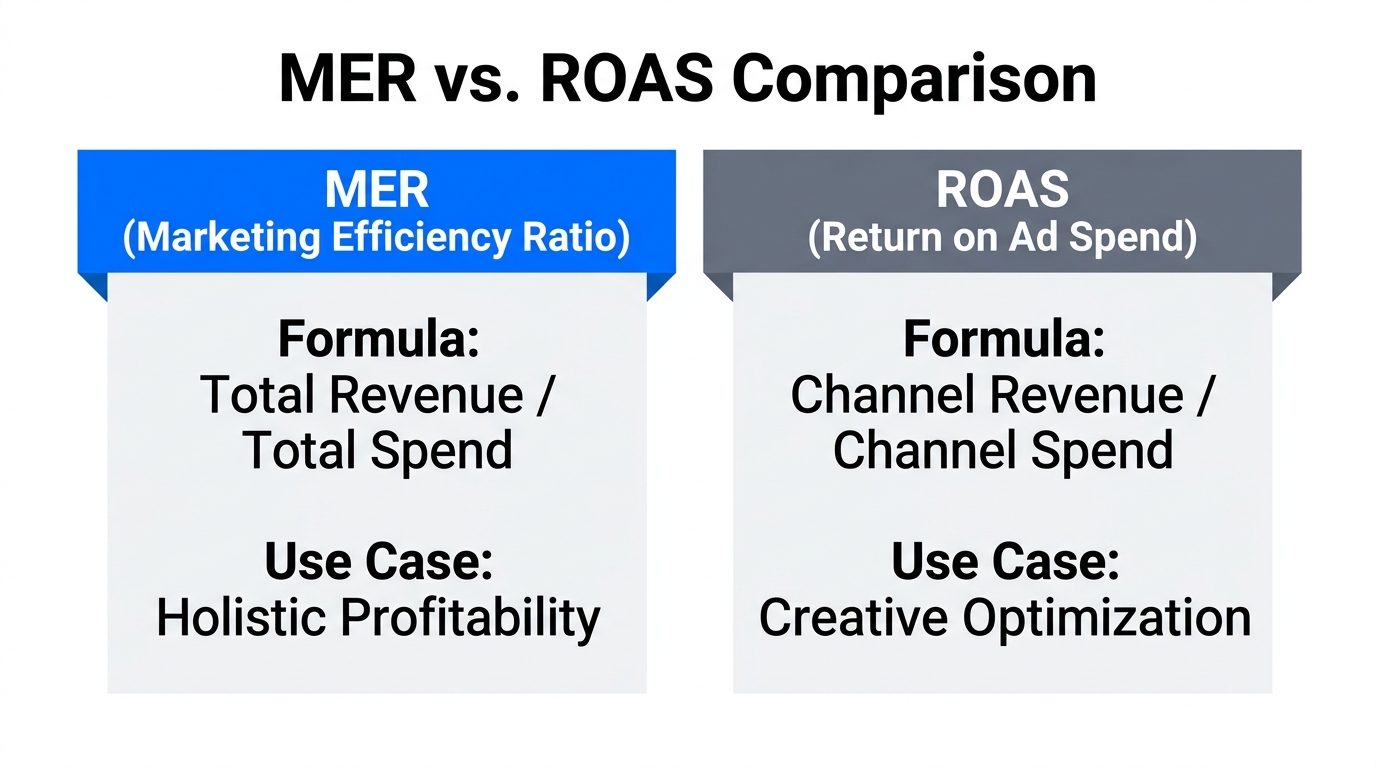
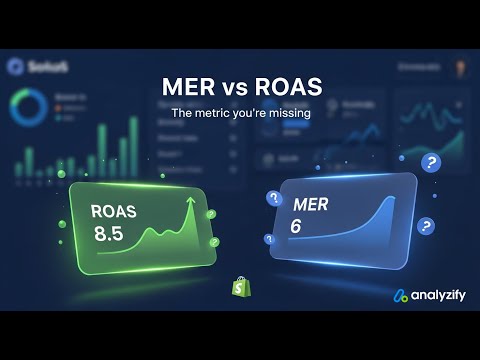
If you've ever felt that your ad metrics don't match your store's financial reality, then Marketing Efficiency Ratio (MER) is the number that finally connects those two worlds. While ROAS (Return on Ad Spend) measures the performance of a specific campaign, MER gives you the big picture of how efficiently your overall marketing spend turns into revenue.
The formula is simple: Total Revenue / Total Ad Spend = MER. For example, if your store makes $100,000 in total revenue and you spend $20,000 on ads across Meta Ads, Google, and TikTok, your MER is 5. You are earning $5 for every $1 spent. This 'blended' view is essential because it accounts for the 'assists' that don't show up in a single dashboard.
"ROAS tells you how a campaign performed; MER tells you if your business is actually making money."
TikTok Shop vs. Shopify Analytics: The Attribution Nightmare
Running TikTok Shop alongside a standard Shopify storefront adds a layer of complexity to your blended ROAS for ecommerce. TikTok Shop orders are processed within the TikTok ecosystem, while Shopify orders happen on your site. This creates a data silo where your customer journey is split in two.
| Metric | TikTok Shop Dashboard | Shopify Dashboard | Stormy AI (Blended) |
|---|---|---|---|
| Revenue Tracking | In-app sales only | Web sales only | Combined Total |
| Customer Data | Limited (TikTok owned) | Full Ownership | Unified CRM |
| Attribution | Last-click in-app | Standard Web Tracking | Cross-platform Assist |
To avoid the 'manual spreadsheet trap,' you need a way to aggregate this data automatically. Stormy AI handles this by acting as your AI ecommerce employee. It can log into your TikTok Shop Seller Center, pull the daily payout data, sync it with your Shopify revenue, and update a master spreadsheet in Google Sheets or Excel in real-time. Instead of manual exports, you get a living document that shows your true daily profit across all nodes.
Escaping the Manual Spreadsheet Trap
3:45Most founders spend 4-6 hours a week pulling CSVs from Amazon Ads, Google, and Meta just to build a weekly report. This is where mistakes happen—currency format inconsistencies, missing dates, and duplicated data lead to poor scaling decisions. In 2026, automated marketing reporting is a requirement, not a luxury.
An AI employee like Stormy AI operates differently than a static dashboard. You can ask Stormy to:
- "Wake up every Monday at 8 AM and pull spend from TikTok and Google."
- "Compare that spend against Shopify's total net revenue for the week."
- "Calculate our MER and flag if it drops below our break-even threshold of 3.2."
This allows you to move from asking "Which ad performed better?" to asking "Is my overall marketing strategy profitable?" This shift changes how you make every decision, from scaling campaigns to setting annual budgets in Notion or your ERP.
"The moment you stop being a data entry clerk is the moment you start being a CEO."
Setting Up Automated Alerts for MER Thresholds
The most dangerous thing for a one-person brand is a 'runaway' ad spend. If a TikTok video goes viral but the traffic doesn't convert, your MER can plummet before you even realize you've overspent. By 2026, you should have automated alerts set up to protect your margins.
Using Stormy AI, you can set a task scheduler to monitor these levels. Stormy checks your spreadsheet rows every hour. If the calculated MER row drops below your limit, Stormy can instantly send you a message on Slack or Telegram, or even draft an email to your ad buyer to pause underperforming campaigns. This level of automated marketing reporting ensures that you never wake up to a five-figure loss.
The 2026 Playbook: Valuing the 'Social Discovery' Assist
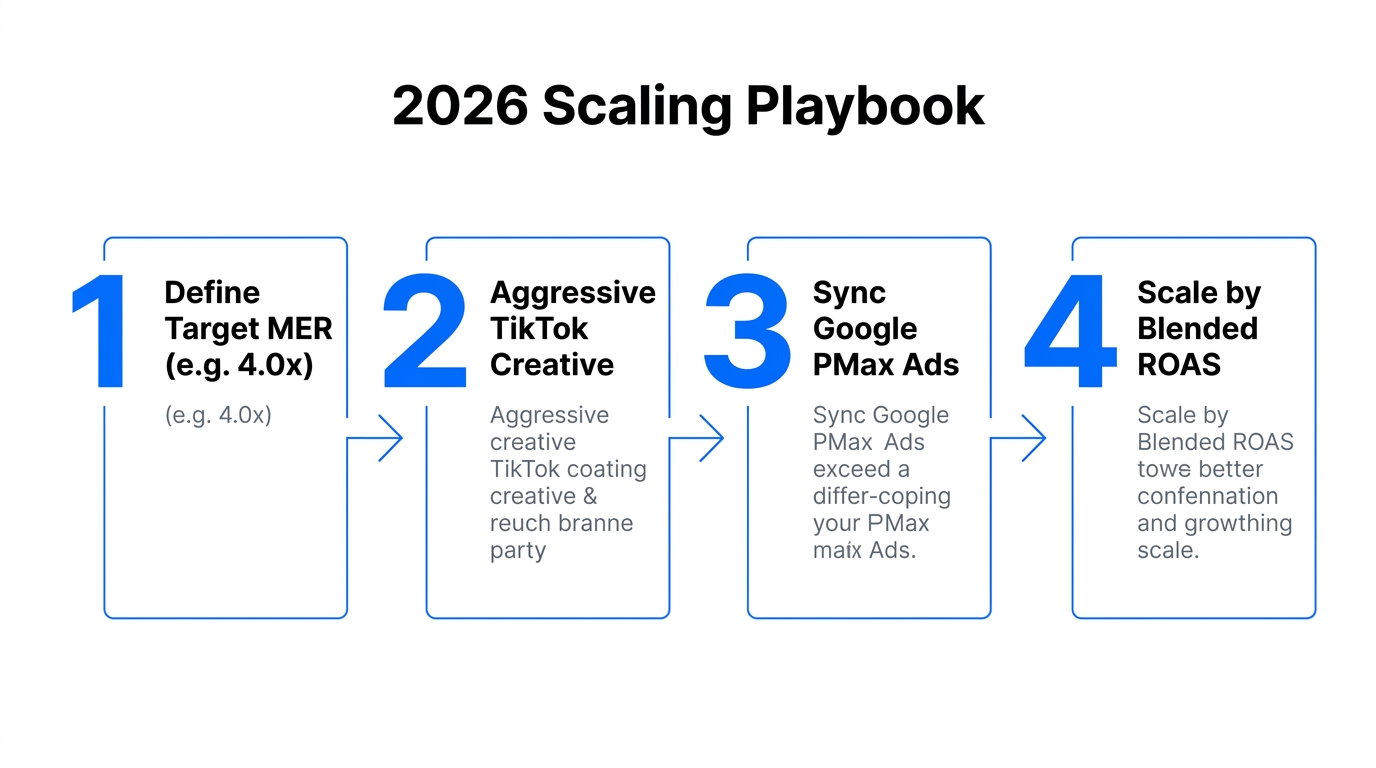
To scale, you must value the 'assist.' Modern attribution models in 2026 use AI to determine the weight of each touchpoint. If 40% of your customers watch a TikTok video before searching for you on Google, TikTok deserves 40% of the credit—even if the 'last click' happened on a search ad.
- Identify Trends: Use tools like Triple Whale or Northbeam to see the path to purchase.
- Monitor Spikes: When you launch a new TikTok creator campaign, ask Stormy AI to track the increase in 'Direct' and 'Organic Search' traffic on Google Analytics.
- Adjust Budgets: If organic revenue grows 20% following a TikTok spend increase, maintain the TikTok spend even if its direct ROAS looks low.
Conclusion: Building a Lean, AI-Powered Growth Engine
5:50Scaling a Shopify store in 2026 is no longer about finding a 'winning ad.' It is about managing the flow of data between discovery platforms like TikTok and intent platforms like Google. By shifting your focus from siloed ROAS to blended ROAS for ecommerce, you gain the clarity needed to scale without sacrificing your profit margins.
Don't get stuck in the manual spreadsheet trap. Whether you use a dedicated analytics tool or an AI ecommerce employee like Stormy AI to handle your back-office monitoring, the goal is the same: move from data collection to data-driven action. Your job as a founder is to steer the ship, not to manually calculate the fuel efficiency in a spreadsheet every morning. Start tracking your MER today and build a more resilient, profitable brand.