In 2026, the LinkedIn feed is no longer a corporate notice board; it is a high-velocity battleground for attention where human faces carry significantly more weight than brand logos. The transition from traditional SaaS (Software-as-a-Service) to Agent-as-a-Service (AaaS) has fundamentally rewritten the playbook for B2B growth. Leading marketing teams are now deploying OpenClaw, an open-source AI agent framework, to handle the heavy lifting of executive branding, creative auditing, and ad management.
The shift is driven by a simple reality: your audience is immune to generic corporate messaging. To cut through the noise, you need a strategy that pairs human intuition with autonomous execution. This article explores how to leverage OpenClaw to scale executive influence, combat creative fatigue automation, and turn your leadership team into your most potent advertising asset.
The Rise of "Trust as a KPI" in 2026
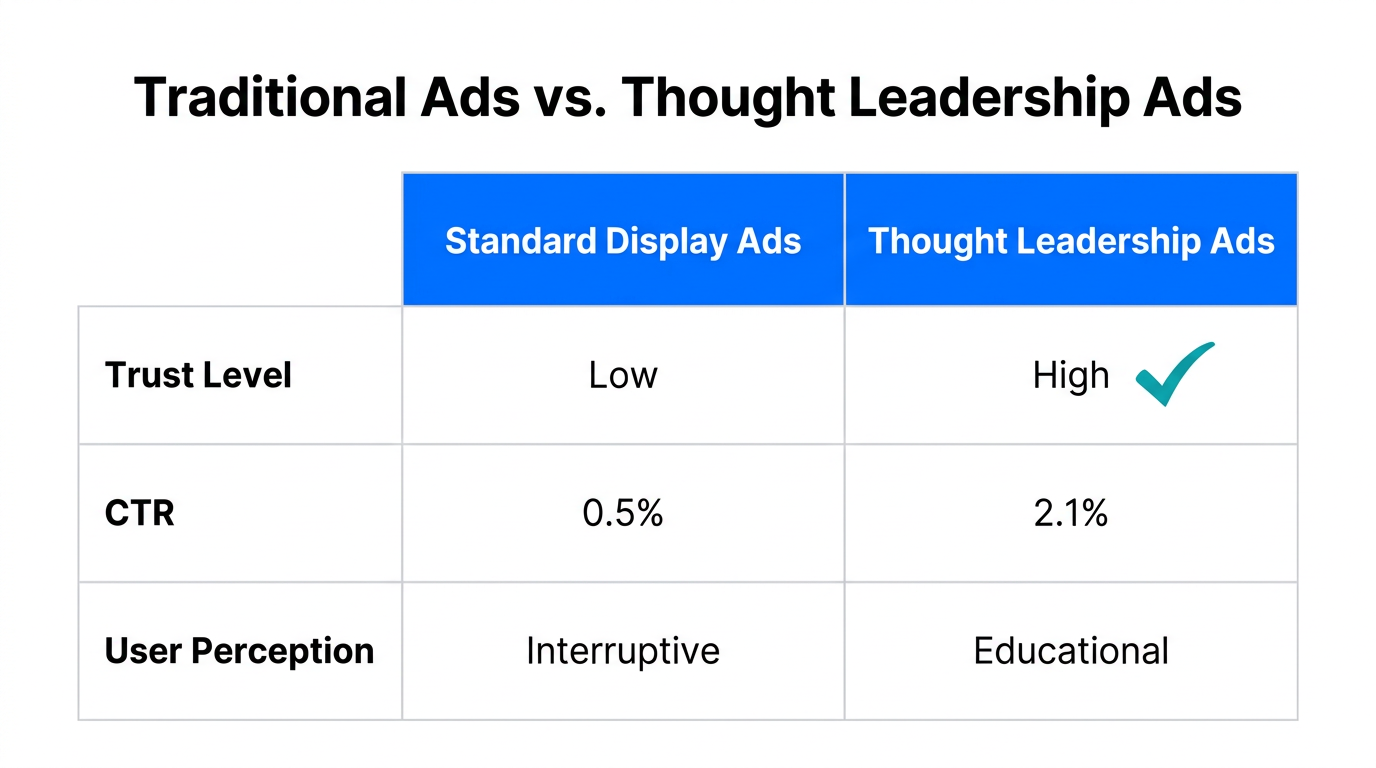
For years, marketers optimized for CTR, CPC, and CPA. While these metrics still matter, 2026 is the year of "Trust as a KPI." Modern buyers are skeptical of polished corporate ads; they crave authentic insights from real people. This is why LinkedIn Thought Leadership Ads—which allow brands to promote posts from verified executive profiles—have seen an explosive surge in adoption.
According to research by Lever Digital, promoting thought leadership content leads to a 14% lift in brand perception. However, the challenge for most firms is consistency. Executives are busy, and manual ad management is slow. Enter OpenClaw: the framework that allows you to automate the drafting, scheduling, and performance monitoring of these high-value assets without losing the executive's unique voice.
"The key to LinkedIn in 2026 isn't a higher budget; it's a higher trust score, achieved through executive transparency and AI-enabled consistency."Combating Creative Fatigue with AI Vision Models
One of the most persistent hurdles in 2026 is creative decay. On LinkedIn, where the professional audience is highly discerning, the effectiveness of a visual asset drops significantly faster than on consumer-facing platforms. Video is now the dominant format, with uploads increasing 34% year-over-year, but even the best video loses its edge after 14 days of high-frequency exposure.
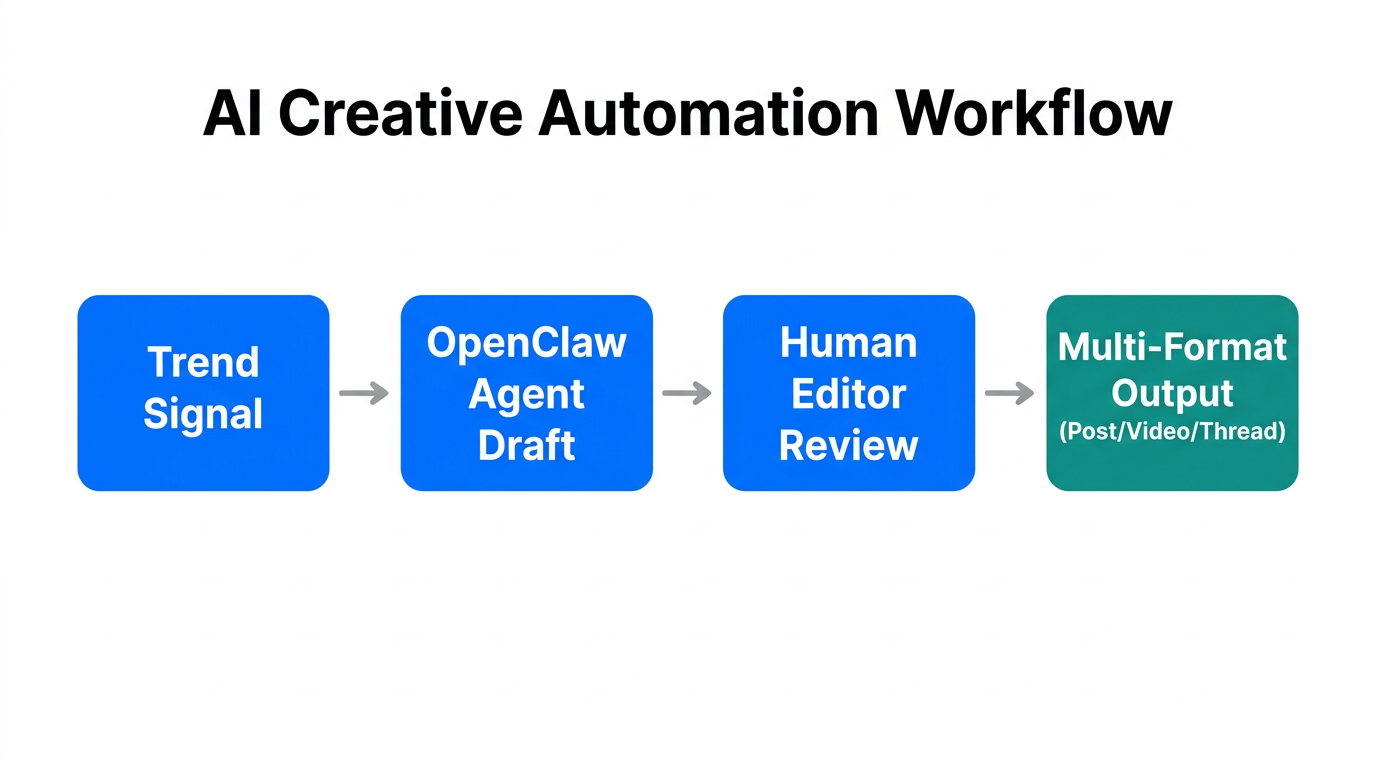
OpenClaw solves this via the Creative Fatigue Analyst skill. Using advanced vision models like GPT-4o or Claude 3.5, the agent literally "views" your ad visuals and compares them against historical performance data. If the CTR drops below a pre-set threshold (often 0.45%), the agent doesn't just send an alert—it suggests specific iterations.
- Background Shifts: Swapping a corporate blue background for a professional office setting.
- Hook Refinement: Analyzing the first 3 seconds of a video to identify where users drop off.
- Style Adaptation: Identifying if the audience is responding better to "lo-fi" UGC-style content versus high-production assets.
By integrating these insights into a creative loop, brands can maintain high performance without a massive design overhead. This is particularly effective when sourcing content from UGC creators on Stormy AI, where AI agents can help match the right creator style to the specific executive's brand voice.
The 7 Essential OpenClaw Skills for LinkedIn Ads
To master LinkedIn influencer marketing at scale, you need a suite of specialized agents. In the OpenClaw ecosystem, these are known as "Skills." Here is the modern marketing stack for 2026:
| Skill Name | Primary Function | 2026 Impact Goal |
|---|---|---|
| Performance Auditor | 24/7 account monitoring for CPA spikes | Reduce wasted spend by 25% |
| Creative Fatigue Analyst | Vision-model CTR trend tracking | Maintain CTR above 0.45% |
| Budget Scaling Manager | Automated bid adjustments based on ROAS | Stability during 5-7 day learning phases |
| Audience Architect | CRM sync and funnel overlap detection | Improve conversion rates by 30-40% |
| Leadership Creator | Drafting content from executive whitepapers | 14% lift in brand perception |
| Intent Scraper | Signal-based ABM (e.g., Series B funding) | 200% better ROI than broad targeting |
| NLP Reporter | Natural language reporting via Slack/Telegram | Instant executive-ready visibility |
The Performance Auditor is perhaps the most critical for budget safety. By utilizing the Adspirer MCP Server, this agent scans for anomalies across your entire account. Rather than waiting for a weekly report, you are notified within minutes if a campaign's cost-per-acquisition deviates from the norm, allowing for real-time course correction as noted by Ryze AI.
"Creative decay is the silent killer of B2B ROI. If your CTR drops below your benchmark, your AI agent should already be drafting the replacement before you even open your dashboard."The Playbook: Scaling Executive Branding with PostClaw
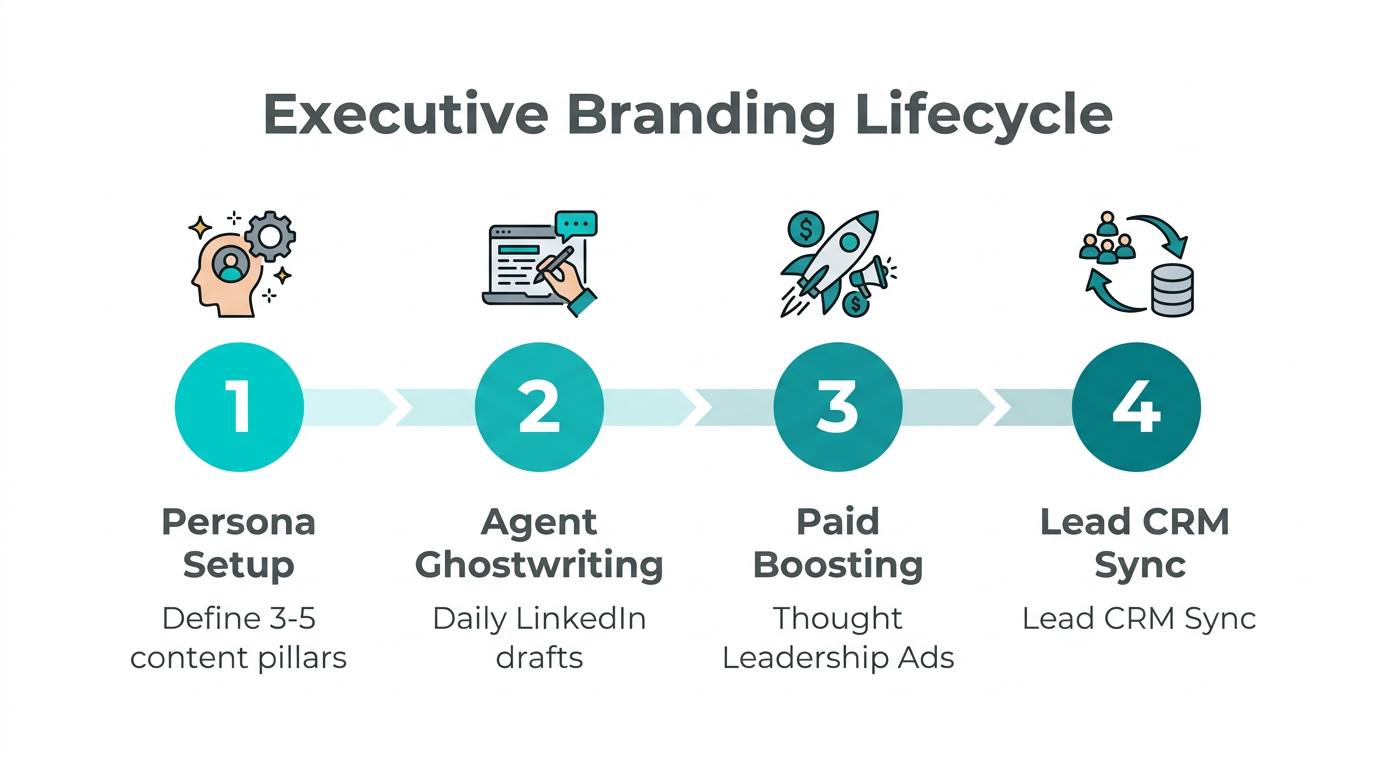
Building an OpenClaw executive branding presence requires a structured approach. You cannot simply blast AI-generated text and expect results; the agent must be trained on the executive's actual industry expertise and whitepapers.
Step 1: Knowledge Ingestion
Use the OpenClaw framework to ingest the executive's previous articles, internal whitepapers, and recorded speeches. This creates a "Voice Profile" that the agent uses to draft social posts that actually sound like the person they represent.
Step 2: Drafting and Review via PostClaw
Leverage PostClaw, a Telegram-based social media manager agent. PostClaw can draft five versions of a LinkedIn post based on a single news event or industry report. The executive or marketing manager then reviews and approves the best version directly from their mobile device.
Step 3: Automated Promotion
Once a post gains organic traction (monitored by the agent), the Audience Architect triggers the Thought Leadership Ad promotion. This ensures you are only putting ad spend behind content that has already proven its resonance with a real audience.
Signal-Based Targeting: Moving Beyond Job Titles
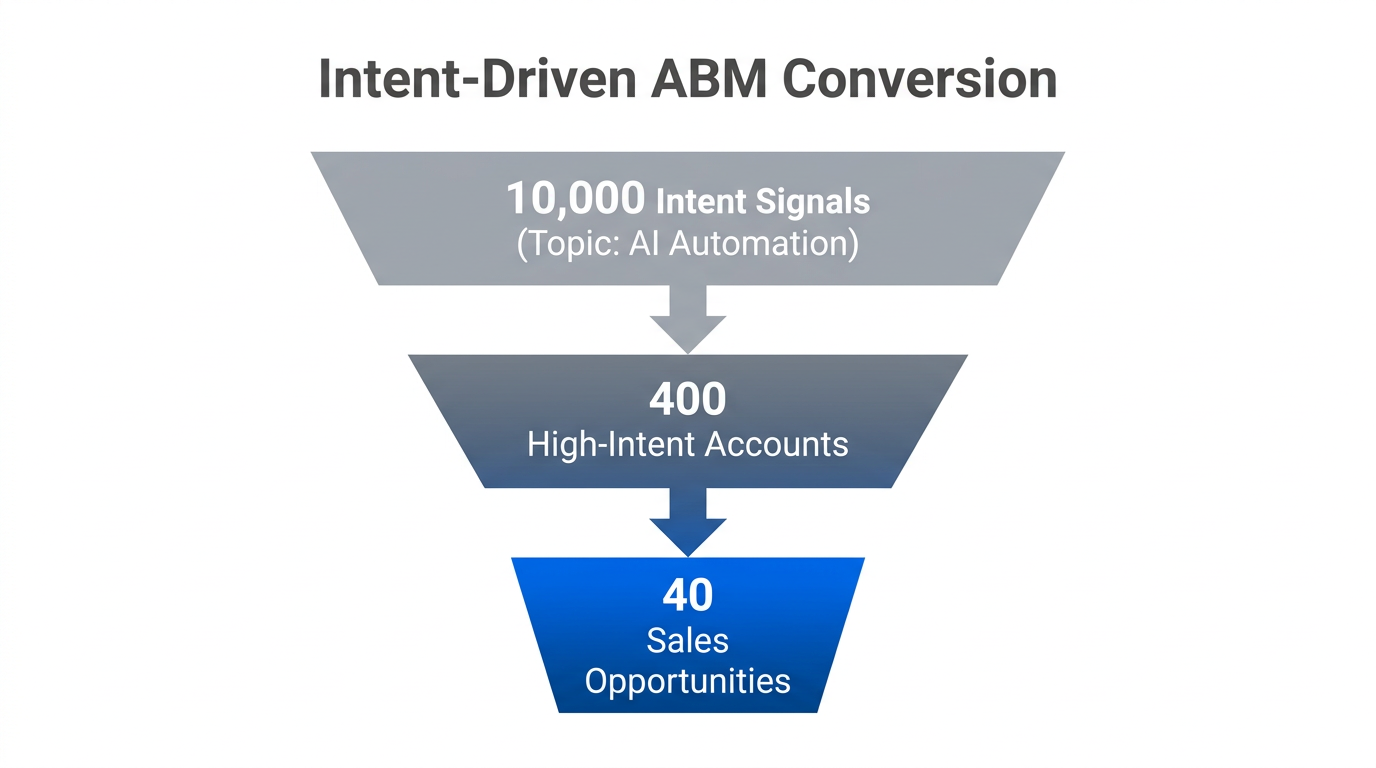
Static targeting is a relic of the past. In 2026, high-performance teams use the Signal-Based Intent Scraper to find prospects exactly when they are ready to buy. This involves tracking signals such as a target company raising a Series B round or a key decision-maker posting about a specific pain point.
While this is powerful, it carries risks. Expert warnings suggest avoiding aggressive web scraping without official APIs, as LinkedIn's bot detection is highly sophisticated. Instead, use agents to turn intent data into multi-channel ABM campaigns, which have been shown to deliver 200% better ROI than broad demographic targeting as reported by Marketing LTB.
"In 2026, intent is the new interest. Targeting a 'Marketing Director' is generic; targeting a 'Marketing Director at a company that just expanded to EMEA' is a strategy."Common Pitfalls in 2026 LinkedIn Advertising
Even with the best AI agents, human oversight is mandatory. There are several "traps" that can sink a LinkedIn campaign regardless of how much automation you use.
- Over-Targeting: Combining too many filters (seniority, group membership, industry, and skills) can shrink your audience to the point where CPMs skyrocket to £35 or higher. According to Factors AI, the sweet spot for a LinkedIn audience is between 30,000 and 100,00 members.
- The "Rogue Agent" Scenario: Never give an agent "Write" access to your billing or budget without a human-in-the-loop review. A single API glitch could lead to a catastrophic overspend in minutes.
- Gating Content Too Early: If you are using LinkedIn Document Ads, do not gate the PDF on the first or second page. Search Engine Land recommends revealing 3-5 pages of pure value before requiring a lead gen form.
Conclusion: The Future of Executive Influence
Scaling thought leadership in 2026 is no longer a manual chore; it is a sophisticated orchestration of human expertise and AI execution. By using OpenClaw to handle creative fatigue, budget scaling, and intent-based discovery, you allow your executives to focus on what they do best: leading. Platforms like Stormy AI further complement this by helping brands discover and manage the right creators to amplify these executive voices across multiple platforms.
As LinkedIn CPMs continue to rise, the only way to maintain a positive ROAS is through hyper-personalization and trust. Start by deploying a Performance Auditor today and begin the journey toward an automated, agent-led LinkedIn presence that puts your people at the center of your brand story.