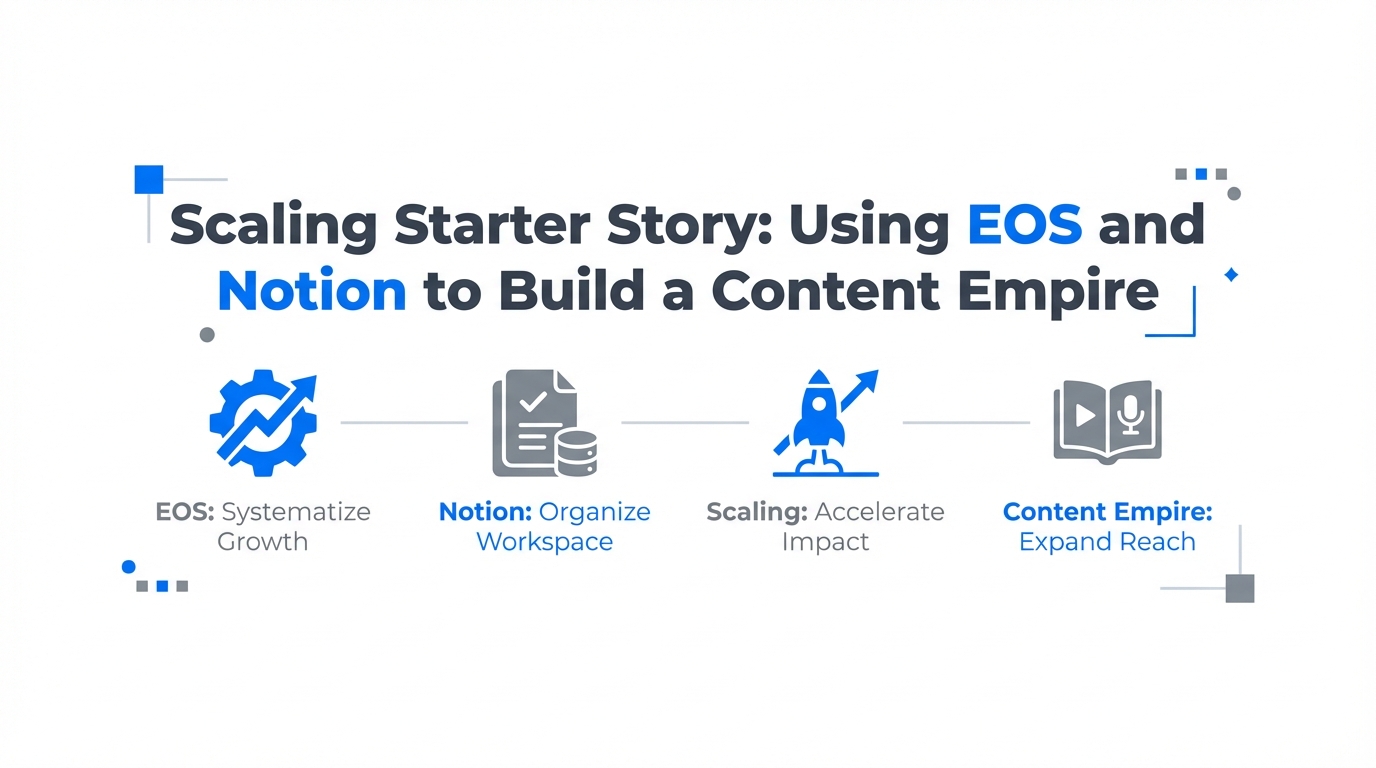
When Pat Walls started Starter Story as a side project while working a corporate nine-to-five, he didn't realize he was laying the foundation for a media empire that would eventually catch the eye of major media players. For years, Walls operated as a high-output solopreneur, conducting interviews and managing a database of thousands of founders. However, the transition from a single-person operation to a scalable media brand required a fundamental shift in mindset and mechanics. By adopting the Entrepreneur Operating System (EOS) and a centralized Notion stack, Walls escaped the 'busy trap' to build a business that runs on systems, not just sheer willpower.
The 'Busy is a Loser' Philosophy: Escaping Urgency Culture
In the early days of any creator journey, 'busy' often feels like a badge of honor. We celebrate the late nights, the overflowing inbox, and the constant fire-fighting. But as Walls learned during his tenure at Deloitte, this urgency culture is actually a symptom of a flawed business model. Real growth doesn't come from working more hours; it comes from building asynchronous, system-driven operations that allow for deep work and strategic thinking.
"Busy people are the biggest losers. I hated urgency culture in corporate life—getting emails that turned into whole-weekend deals. I wanted a business built around systems, not Slack notifications."The goal is to move away from being a 'reactive' founder to a 'proactive' CEO. This means eliminating one-off Slack messages and frantic emails in favor of a centralized task management system. In a truly scalable media business, tasks are assigned with clear parameters and no artificial deadlines. As long as the team hits their Key Performance Indicators (KPIs) and completes their scheduled 'Rocks,' the timing of the work becomes irrelevant. This philosophy allows for what Walls calls the 'noon tennis' lifestyle—the ability to detach from the business without it crumbling.
Implementing EOS: The Operating System for Media Growth
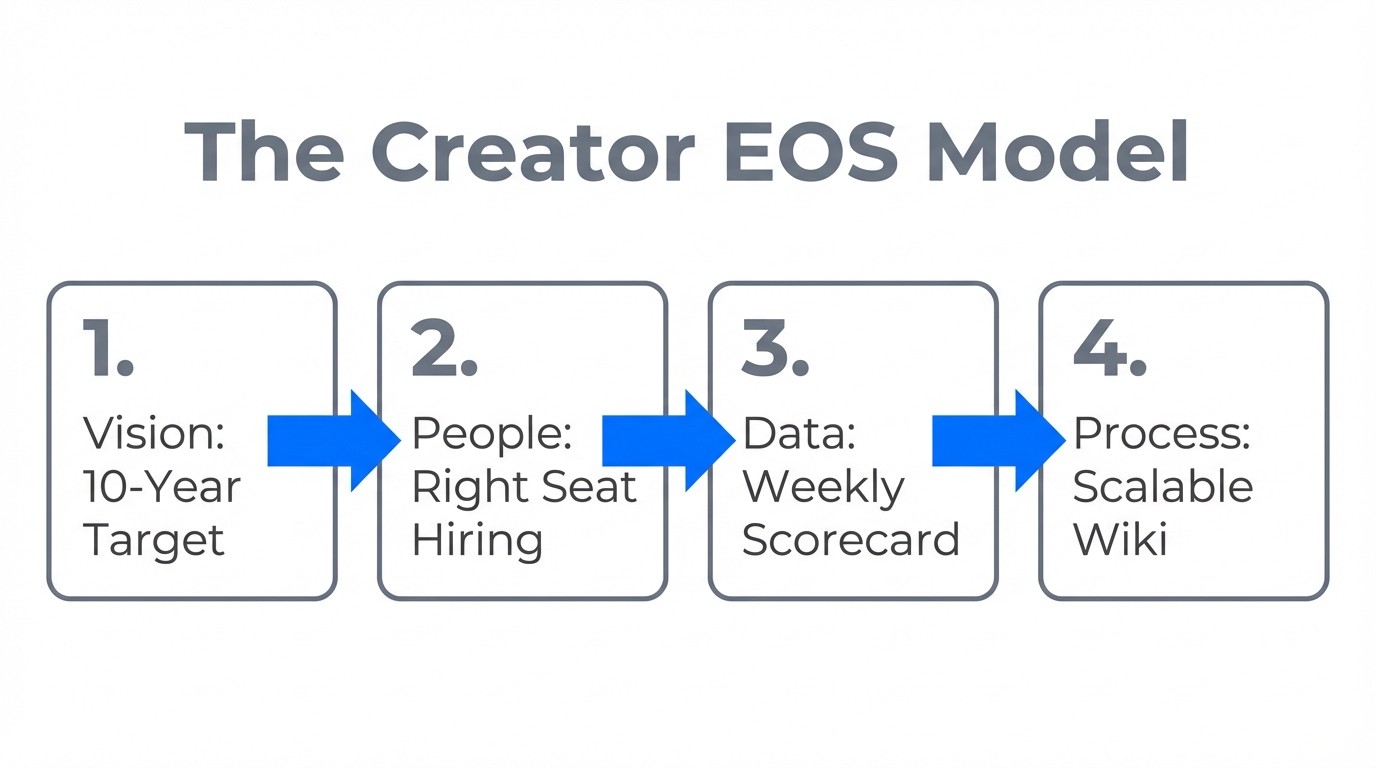
Scaling a media business requires more than just a content calendar; it requires an organizational framework. Many founders turn to the Entrepreneur Operating System (EOS), popularized by Gino Wickman in the book Traction. While originally designed for traditional corporations, EOS is surprisingly effective for content creators transitioning to a team model.
The Power of the L10 Meeting
The heartbeat of the EOS framework is the L10 (Level 10) Meeting. This is a weekly, 90-minute session designed to keep the leadership team aligned. Instead of dozens of scattered syncs, the L10 meeting consolidates everything into a single, high-efficiency block. At Starter Story and organizations like Hampton, these meetings focus on a scorecard of metrics, high-priority tasks, and 'IDS' (Identify, Discuss, Solve) sessions to clear bottlenecks.
6-Week Rock Cycles
Traditional EOS suggests quarterly goals, known as 'Rocks.' However, for agile media brands and startups, three months can feel like an eternity. A more effective approach is the six-week Rock cycle. This allows teams to pivot quickly based on new data from platforms like YouTube or TikTok while still maintaining enough focus to complete meaningful projects. Each team member is typically assigned two major Rocks every six weeks, ensuring they aren't spread too thin.
| Feature | Solopreneur Approach | System-Driven Approach (EOS) |
|---|---|---|
| Meetings | Ad-hoc, frequent, disorganized | One weekly L10 Meeting |
| Goal Setting | Vague monthly ideas | Specific 6-week 'Rocks' |
| Accountability | Self-driven, prone to burnout | Scorecard-based transparency |
| Decision Making | Gut instinct only | IDS (Identify, Discuss, Solve) |
The Notion Production Stack: Centralizing Distribution
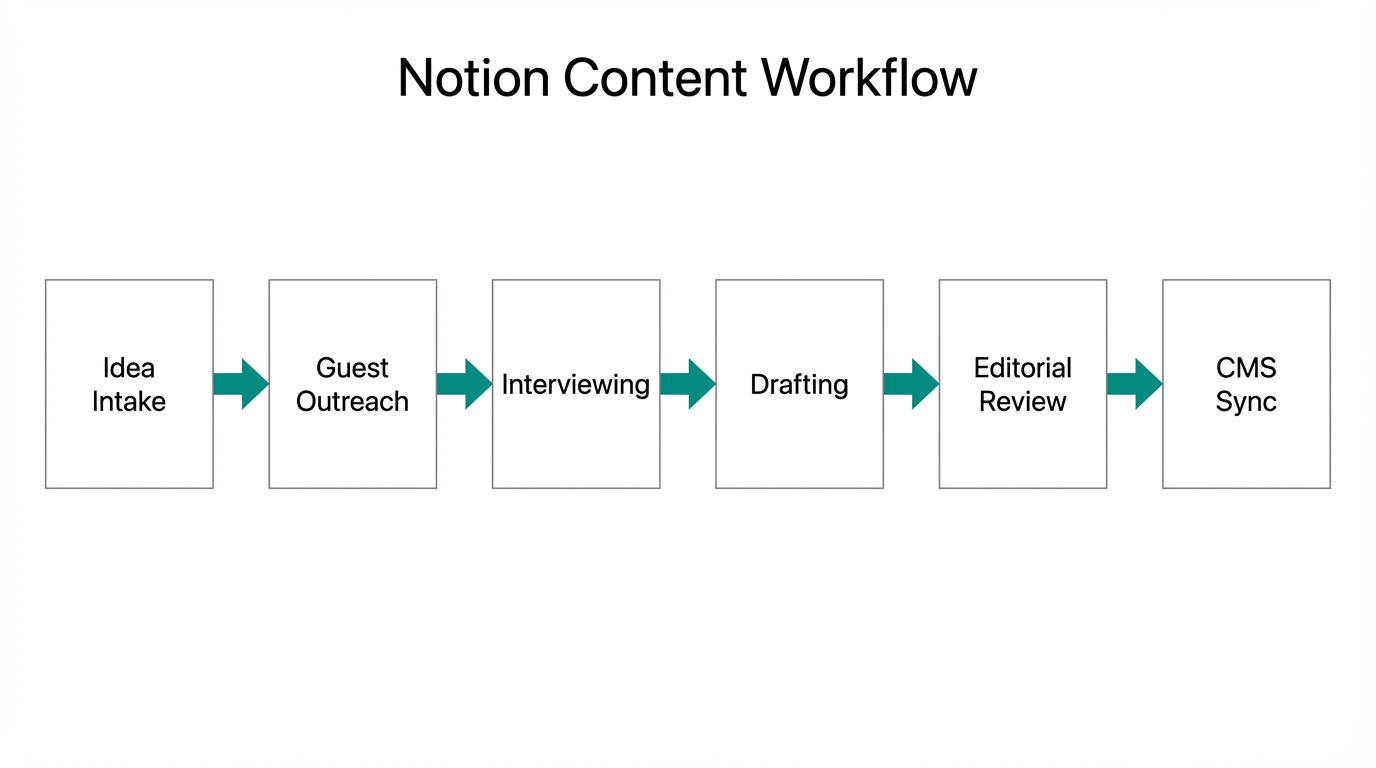
As Starter Story expanded into YouTube, Instagram, and Twitter, the complexity of content operations skyrocketed. To manage this, Walls built a comprehensive Notion Production Stack. Every piece of content, from a long-form interview to a short-form clip, lives in a centralized dashboard. This allows a 'light producer' or a small team of freelancers to manage the entire lifecycle of a post without the founder needing to oversee every detail.
For modern media brands, sourcing the right talent is just as important as managing them. Using Stormy AI can help source and manage UGC creators at scale, feeding a constant stream of high-quality talent into your production pipeline. When you combine Notion for project management with influencer discovery on Stormy AI, you create a workflow that can handle hundreds of pieces of content per month.
The Pre-Production 'Treatment' Strategy
One of the most effective ways to ensure Video ROI is to borrow a concept from Hollywood: the Treatment. Before a single frame is filmed, the producer must write a pitch for the video. This document answers critical questions: Why should this video exist? What feeling will the viewer walk away with? Most importantly, it includes the packaging (title and thumbnail) before production even begins.
- Packaging First: If the title and thumbnail aren't clickable, the video shouldn't be made.
- The Big Idea: Every video should revolve around one core 'character' or 'checklist' (e.g., "The 10-Step Playbook for SAS Growth").
- Validation: Use existing successful Reddit posts or social media threads as the 'bones' for your video scripts.
"Apps are the new info products. With AI coding tools, a team of zero can build apps that solve niche problems in health, wealth, and productivity."Focus as a Growth Lever: The 'Think Week' Methodology
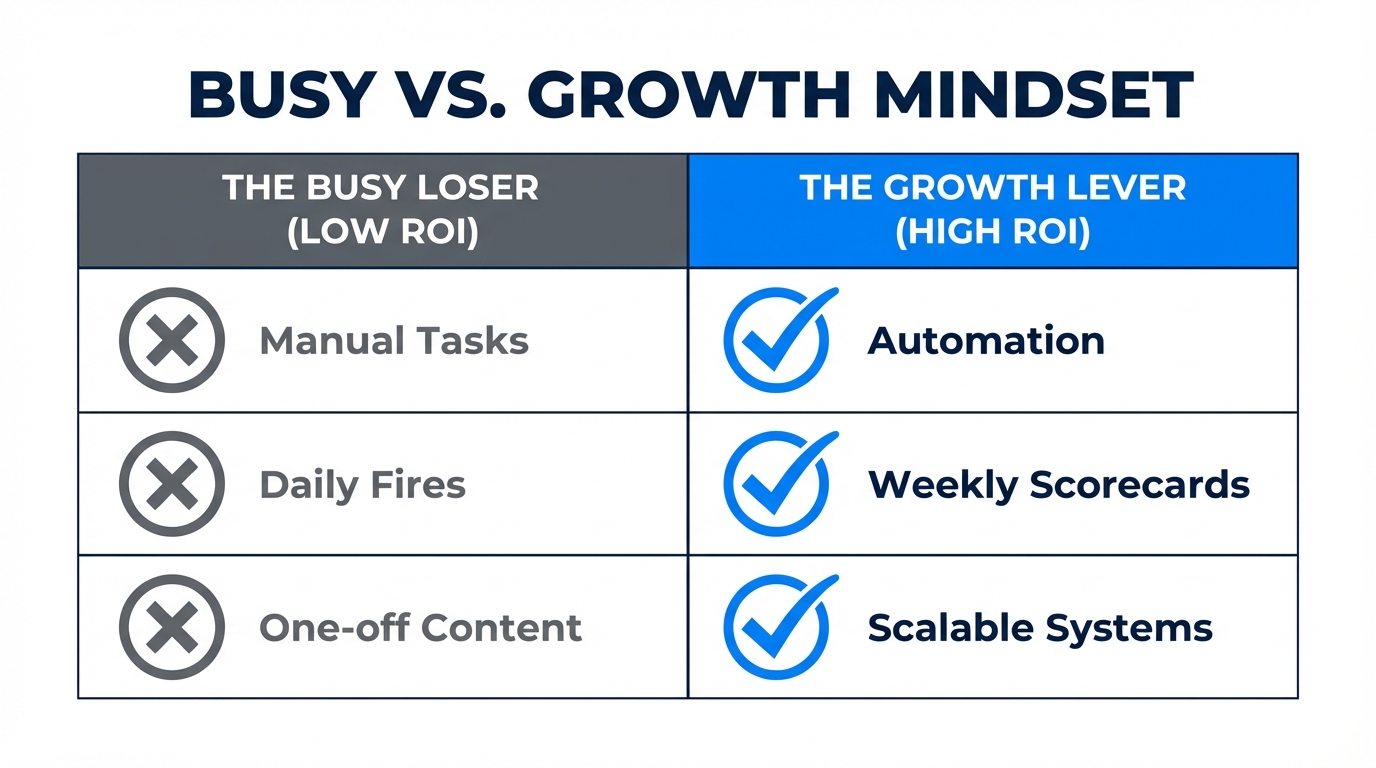
A major obstacle for most entrepreneurs is the 'ego business'—the project you feel like you *should* build because it sounds impressive, even if it's not your most profitable. In 2020, Walls found himself plateaued at $8,000 per month, split between Starter Story and a software plugin. To break the deadlock, he utilized the Think Week methodology, famously used by Bill Gates.
During a week-long road trip with no social media or email, Walls realized he was putting 20% of his effort into 80% of his revenue. He made the radical decision to drop every other project and go all-in on Starter Story. Within one month of this focused effort, the business's revenue doubled. This highlights the 80/20 rule of content operations: often, the path to $25k+ per month isn't doing more things, but doing one high-leverage thing much better.
The New Era: Apps as Info Products
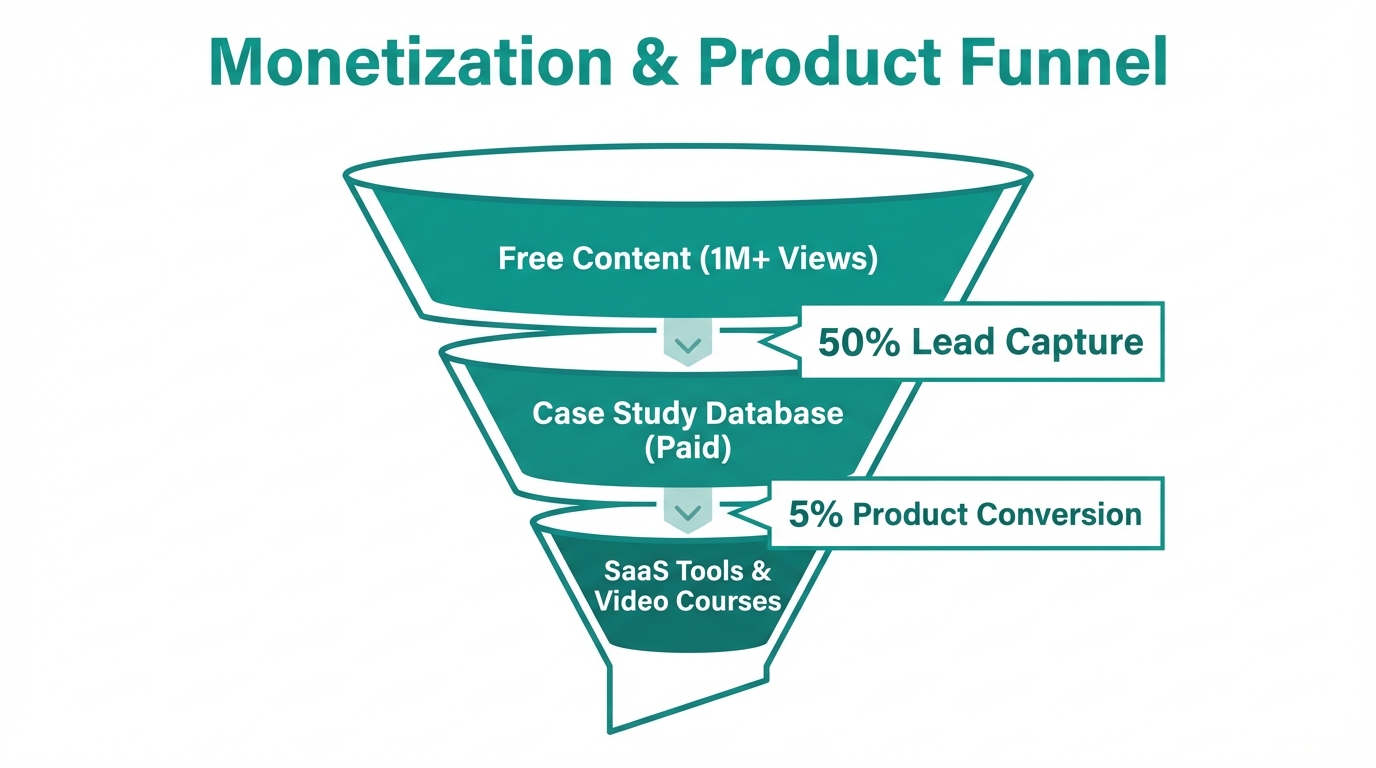
The media landscape is shifting. Today, simple iOS apps are becoming the new information products. Apps like Push Scroll (which forces push-ups before scrolling social media) or niche health trackers are generating $30k-$70k per month. These apps succeed because they combine AI-powered development with viral TikTok discovery.
For founders, the opportunity lies in B2B Video. Most companies don't have a native 'video' function yet. If you can build a system that delivers high-quality YouTube strategy or 'man on the street' interviews for brands, you can charge $50,000 to $100,000 per month. Tools like Canva for design and Stormy AI for creator sourcing allow you to build these agencies with minimal overhead.
Final Takeaways for Scaling Your Media Brand
- Adopt an Operating System: Whether it's a modified EOS or a custom Notion workflow, you need a system to manage the 'growing headache' of a scaling business.
- Validate Before Building: Use 'vibe coding' or viral videos to validate an app or content idea before investing in full production.
- Schedule Your Thinking: Take a 'Think Week' at least once a year to audit your focus and cut the projects that are distracting you from your core revenue driver.
Scaling from a solopreneur to a content empire isn't about working harder; it's about installing the rails that allow your business to move forward without you. By combining the strategic focus of EOS with the tactical organization of Notion, you can build a media brand that isn't just a job, but a sellable asset.