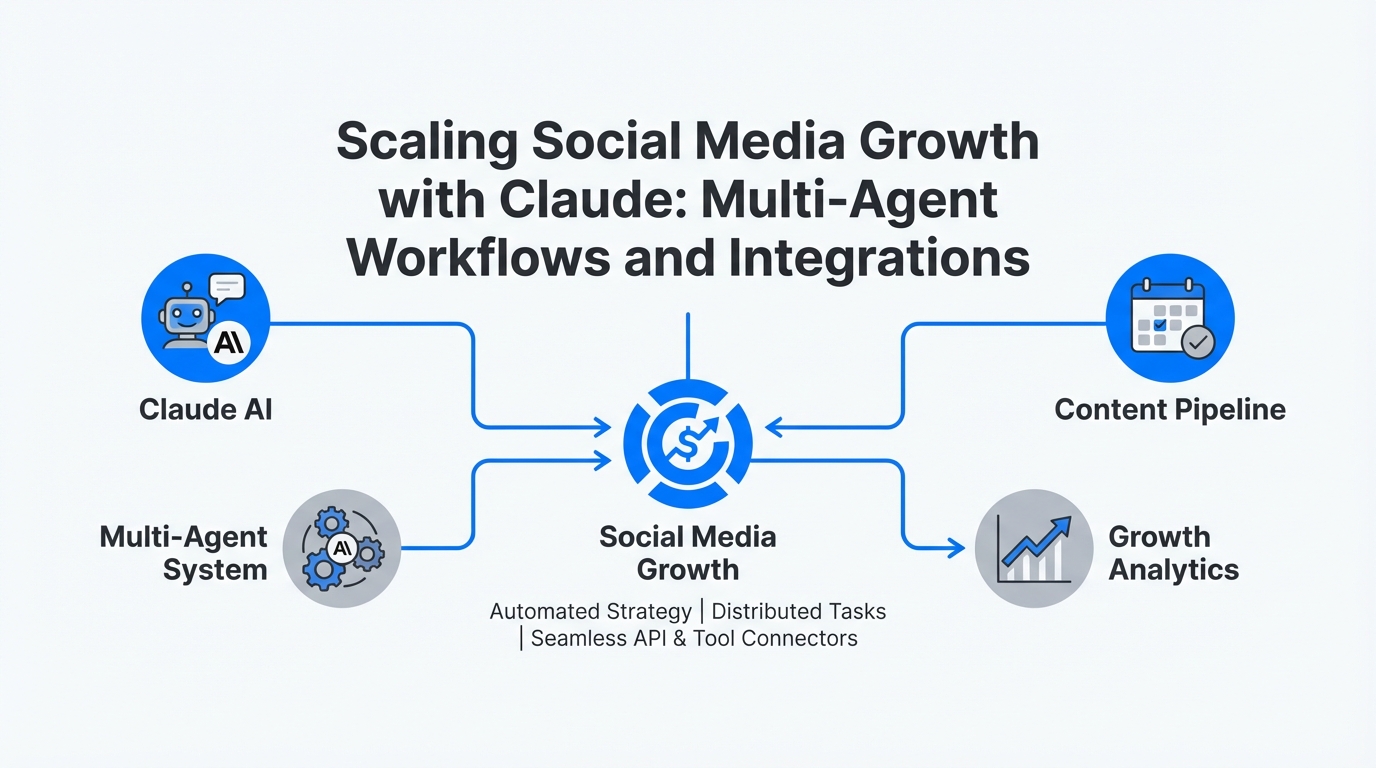
In the rapidly evolving landscape of 2025, social media growth is no longer a game of volume—it is a game of sophisticated orchestration. Marketers have moved beyond simple chatbots; we are now entering the era of the "agentic" social media manager. Research from the Marketing AI Institute suggests that the shift from simple content generation to 'agentic' social media management is the defining trend for agencies looking to scale without ballooning their overhead. By leveraging Anthropic's Claude, brands are seeing a staggering 127% faster content creation while maintaining roughly 89% of human quality standards. This isn't just about writing captions; it's about building a multi-agent AI systems marketing ecosystem that functions while you sleep.
The Rise of Claude in Enterprise Marketing
By mid-2025, Claude’s monthly active users reached 30 million, but the real story lies in its market penetration. Data from Gartner indicates that Claude currently holds 32%–40% of the enterprise AI market share, making it the preferred choice for professional marketing teams. Unlike more consumer-focused models, Claude's appeal lies in its "human-like" nuance. Experts from Helen Cox Marketing consistently rate Claude’s output as significantly more sophisticated for customer-facing copy, avoiding the predictable "AI-isms" that often plague competitors.
This massive context window is the engine behind AI social media automation. Instead of feeding the AI one post at a time, you can upload your entire brand voice guideline, previous top-performing posts, and competitor analysis into Claude Projects. This ensures 100% consistency across LinkedIn, Instagram, and X, turning the AI from a simple writer into a strategic thought partner that understands your brand's soul.
"Moving from 'AI as a writer' to 'AI as a strategist' is the key to predicting trend performance and sentiment in real-time."
Building Multi-Agent Systems: The Growth Hacker’s Blueprint
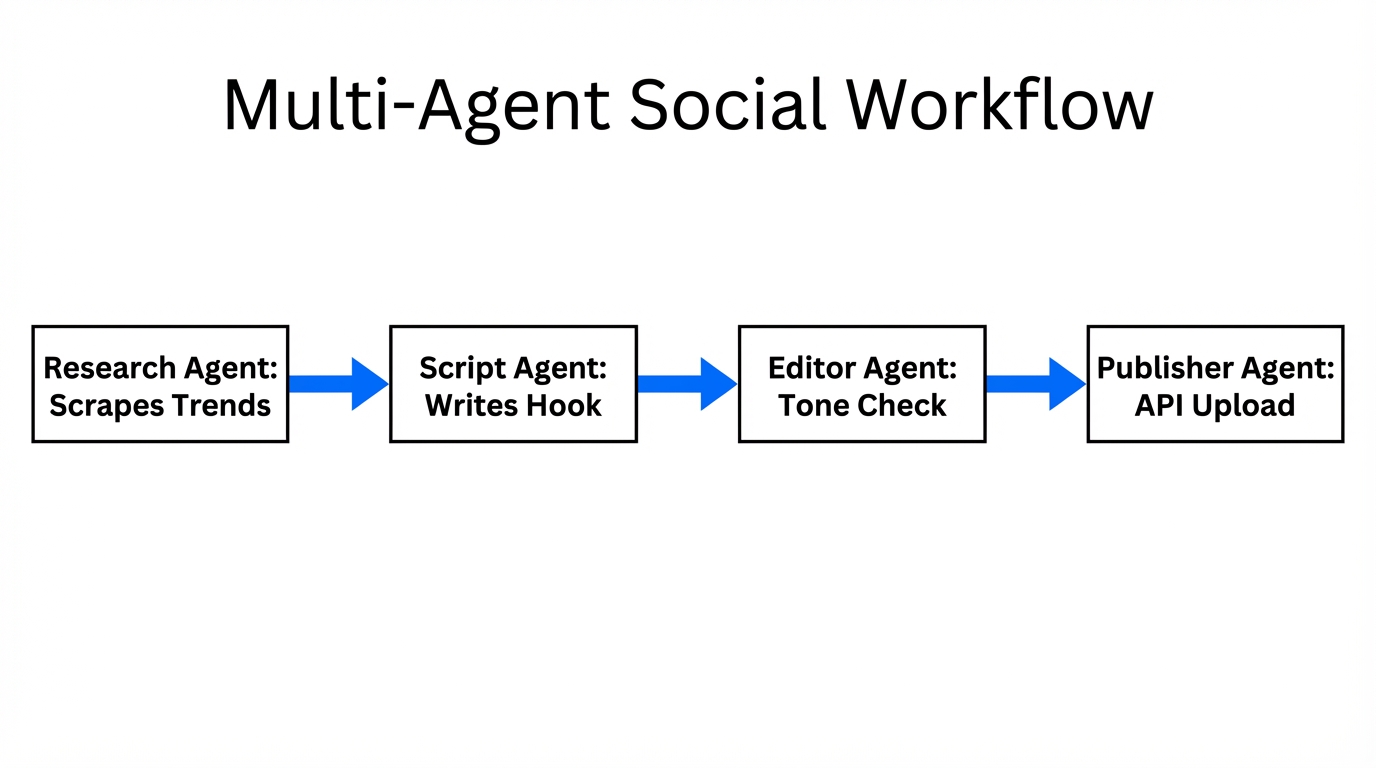
To truly scale, you need to move beyond a single prompt window. The most successful agencies are now deploying specialized "sub-agents" using Claude Code to handle repetitive tasks autonomously. This multi-agent AI systems marketing approach distributes the workload across specialized instances of the model, each optimized for a specific part of the growth funnel.
| Agent Role | Primary Responsibility | Success Metric |
|---|---|---|
| Agent A: The Analyst | Monitors weekly engagement metrics and sentiment. | Metric Accuracy |
| Agent B: The Hook Specialist | Brainstorms trend-reactive hooks based on real-time data. | Click-Through Rate (CTR) |
| Agent C: The Visual Designer | Generates precise image prompts for Canva. | Brand Alignment |
By compartmentalizing these tasks, you reduce the risk of "task dilution" where a single AI instance tries to do too much and fails at everything. For example, Agent A can identify that your audience engages most with educational carousels on Tuesday mornings. It then passes this insight to Agent B, who drafts five high-impact hooks. Finally, Agent C creates the specific visual descriptions needed to generate the creative assets via Canva's developer APIs.
Visual Automation: The Claude x Canva Integration
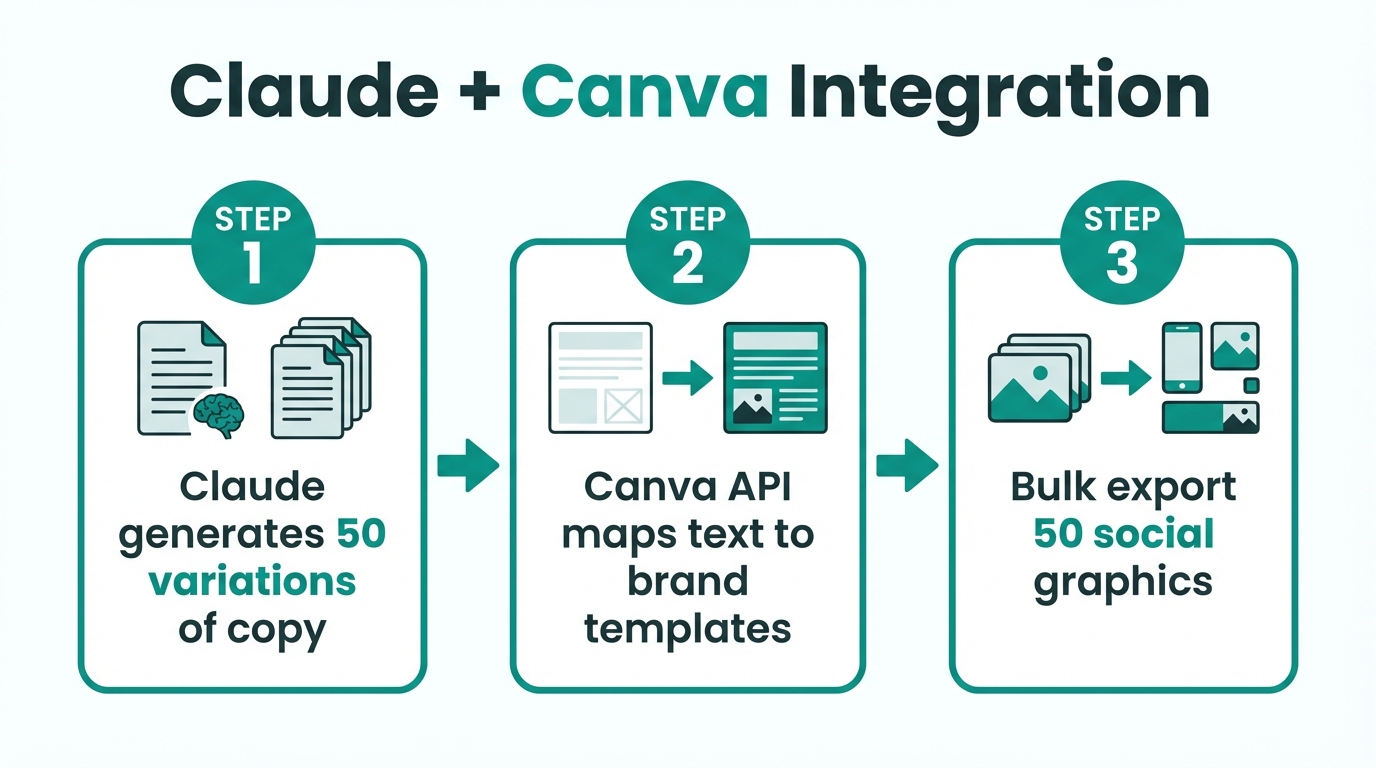
The July 2025 launch of the Claude x Canva integration revolutionized the creative workflow. By using the Model Context Protocol (MCP), marketers can now generate and edit social media visuals directly within the Claude interface. This eliminates the friction of jumping between tabs and manually copying hex codes or style guides.
When you use the Claude Canva integration, the AI doesn't just suggest an image; it understands your brand's existing templates and design language. This has allowed small businesses—like a restaurant chain with 25 locations—to reduce monthly content planning time from 20 hours to just 3 hours, while simultaneously seeing a 35% increase in engagement. This level of AI social media automation ensures that even high-volume accounts maintain a premium aesthetic without the need for a massive design team.
Real-Time Social Listening and Automated Outreach
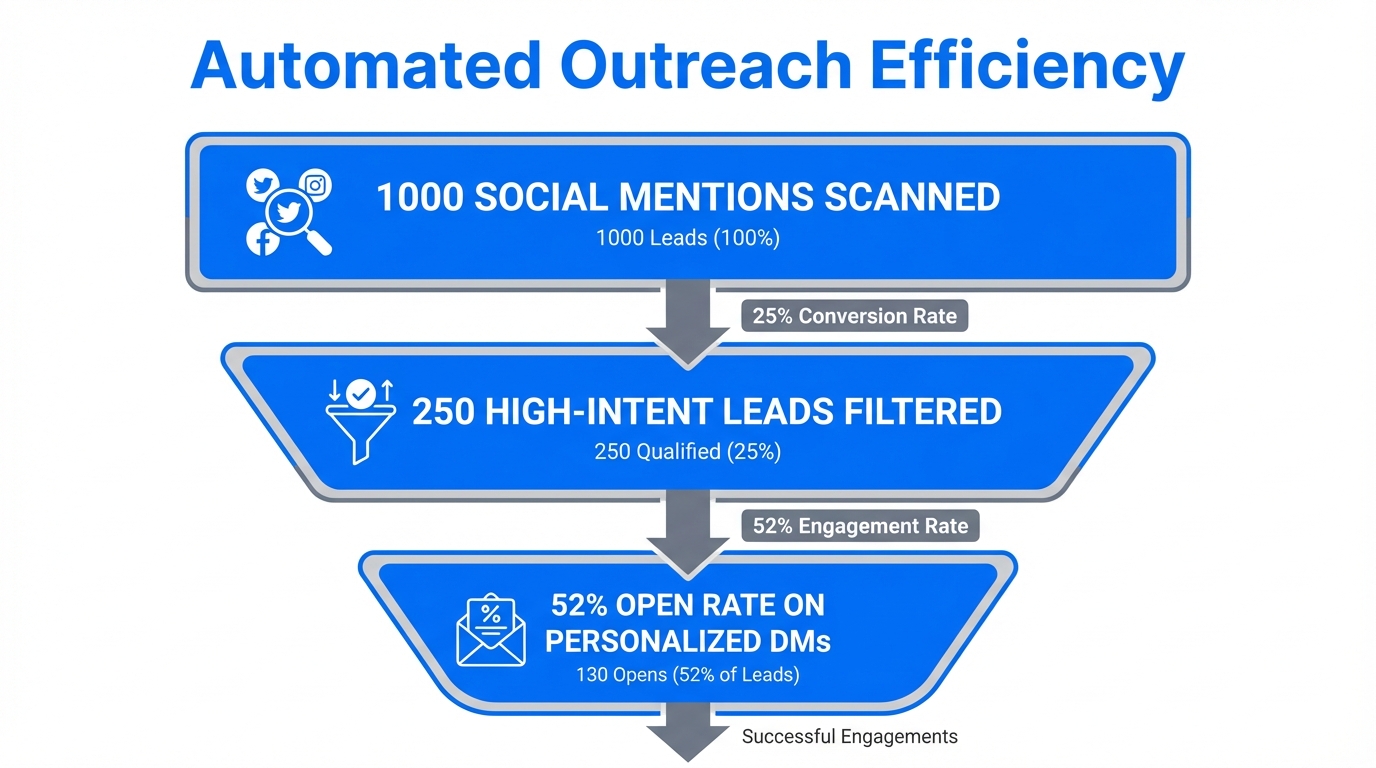
Traditional social listening often involves messy CSV exports and delayed analysis. Modern growth hackers are now leveraging AI social listening tools like Xpoz, which allows Claude to directly query real-time social data via MCP. This means your agents can react to trends as they happen, rather than 48 hours later when the window of opportunity has closed.
This real-time data is particularly powerful when applied to automated social media outreach. In the SaaS world, personalization is the difference between a conversion and a block. A recent tech industry case study revealed that integrating Claude via API to personalize LinkedIn outreach messages resulted in achieving a 52% open rate and a 21% reply rate. This is significantly higher than the industry average for cold outreach.
To manage this at scale, many teams are integrating these AI flows with their creator management processes. While Claude handles the sophisticated messaging, platforms like Stormy AI streamline creator sourcing and outreach, ensuring that the personalized outreach is directed at the right influencers who actually fit the brand's niche and audience quality standards.
"Scaling outreach isn't about sending more emails; it's about making 1,000 emails feel like 1,000 unique conversations."
The Automation Stack Playbook
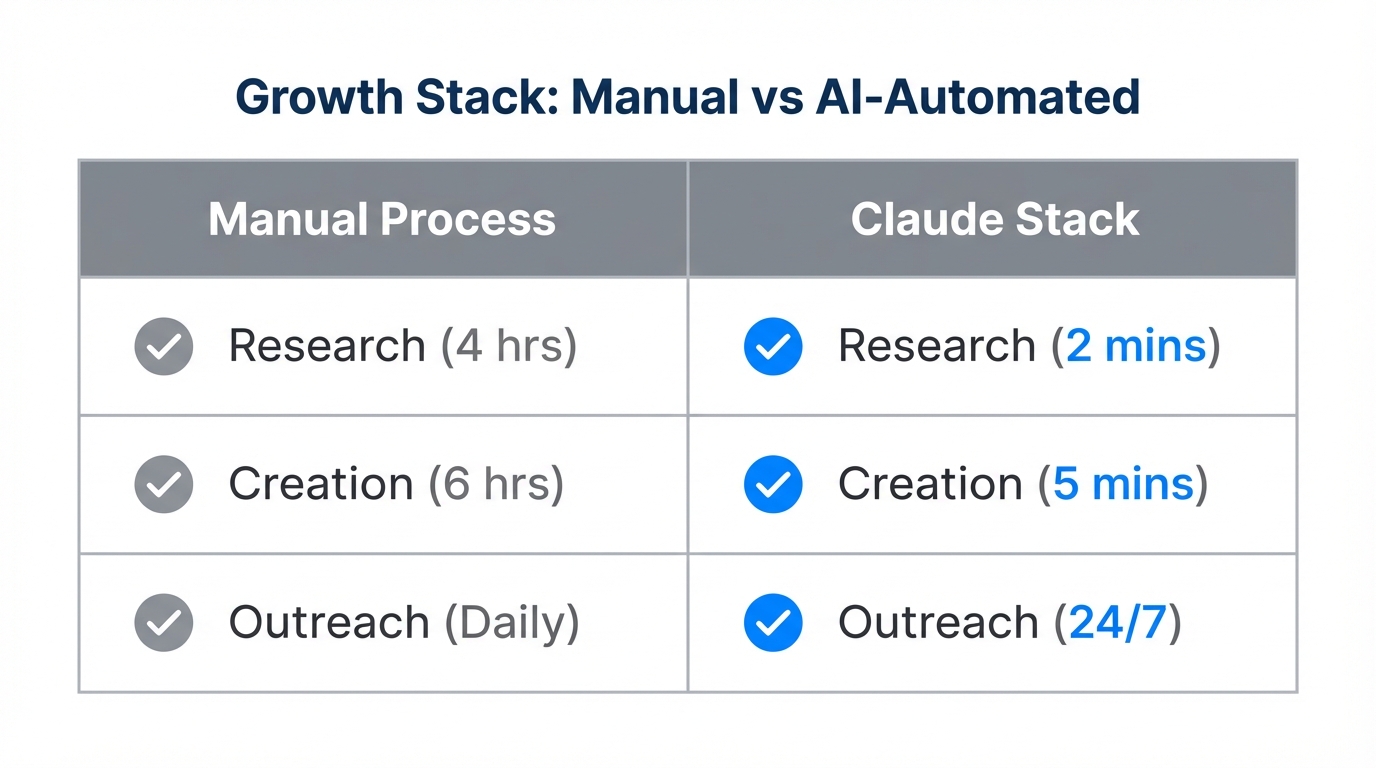
Building a robust automation stack requires connecting your "brain" (Claude) to your "hands" (distribution tools). Here is the recommended playbook for setting up a fully automated community management and content distribution engine:
- Triggering: Use Zapier or Make.com to monitor brand mentions across X, Instagram, and LinkedIn.
- Processing: Send the mention content to Claude via API. Include your brand voice document as context so the response sounds authentic.
- Filtering: Use Claude's Constitutional AI framework to ensure the response is ethical and brand-safe, filtering out potential PR risks.
- Scheduling: Automatically push the approved response to Buffer or Hootsuite for final distribution.
This workflow allows a single growth hacker to manage the community engagement of several major brands simultaneously. For more advanced influencer-led campaigns, using the AI agent features within Stormy AI can further automate the discovery and follow-up process, allowing you to find the perfect TikTok or Instagram creators while your main AI stack handles the content creation.
Common Mistakes to Avoid in AI Automation
Despite the efficiency gains, blind trust in AI can lead to the "hallucination trap." Research from industry analysts highlights that even the most advanced models can occasionally fabricate statistics. To mitigate this, always verify critical data using tools like Perplexity or Google Search before publishing.
Another common error is ignoring platform nuance. A viral thread on X will rarely perform the same way as a LinkedIn thought-leadership post. Claude is exceptionally good at "localizing" content for each platform's culture, but only if you explicitly prompt it to do so. Avoid the temptation to post the exact same copy across all channels; instead, use your multi-agent system to adapt the core message for each unique audience.
Conclusion: The Future of Growth Hacking
The transition to multi-agent AI systems marketing represents a fundamental shift in how we approach social media. By combining the strategic depth of Claude with visual integrations like Canva and outreach platforms, brands can achieve scale that was previously impossible. Whether you are a startup looking to grow from 0 to 10,000 followers in a month or an established SaaS firm looking to optimize automated social media outreach, the tools are now in place to make it happen. The goal is no longer to work harder, but to build a better system—one where AI handles the repetitive, and humans handle the creative soul.