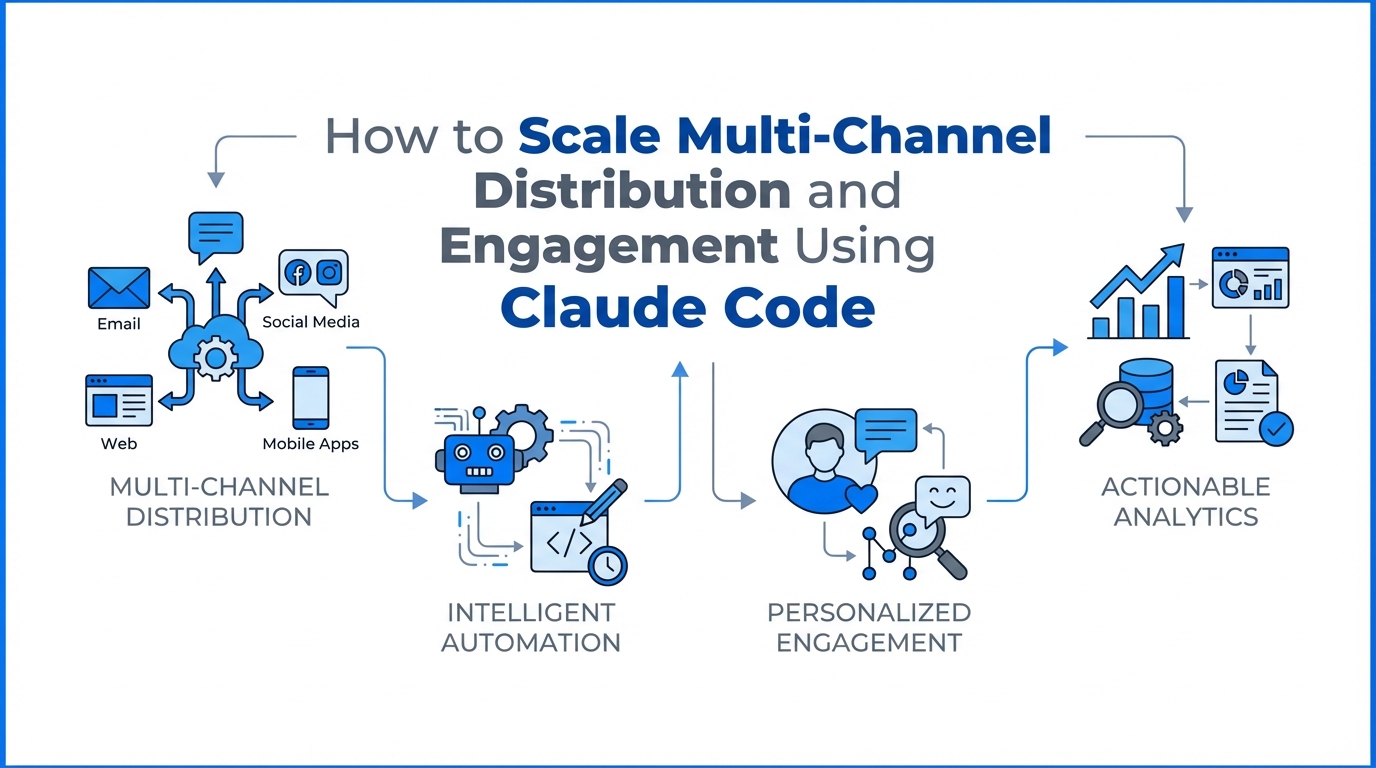
For years, the biggest hurdle in the creator economy hasn't been coming up with ideas—it’s been the grueling reality of distribution. You write a long-form article, then you have to slice it into a LinkedIn post, a dozen X (formerly Twitter) threads, three Instagram captions, and a community poll. Most creators and marketing teams hit a wall here, often referred to as the "distribution bottleneck." However, a tectonic shift is occurring. According to Gmelius, 79% of companies have already begun adopting AI agents to solve operational bottlenecks, moving past simple chat interfaces into autonomous systems that actually execute work across multiple platforms.
By leveraging Claude Code and the new Model Context Protocol (MCP), brands are no longer just using AI to write; they are using it to build autonomous distribution engines. This guide explores how you can move from manual posting to an agentic multi-channel distribution strategy that scales your authority while you sleep.
"The shift from 'AI as a writer' to 'AI as an autonomous social employee' is the defining trend of the 2026 creator economy."
Why Distribution is Shifting to Agents
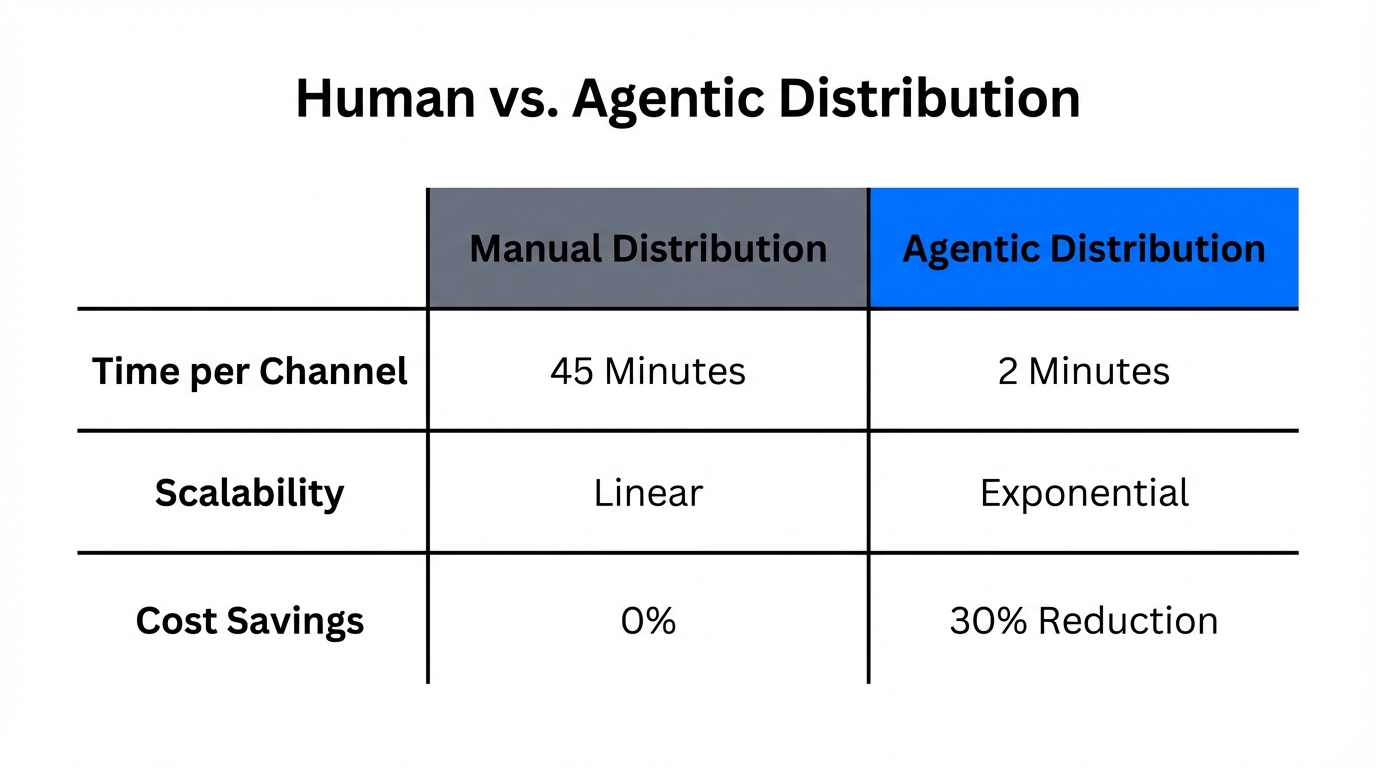
The traditional social media workflow is broken. Even with scheduling tools, the mental load of adapting a brand voice for different platforms leads to burnout. This is why 88% of executives are planning to significantly increase their investment in agentic capabilities over the next 18 months, as reported by the Digital Marketing Institute. Unlike legacy automation, which simply pushes a button at a certain time, an AI agent built with Claude Code can reason about the content it is distributing.
When you build an agent, you aren't just scheduling posts; you are deploying a system that can monitor trending topics on Reddit, summarize industry news, and cross-post tailored insights to LinkedIn and X without human intervention. This results in a 30% reduction in content creation time and a massive boost in consistency.
The Tech Stack: Claude Code and MCP
To scale distribution, you need more than a browser window. You need a development environment where the AI can "touch" the internet and your file system. This is where Claude Code (the CLI) and the Claude Agent SDK come into play. These tools allow you to create a "stateful" agent—one that remembers what it posted yesterday and understands the long-term goal of your campaign.
The secret sauce, however, is the Model Context Protocol (MCP). Think of MCP as the "USB-C for AI." Traditionally, if you wanted an AI to post to social media, you had to write custom code for every single API. With MCP, your agent can connect to external data sources and social APIs using standardized servers. You can find ready-to-use servers on the MCP Marketplace or explore the Awesome MCP Servers list to find integrations for everything from Google Search to Slack.
| Feature | Legacy Automation | Agentic Distribution (Claude Code) |
|---|---|---|
| Execution | Rules-based (If This Then That) | Reasoning-based (Strategic) |
| Integration | Custom API wrappers | Model Context Protocol (MCP) |
| Context | Single post awareness | Full repository & strategy awareness |
| Efficiency | Linear time savings | Exponential (30%+ reduction) |
The 'News Roundup' Agent: A Case Study
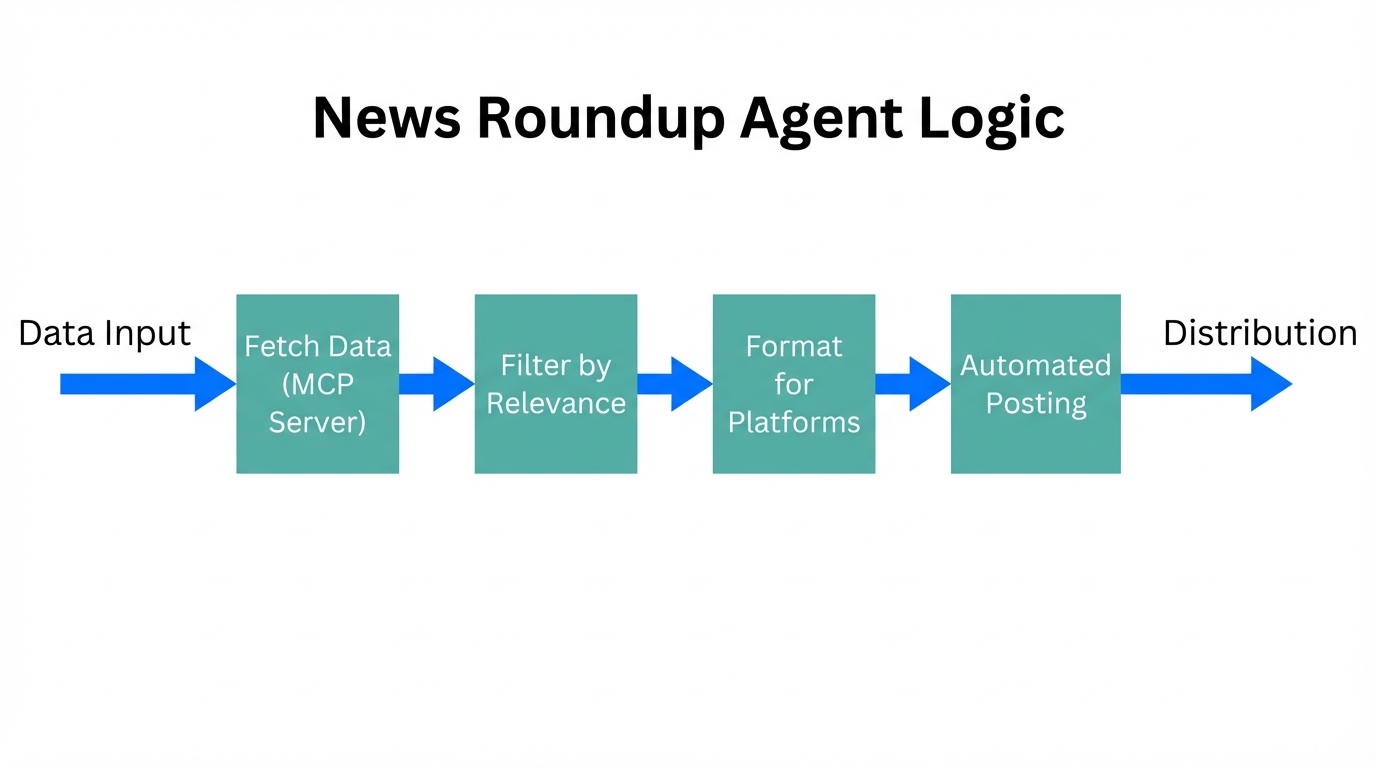
One of the most effective ways to build authority is by becoming the "curator" for your industry. A developer using the SmythOS framework recently demonstrated a LinkedIn agent that autonomously searches for "AI Industry" trends, selects the top three most relevant articles, and drafts a 100-word executive summary. Platforms like Stormy AI streamline creator sourcing and outreach, providing the authentic perspective that these agents then distribute across channels.
By using the Claude 3.7 Sonnet thinking mode, the agent doesn't just copy-paste text. It reasons about why a specific news piece matters to its specific audience. This transition from "assistant" to "strategist" is what drives the 20-30% lift in engagement seen by teams using modern marketing automation, according to Templated.
"The 'News Roundup' agent isn't just a bot; it's a 24/7 research department that publishes your brand's perspective while you sleep."
Step-by-Step Playbook: Building Your Distribution Agent
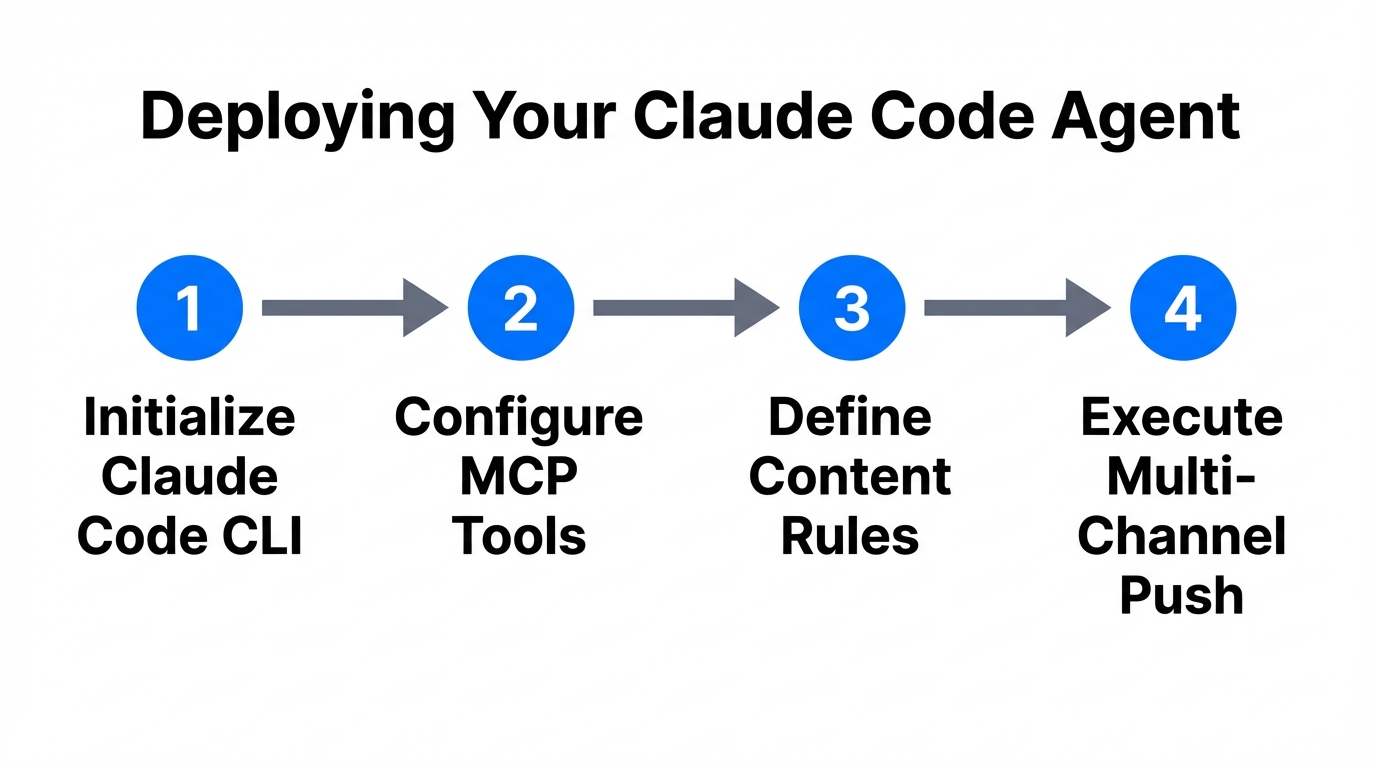
Ready to build? Follow this playbook to set up an autonomous distribution agent using Claude Code and the Agent SDK.
Step 1: Environment Initialization
Start by setting up your project in your terminal. You will need the Claude Agent SDK to handle the "Agent Loop," which allows Claude to make decisions, execute tools, and verify results.
npm init -y
npm install @anthropic-ai/claude-agent-sdk
Ensure you have access to the Anthropic Developer Console to generate your API keys.
Step 2: Connect Social APIs via MCP
Instead of writing complex OAuth code, use a pre-built Social Media MCP Server. This allows your agent to communicate with X, LinkedIn, and Mastodon through a single interface. If you need a custom tool, you can use the Postman MCP Generator to turn any social API into an AI-ready tool in minutes.
Step 3: Define Strategic Memory in CLAUDE.md
Claude Code reads a file called CLAUDE.md at the start of every session. Use this to store your Brand Voice, Posting Schedules, and Negative Constraints (e.g., "Never use more than two emojis"). This ensures consistency without needing to repeat your instructions in every prompt.
Step 4: Implement Autonomous Engagement
Engagement isn't just about posting; it's about responding. You can build Community Poll Bots that analyze comments on YouTube and automatically generate engagement polls to keep the conversation going, as highlighted in Forbes.
Managing Efficiency and Avoiding Pitfalls
While the benefits are clear, moving toward full autonomy requires guardrails. One of the most common mistakes is failing to implement a "Kill Switch." Agents can occasionally enter infinite loops if a tool returns an error. Always set a maxIterations limit in your SDK configuration to prevent runaway API costs.
Additionally, for larger campaigns involving dozens of creators, platforms like Stormy AI provide a centralized Creator CRM to track these interactions, ensuring your AI agents aren't operating in a silo. You can pair your distribution agent with a project management tool like Asana or Linear to track the status of every piece of content the agent produces.
Finally, consider the security of your environment. Running an agent with full file access on your primary machine is risky. Experts recommend using Docker containers to sandbox the agent, limiting its access to only the files it needs for social distribution. This protects your broader system while allowing the AI to manage your Unified Social APIs effectively.
Conclusion: The Future of Agentic Distribution
Scaling multi-channel distribution is no longer a matter of hiring more social media managers—it’s about building smarter systems. By combining the reasoning power of Claude 3.7 with the connectivity of MCP, you can build a distribution powerhouse that manages your community, curates industry news, and engages with your audience 24/7.
The goal is to move toward that 30% reduction in content creation time, allowing your human team to focus on high-level strategy and creative breakthroughs. Whether you are using tools like Stormy AI to discover influencers or Claude Code to build your distribution bot, the future of the creator economy is undoubtedly agentic. Start small, define your brand voice in CLAUDE.md, and watch your multi-channel engagement reach new heights.