Scaling Social Commerce in 2026: A Marketer Guide to Google Recommendations AI and Visual Discovery
Discover how Google Recommendations AI and visual search are transforming social commerce in 2026. Learn the 'Ask and Act' strategy to drive 30% higher ROI.
In 2026, the digital storefront is no longer a static grid of products; it is a dynamic, conversational entity that lives inside social feeds and AI assistants. We have officially moved past the era of 'search and scroll' into a high-velocity phase of 'Ask and Act' commerce. For marketers and creator economy founders, this shift represents the most significant opportunity for growth since the invention of the smartphone. By leveraging tools like Google Recommendations AI and multimodal visual discovery, brands are finding that the distance between a customer's inspiration and their final purchase has shrunk to seconds.
The data backing this transition is staggering. The global AI-enabled ecommerce market, which sat at $8.65 billion just last year, is now projected by Statista to skyrocket to over $64 billion by 2034. This growth is driven by a fundamental change in consumer behavior: 71% of consumers now expect personalized experiences, and 76% report active frustration when brands fail to provide them. In 2026, if your social commerce strategy isn't predictive, it's already obsolete.
The Era of 'Ask and Act': From Keywords to Conversations
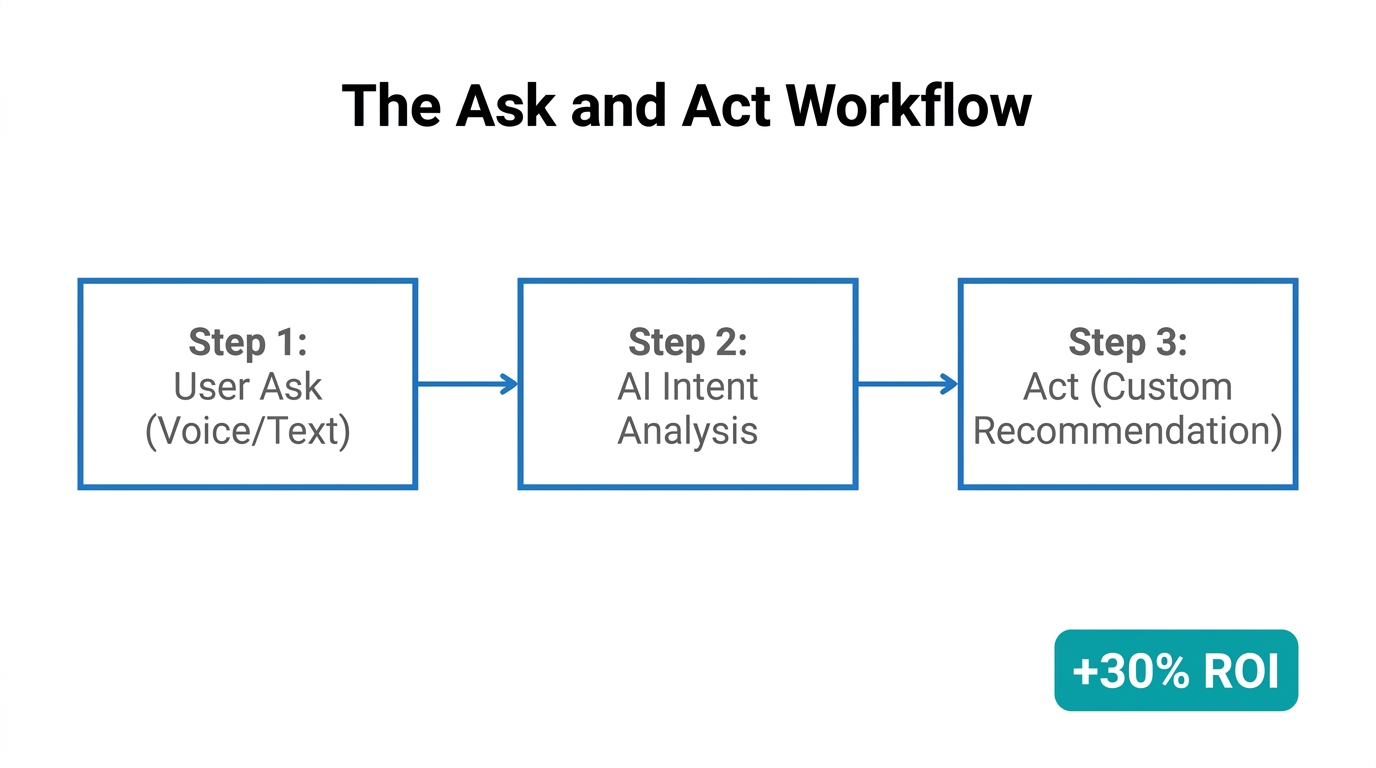
The biggest trend defining this year is the transition to conversational commerce. Traditional keyword searches are being replaced by natural language queries. Instead of typing 'blue running shoes,' users are now telling their AI agents, 'I need an outfit for a rainy half-marathon in Seattle next month.' This shift, as highlighted by Forbes, allows AI shopping agents to act as personal stylists, moving beyond simple correlations to deep contextual understanding.
"The shift from 'search and scroll' to 'ask and act' defines the 2026 social commerce landscape — brands that don't adapt to natural language queries will lose their seat at the table."
To succeed in this environment, marketers must adopt a conversational commerce strategy that focuses on intent rather than just traffic. This involves feeding your recommendation engines with high-quality, structured data. Experts note that the winners in this space are those with centralized and well-structured data pools. When your AI understands the 'why' behind a purchase, it can offer suggestions that feel intuitive rather than intrusive.
Visual & Multimodal Discovery: Searching Without Words
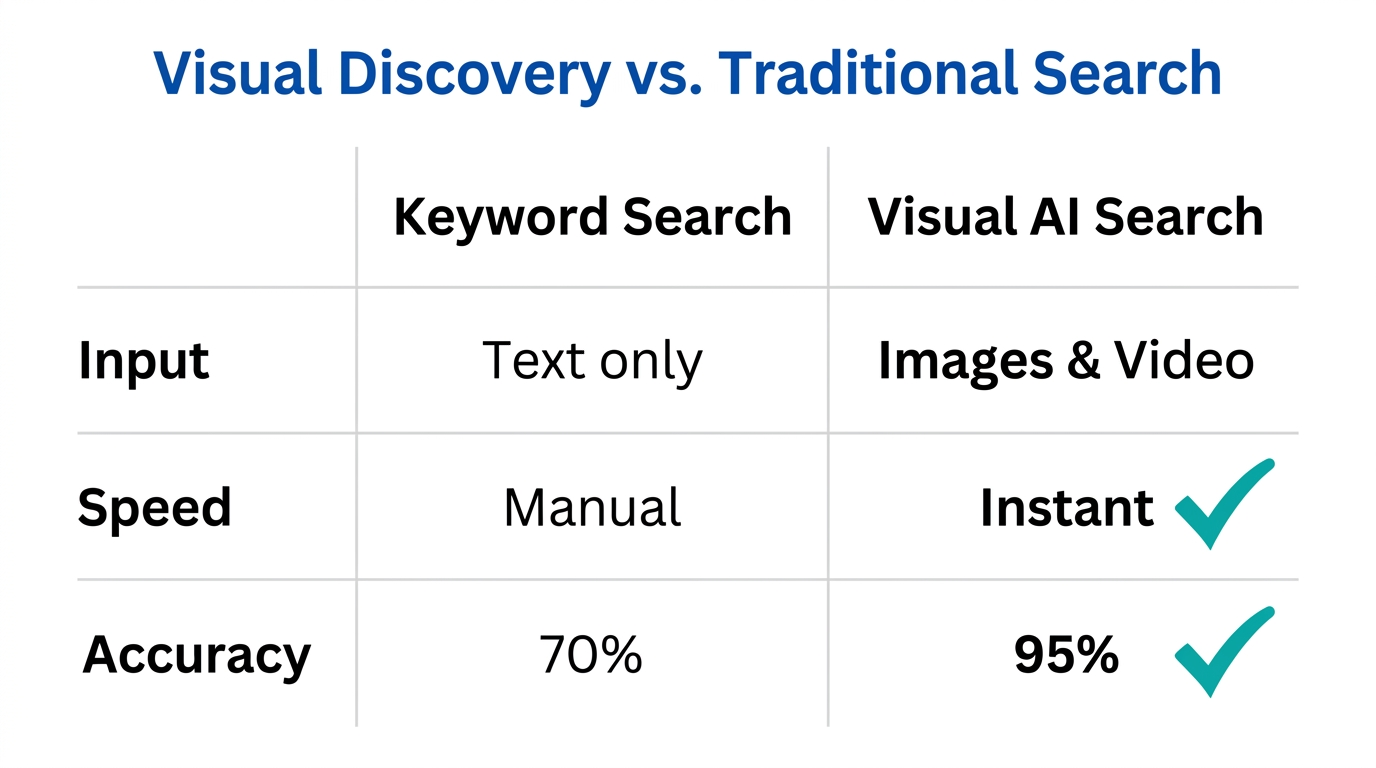
In 2026, the camera has become the new search bar. Visual searches have grown 70% globally, with major platforms now processing billions of image-based queries every month. This trend, termed multimodal discovery, allows users to combine images, text, and even voice to find exactly what they want. For example, a user can snap a photo of a creator's jacket on TikTok Shop and ask their phone, 'Find this in a size medium and show me matching boots.'
According to Rep AI, visual discovery is a primary driver of social-led customer acquisition. To capitalize on this, brands must invest in AI-first catalog enrichment. This process uses computer vision to automatically tag product attributes — such as material, pattern, and silhouette — directly from images. These rich metadata tags ensure that discovery engines, like Google Recommendations AI, have the granular data needed to surface your products in complex visual searches.
| Search Era | Primary Input | User Intent | Discovery Method |
|---|---|---|---|
| Search & Scroll | Keywords | General Interest | Browsing grids |
| Ask and Act (2026) | Natural Language / Voice | Specific Problem-Solving | AI Conversational Agents |
| Visual Discovery | Images / AR | Aesthetic Replication | Multimodal Search |
Driving 35% Higher Sales with AR and Virtual Try-Ons
One of the most effective ways to bridge the gap between social discovery and purchase is through Augmented Reality (AR). Tools that allow for virtual try-ons or home visualization are no longer gimmicks; they are essential conversion drivers. IKEA pioneered this with their AR-powered Kreativ app, which helped users visualize furniture in their actual living rooms, leading to 35% more online sales and significantly reducing return rates.
Similarly, in the beauty and fashion sectors, brands like Sephora and L'Oréal have seen transformative results. L’Oréal’s platform, which has hosted over 1 billion virtual try-ons, reported conversion rates 3x higher than standard product pages. When a customer can see how a product fits their body or their space, the psychological barrier to purchase vanishes.
"AI-driven visual tools like virtual try-ons don't just increase conversion; they solve the $500 billion return problem by setting accurate customer expectations before the checkout."
Integrating Influencer Data with Google Recommendations AI
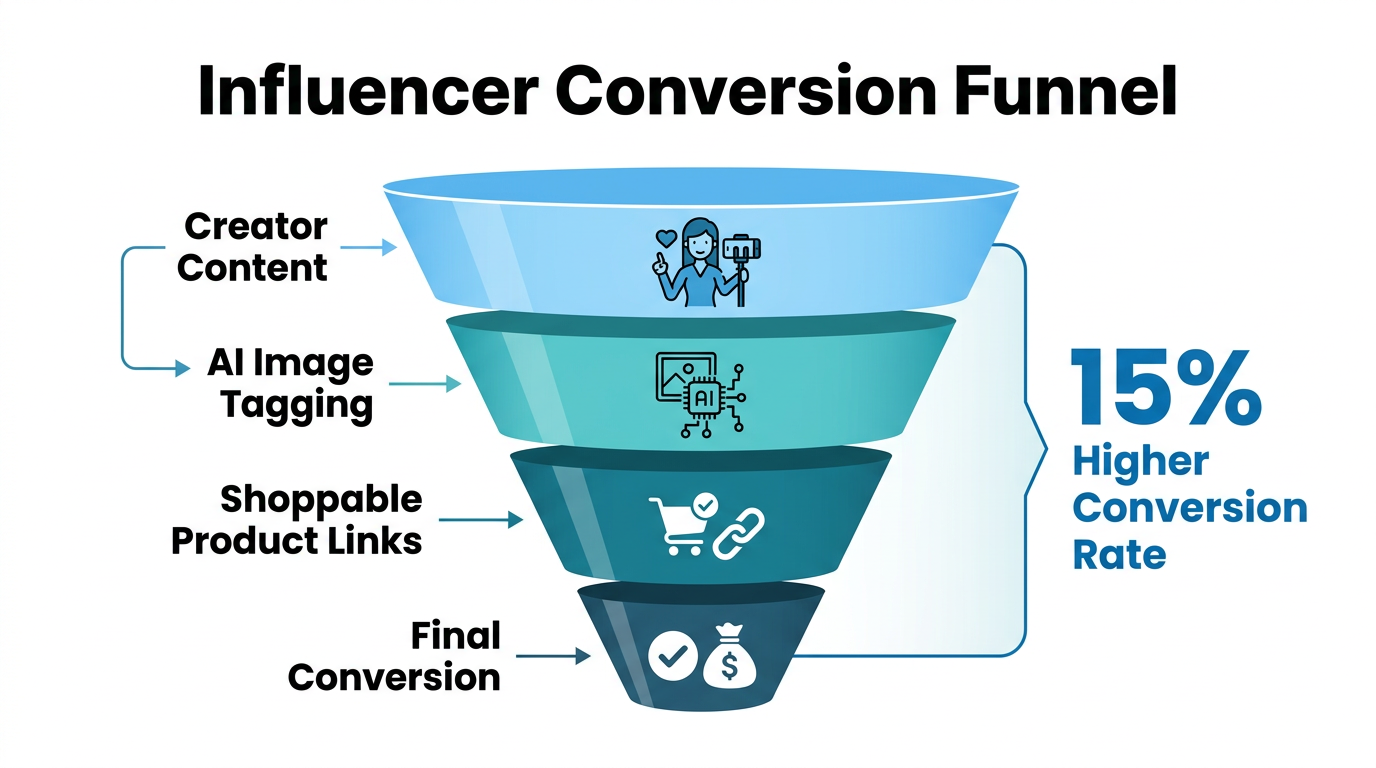
The most sophisticated marketers in 2026 are integrating their influencer marketing data with their backend recommendation engines. This creates a persistent customer profile that follows the user from a creator's social post to the brand's checkout page. By tracking which influencers a customer interacts with, Google Recommendations AI can adjust its relevancy scores in real-time.
For instance, if a user frequently engages with 'minimalist lifestyle' creators, the recommendation engine will prioritize clean-lined furniture and neutral-toned apparel during their next site visit. To find the right creators to fuel this data loop, platforms like Stormy AI are invaluable. Using Stormy's AI search, brands can identify creators whose audience demographics perfectly align with their target customer profiles, ensuring the data fed into the recommendation engine is high-intent and relevant.
The 2026 Social Commerce Implementation Playbook
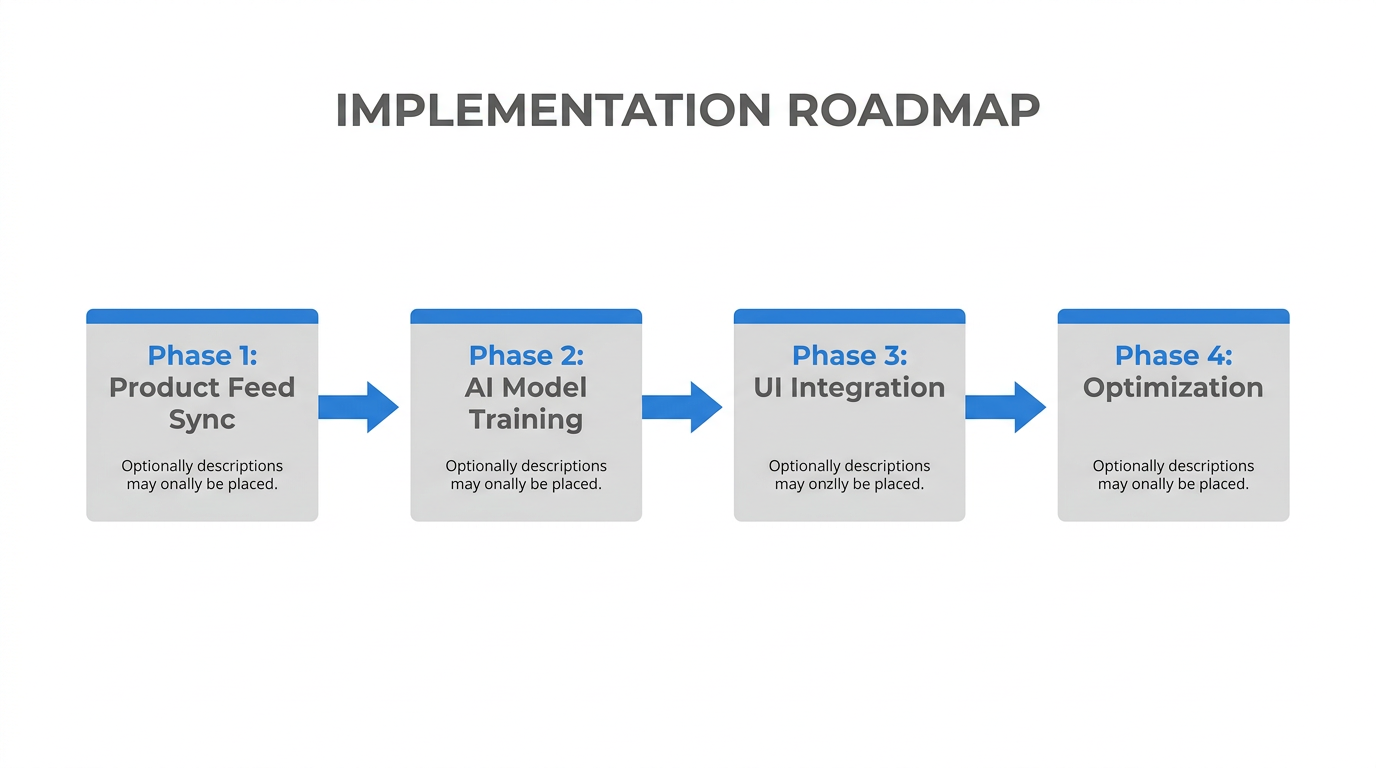
Scaling social commerce requires a structured approach to data and technology. Follow this 3-step playbook to optimize your influencer marketing ROI and conversion rates.
Step 1: Implement Hybrid Filtering
Avoid the 'cold start' problem by combining Collaborative Filtering (tracking what similar users liked) with Content-Based Filtering (analyzing product attributes). This ensures that even new visitors receive relevant suggestions based on the social content that brought them to your site. High-quality AI personalization can increase conversion rates by up to 30% immediately upon implementation.
Step 2: Real-Time Contextual Triggers
Move beyond historical data and start using real-time triggers. If a customer is browsing your site from a location where it is currently raining, your AI should automatically surface waterproof gear. Tools like Zapier or Make can help bridge these environmental data points with your commerce engine to make the AI feel 'human' and attentive to the customer's immediate needs.
Step 3: Hypothesis-Led A/B Testing
Don't just implement AI and walk away. Use platforms like Statsig to run rigorous A/B tests. Set specific hypotheses, such as 'Placing visual search results above the fold will increase CTR by 15%,' and ensure your sample sizes are large enough to account for seasonal shifts.
Common Pitfalls: Why AI Recommendation Engines Fail
Despite the potential, many brands stumble in their execution. The most common mistake is data silos — using incomplete purchase history that leads to recommending products a customer has already bought. Another critical error is choice overload. Showing too many recommendations on a single page can confuse visitors and actually lower conversion rates.
Finally, beware of AI hallucinations in conversational commerce. As industry experts warn, many AI failures are caused by misinformation rather than system crashes. Ensure your AI personal shoppers are grounded in your actual product catalog to maintain customer trust.
"Trust is the currency of 2026. An AI that hallucinates a product feature or price will cost you a customer for life."
Conclusion: The Future of Social Commerce is Predictive
Scaling social commerce in 2026 requires a relentless focus on relevancy. By combining the power of Google Recommendations AI with the reach of visual discovery and influencer-led data, brands can create shopping experiences that feel like magic. The path forward is clear: automate your catalog enrichment, embrace visual search, and treat every social interaction as a data point that helps you better understand your customer. As you build your creator partnerships to drive this discovery, remember that platforms like Stormy AI are here to help you find the perfect influencers to scale your brand to new heights.