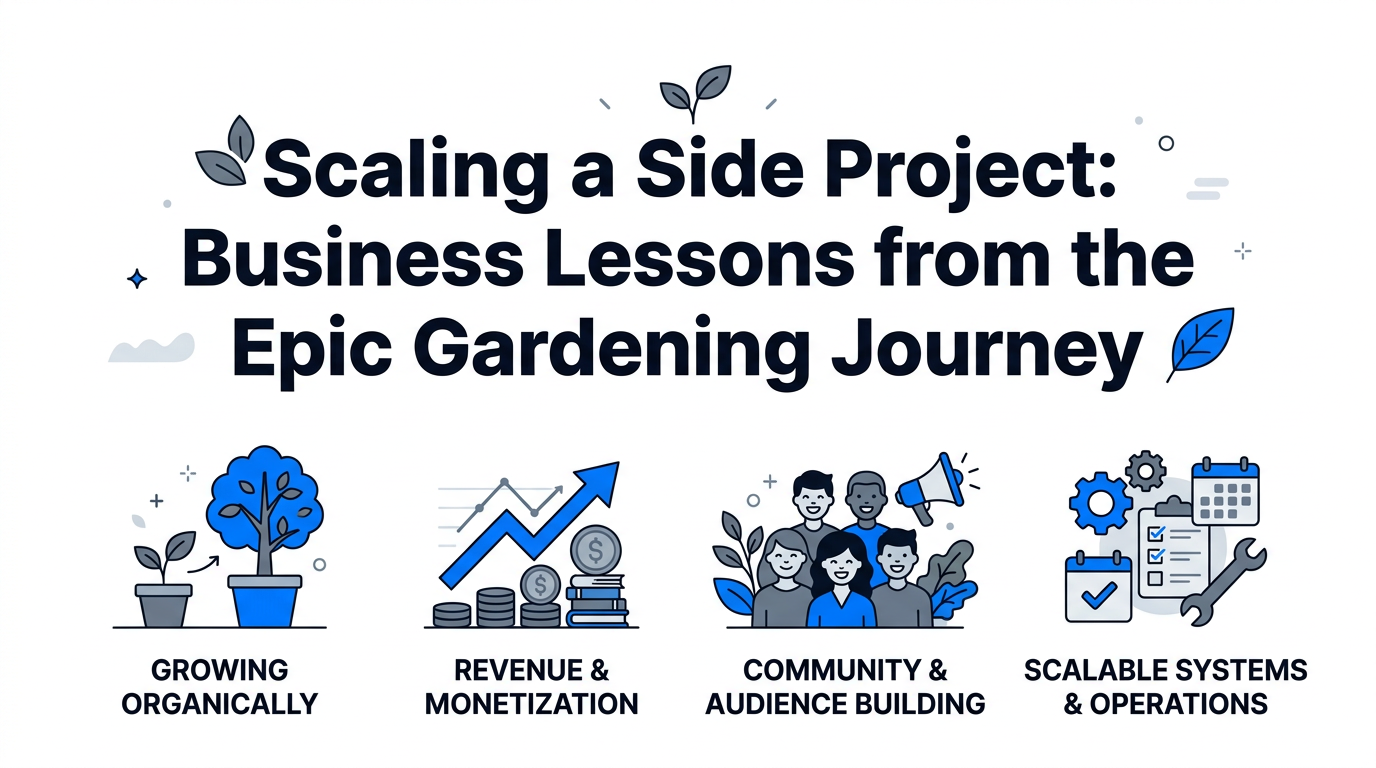
Most entrepreneurs start with a vision, but Kevin Espiritu started with a bucket of dirt and a few seeds. What began in 2013 as a simple hobby to "break the pattern" of sitting behind a computer screen eventually evolved into Epic Gardening, the world's most followed gardening brand. Transitioning from a blog making $400 a month to a powerhouse generating tens of millions in annual revenue isn't just about luck; it's about a fundamental shift in mindset and operations. For founders looking at scaling a side project, the journey of Epic Gardening offers a masterclass in business building, moving from the curiosity of a creator to the strategic precision of a CEO.
Breaking the 'Learning Loop': Execution Over Consumption
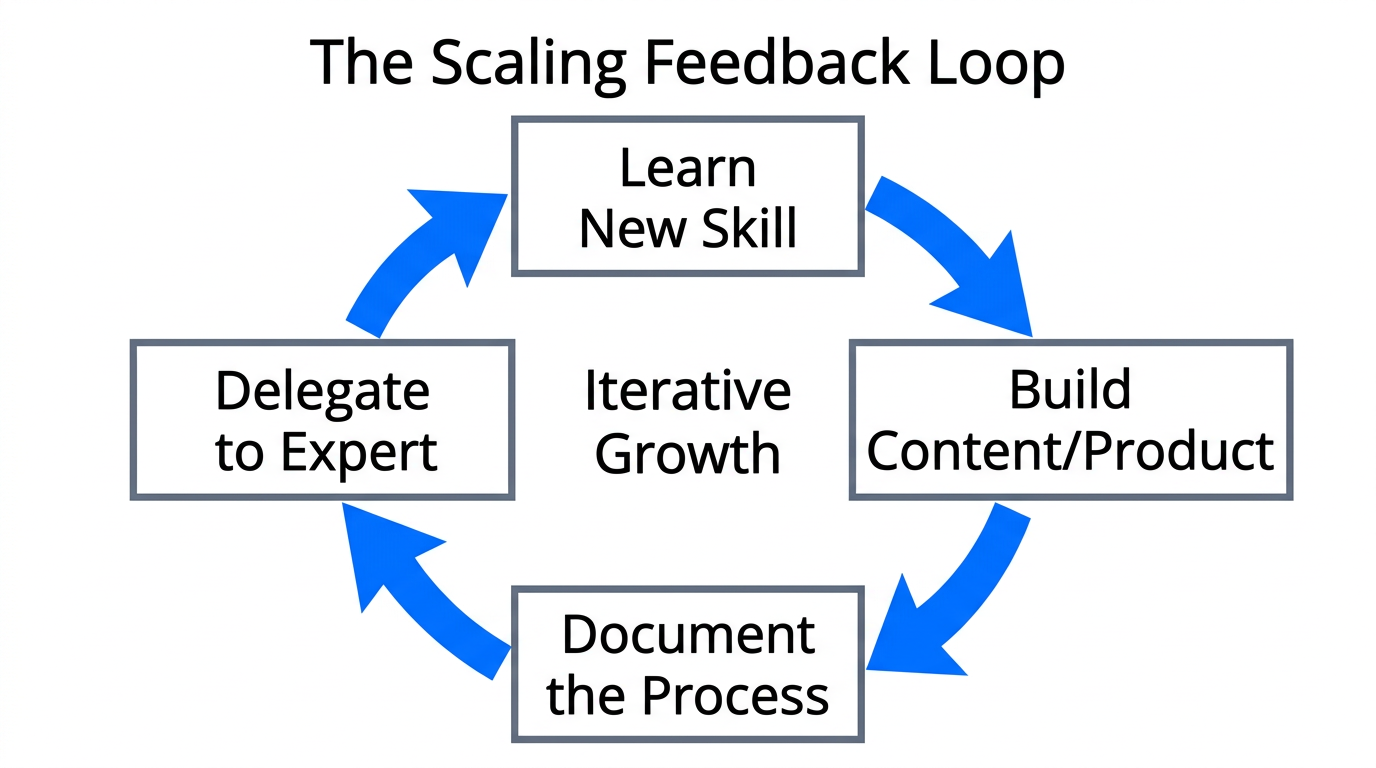
One of the most significant hurdles in the early entrepreneurship growth stages is what Kevin calls the "learning loop." It is the tendency to consume endless amounts of information—videos, books, and courses—without ever putting a shovel in the ground. Many beginners believe they need a perfectly formatted business plan, custom business cards, and a fully registered entity before they even validate if anyone wants what they are selling. This "treading water" is a silent killer for most startups.
The key to breaking this cycle is immediate execution. Kevin's own journey involved spending 12 hours a day researching gardening topics and writing articles for his blog. He didn't wait for a degree in horticulture; he learned by doing, often failing, and then documenting the process. To succeed in bootstrapping a business, you must consume a small amount of knowledge and immediately translate it into action. If you are learning how to start a YouTube channel, don't watch ten hours of tutorials—watch one, then record a video on your phone.
"I would really try to immediately put it into action after you consume, because I spent so many times just spinning my cycles... you just get stuck there and you're really just treading water doing pretty much nothing in the real world."
The Revenue Milestones: Analyzing the Jump from $70k to $7.3M
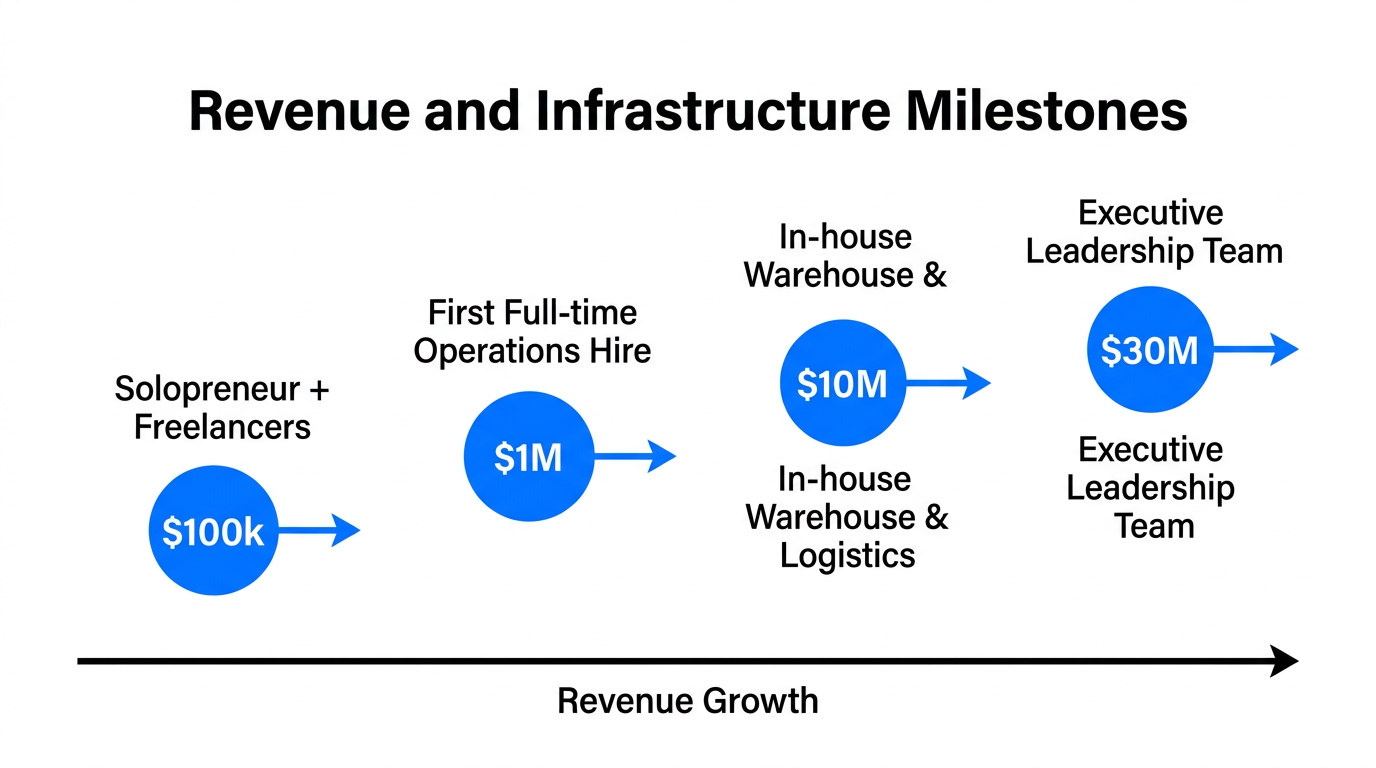
Scaling a side project requires understanding that what gets you to $100k will rarely get you to $1M, and what gets you to $1M will certainly not get you to $10M. Epic Gardening saw a vertical growth trajectory that serves as a blueprint for go-to-market strategy evolution. In 2017, the business generated $75,000. By 2021, that figure had ballooned to $7.3 million. This wasn't just a result of more content; it was a result of changing the underlying business model.
Initially, the revenue was primarily media-based—think ad revenue and brand deals. However, the real explosion happened when Kevin realized he could be the brand sponsoring his own content. This shift from renting an audience to owning the commerce side of the relationship is where true scale lives. By 2019, the revenue was split 50/50 between media and products. This diversification provided the cash flow necessary to reinvest in more aggressive growth.
| Year | Revenue Milestone | Core Focus |
|---|---|---|
| 2017 | $75,000 | Content & SEO Traffic |
| 2018 | $225,000 | Audience Building |
| 2019 | $540,000 | Product Integration |
| 2020 | $2,800,000 | E-commerce Scaling |
| 2021 | $7,300,000 | Brand Dominance |
Product Development: The Non-Technical Founder's Wedge
A common mistake for non-technical founders is trying to reinvent the wheel. Kevin didn't start by engineering a new type of gardening tool from scratch. Instead, he looked at what his audience was already asking for. He noticed a persistent interest in a specific type of metal corrugated raised bed that wasn't readily available in the American market. His go-to-market strategy was simple: find a high-quality product that already existed elsewhere and become the primary distributor for his audience.
He set up a basic Shopify store and used Instagram stories to test demand. Within two weeks, he had sold out. This "wedge" product proved that his audience wasn't just there to learn—they were there to buy. For many business building journeys, the quickest path to revenue is not innovation, but better distribution of existing value. Once the demand is proven, you can then move into custom manufacturing and proprietary designs.
When you reach this stage of managing physical products and a growing influencer presence, platforms like Stormy AI can help source and manage UGC creators at scale to promote those very products. Using AI to find creators who align with your niche—much like Kevin did with gardening—allows you to replicate your own success through other voices.
Transitioning from Creator to CEO: The 'No Agenda' Rule
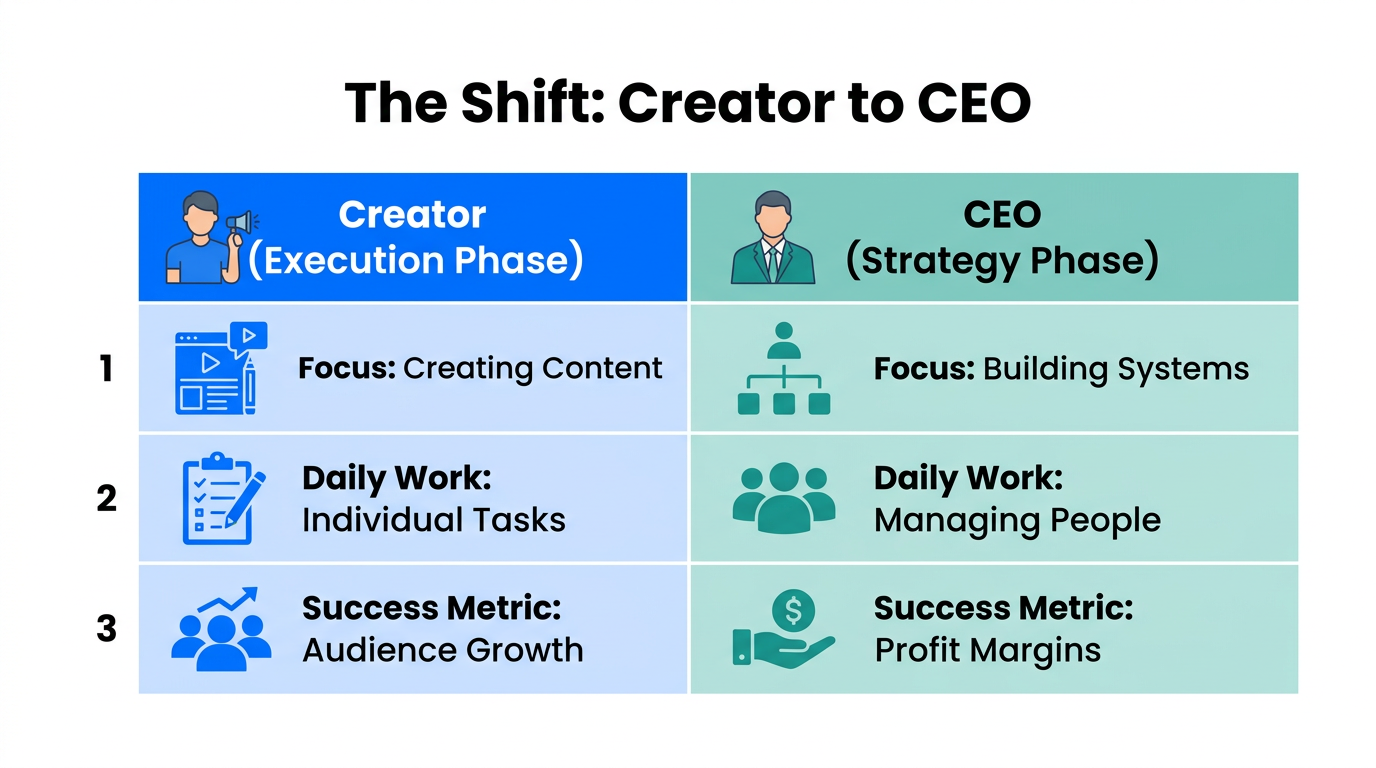
The most difficult part of scaling a side project is the internal shift the founder must make. In the beginning, you are the "doer"—the writer, the editor, the gardener. As the business grows, you must become the "architect." Kevin found that as the business scaled, his days became cluttered with product development meetings, executive sessions, and partnership calls. The very thing he loved—gardening—was being pushed out by the business of gardening.
To combat this, he implemented a strategy of Deep Work. He blocks off segments of his schedule specifically to be in the garden without his phone. This isn't just for mental health; it's for strategic clarity. It is during these quiet moments that the next big product idea or content pivot often surfaces. As a CEO, your job is no longer to perform every task, but to maintain the "curiosity-led" vision that started the company in the first place.
"You can't turn the brain off sometimes... I've scheduled time to just garden with no agenda. I can think, but I can't really whip the phone out and start making a video."
Hiring and Leadership: Preserving the Curiosity-Led Vision
Building a team is the final stage of entrepreneurship growth stages. For Epic Gardening, the goal was to find people who shared Kevin's innate curiosity. When hiring, focus less on specific technical credentials and more on a candidate's ability to go down "rabbit holes." A curious team will figure out how an e-commerce business works, how to lead a team, and how to find new products, even if they haven't done it before.
As you transition into a leadership role, your communication stack becomes vital. You might use general business CRM tools for managing relationships or Slack for internal comms, but the essence of leadership is keeping the team aligned with the original mission. Kevin's homestead in San Diego serves as the "Epic Gardening Headquarters," a physical reminder that the business is rooted in testing, growing, and genuine passion.
For brands that are scaling through community and creators, using Stormy AI ensures that the external voices representing your brand share that same authentic curiosity. Maintaining a "curiosity-led" brand requires vetting every partner, influencer, and employee against the core values that made the side project successful in the first place.
Conclusion: Your Scaling Playbook
The journey from $70k to $30M+ is rarely a straight line, but the lessons from Epic Gardening provide a clear playbook for founders. Success in scaling a side project comes down to a few critical shifts:
- Kill the Learning Loop: Execute 3x more than you consume.
- Own the Commerce: Move from media and ads to proprietary or distributed products.
- Protect the Vision: Use 'No Agenda' time to maintain strategic oversight.
- Hire for Curiosity: Build a team that loves the problem as much as you do.
Whether you are growing plants or building software on Framer or Webflow, the principles of business building remain the same. Start with curiosity, validate with action, and scale through infrastructure. The actual business is often hidden beneath the education you are already providing—you just have to be curious enough to find it.