How to Scale Your Shopify Store with OpenClaw: The 2026 Guide to Agentic Commerce
Scale your Shopify store in 2026 using Agentic Commerce. Learn how OpenClaw and B2A marketing strategies drive ROI and 40% operational cost reductions.
By March 2026, the traditional Direct-to-Consumer (DTC) model has undergone a seismic shift. We are no longer just selling to human browsers; we are selling to their autonomous representatives. This new era, known as Agentic Commerce, is defined by the rise of Business-to-Agent (B2A) marketing. For Shopify merchants, the tool at the center of this revolution is OpenClaw, an open-source framework that allows brands to deploy digital employees that manage everything from logistics to customer acquisition with near-zero human intervention.
The Rise of B2A Marketing: From Humans to Purchasing Agents
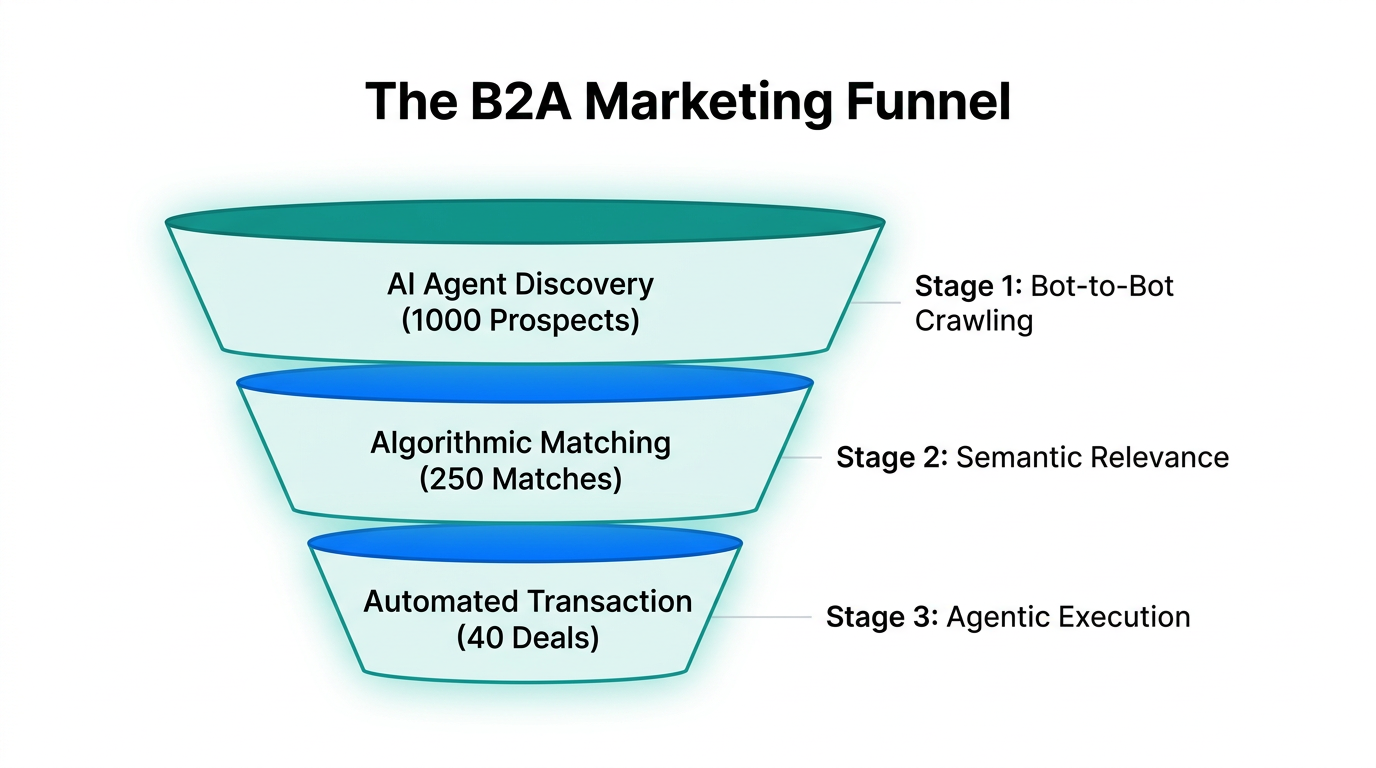
In 2026, marketing is no longer purely about eye-catching creative for human consumption. While brand identity remains vital, a massive portion of e-commerce traffic now originates from purchasing agents—AI entities like Google Gemini or specialized AI agents that scan the web to execute transactions on behalf of users. According to recent data from Precedence Research, the global AI agent market has surged to $11.78 billion, representing a staggering 46% year-over-year growth.
This shift to a B2A (Business-to-Agent) strategy requires Shopify store owners to optimize their storefronts for machine readability. Agents look for structured data, API accessibility, and transparent pricing rather than just pretty banners. Brands that fail to adapt find themselves invisible to the digital assistants that now control a significant share of household and enterprise spending. Merchants are increasingly using Self-Healing UI Automation to ensure their stores remain accessible even when themes are updated, preventing the "broken scraper" issues of 2024.
"OpenClaw is about turning signals into action. It reduces context switching for e-commerce leaders by moving directly from an analytics insight to a shipped work task."
The Economic Reality: ROI and Operational Benchmarks
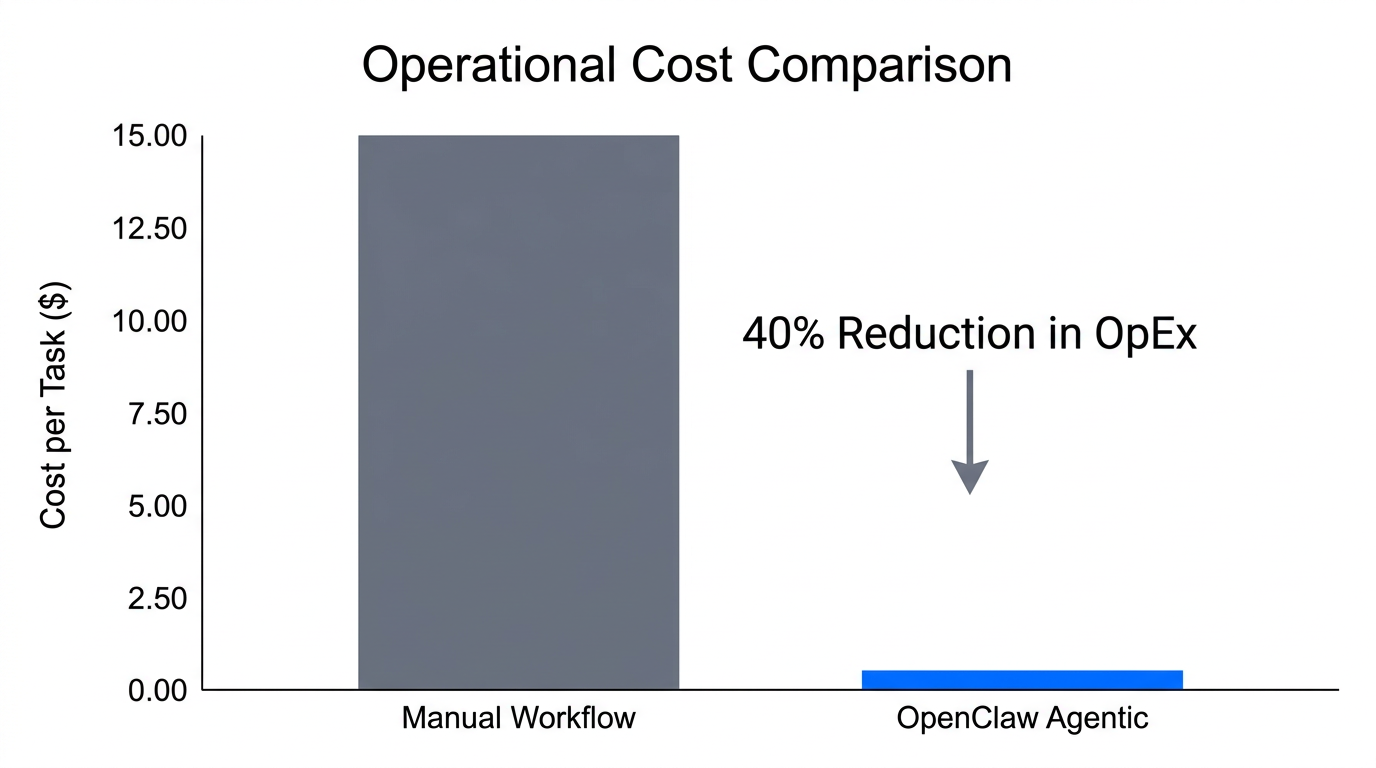
For the 5.7 million active stores on Shopify, the primary draw of OpenClaw is the drastic reduction in operational overhead. Early adopters are reporting 35–45% cost reductions by replacing manual workflows with agentic skills. These aren't just simple bots; they are integrated systems that query carrier endpoints to solve "Where Is My Order" (WISMO) tickets autonomously. To scale these operations, platforms like Stormy AI complement the backend automation by streamlining the search and discovery of creator partners to drive top-of-funnel agentic traffic.
The financial impact is most visible in customer service and inquiry conversion. According to data tracked on Tencent Cloud, merchants using agentic systems have seen conversion rates on customer inquiries jump from 22% in the old era to 41% today. The speed of response is the differentiator—moving from hours to seconds.
| Metric | Before OpenClaw (2024) | After OpenClaw (2026) | Improvement |
|---|---|---|---|
| Support Response Time | 4.2 Hours | 3.8 Minutes | 98.5% faster |
| Order Accuracy | 88% | 95.4% | +7.4% accuracy |
| Operational Overhead | $5–$6 per ticket | $0.45 per ticket | 90%+ reduction |
| CSAT Score | 3.2 / 5.0 | 4.4 / 5.0 | Significant lift |
As Joshua Warren noted on Commerce Today, the transition to OpenClaw is essentially hiring a "Digital Employee" that never sleeps. This is particularly effective for high-growth brands that previously struggled with the "janky, repetitive tasks" of order management and inventory polling, as noted by developer Akash Senapaty.
Case Studies: Reclaiming 10+ Hours Per Week
Real-world application of OpenClaw has moved beyond the experimental phase. Consider a solo e-commerce seller managing over 200 listings. By deploying OpenClaw on a Tencent Lighthouse instance, their response time plummeted from 45 minutes to 8 seconds, leading to a 19% increase in inquiry-to-sale conversion.
In the logistics space, brands are eliminating manual data entry entirely. One cross-border merchant reclaimed 10+ hours per week simply by deploying a logistics skill that autonomously synced tracking numbers between Shopify and international carriers. This has effectively reduced tracking disputes to near-zero, as agents can proactively alert customers to delays before a complaint is even filed.
Even content creation has been optimized. An email marketing specialist reported on Medium that using an OpenClaw agent to analyze campaign history allowed them to triple their monthly output, increasing revenue from $2,400 to $6,200 in a single month. This level of Agentic ROI is why the ClawHub repository saw its skill count explode from 700 to over 5,700 in just six weeks.
"The killer use case is the 'Digital Employee.' It handles the janky, repetitive tasks that usually require a human to sit at a desk and click buttons."
The Practitioner’s Playbook: Deploying Your Agent
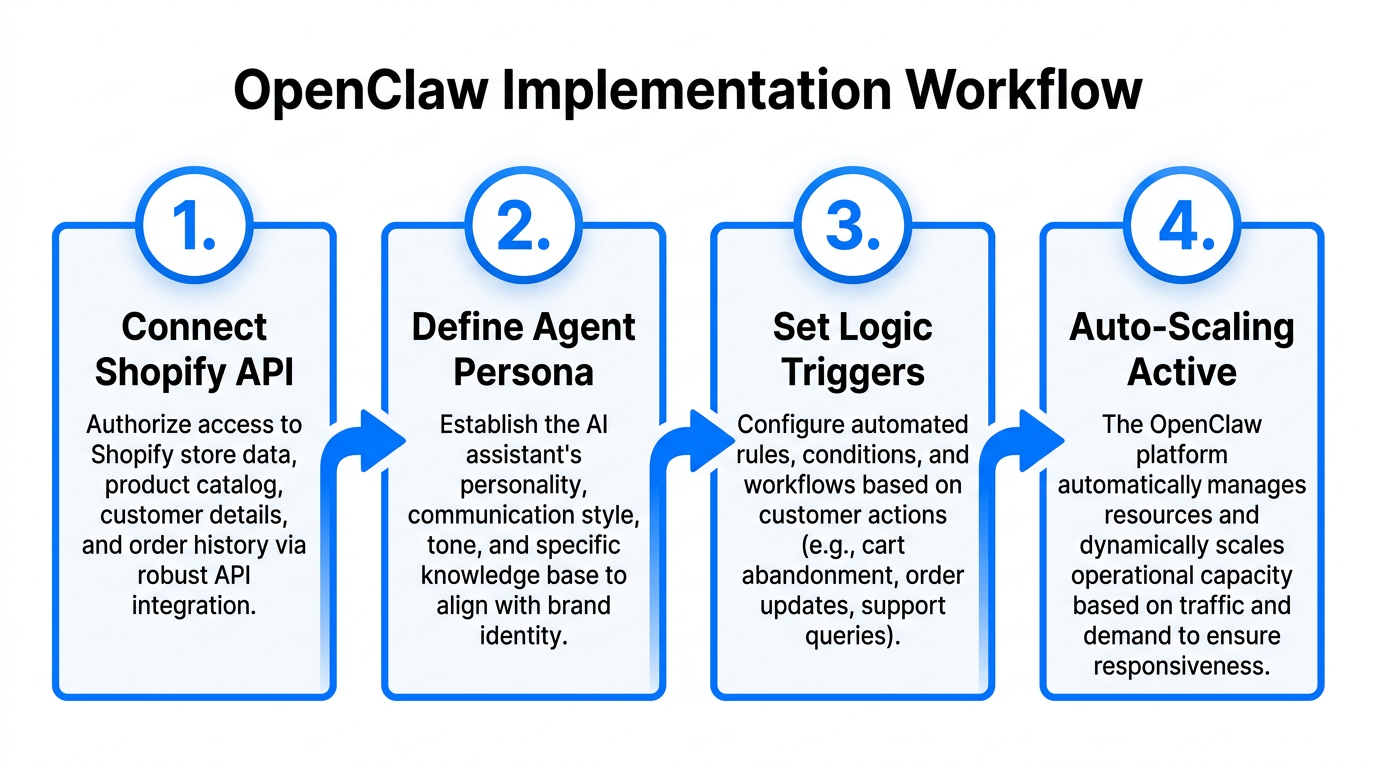
Setting up an autonomous storefront in 2026 requires a more technical approach than the plug-and-play apps of the past, but the rewards are significantly higher. Most successful practitioners follow a three-step deployment strategy:
- Always-On Hosting: Reliability is key. Merchants deploy OpenClaw via Docker on a VPS like DigitalOcean. Local machines are avoided to ensure the agent can respond 24/7 to global queries.
- The Shopify Bridge: To give the agent structured access to store data, developers use Composio. This establishes a Model Context Protocol (MCP) server, allowing the agent to safely read orders, modify inventory, and process returns.
- The Channel Tentacles: The agent is connected to a frontend—usually Telegram or WhatsApp Business—so the merchant can manage the store through natural language. For example, a merchant might text: "Check for all returns from the last 24 hours and flag any that involve high-value items."
Advanced users also leverage the WebSocket Gateway Protocol (default port 18789) to execute system-level commands, bypassing the latency issues common in older cloud REST APIs. This architecture allows the agent to function as a truly autonomous operator rather than just a chatbot script.
openclaw onboard command to quickly link your Shopify backend via Composio API for immediate integration.Managing the "Unhinged" Nature of AI Agents
With great power comes significant risk. Expert Ryan Eade has described OpenClaw as "unhinged" because it lacks built-in rails, giving it total control over the host system. Without strict governance, an agent could theoretically delete product catalogs or issue unauthorized refunds. A 2026 security audit shared on Reddit found that 15% of community-contributed skills contained malicious instructions designed to exfiltrate API keys.
Furthermore, API cost shock is a real concern. Complex multi-step reasoning using high-end models can lead to bills exceeding $100 per day if not managed. To mitigate this, practitioners are shifting to tiered routing, using smaller models for simple tasks and reserving heavy-hitters like Claude 3.5 for high-stakes decision-making. Security-first alternatives like NanoClaw are also emerging, which run within isolated Linux containers to prevent rogue behavior.
"OpenClaw's lack of rails is its greatest strength and its most terrifying vulnerability. Security is no longer optional in agentic commerce."
GEO: The New Shopify SEO
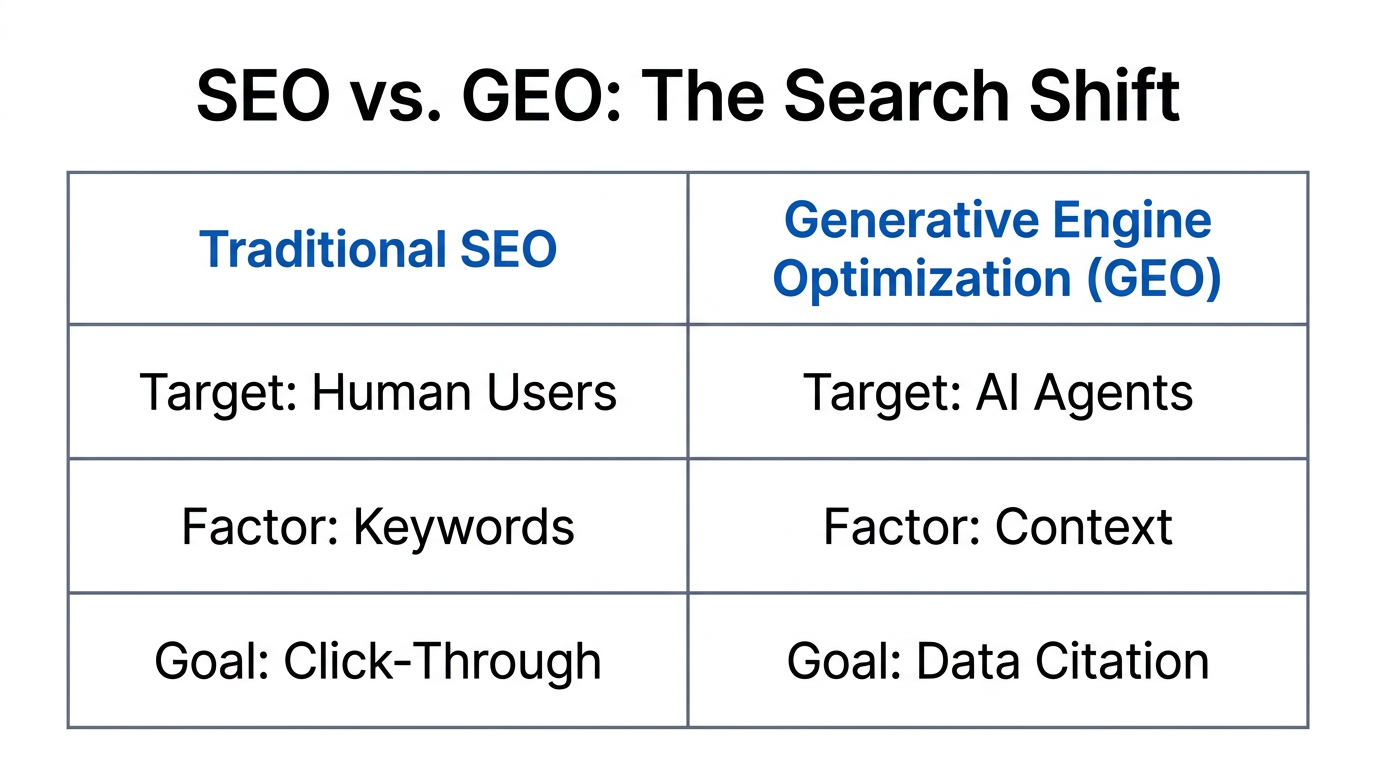
Traditional SEO is dying. In 2026, we focus on GEO (Generative Engine Optimization). This involves making your store discoverable to Large Language Models (LLMs) and agents rather than just Google’s crawler. Key search terms have shifted toward intent-heavy phrases like "Shopify MCP Configuration" and "Agentic Storefronts."
To rank in the "Generative Era," your product descriptions must be detailed and factually dense. Agents prioritize data accuracy over marketing fluff. Ensuring your Shopify store has a robust, publicly accessible API or a well-documented robots-agent.txt is the 2026 equivalent of having good meta tags in 2024. Platforms like Stormy AI are already helping brands identify which influencers and creators are most compatible with these agent-driven discovery models, ensuring that the human "word of mouth" translates effectively into digital agent recommendations.
Conclusion: The Future is Automated
The transition to agentic commerce is not just a trend; it is an evolution of the economic stack. By moving from DTC to B2A, Shopify merchants can reclaim their time, slash operational costs by over 40%, and achieve conversion rates of 41% or higher on customer inquiries. While the security risks of "unhinged" agents are real, the competitive advantage of having a 24/7 digital workforce is too great to ignore. As the AI agent market continues its climb toward $12 billion, the question for Shopify founders is no longer if they will adopt agents, but how quickly they can deploy them.