In 2026, the traditional SEO content audit—the grueling process of matching spreadsheet data against live URLs for days on end—has officially become a relic of the past. As we move deeper into the era of agentic workflows, the most successful growth teams have shifted from being mere editors to being orchestrators of SEO automation 2026. The catalyst for this shift? Claude Code, a terminal-based agentic CLI that does more than just chat; it executes.
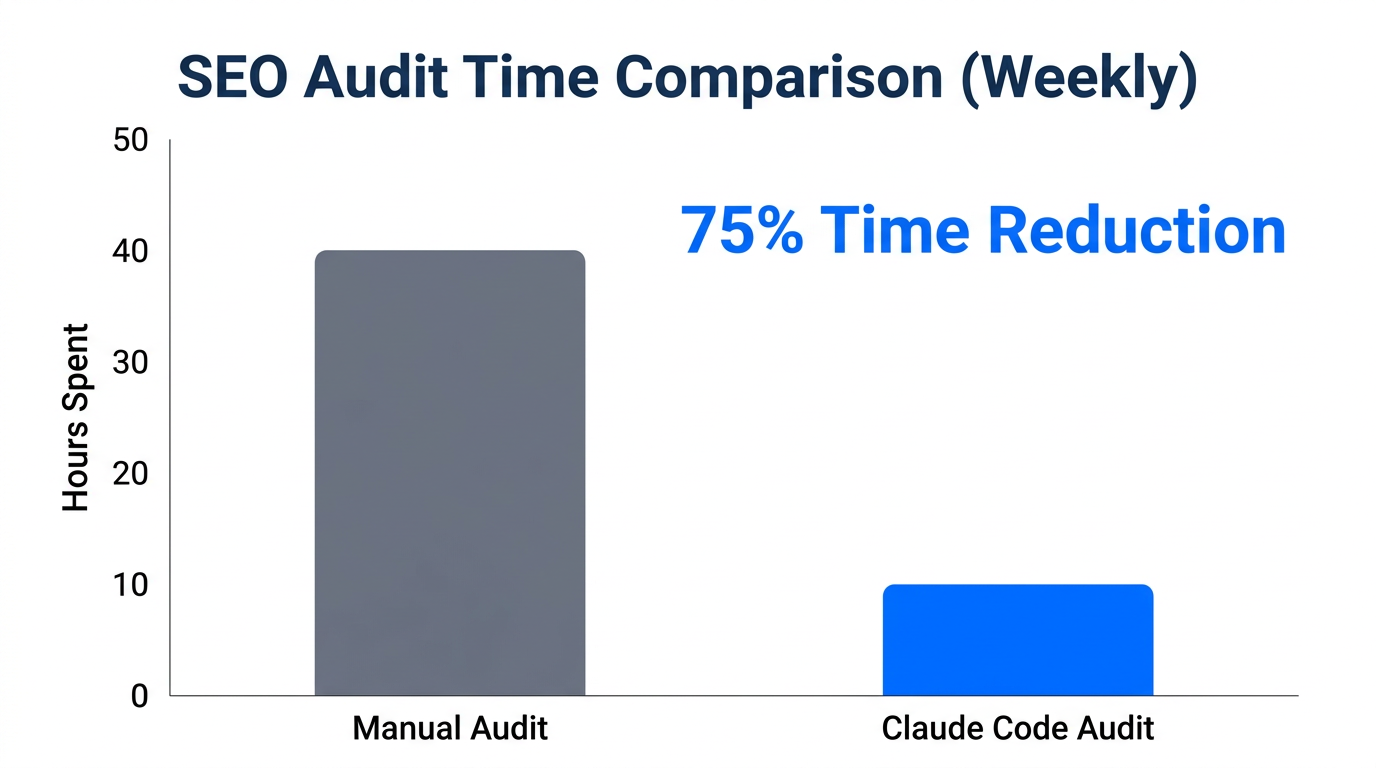
The reality of the current landscape is stark: while 88% of marketers use AI daily, only 26% have successfully generated tangible value from it. This "value gap" exists because most teams are still copy-pasting text into web browsers instead of building integrated automation engines. By leveraging Claude Code and the Model Context Protocol (MCP), SEO managers are now reducing 8-hour audits to just 120 minutes, allowing for a hyper-responsive AI SEO strategy that converts at much higher rates.
What is Claude Code and the MCP Revolution?
Unlike the standard Claude.ai web interface, Claude Code is an agentic command-line tool that operates natively in your computer's terminal. It has the power to read and write files, execute bash commands, and most importantly, connect to your entire marketing stack through the Model Context Protocol (MCP).
Think of MCP as the "USB-C" for marketing technology. It allows Claude to communicate directly with platforms like Ahrefs, Google Search Console, and HubSpot without the need for messy, custom-coded API bridges. For the modern SEO, this means Claude can pull your ranking data, crawl your site for 404s, and write a content refresh brief all in one terminal session.
"MCP enables marketers to shift from static dashboards toward conversational, question-driven access to data. It’s faster, more agile, and results in campaigns written for the individual, not just the segment." — Natalie Lynch, Principal PM at MailjetThe Setup: Connecting Claude to Your SEO Stack
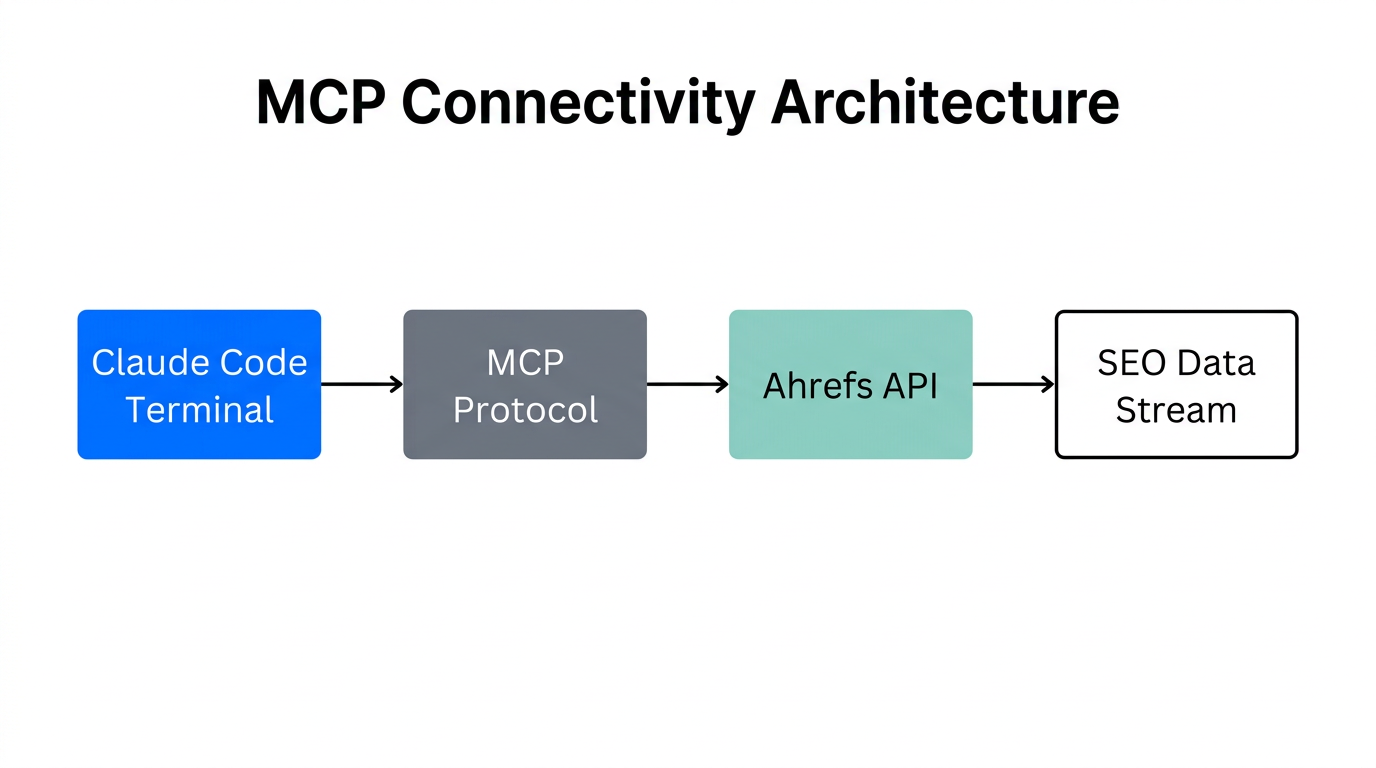
Before you can automate your content audits, you must bridge the gap between your AI and your data. The core of this Claude Code SEO workflow involves setting up an Ahrefs MCP server. This connection allows the AI to perform complex queries like, "Which of our high-volume pages have seen a 20% drop in traffic over the last 30 days?"
Step 1: Install the Foundations
You will need Node.js installed on your machine to run the CLI. Once ready, you can install the official Claude Code package via NPM. You will also need GitHub Desktop for version controlling the automated changes Claude makes to your content files.
Step 2: Initialize Project Context
Create a CLAUDE.md file in your root SEO directory. This serves as the agent's memory. Include your brand voice, target audience profiles, and preferred formatting for content refreshes. This ensures the AI doesn't just produce generic text, but content that aligns with your 2026 growth goals.
Step 3: Connect MCP Servers
Browse the MCP Server Marketplace to find connectors for the Ahrefs API and Google Search Console. By linking these, you empower Claude to act as a data scientist who also happens to be a world-class copywriter.
| Feature | Traditional Audit (2024) | Agentic Audit (2026) |
|---|---|---|
| Data Extraction | Manual CSV exports & VLOOKUPs | Real-time API pulling via MCP |
| Insight Generation | Human analysis (3-4 hours) | Claude Plan Mode (10 minutes) |
| Content Editing | Manual rewrites in CMS | Automated file updates via CLI |
| Internal Linking | Manual link insertions | Sub-agent bulk linking |
The Playbook: Automating Content Audits in the Terminal
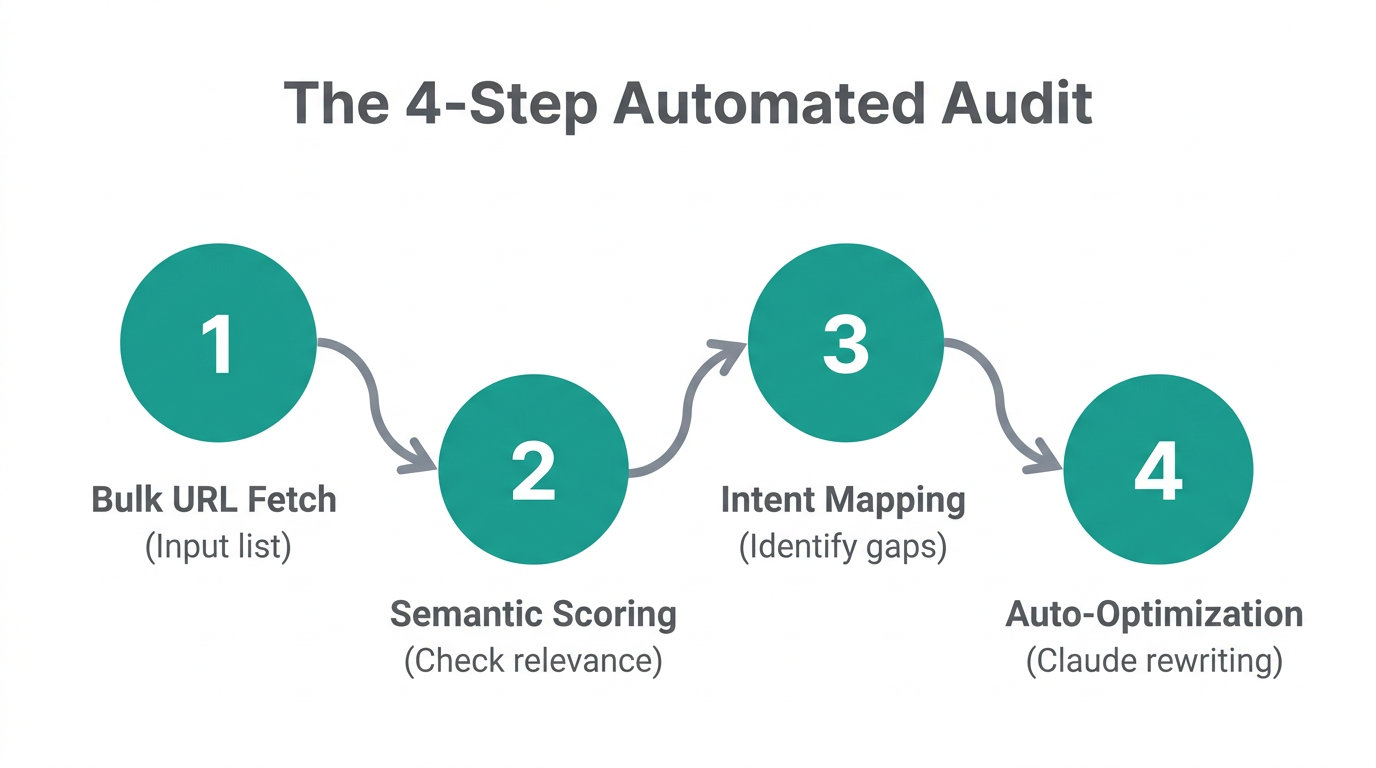
The goal of automated content audits isn't just to find errors; it's to identify and capitalize on opportunities. Digital agencies like Digital Applied have reported reducing 8-hour audit cycles to just 2 hours by using this specific 4-step workflow.
Phase 1: Identify the "Boring" Tasks
Don't ask the AI to "improve our SEO." Instead, target the repetitive manual work. Tasks like identifying pages with high impressions but low click-through rates (CTR) are perfect for SEO automation 2026. Claude can scan your GSC data in seconds to find these "quick wins."
Phase 2: Use Plan Mode for Strategy
Before letting the agent write a single line of code or content, hit Shift + Tab to enter Plan Mode. Ask Claude to draft a technical spec for the audit. This prevents the agent from hallucinating logic and ensures it understands exactly which metrics (e.g., bounce rate, time on page, keyword density) it should be analyzing.
Phase 3: Deploy Sub-Agent Teams
One of the most powerful trends in 2026 is agentic orchestration. You can spawn specialized sub-agents to work in parallel. While one agent handles technical fixes (like broken redirects), another can act as a "Content Strategist" to suggest internal link placements based on semantic relevance.
"Growth marketing is going the way of product management. We’re not just executing campaigns; we’re building the products that achieve our targets." — Austin Lau, Growth Marketer at AnthropicWhen your audit uncovers gaps in user-generated content (UGC) or social proof, platforms like Stormy AI can be integrated into the workflow to discover creators who can provide the missing visual assets for your high-ranking pages.
Avoiding the 'Dirty Data Dependency' Trap
Automation is only as effective as the data feeding it. In 2026, the biggest risk to AI SEO strategy is "garbage in, garbage out." If your CRM or Google Analytics data is poorly tagged, Claude Code will generate recommendations based on false premises. Isaac Rudansky, founder of AdVenture Media, notes that Claude is the "AI coding assistant every marketer needs," but it still requires a human-in-the-loop to verify logic.
- Principle of Least Privilege: Always use scoped permissions when connecting Claude to your HubSpot MCP server. Avoid giving the AI full admin access to prevent accidental data deletion.
- Human Review: 50% of marketers fear performance loss because they treat AI as a "set it and forget it" tool. Always review the bash commands Claude proposes before allowing them to execute.
- Security First: Use OAuth 2.1 for all connections and follow the MCP security guidelines to protect your API keys.
For brands scaling their influencer and UGC efforts alongside SEO, using a secure discovery tool like Stormy AI ensures that your creator data is vetted and clean before it's integrated into your broader marketing automation ecosystem.
"The key to 2026 growth isn't more content—it's cleaner data and faster iteration through agentic workflows."The Future of SEO is Agentic
Scaling SEO content audits in 2026 requires more than just a passing knowledge of AI; it requires a move toward the terminal. By utilizing Claude Code and MCP servers, you can transform your SEO from a reactive department into a proactive growth engine. We've seen that AI-powered campaigns are already delivering a 32% increase in conversions on average—imagine what happens when that intelligence is applied to every single page on your site.
Start small: identify one "boring" task, initialize your project context, and let Claude help you orchestrate your way to the top of the SERPs. The tools are here—it's time to build the engine.