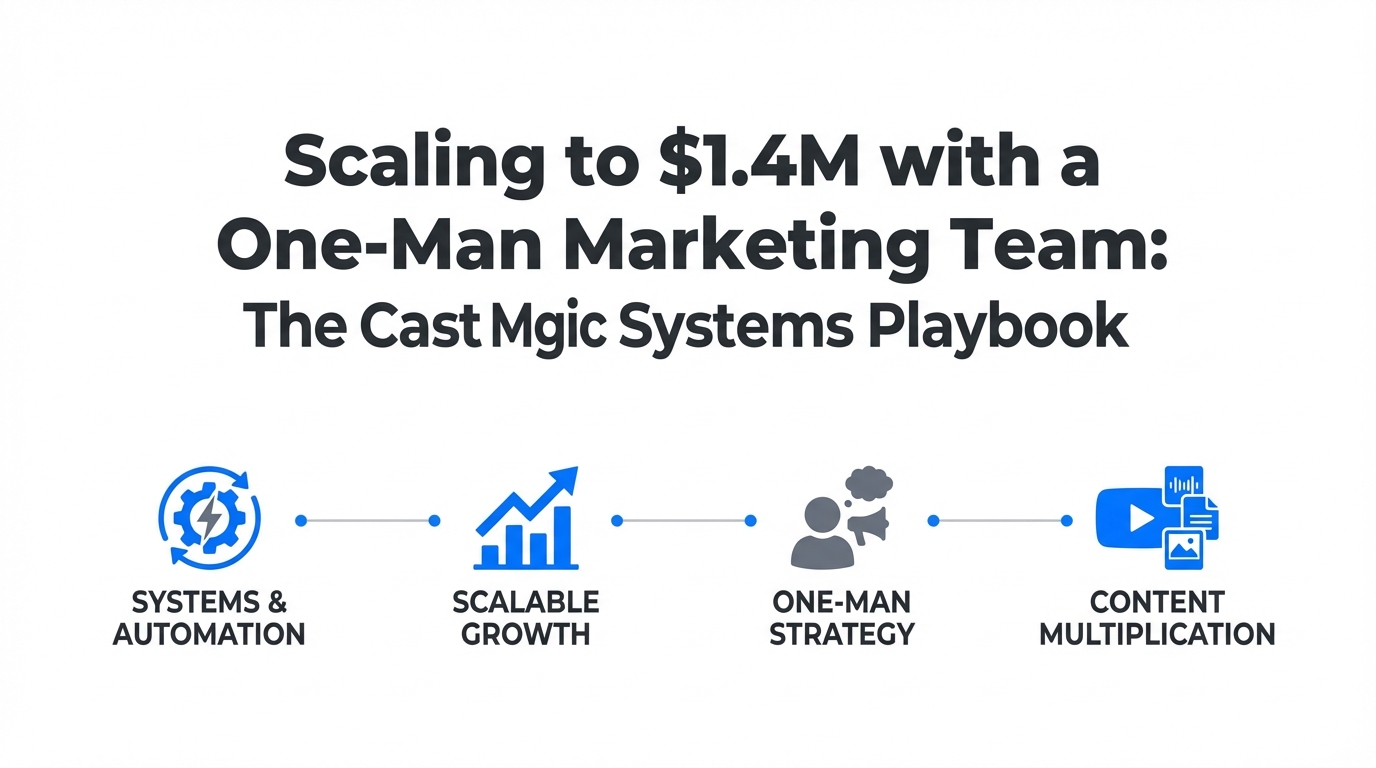
In the world of high-growth SaaS, the prevailing wisdom suggests that scaling to $120,000 in Monthly Recurring Revenue (MRR) requires a massive marketing department, a bloated VC-backed budget, and a floor full of SDRs. However, the founders of Cast Magic just shattered that narrative. In less than a year, they scaled from zero to over $1.4M in Annual Recurring Revenue (ARR) with a one-man marketing team and a obsession with automated systems.
By building a "painkiller" product instead of a "vitamin" and leveraging hyper-efficient distribution channels, Blaine, Ramon, and Justin have created a blueprint for profitable growth strategy that any lean startup can replicate. This isn't just about working harder; it’s about engineering a lean marketing team that produces the output of an agency without the overhead. Below is the exact system they used to dominate the AI content repurposing space.
The Bootstrapped Advantage: Why Profitability Beats VC Funding
Many founders seek validation through fundraising. The Cast Magic team took the opposite approach. Having previously worked at VC-backed startups—with one founder having raised over $80 million across previous ventures—they grew tired of the endless cycle of pitches and board meetings. They decided to focus on customer validation rather than investor validation.
This shift in focus led to better marketing decisions. When you aren't burning through a venture check, every dollar spent must have a clear return. This forced the team to build a marketing automation for startups stack that focused on high-margin, high-impact activities. By avoiding the "fundraising trap," they spent their time talking to users and building a product they actually used themselves.
"If you're not great at building a business and generating revenue, and you choose to get great at fundraising, you're just going to have the whole thing backwards."Reverse-Engineering Competitor Distribution
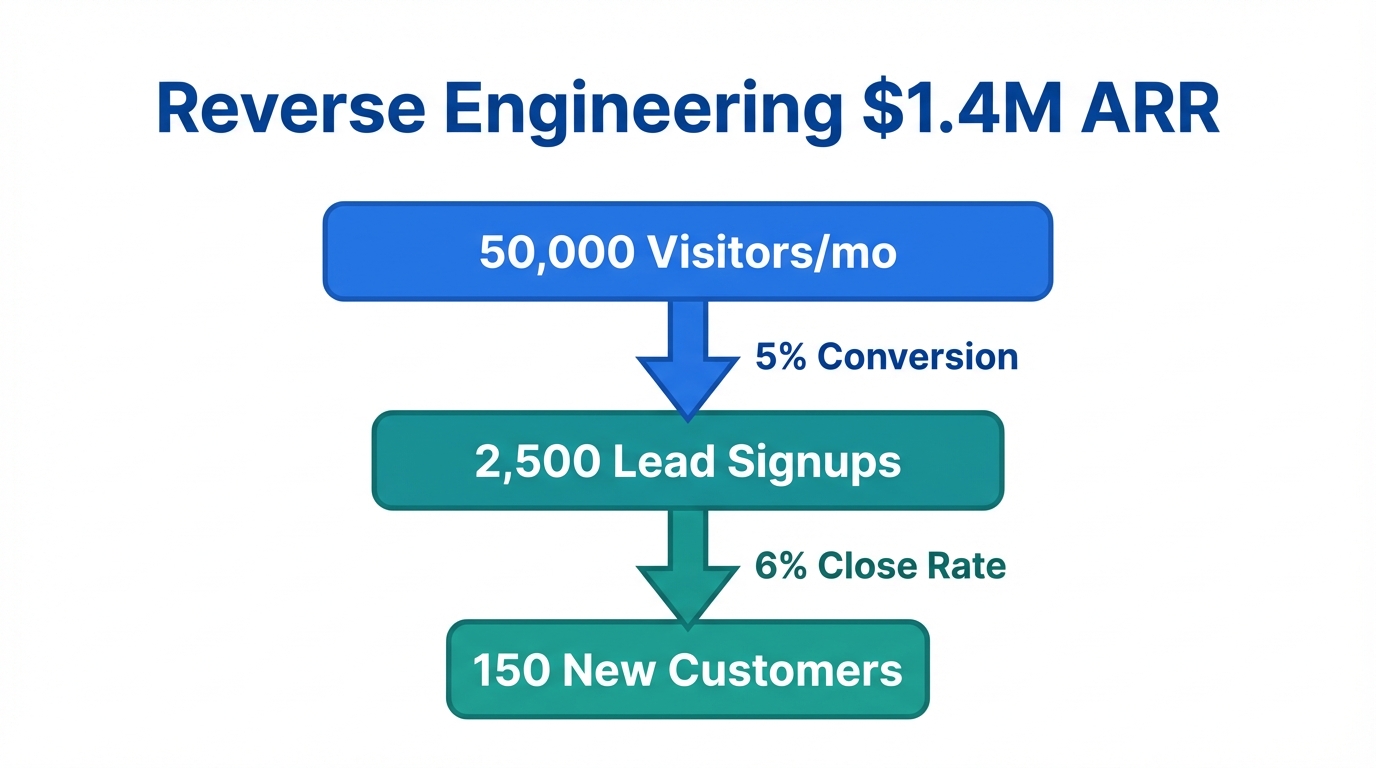
One of the most powerful strategies the team used was reverse-engineering successful distribution models. Instead of guessing where their customers lived, Ramon (who leads marketing) mapped out how similar companies serving the same audience achieved their growth.
They looked for businesses that scaled aggressively through affiliate marketing and influencer collaborations. By identifying these patterns, they didn't have to reinvent the wheel. They scraped platforms like Instagram and YouTube to find creators in adjacent niches—such as podcasting and DTC marketing—and reached out with a structured incentive program.
Finding the Right Distribution Partners
The team used a high-volume approach to identify viable channels. They would:
- Scrape Instagram and social platforms for specific hashtags relevant to their niche.
- Build a massive list of potential creators and businesses in adjacent industries.
- Outreach at scale to test response rates and build leverage.
- Analyze CPMs and conversion rates to decide which creators were worth a long-term sponsorship.
For founders trying to scale this type of discovery, platforms like Stormy AI streamline creator sourcing and outreach by automatically finding influencers in specific niches and managing the initial emails, allowing a solo marketer to maintain high volume without burning out.
| Phase | Strategy | Primary Goal |
|---|---|---|
| Launch | AppSumo Lifetime Deal | Brand foundation & 10,000+ initial users |
| Growth | Creator Affiliates | Sustainable 20% MoM recurring growth |
| Scaling | Vertical Contractors | Deepening reach in specialized niches |
The One-Man Marketing System: Contractors & Systems
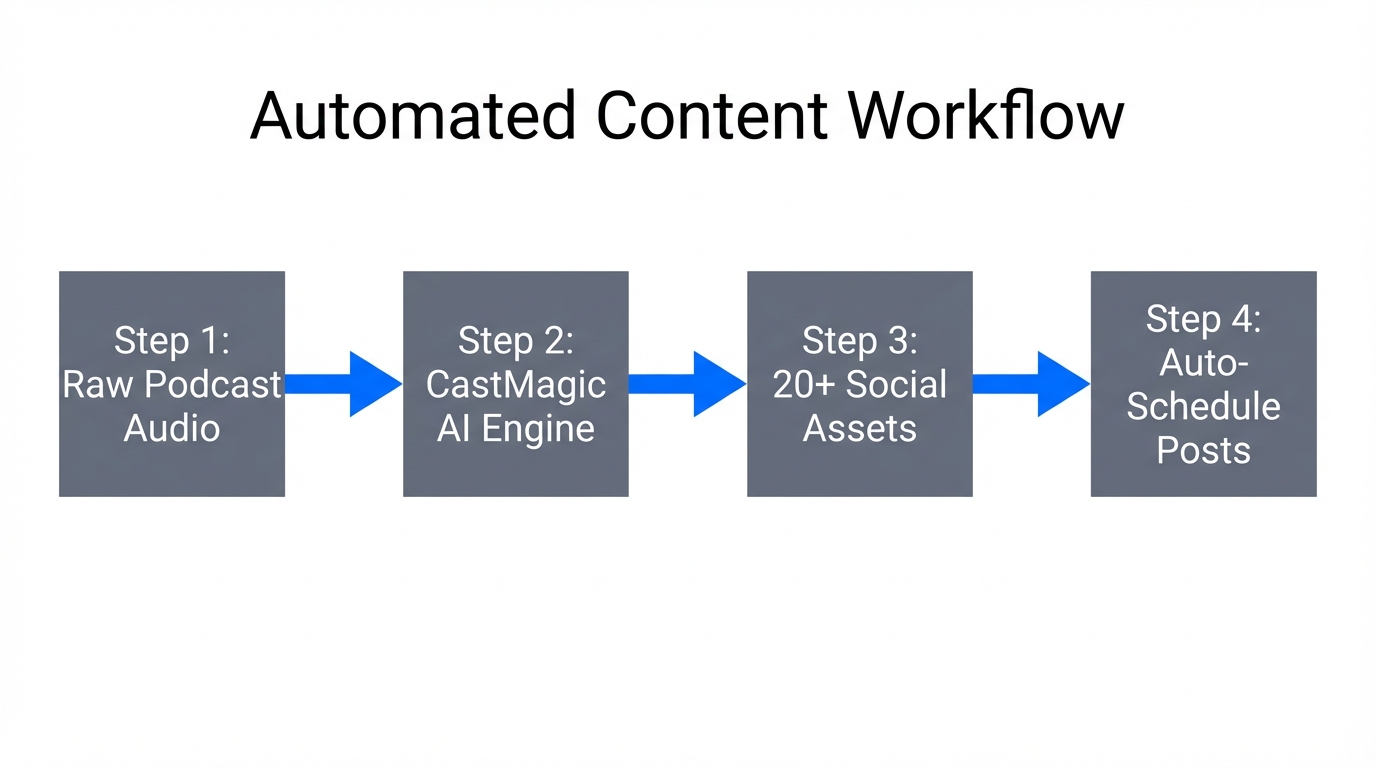
Managing a lean marketing team doesn't mean doing everything yourself. It means being the architect of systems that others execute. Ramon manages the entire marketing engine by hiring specialized vertical contractors. These are experts in specific areas—like video editing or SEO—who handle the manual labor while he maintains the strategic direction.
The secret to making this work is radical documentation. When Ramon noticed he was spending too much time on calls with creators explaining content concepts, he built a comprehensive Notion document that mapped out every content angle, hook, and requirement. This allowed him to scale his creator program without increasing his meeting load.
"It really just all comes down to systems. I created a whole Notion document... now I don't have to get on a call with them to ideate on content concepts."The 20% Rule: Guardrails for Sustainable Growth
Financial discipline is the heartbeat of the Cast Magic marketing strategy. They operate under a strict 20% Marketing-to-Revenue Rule. This means they never spend more than 20% of their total revenue on marketing expenses.
This constraint ensures that the business remains highly profitable and that every marketing experiment is scrutinized for efficiency. If a channel like Google Ads or TikTok Ads Manager isn't yielding a positive ROI within this 20% bucket, it is cut or optimized immediately. This is the hallmark of a profitable growth strategy.
The 'Monday/Friday' Alignment Framework
With a lean, remote team spread across Miami, Fort Lauderdale, and Austin, communication could easily become a bottleneck. To avoid the "meeting hell" typical of corporate environments, the Cast Magic team uses a Monday/Friday alignment framework.
- Monday (30 Minutes): A quick standup to align on the week's product priorities and shipping goals.
- Friday (30 Minutes): A closing call to review what was shipped and troubleshoot any blockers.
The rest of the week is dedicated to deep work. They rely on asynchronous communication to stay fast and agile. By blocking out the calendar and focusing on shipping code and content, they maintain a velocity that larger teams simply cannot match. Every quarter, they supplement this with a full week of in-person collaboration to tackle big-picture strategy and maintain team chemistry.
For those managing a large roster of creators or partners alongside a lean team, an AI-powered CRM like Stormy AI can act as a force multiplier, handling the automated follow-ups and tracking that usually clutter a marketer's inbox.
Simplicity in the Tech Stack
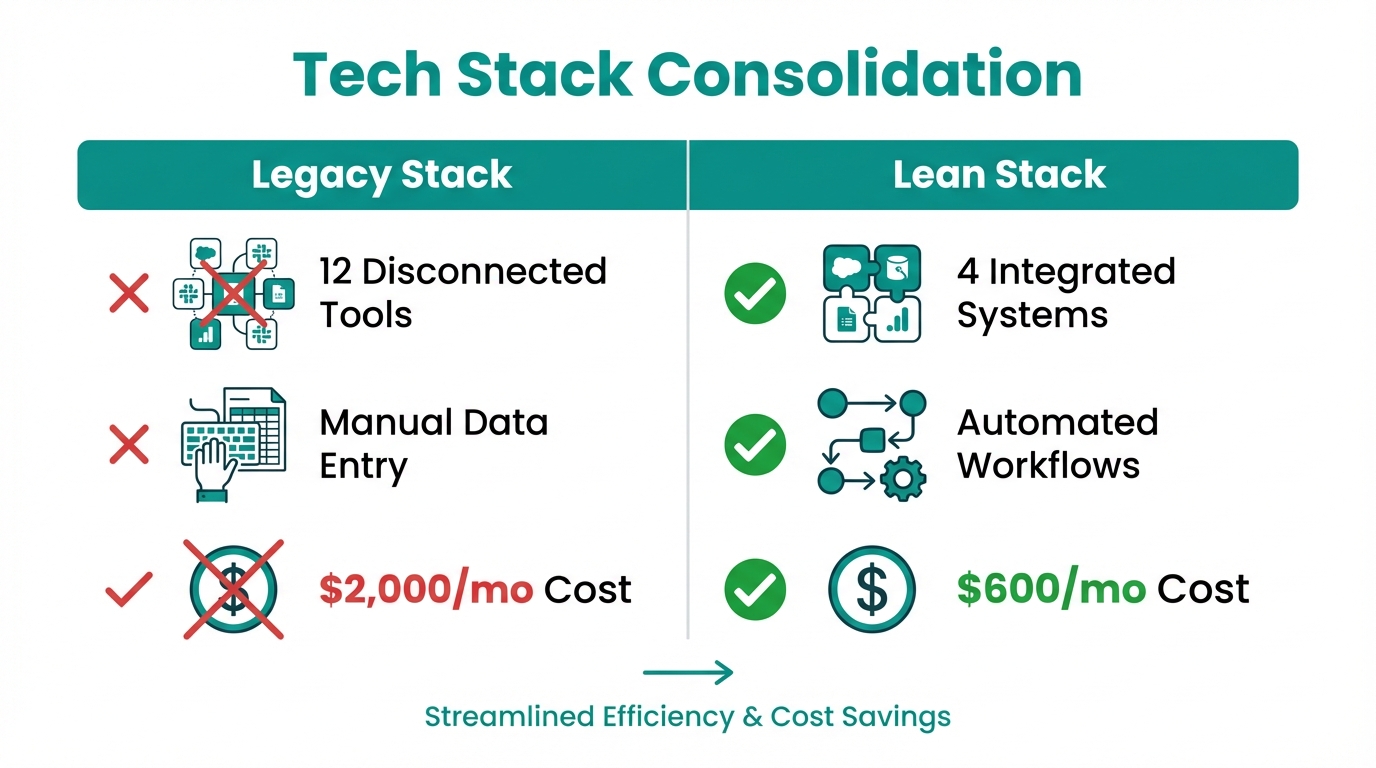
Building a million-dollar app in two weeks requires choosing stability over novelty. The team built the core of Cast Magic using Elixir and the Phoenix framework. This allowed them to build both the front-end and back-end in a single language, significantly speeding up the development process.
For the marketing side, they leaned on user-friendly tools that didn't require heavy dev support:
- Landing Page: Built on Webflow using templates to ensure a professional look with zero custom code.
- Outreach: Manual scraping combined with structured email systems.
- Project Management: Heavily reliant on Notion for documentation and creator briefs.
Conclusion: Building for the Long Term
The success of Cast Magic isn't a fluke; it is the result of solving a real problem and wrapping it in an automated distribution engine. By focusing on systems rather than headcounts, they have achieved what most founders only dream of: a high-margin, high-growth business that doesn't require a 50-person team to maintain.
If you are a solo founder or part of a lean startup, the lesson is clear: Build for yourself, automate your outreach, and never let your marketing spend outpace your profitability. Whether you are using AppSumo for an initial boost or building an affiliate army, success lies in the systems you build today.