For years, the gold standard of influencer marketing was the double-tap. Marketers obsessively tracked likes, comments, and follower counts, treating these vanity metrics as a proxy for brand health and potential sales. But as we move into 2026, the landscape has fundamentally shifted. The rise of sophisticated Agentic AI Bots and the democratization of Deepfake Endorsements have rendered platform-provided metrics nearly obsolete. Brands are no longer just fighting for attention; they are fighting a war against global economic losses projected to exceed $2.2 billion due to influencer fraud this year alone.
To survive and thrive, performance-focused marketers are moving toward a performance-based influencer marketing model. This strategy ignores the public-facing 'mirage' of engagement and focuses exclusively on uncitadelable first-party signals: tracking links, unique discount codes, and direct e-commerce integrations. This guide will walk you through the precise playbook for scaling your influencer marketing ROI by leveraging modern AI-powered platforms to verify authenticity and drive growth.
The Death of Vanity Metrics: Why Engagement is No Longer Enough
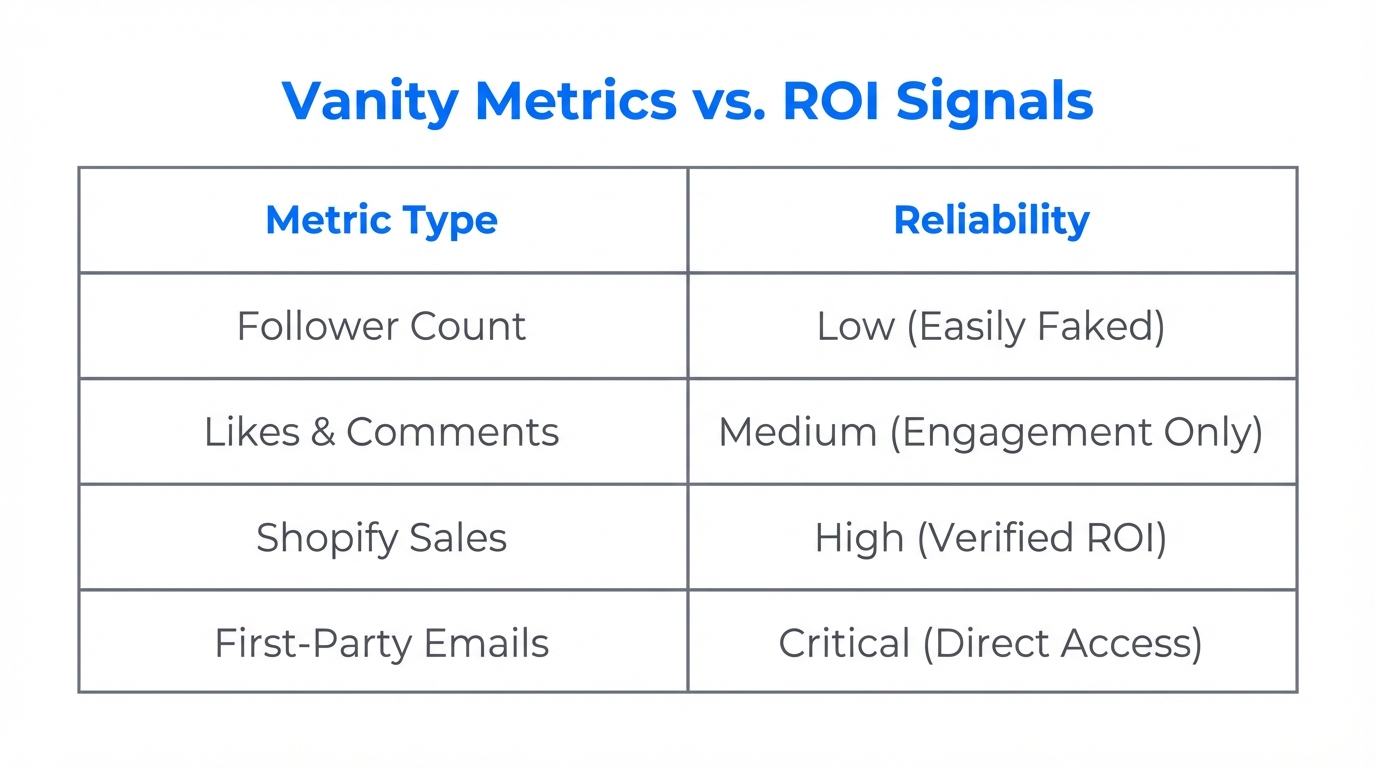
The numbers are staggering. According to recent audits, for every person searching for legitimate ways to detect fraud, twelve others are searching for how to buy fake followers. This imbalance has birthed an ecosystem of Fraud-as-a-Service (FaaS), where influencers can rent professional-looking, fake engagement loops for as little as $20. On platforms like TikTok, the demand for artificial engagement has skyrocketed by over 800% in the last two years.
Traditional detection methods—like looking for "nice pic!" comments—are failing because modern Agentic AI Bots can now carry out human-like conversations and respond to stories with nuanced language. This makes an e-commerce growth strategy based on public data incredibly risky. If you are paying a creator based on their reach or their engagement rate, you are likely paying a premium for a hollow audience that has zero intent to buy.
"The detection gap is widening. While brands lose billions, scammers are using dark web toolkits to simulate authentic human interest at a scale never seen before."
Leveraging E-commerce Integrations for Real-Time Verification
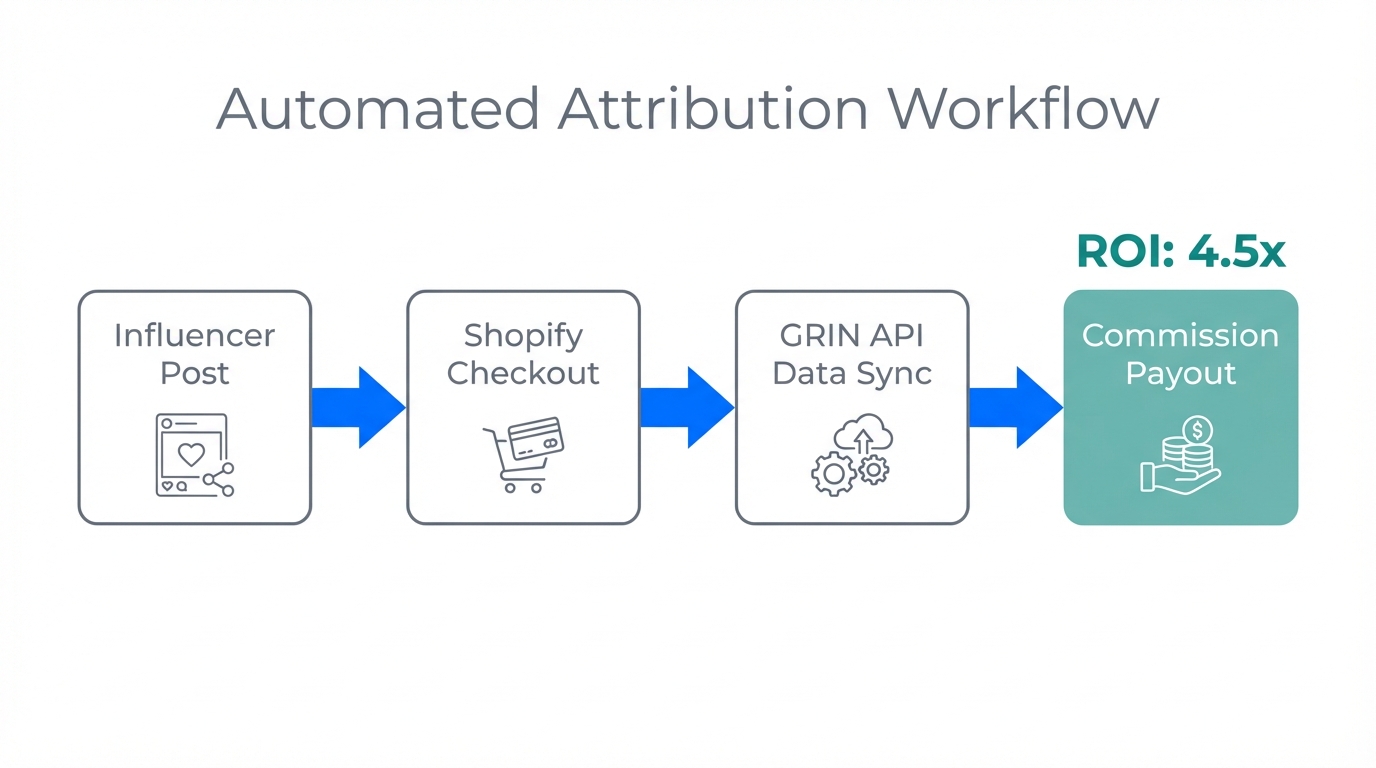
The most effective way to combat this sophisticated fraud is to connect your influencer management platform directly to your point of sale. A direct Shopify integration serves as the ultimate truth serum. Instead of waiting for a creator to send you a screenshot of their 'insights' (which can be easily faked via Photoshop or deepfake technology), you see the actual revenue flowing into your Shopify dashboard in real-time.
When you integrate your management tool with your store, every creator is assigned a trackable link and a unique discount code. This setup allows you to:
- Verify Conversion Attribution: Instantly see which creators are driving actual sales versus just generating 'noise'.
- Automate Product Seeding: Track exactly when a creator receives a product and when they post about it, linking the timeline to sales spikes.
- Calculate Exact CPA: Move away from 'estimated media value' and toward a hard Cost Per Acquisition (CPA) metric.
| Metric Category | Legacy Method (High Risk) | First-Party Method (Fraud-Proof) |
|---|---|---|
| Reach | Follower Count | Link Clicks (CTR) |
| Engagement | Likes/Comments | Add-to-Cart Actions |
| Success | Sentiment Analysis | Total Revenue (GMV) |
| Verification | Screenshots | Direct API Integration |
Unmasking 'Hollow' Audiences with AI-Powered Vetting
While conversion data is king, you still need top-of-funnel vetting to avoid wasting time on outreach to fraudulent accounts. This is where AI-driven authenticity checkers become essential. Unlike basic auditors, modern systems analyze the click-through potential and audience reachability of a creator.
A major red flag in 2026 is "Mass Following." If a creator's audience consists of users who follow more than 1,500 people, the creator's content is virtually invisible in those users' feeds. Tools like FameAudit help you identify if an audience is 'hollow' by comparing their engagement velocity against historical benchmarks. For instance, authentic engagement usually follows a bell curve—spiking at the time of post and tapering off. If you see a 'step' pattern where thousands of likes appear hours after a post goes live, you are looking at a bot farm.
To truly scale, you need a discovery engine that does the heavy lifting for you. While some platforms are great for affiliate management, modern platforms like Stormy AI allow you to discover creators through natural language prompts and automatically vet them for audience quality using AI-driven scoring before you even send the first email. This prevents you from ever entering a negotiation with a fraudulent creator.
The Pilot Micro-Campaign Playbook: Auditing Before You Scale
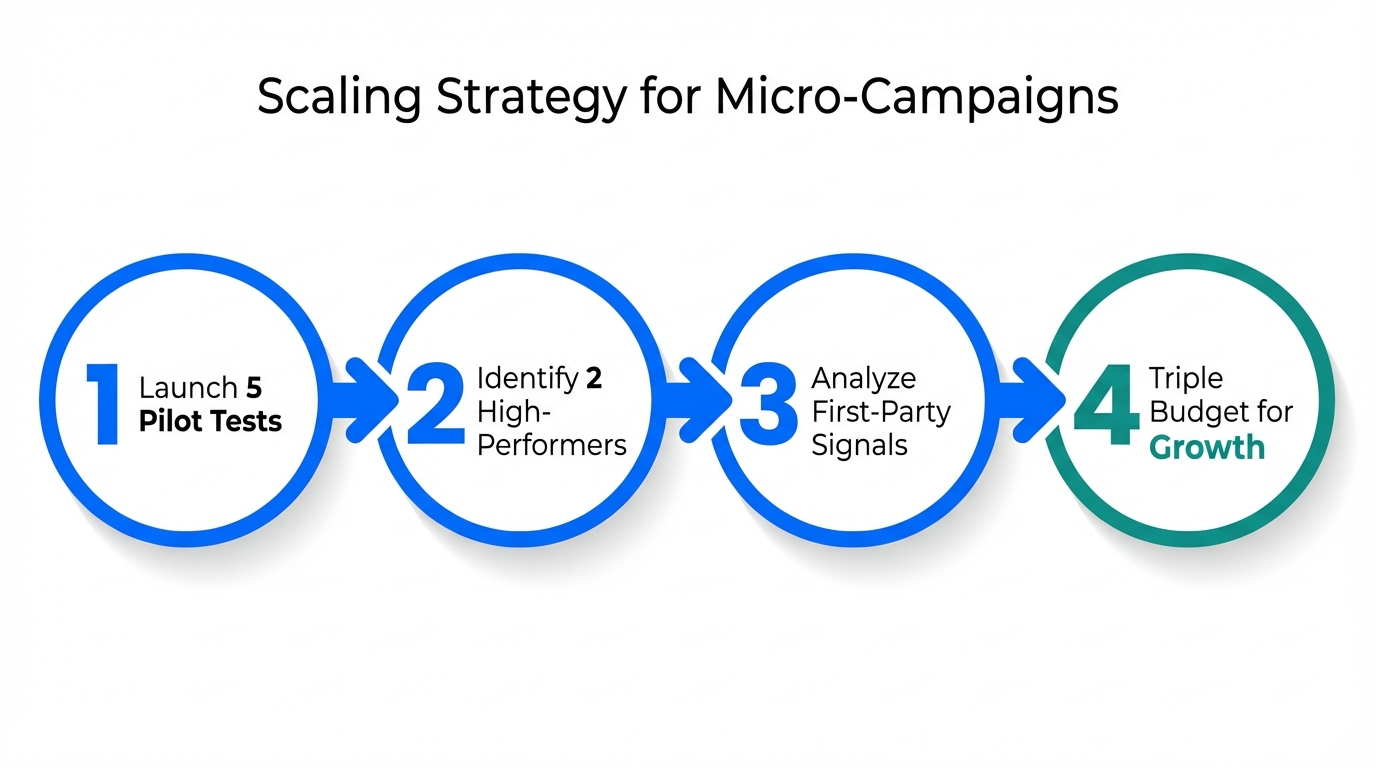
One of the costliest mistakes brands make is signing a $50,000 seasonal contract based on a creator’s media kit. In the age of biometric fraud and AI-generated personas, you must treat every new partnership as a trial. Use the following steps to execute a Pilot Micro-Campaign:
Step 1: The $1,000 Audit
Instead of a large commitment, offer a one-off post or a short-form video for a set fee of $500–$1,000. Provide a unique tracking link via a reputable Social Auditor or your internal CRM. If the creator has 500k followers but generates fewer than 50 clicks, their audience is effectively non-existent.
Step 2: Engagement Velocity Analysis
Monitor the post for the first 24 hours. Does the engagement happen in a natural flow? Use advanced auditing tools to check the Audience Quality Score (AQS). If the score is below 60, the risk of bots is high. Many legacy tools like Tagger were used for this in the past, but they lack the real-time AI detection found in modern platforms.
Step 3: Analyze the 'Comment Quality'
Go beyond the quantity of comments. Are users asking specific questions about the product, or is the comment section filled with emojis and generic praise like "Amazing!" or "Love this!"? Real influence triggers curiosity and conversation, not just spam.
"A creator with 10k genuine fans is worth more than a creator with 1M bots. The Pilot Micro-Campaign is your insurance policy against the $2.2 billion fraud bubble."
Drafting ROI-Specific Contracts with Termination Clauses
In 2026, your legal agreements must be as smart as your marketing tools. A standard contract is no longer sufficient to protect your influencer marketing ROI. You need to include specific language regarding audience integrity and data transparency. Consider adding the following clauses to your agreements using templates from resources like Rocket Lawyer:
- The 20% Rule: A clause stating that the contract can be terminated without pay if a third-party audit reveals more than 20% suspicious or inactive followers.
- Live Insights Requirement: Instead of static screenshots, require the creator to provide a screen-recorded walkthrough of their TikTok or Meta analytics dashboard.
- Whitelisting Rights: Ensure you have the rights to run dark posts or spark ads using their content. This allows you to scale their 'winning' content through Google Ads or Apple Search Ads, where the attribution is 100% clear.
Scaling Your Strategy with AI-Powered Management
Executing these audits manually for every creator is impossible if you're trying to scale to hundreds of partners. This is where professional-grade CRM workflows and automation come into play. By using Stormy AI, you can set up an autonomous AI agent that handles the discovery, vetting, and initial outreach. This ensures that every creator entering your pipeline has already passed a baseline authenticity check, allowing your team to focus on building long-term relationships rather than auditing bot farms.
By pairing Stormy AI for sourcing with a tool like Klaviyo for automated affiliate emails, you create a closed-loop system where only the most authentic, high-performing creators are retained. This long-term "program" mentality is what allowed brands like Gymshark to dominate their niche—they prioritized community-embedded creators over generic lifestyle accounts whose engagement was built on sand.
The Future of Fraud-Proof Growth
The influencer marketing industry is undergoing a massive correction. The brands that will survive the next few years are those that stop buying "fame" and start buying verified first-party signals. By integrating your management stack with Shopify and utilizing advanced AI vetting, you can build a growth engine that is immune to AI-driven deception.
Remember: Never prioritize reach over relevance. Use the Pilot Micro-Campaign strategy to audit every new creator, protect your budget with ROI-specific contracts, and use modern tools to automate the vetting process. In a world of deepfakes and bots, transparency is your most valuable asset.