The era of manually clicking through hundreds of dashboard tabs to optimize a single campaign is coming to a close. In its place, a more efficient, terminal-driven methodology is emerging. For growth marketers, the shift toward an AI ad campaign manager CLI (Command Line Interface) isn't just about looking like a developer; it’s about achieving a level of speed and precision that traditional GUIs simply cannot match. With the global AI marketing market projected to reach $107.5 billion by 2028, the competitive advantage now lies in autonomous execution and real-time algorithmic auditing.
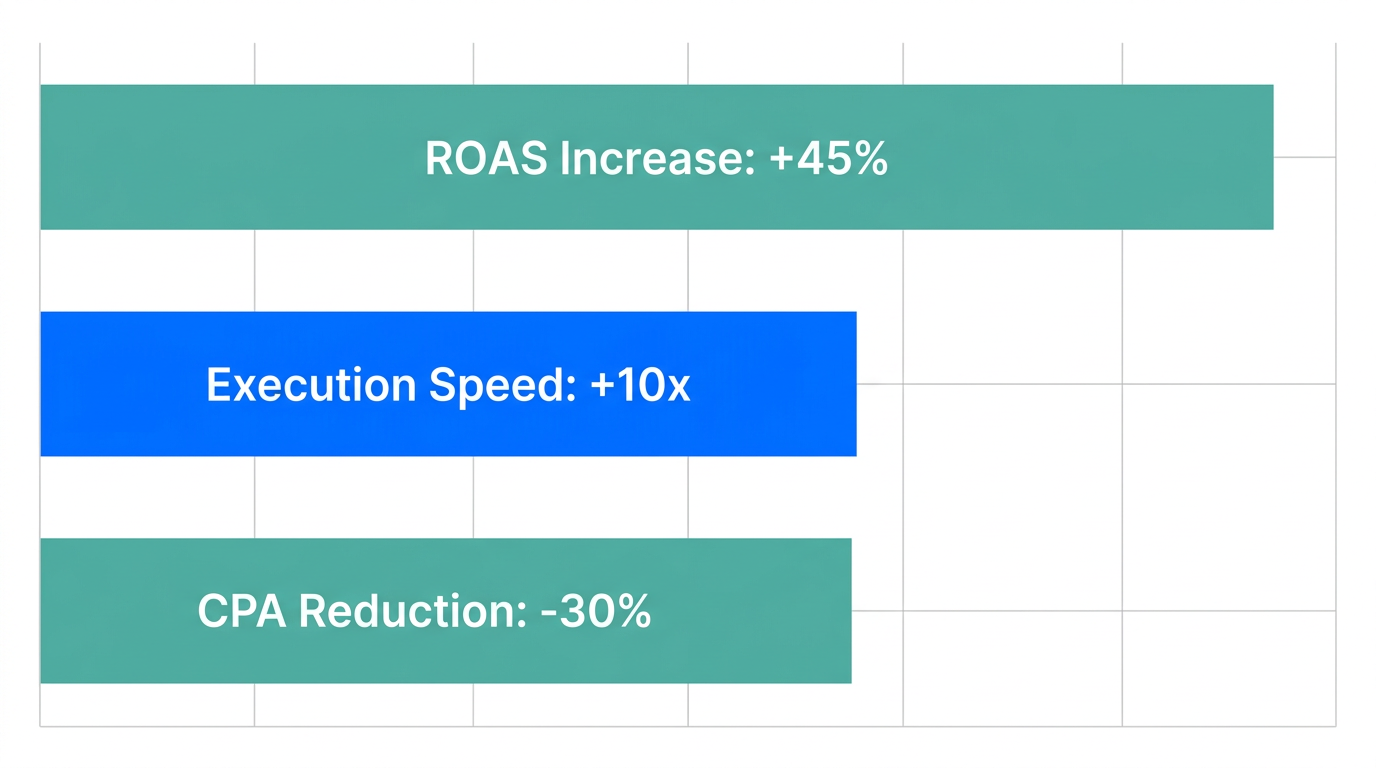
By moving from manual dashboard management to goal-based autonomous execution, technical marketers are seeing a dramatic shift in their performance metrics. Data shows that programmatic advertising strategies driven by advanced automation can reduce Cost Per Acquisition (CPA) by as much as 30%. This playbook explores how you can transition your workflow into this high-velocity environment, leveraging natural language and autonomous agents to maximize your AI marketing ROI.
The Shift from Rule-Based Automation to 'Yolo Mode'
For years, "automation" in ad platforms meant basic if-then rules: "If CPA is over $50, pause the ad group." While helpful, this approach is rigid and reactive. The marketing automation trends of 2025 are shifting toward autonomous goal execution, often referred to as "Yolo Mode" in technical circles. In this paradigm, you don't give the AI a set of rules; you give it a objective and a set of constraints.
Tools like Adscriptly CLI are leading this charge by offering three distinct operational modes: Plan (read-only auditing), Execute (human-in-the-loop confirmation), and Yolo (fully autonomous performance optimization). When the system operates in Yolo mode, it uses large language models to interpret account performance against high-level KPIs, making hundreds of micro-adjustments to bidding, negative keywords, and budget allocation every hour.
"The move to autonomous ad management isn't about removing the marketer; it's about removing the latency between a data signal and a corrective action."
This autonomy is further enhanced by the Model Context Protocol (MCP), a new standard for connecting AI agents to external tools. According to MCP Market, this allows a single CLI interface to manage multiple platforms—such as Google Ads, Meta, and your internal CRM—simultaneously, ensuring that your ad spend is always aligned with actual business revenue rather than just vanity clicks.
Proof in Performance: H&R Block and Trendyol
The transition to AI-driven programmatic advertising strategy isn't just theoretical. Enterprise-level brands are already seeing staggering results by moving away from manual optimization. For example, H&R Block utilized automated AI solutions via Sprinklr to streamline their campaign content, resulting in a 144% increase in conversion rates. By automating the creative and targeting loops, they were able to respond to tax-season fluctuations with a speed that manual teams couldn't replicate.
Similarly, the Turkish retailer Trendyol implemented predictive bidding strategies to manage their massive product catalog. By using AI to forecast user behavior and adjust bids programmatically, they achieved a 180% improvement in ROAS and a 27% reduction in CAC. These results highlight how AI improves targeting accuracy for 82% of marketers who embrace these tools.
| Brand | Strategy Implemented | Key Metric Improvement |
|---|---|---|
| H&R Block | Automated Content & Bidding | 144% Increase in Conversions |
| Trendyol | Predictive Bidding AI | 180% Increase in ROAS |
| Carvana | AI-Scripted Personalized Video | 1.3 Million Unique Ads |
Even in the creative space, automation is scaling results. Carvana famously used automated scripts to generate 1.3 million personalized video ads, a feat that would have taken years for a traditional creative team. This level of "micro-campaign" execution is exactly what an AI ad campaign manager CLI is built to facilitate.
The Velocity Advantage: Why CLIs Win
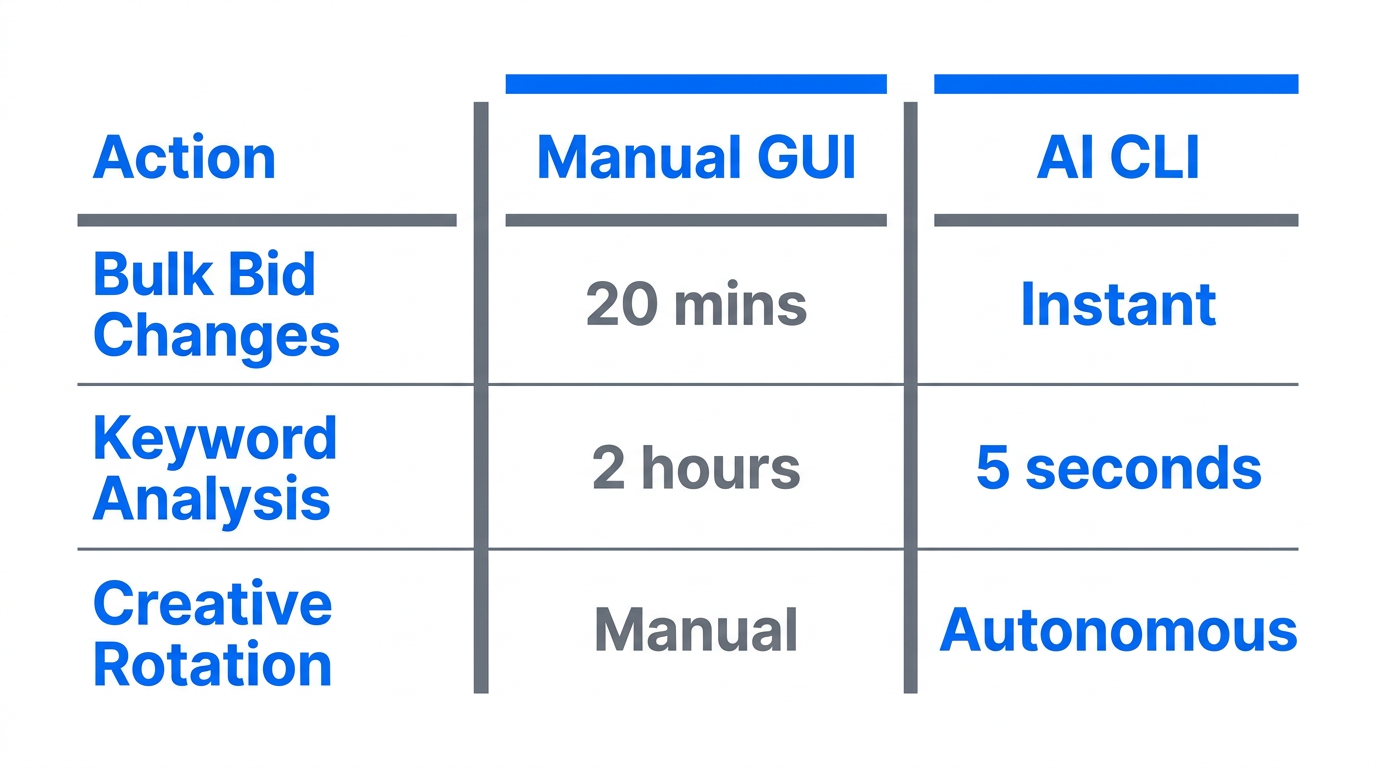
Why use a terminal when Google Ads and Meta have such robust dashboards? The answer is velocity. A growth lead can audit an entire account in 30 seconds with a single command like adscriptly audit, whereas navigating the web GUI would require clicking through 10 or more nested menus. For developers and technical marketers, the terminal is a force multiplier.
Commonly used CLI tools for modern ad ops include:
- Adscriptly CLI: Specifically designed for Google Ads with natural language processing.
- ZuckerBot: A Meta Ads MCP server that allows agents like Claude or Gemini to launch campaigns directly from the terminal.
- Trak-Social CLI: An open-source solution for tracking performance metrics on Meta without logging into the clunky Ads Manager UI.
- Agent Zero: A general-purpose AI agent framework used to build custom autonomous ad managers.
By using these tools, you can script complex workflows that bridge the gap between your ad platforms and your tech stack. For instance, you can use n8n to connect your CLI with Shopify, automatically pausing ads for products that have low inventory—something that standard ad platform automations often struggle to do accurately.
Step-by-Step: Setting ROAS Guardrails
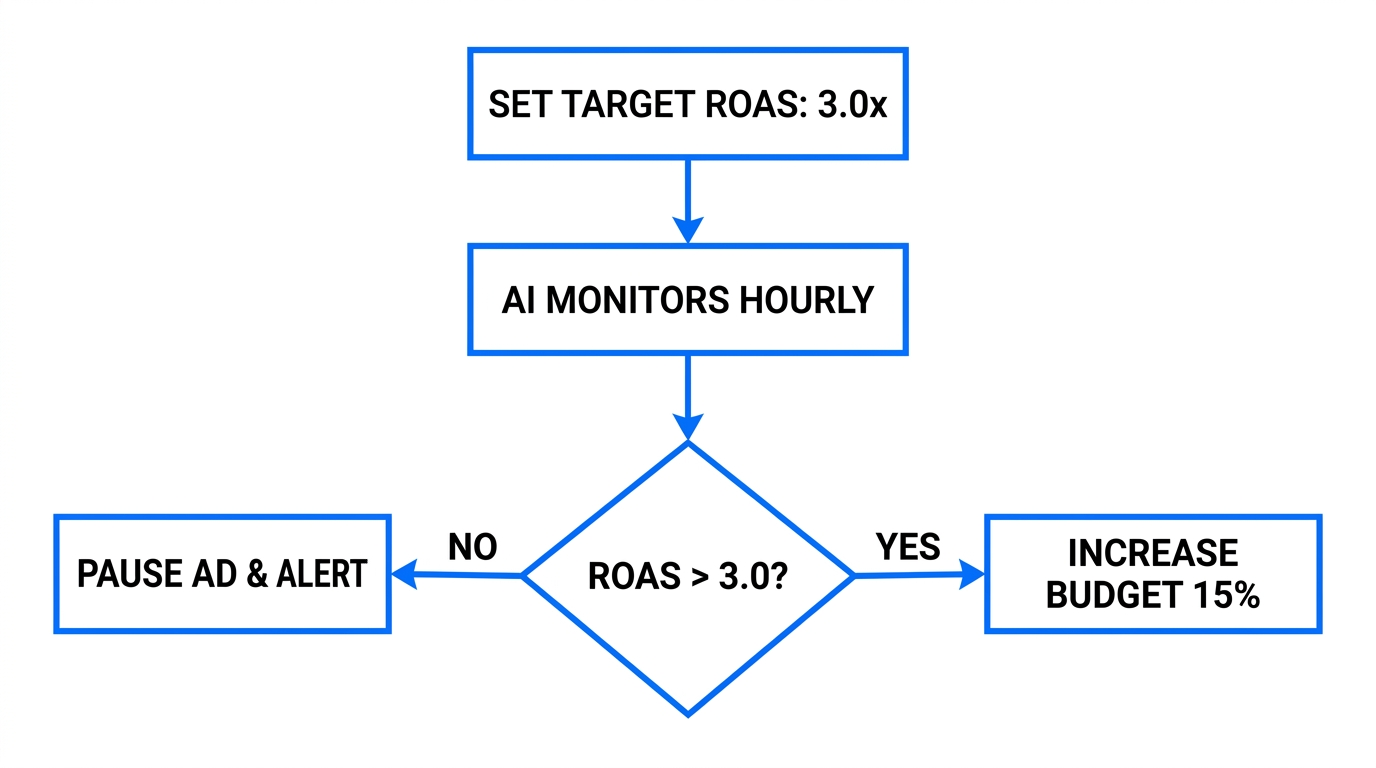
The greatest fear of any growth marketer is the "budget burn"—where an autonomous AI spends thousands on a failing experiment. To prevent this, you must build a robust framework of guardrails before engaging "Yolo Mode." The objective is to give the AI freedom to explore, but within strict economic boundaries.
Step 1: Define Your Economic Thresholds
Before running a single command, you must determine your break-even ROAS and your target CPA. These numbers will serve as the hard stop for your AI agent. In a CLI environment, you can often set these globally. For example: set-guardrail --max-cpa 45 --min-roas 2.5.
Step 2: Implement Multi-Layered Auditing
Don't just rely on the ad platform’s internal reporting. Use your CLI to pull data from multiple sources. Successful marketers often use a "Skilled Driver" approach, where the AI executes but a human reviews high-level spend every 24 hours. According to experts at ExtraDigital, AI is a high-speed vehicle that requires a driver to prevent it from veering off-course with poor creative variations.
Step 3: Establish the Feedback Loop
The most important part of ROAS optimization is the data you feed back into the system. If you only track clicks, the AI will optimize for clicks. Instead, use your CLI to upload Offline Conversion Data from your CRM, such as Pipedrive or Salesforce. This ensures the AI knows which ad variations actually lead to closed deals, not just digital curiosity.
Prompting Your Way to Better Performance
One of the most powerful features of an AI ad campaign manager CLI is the ability to use natural language to perform complex audits. Instead of building custom reports in a GUI, you simply ask the terminal for the insights you need. This is where AI marketing ROI truly shines, as it reduces the time spent on data analysis from hours to seconds.
Try using these specific prompts in your CLI to uncover hidden opportunities:
- "Show me all ad groups where CPA is 20% higher than the account average over the last 7 days and pause the ones with less than 2 conversions."
- "Analyze my search terms for the last month and identify high-volume keywords that have zero conversions—add them as negative keywords."
- "Find the top 5 creative variations by ROAS and suggest three new headline variations based on their common themes."
When you find a winning creative strategy, you need to scale it with fresh, high-quality content. For brands looking to scale UGC (User-Generated Content) for mobile apps or e-commerce, platforms like Stormy AI can help you source and manage creators at scale. By finding the right influencers to create your ad assets, you provide the AI CLI with better "fuel" to drive your programmatic campaigns.
"The prompt is the new pivot table. If you can describe the problem, the AI can execute the solution."
The 'Skilled Driver' Model: Human Strategy vs. AI Execution
While the AI manages the how (bidding, micro-segmentation, and budget pacing), the human marketer must always own the why. This is the core of the "Skilled Driver" model. AI is excellent at pattern recognition, but it lacks an understanding of brand values, long-term market shifts, and human emotion. According to Adnimation, the most successful ad operations are those that strike a balance between algorithmic speed and human intuition.
Common mistakes to avoid in this model include:
- Set and Forget Mentality: Assuming the AI will handle everything perfectly without supervision.
- Ignoring Brand Voice: Allowing the AI to generate generic, "spammy" copy that dilutes your brand identity.
- Focusing on the Wrong KPIs: Optimizing for low-cost clicks instead of high-value customer lifetime value (CLV).
To truly scale, you must treat your AI CLI as a highly talented intern. It can do the heavy lifting and the grunt work of data entry and adjustment, but you are the director. You set the destination, and the AI handles the navigation. This synergy is what allows growth teams to maintain 30% lower CPAs even as they double or triple their monthly spend.
Conclusion: Future-Proofing Your Growth Stack
Transitioning to an AI ad campaign manager CLI is no longer a niche tactic for developers—it is a foundational requirement for growth marketers who want to stay competitive in 2025. By embracing autonomous "Yolo Mode" while maintaining strict ROAS guardrails, you can unlock efficiency levels that were previously impossible. Remember that the technology is only as good as the strategy behind it; maintain your role as the "Skilled Driver," use tools like Stormy AI to keep your creative pipeline full of high-quality UGC, and let the terminal handle the heavy lifting of execution. The future of advertising isn't just automated—it’s autonomous.