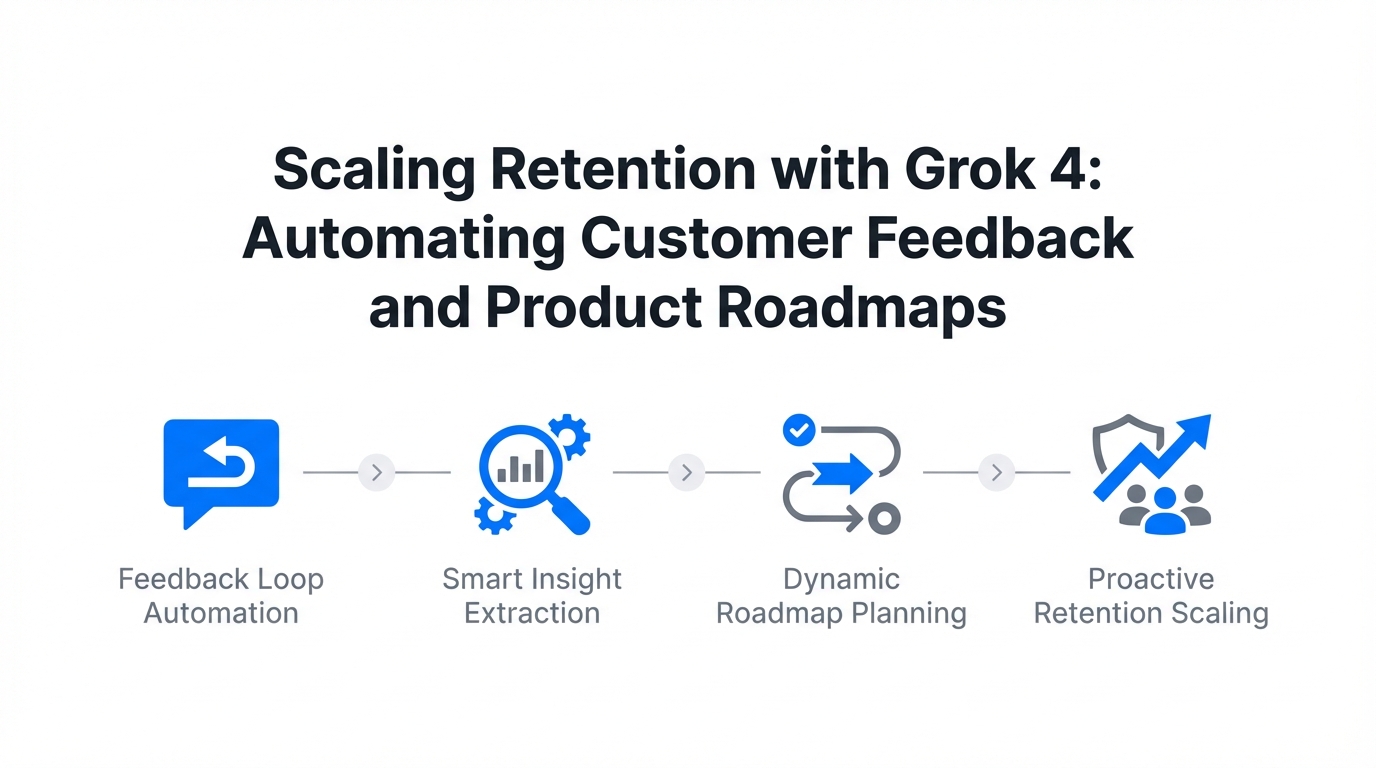
In the high-stakes world of product management, the distance between receiving a customer complaint and shipping a fix is the exact space where churn happens. Traditionally, closing this gap required hours of manual labor: exporting CSVs from support tickets, tagging sentiment in spreadsheets, and arguing over roadmap priorities in endless meetings. However, the release of Grok 4 has introduced a paradigm shift in how growth leads handle Grok 4 business automation. By leveraging real-time data from X and sophisticated internal reasoning modes, teams can now transform raw noise into a prioritized, data-backed product strategy in seconds.
Retention is no longer just about email sequences; it is about building what users actually need before they realize they are frustrated. This article provides a comprehensive playbook for using Grok 4 to automate your feedback loops, quantify brand loyalty, and forecast the impact of new features on your bottom line.
Automating Sentiment Analysis: Categorizing Themes in Seconds
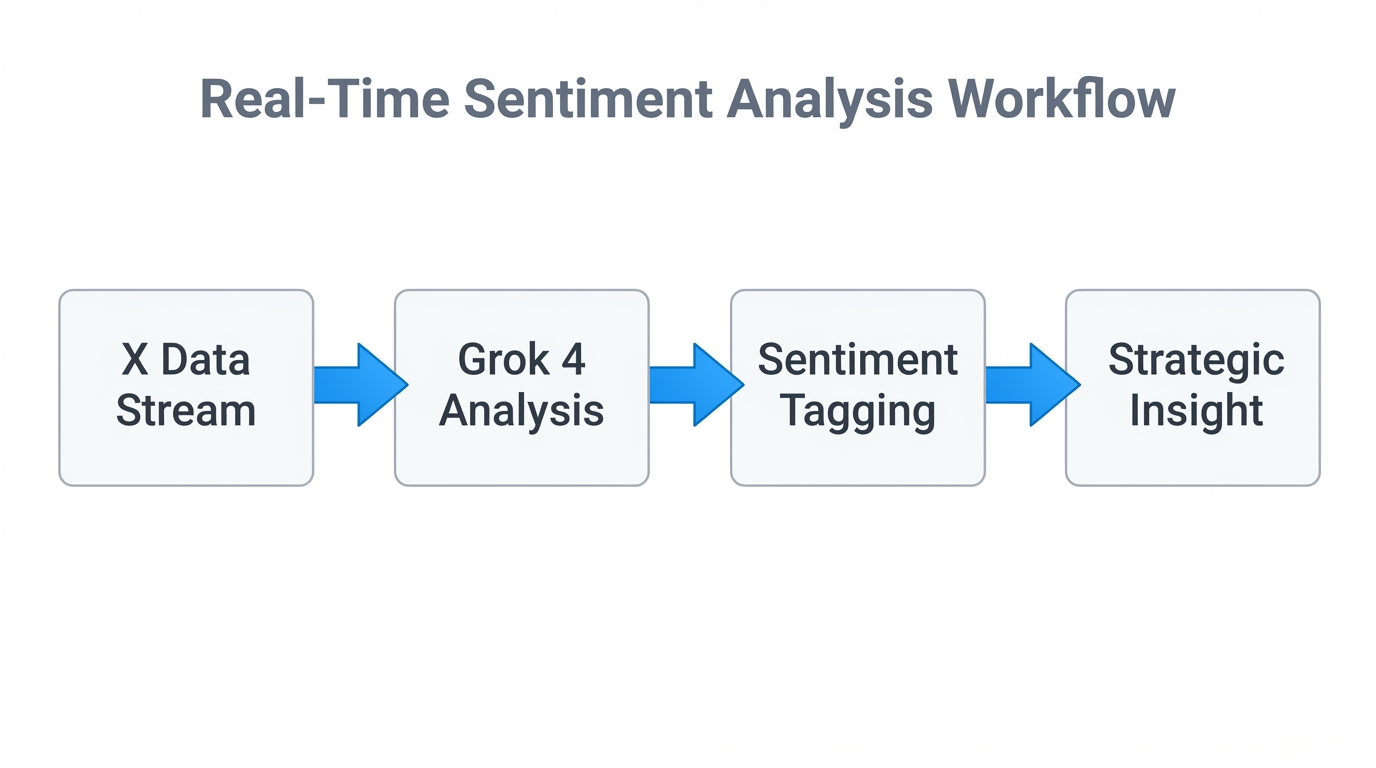
The first step in any retention marketing strategy is understanding the "why" behind user behavior. Grok 4’s customer feedback agent excels at taking thousands of data points—from App Store reviews to Discord chats—and distilling them into actionable themes. Unlike previous models, Grok 4 utilizes a "Thinking Mode" to evaluate the nuances of human emotion, distinguishing between a minor UI grievance and a critical performance bottleneck.
When you input a batch of reviews into a tool like Notion or directly into Grok, the AI identifies recurring patterns. For example, in a recent test involving the Todoist app, Grok identified "lack of visual clarity" as a primary driver of user overwhelm. By quantifying these themes, growth leads can move away from anecdotal evidence and toward a AI sentiment analysis for brands that is rooted in statistical significance.
"The era of the 'Idea Guy' is here, but only if that guy has the data to back his instincts. Grok 4 provides that foundation by turning millions of raw interactions into a clear signal."Quantifying NPS and Loyalty with Real-Time X Integration
One of the most powerful features of Grok 4 is its native access to the X data stream. Traditional Net Promoter Score (NPS) surveys suffer from response bias—only the very happy or very angry take the time to fill them out. Grok 4 bypasses this by analyzing organic brand mentions to provide a more authentic loyalty score.
By searching for brand sentiment across the global conversation, Grok can calculate a "Real-Time NPS." If users are organically recommending your tool—for instance, telling others that Idea Browser is a "cheat code" for startups—Grok recognizes this as a high-loyalty signal. This real-time pulse check is essential for retention marketing strategies, as it alerts you to shifts in brand perception long before they show up in your churn metrics.
| Metric Type | Traditional Method | Grok 4 Automation |
|---|---|---|
| NPS Collection | Email Surveys (Low Response) | Real-time X sentiment analysis |
| Analysis Time | Days/Weeks | Seconds |
| Data Source | Internal Only | Internal + Global X Conversations |
| Actionability | Static Report | Dynamic Roadmap Suggestions |
Using this data, Grok can assign a quantified score (e.g., an NPS of 90) based on how often users defend the brand or promote it without being prompted. This level of Grok 4 customer feedback analysis gives teams a competitive edge by surfacing sentiment trends that competitors using legacy tools would miss entirely.
Building a Prioritized Product Roadmap from Competitive Gaps
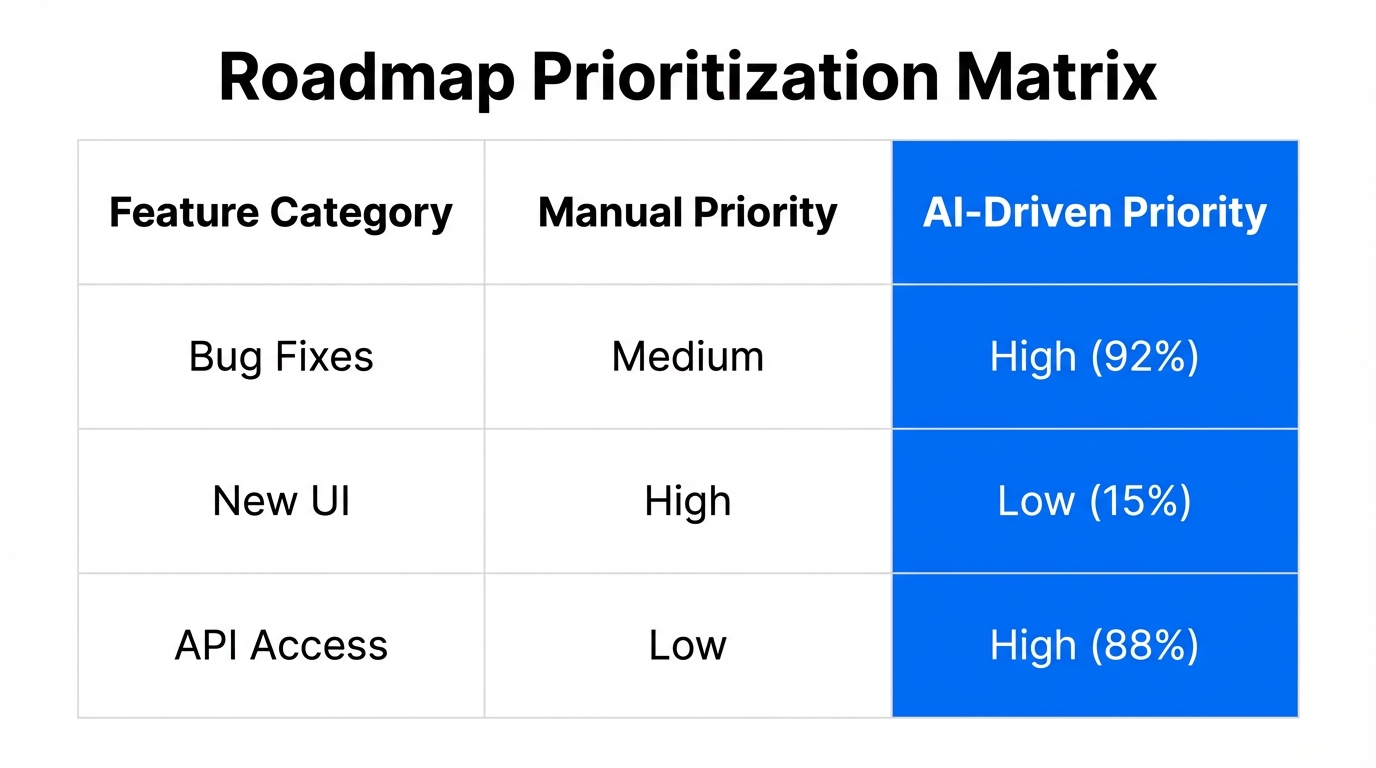
Once you have identified your own pain points, the next step in product roadmap automation is looking outward. Grok 4 acts as a market research agent, scanning competitors like Asana or Linear to find untapped opportunities. It looks for what users are "screaming for" in competitor reviews and suggests features to fill those gaps.
For example, if Grok detects that users of high-end video tools like Synthesia are frustrated by latency, it might suggest that your startup focuses on "pixel-by-pixel real-time rendering" as a key differentiator. This isn't just a guess; it's a data-backed prioritization based on real-time market voids. To validate these roadmap ideas further, many modern growth teams use platforms like Stormy AI to find and outreach to niche UGC creators who can test these new features and provide rapid feedback before a full-scale launch.
The Prioritization Matrix
- High Impact / Low Effort: UI tweaks and documentation clarity that Grok identifies as recurring friction points.
- High Impact / High Effort: Major feature shifts, such as moving from rigid UIs to canvas-based designs.
- Low Impact / Low Effort: Aesthetic changes that Grok suggests for "brand appeal" based on current X trends.
"A roadmap shouldn't be a wishlist; it should be a response to the market's loudest silences."Forecasting the Impact of New Features on Retention
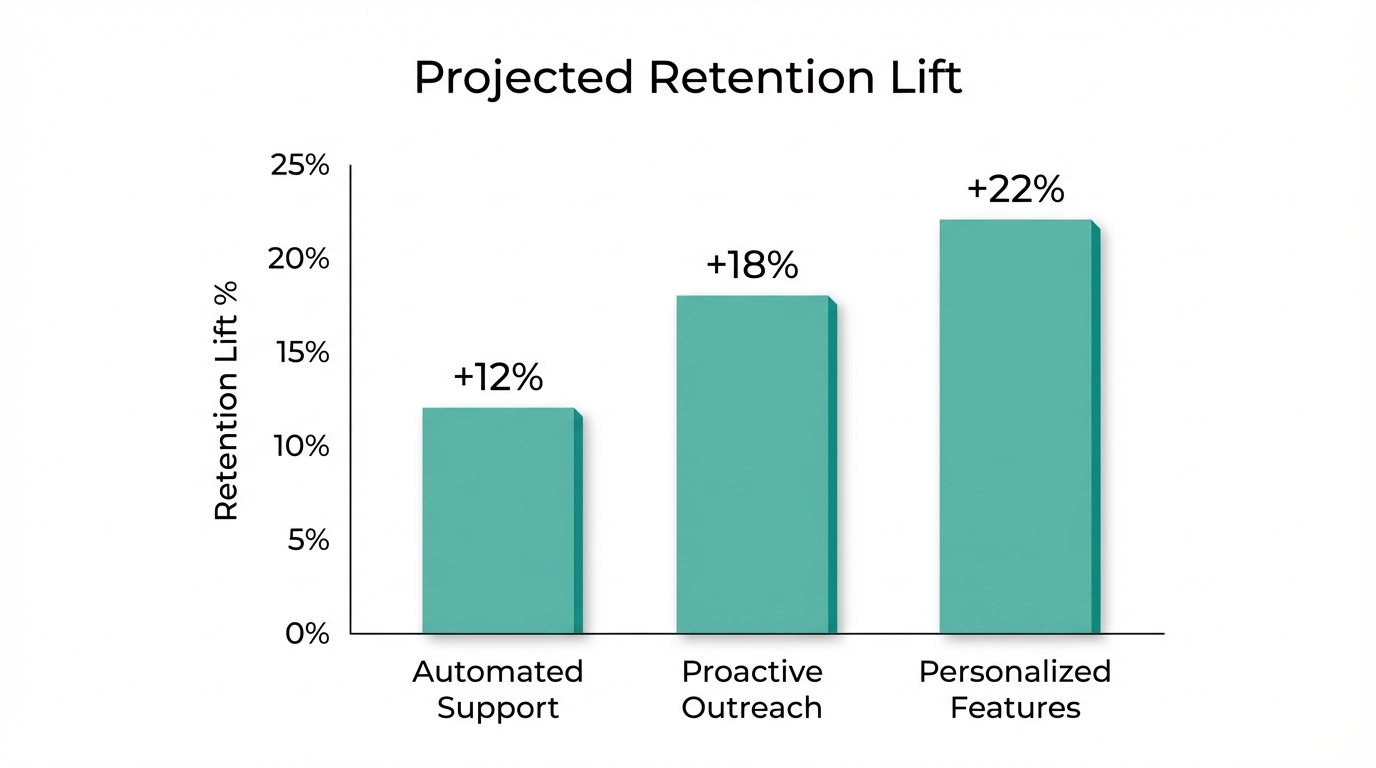
Perhaps the most futuristic application of Grok 4 business automation is its ability to forecast retention. By analyzing historical feedback patterns and the projected value of proposed features, Grok can use its "Code Mode" to run Python scripts that model growth projections. It can estimate how much a 10% increase in "system speed" (a common request for tools like Notion) would decrease churn among power users.
This forecasting allows growth leads to justify product spend to stakeholders. Instead of saying "we should build this," you can present a Grok-generated forecast showing a potential 15% boost in user LTV. Integrating this with your existing stack—perhaps tracking the results in Google Analytics or Mixpanel—creates a closed-loop system where every product decision is tied to a measurable retention outcome.
Step-by-Step Playbook: Linking Feedback Loops to Slack
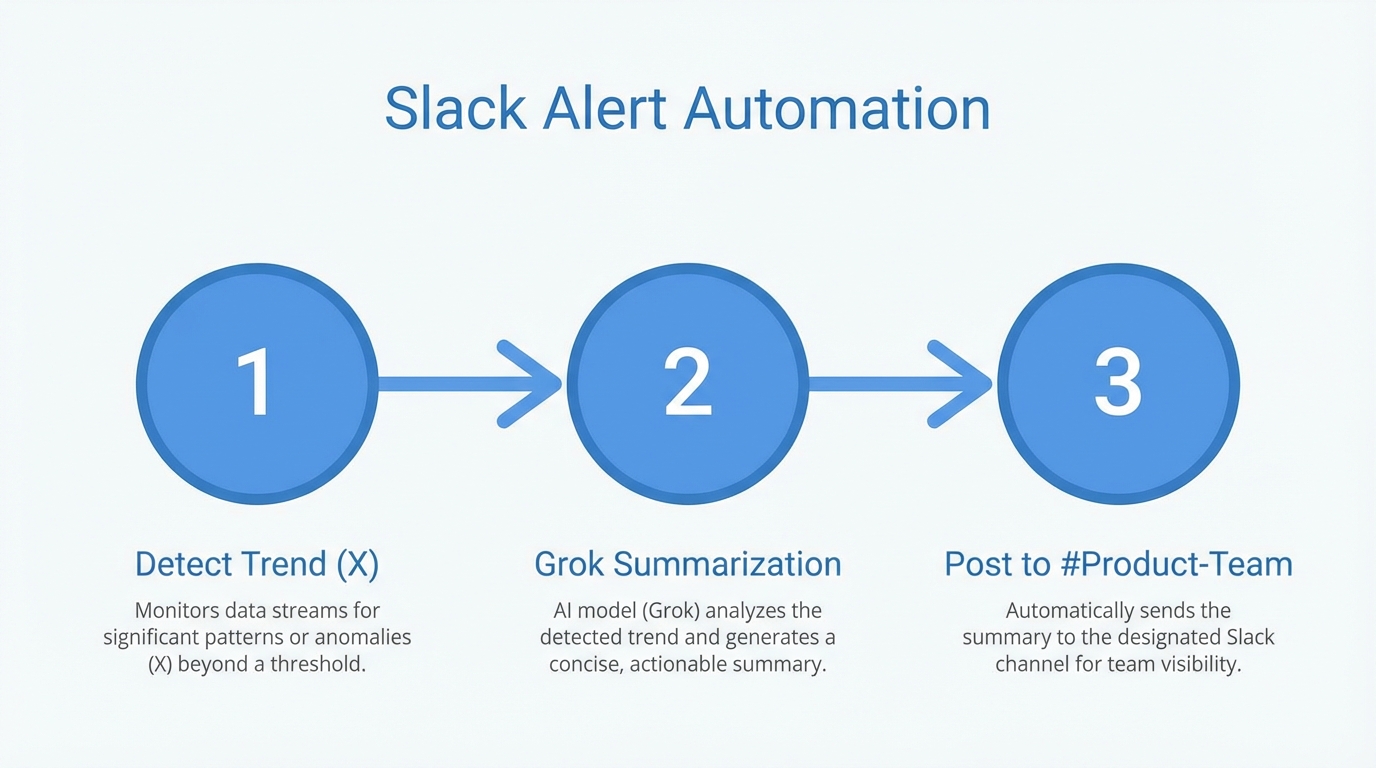
To truly scale retention, the feedback loop must be autonomous. You shouldn't have to manually prompt Grok every day. Here is a playbook for setting up a Grok 4 business automation workflow that keeps your entire team informed.
Step 1: Aggregrate Raw Feedback
Use a tool like Zapier or Make to collect customer reviews, support tickets, and mentions from X into a central database like Airtable.
Step 2: Grok 4 Analysis Prompt
Set up a daily scheduled script that sends the last 24 hours of feedback to Grok 4. Use a specific prompt: "Analyze this batch of reviews as a sentiment analysis agent. Categorize themes, quantify the daily NPS, and summarize the top 3 actionable product improvements."
Step 3: Push to Slack
Configure the output to be sent directly to a #product-feedback channel in Slack. This ensures that the engineering and design teams see real-time user sentiment without having to leave their workspace. For teams managing external creator relationships, tools like Stormy AI can sit alongside this workflow to manage the outreach and communication with the users providing this high-value feedback.
Step 4: Monthly Roadmap Sync
Every 30 days, ask Grok to look at the month's aggregated summaries and automate a prioritized roadmap. Compare this against your current sprint goals to see where the team might be drifting away from user needs.
Conclusion: Building a Feedback-First Growth Engine
Scaling retention isn't about guessing; it's about listening at scale. By implementing Grok 4 customer feedback analysis, product marketers can move from reactive firefighting to proactive growth. The ability to quantify loyalty through X, forecast feature impact with Python code, and automate the entire reporting pipeline to Slack turns customer feedback into a competitive weapon.
As you build your modern growth stack, remember that AI is most effective when it bridges the gap between raw data and human decision-making. Whether you are refining your pitch deck using VC-mode or sourcing UGC creators to validate your next big feature, the tools are now available to build products that users don't just use—but love. Start by automating your first feedback loop today and watch your retention metrics transform from a challenge into your biggest strength.