By 2026, the definition of a "Technical SEO" has shifted fundamentally. We are no longer just looking at spreadsheets and crawling sites with static tools; we are orchestrating autonomous agents to perform real-time interventions. The rise of Claude Code, Anthropic’s agentic CLI tool, has ushered in an era of "Action AI," where marketers can execute terminal commands and edit codebases through natural language. For growth teams, this means programmatic SEO 2026 is no longer about high-volume low-quality pages, but about automated precision at scale. In this playbook, we’ll explore how to integrate Claude Code with Puppeteer to build a self-healing SEO infrastructure.
The Agentic Shift: Why Manual Audits are Obsolete
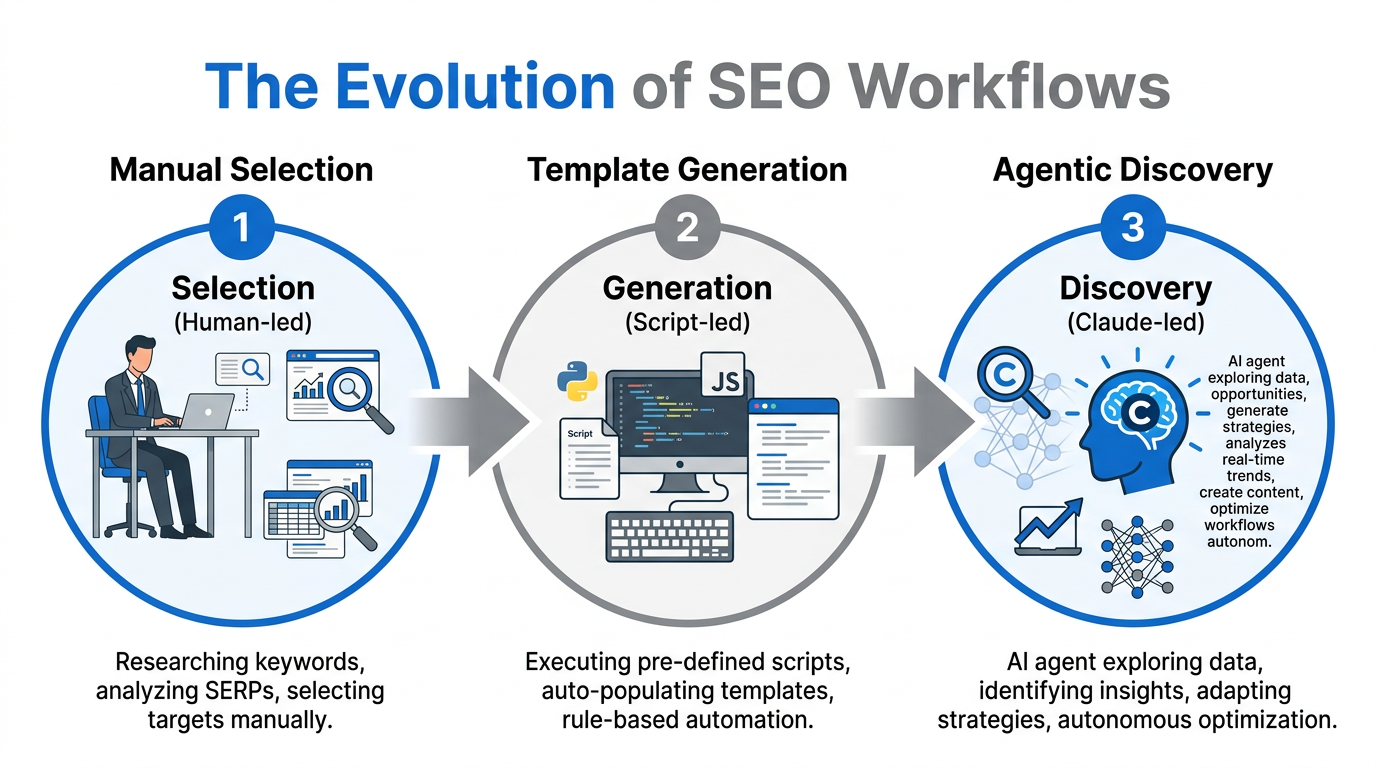
The traditional SEO audit is a snapshot in time—one that is often outdated by the time the developer receives the ticket. In 2026, the AI coding assistant market has surpassed $14 billion, driven by the need for real-time responsiveness. Growth marketers have evolved into "vibe coders," leveraging natural language to ship complex data pipelines without deep syntax knowledge.
This shift is powered by the Model Context Protocol (MCP), an industry standard that allows Claude to connect to external data sources. By using the Puppeteer MCP, Claude Code can now launch a headless browser, navigate to your production site, and perform Claude Code SEO audits with the same nuance as a human specialist, but at the speed of a machine.
"The future of SEO isn't just about finding errors; it's about deploying agents that can find, diagnose, and fix technical debt before the search engines even crawl it."
Step 1: Integrating Claude Code with Puppeteer MCP
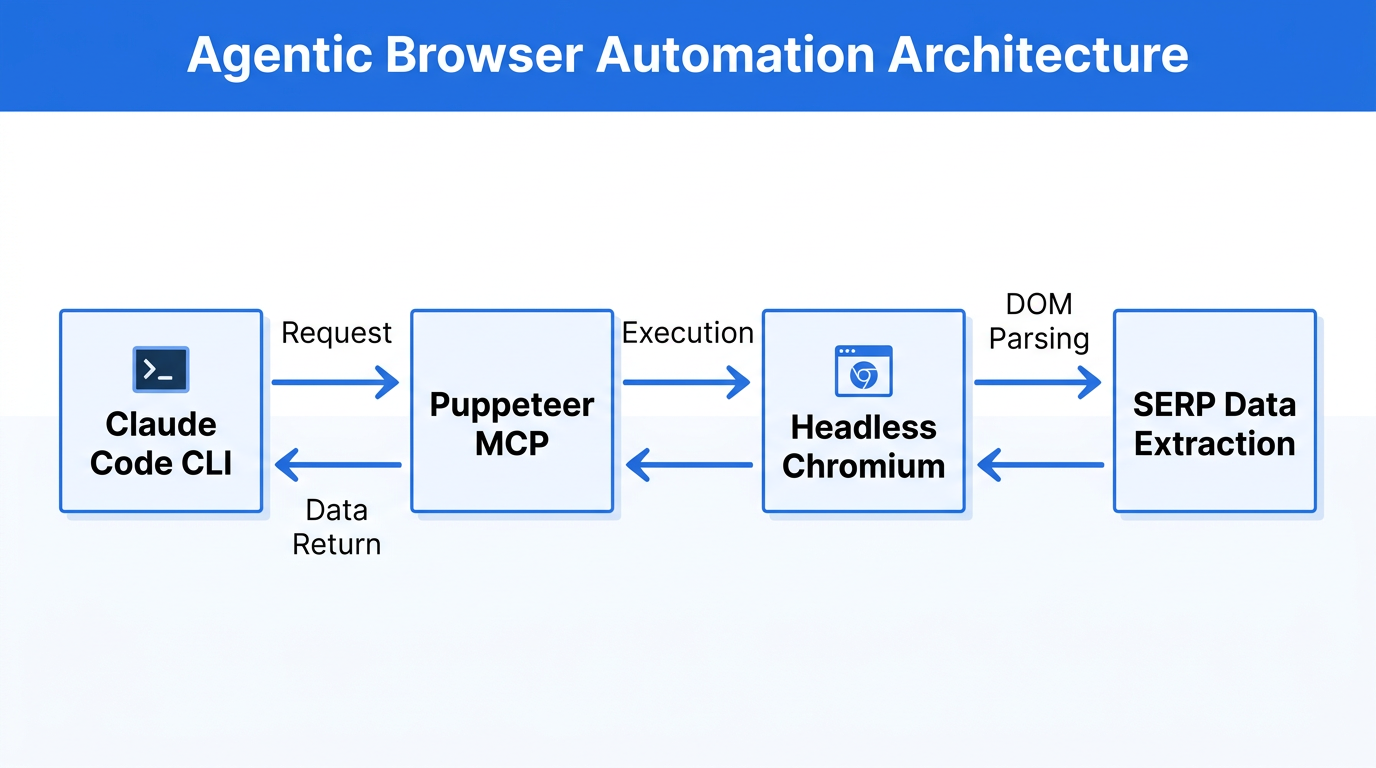
To scale programmatic SEO, you need more than just a crawler; you need a tool that understands the Document Object Model (DOM). Integrating Claude Code with Puppeteer allows the AI to see exactly what Googlebot sees, including JavaScript-rendered content that traditional crawlers might miss.
Configuring the Environment
First, ensure you have the Puppeteer MCP server installed. This acts as the bridge between Claude’s reasoning and the browser’s actions. You can initiate a live audit by simply instructing Claude to "Visit example.com and report on all interactive elements that lack descriptive ARIA labels."
- Live DOM Inspection: Claude can identify if your React or Next.js components are hydrating correctly for SEO.
- Automated Screenshots: Use Claude to capture visual evidence of layout shifts (CLS) that impact your Core Web Vitals.
- Network Monitoring: Analyze which third-party scripts are slowing down your Time to Interactive (TTI).
| Feature | Traditional Audit | Claude Code + Puppeteer |
|---|---|---|
| Execution Speed | Hours/Days | Seconds |
| JS Rendering | Often inconsistent | Full Headless Browser Support |
| Actionability | Static PDF Report | Immediate Code Fix Recommendations |
| Persistence | Snapshot only | Continuous Monitoring via CLI |
Step 2: Automating JSON-LD Schema and H1 Verification
One of the most tedious tasks in AI technical SEO automation is maintaining structured data across thousands of programmatic pages. Claude Code eliminates the manual labor by scanning your page content and generating precise JSON-LD schema on the fly.
When working with a large-scale site, you can use a simple script to have Claude visit each URL, identify the primary entity (Product, Article, or FAQ), and verify if the H1 tag matches the metadata. This is critical for sites that rely on user-generated content or dynamic listings. For example, if you are scaling a directory, Claude can ensure that every page has a unique, descriptive H1 that aligns with the user's search intent.
"Schema is the language of 2026 search engines. If your agent isn't speaking it fluently across every page, you're leaving traffic on the table."
For brands leveraging creator-driven growth, platforms like Stormy AI can help identify the right influencers to fuel these programmatic landing pages, ensuring that the content being indexed is not just technically sound, but also high-converting and socially validated.
Step 3: Building a Custom SEO Skill Library
To truly scale, you shouldn't be repeating prompts. Claude Code allows for the creation of a "Persistent Context" through a CLAUDE.md file in your project root. This file acts as the long-term memory for your SEO strategy. By defining your brand voice, technical constraints, and preferred schema formats here, you ensure that every interaction Claude has with your codebase is consistent.
You can also integrate open-source libraries like Corey Haines' Marketing Skills or dedicated SEO Audit Skills. These libraries pre-load Claude with specialized knowledge on everything from keyword density to canonical tag logic.
/audit-seo, that triggers a full Puppeteer scan, checks for 404s, and validates the robots.txt file in one go.Step 4: Real-time SERP Monitoring and Keyword Movement
In 2026, waiting for a weekly rank tracking report is a recipe for failure. Using Claude Code combined with search-specific MCPs, you can track keyword movement in real-time. This is particularly useful for programmatic SEO where you may have hundreds of pages targeting long-tail queries.
Claude can be programmed to alert you via Slack or email when a primary keyword drops out of the top three positions. Because it has access to your files, it can immediately suggest content updates or technical fixes to regain the lost ground. This level of agentic orchestration moves SEO from a reactive marketing channel to a proactive growth engine. Many top-tier agencies are now using these methods to provide "always-on" SEO services that were previously impossible at scale.
Case Study: Reducing SEO Audit Time by 75%
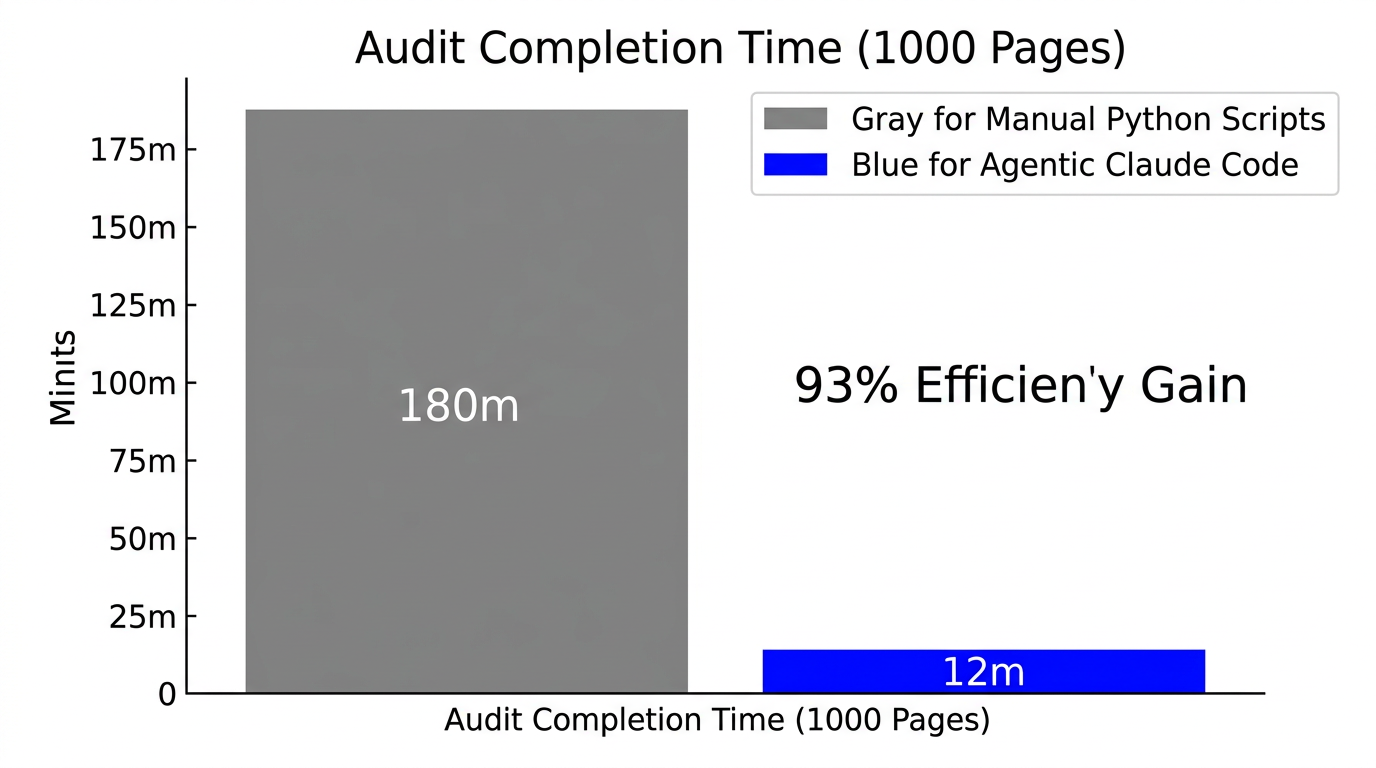
A mid-sized e-commerce platform recently implemented this agentic CLI workflow. Before adopting AI-powered tools, their monthly technical audit took approximately 20 hours of manual labor, involving three different tools and a dozen spreadsheets. By integrating Puppeteer for marketing audits via Claude Code, they transformed their process.
The results were immediate: according to data from Bayelsa Watch, teams using AI assistants see a 40% increase in coding speed and a massive reduction in debugging time. For this company, the 20-hour audit was reduced to just 5 hours. This included not just the identification of errors, but the automated generation of pull requests to fix missing meta descriptions and broken internal links.
"We didn't just save time; we increased our deployment frequency for SEO fixes by 300%. We no longer have an 'SEO backlog.'"
Avoiding the "Set It and Forget It" Trap
While the automation capabilities of 2026 are breathtaking, they are not infallible. Marketers must avoid the common mistake of removing the "Human-in-the-loop" (HITL). AI models can occasionally hallucinate technical metrics or recommend changes that conflict with brand safety.
- Context Bloat: Connecting too many MCP servers at once can confuse the agent. Use "Plan Mode" to map out complex tasks before execution.
- Privacy Concerns: Never feed sensitive PII (Personally Identifiable Information) into an agentic tool without a secure sandbox. Use Claude Enterprise to ensure data is not used for future model training.
- Verification: Always verify Claude's schema output using the Google Rich Results Test before pushing to production.
Conclusion: The Future of Programmatic SEO
Scaling programmatic SEO 2026 requires a mindset shift from "managing tools" to "managing agents." By combining the reasoning power of Claude Code with the browsing capabilities of Puppeteer, growth marketers can build a technical SEO moat that is impossible for competitors using legacy methods to breach. Whether it's through automated schema generation, real-time SERP tracking, or self-healing site audits, the goal remains the same: maximum visibility with minimum manual friction.
As you build your automated marketing stack, consider how creator-led content can further boost your search performance. Platforms like Stormy AI can help you discover and manage the UGC creators that provide the high-quality content search engines crave. Start small by automating a single audit task, and soon you'll find your entire SEO workflow operating at the speed of thought.