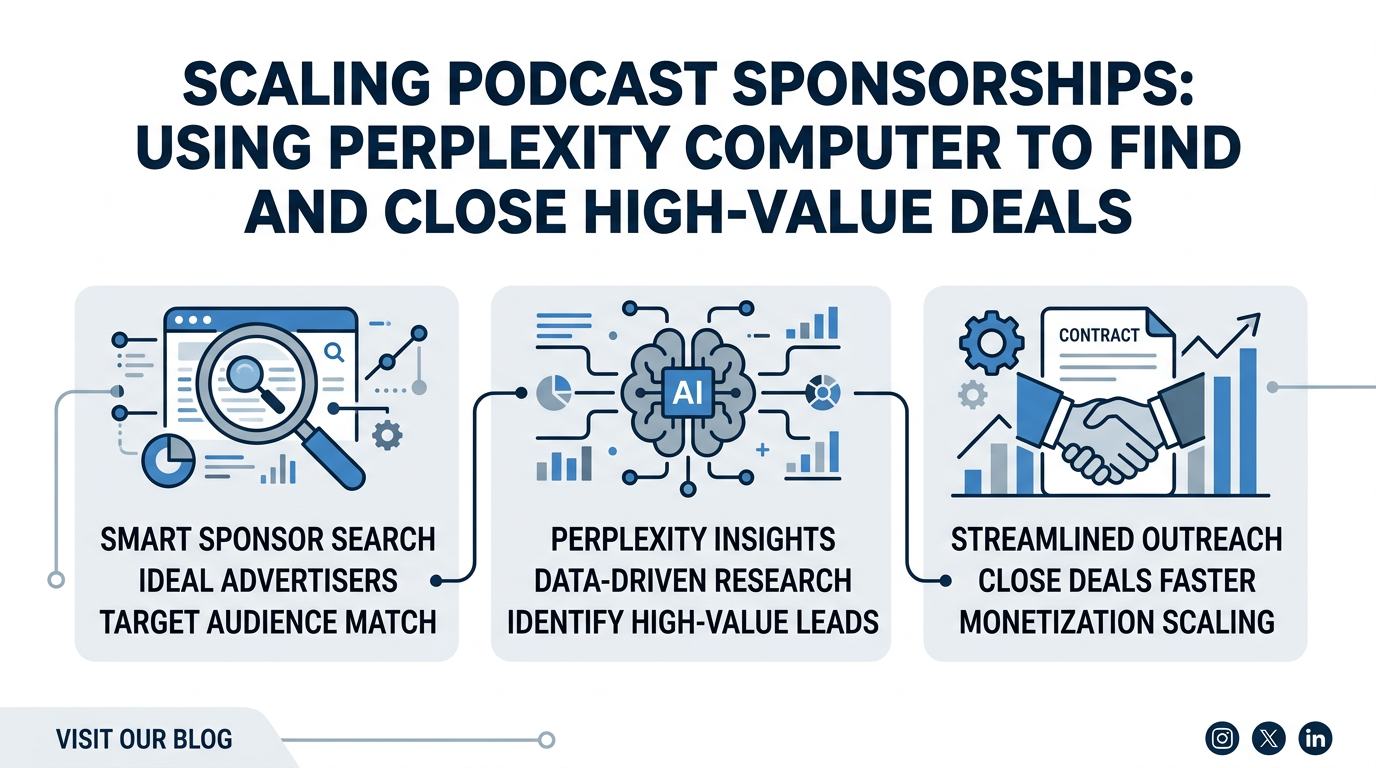
Securing high-value sponsorships is the lifeblood of the creator economy, yet for most podcasters and brand marketers, the process remains a manual, exhausting grind. You spend hours listening to rival shows just to hear their ad reads, digging through LinkedIn for the right marketing contact, and crafting emails that often disappear into the void. But the landscape is shifting. With the advent of agents like Perplexity Computer, the barrier between a niche show and a revenue-generating powerhouse is no longer a dedicated sales team—it is sophisticated influencer marketing automation. This playbook reveals how to identify exactly who is spending money in your niche and how to automate the pitch process from discovery to the final close.
The Competitor Sponsor Hack: Identifying Hot Budgets
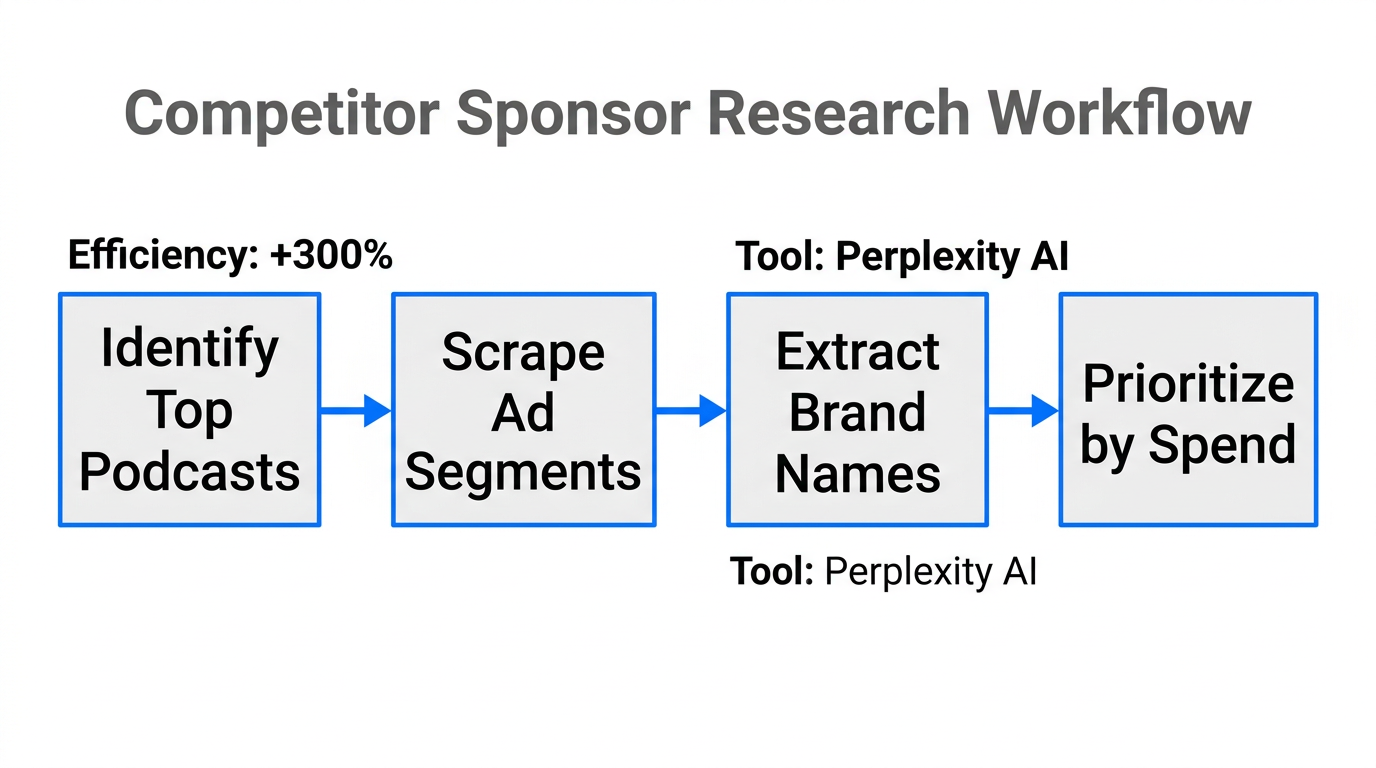
The fastest way to grow your podcast revenue is not to convince a brand to try podcasting for the first time; it is to find the brands that are already spending heavily on shows similar to yours. If a brand sponsors The Bitcoin Podcast Network or My First Million, they have already internally approved a budget for audio advertising. They understand the ROI of the medium, and they are likely looking for more inventory to scale their reach.
Using an AI agent, you can perform "batch research" across dozens of competing shows in seconds. Instead of manual tracking, you can prompt a tool like Perplexity to "Research who advertises on the Technology Brothers Podcast Network (TBPN) and list the top five companies." The AI scans transcripts, social mentions, and industry news to find active spenders like Shopify, Ramp, Plaid, and Figma. This identifies the "hot budgets"—brands currently in an active buying cycle.
"The key to winning sponsorships isn't finding brands with money; it's finding brands that have already decided to spend that money on your specific audience type."
Finding the "Yes" Man: Automating Contact Discovery
A common mistake founders make is pitching the CEO. While reaching out to someone like Tobi Lütke at Shopify might seem bold, CEOs rarely handle the minutiae of podcast placements. The real decision-makers are the Heads of Brand Marketing or Director of Growth Partnerships. These individuals are measured on their ability to find new, high-converting channels.
AI agents can now navigate the professional web to find these specific individuals. By connecting tools like Meta Ads Manager or TikTok Ads Manager data with LinkedIn research, you can identify exactly who manages the budget. A sophisticated brand partnership strategy involves more than just a name; it requires finding their verified email addresses and understanding their recent professional wins—such as a recent appearance on 20VC or a specific direct mail campaign they recently launched.
| Target Role | Why They Matter | Outreach Priority |
|---|---|---|
| Head of Partnerships | Owns the creator budget and final approval. | High |
| Growth Marketing Manager | Analyzes performance metrics and CAC. | Medium |
| CEO / Founder | Visionary, but rarely manages ad buys. | Low |
Crafting High-Context Pitches with AI Research
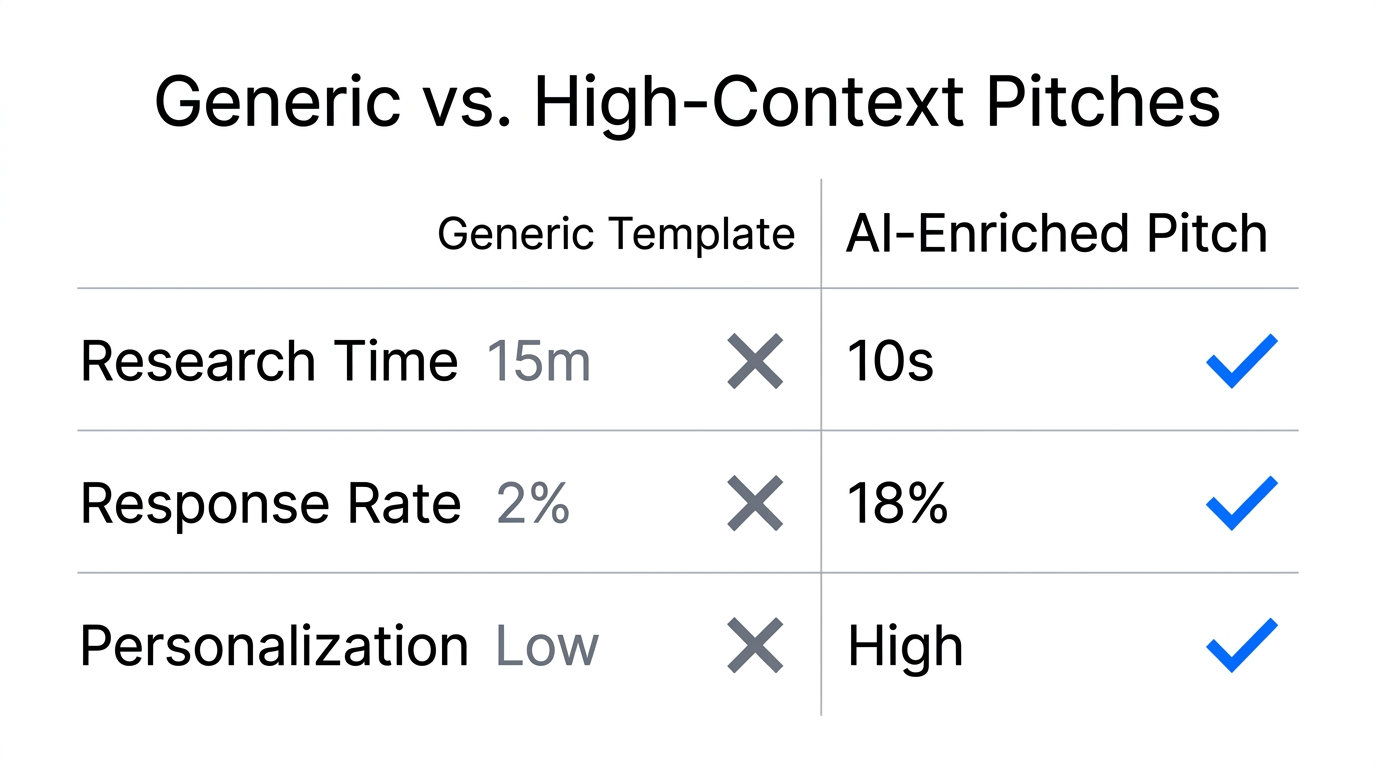
The era of the generic "I have a podcast, want to sponsor?" email is over. To stand out in a crowded inbox, your podcast sponsorship outreach must be hyper-personalized. This means referencing the brand's recent revenue milestones, their new AI catalog tools, or even a specific tweet from the founder about an MRI result they analyzed. This level of detail proves you aren't just a bot—even if you're using one to help you write.
When using influencer marketing automation, you can instruct the AI to "Research the company's recent news, funding, and pain points, then draft a clear, friend-to-friend email." For example, a pitch to the VP of Growth at Ramp might mention their recent interview on 20VC where they discussed "finding alpha in channels no one else is trying." By tying your podcast's audience—say, early-stage founders making infrastructure decisions—to their specific growth goals, you transform a cold pitch into a strategic solution.
"A high-context pitch doesn't just ask for money; it mirrors the brand's own language and recent successes back to them."
Automating the Sponsorship Pipeline at Scale
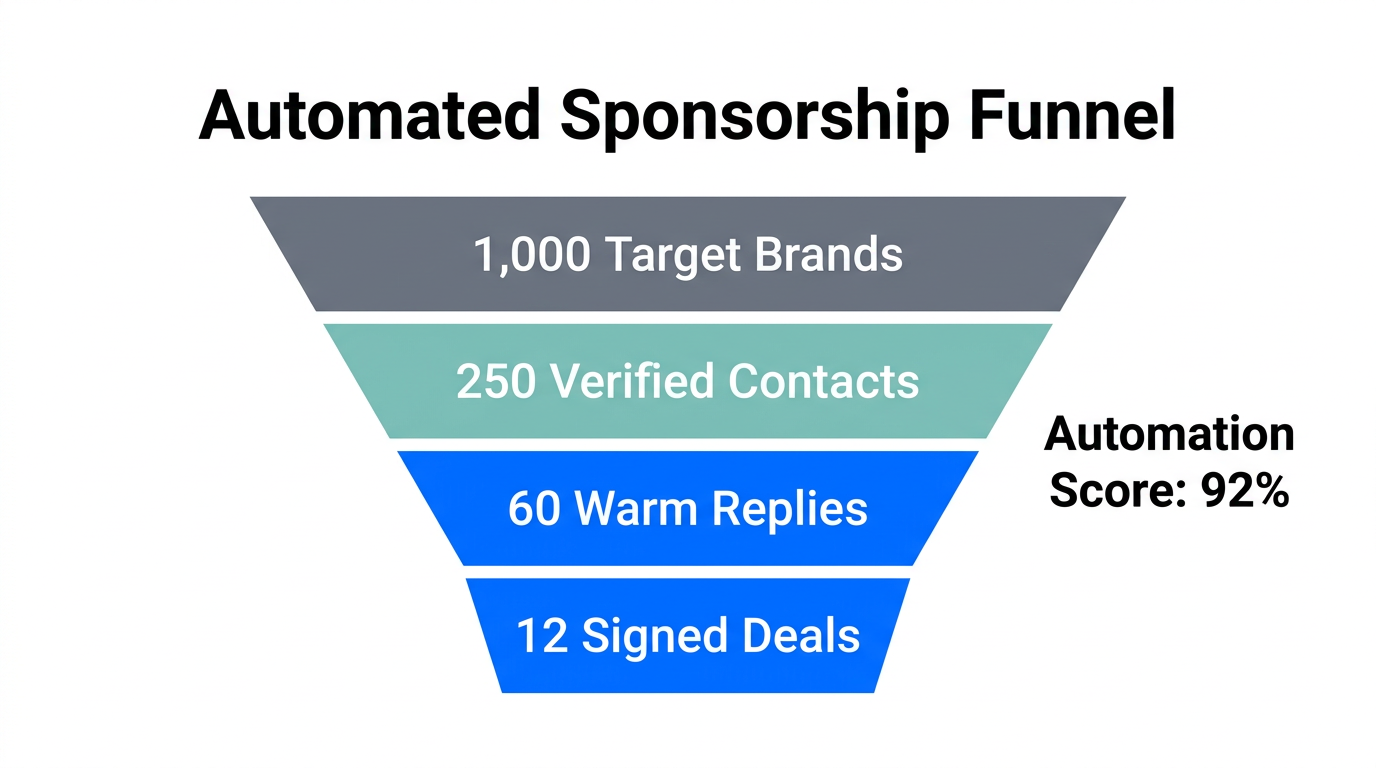
Managing a high-volume sponsorship pipeline is a full-time job, but AI can now handle the heavy lifting. By integrating your research with a tool like Stormy AI, which serves as a specialized creator CRM and discovery engine, you can track dozens of deals simultaneously. Modern AI agents can run sub-tasks in parallel: researching 30 companies, finding contacts, drafting emails, and sending them through your connected Gmail accounts.
This allows a lean team (or a solo creator) to maintain a "shadow sales team" that works while they sleep. You can even set up automated follow-up sequences. Since the first email only converts at roughly 5-10%, scheduling follow-ups at 3 and 7 days with new angles is critical for creator economy growth. Using an AI-native platform helps source and manage UGC creators at scale, providing the vetting and discovery tools needed to ensure you are reaching out to the right partners who align with your brand's quality standards.
The Recurring Monitor: Never Miss a New Sponsor
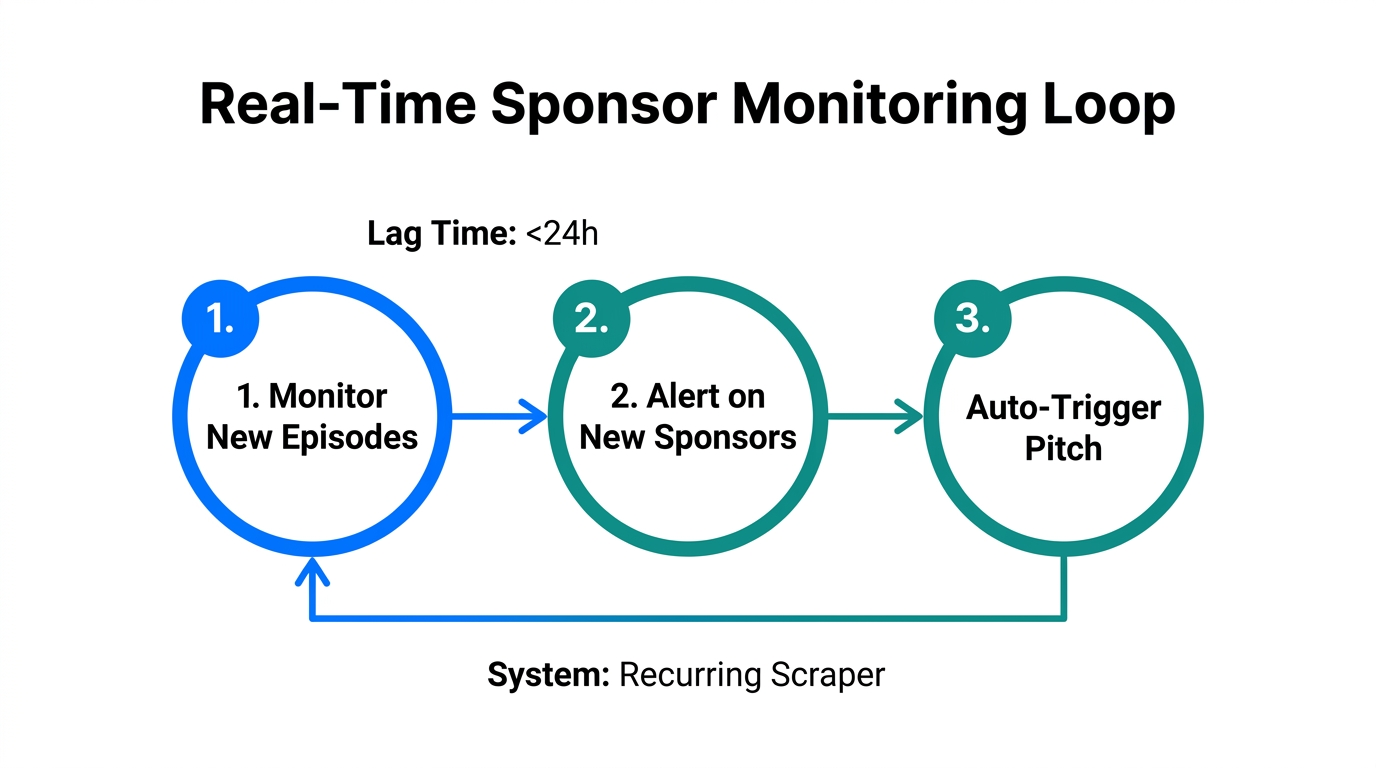
The most lucrative time to pitch a brand is the moment they start testing a new channel. If a brand just dropped their first ad on a competitor's show, their "podcast budget is hot." They are in evaluation mode. If you reach out within 48 hours, you are significantly more likely to get a response than if you wait six months.
You can set up a recurring AI monitoring system to scan the top five podcasts in your niche every morning at 8 AM. The agent checks for:
- New Episode Drops: Identifying who is being mentioned in the mid-roll.
- Guest Announcements: High-profile guests often represent brands that are looking for PR and sponsorship opportunities.
- Pricing Changes: If a competitor changes their sponsorship tiers, you need to know instantly to adjust your own brand partnership strategy.
By using Stormy AI for creator search and vetting, you can further refine this list by ensuring the sponsors you're tracking have a high-quality audience and high engagement rates. This "competitive intelligence agent" ensures you have an unfair advantage in terms of information, allowing you to be the first to pitch when a new sponsor enters the market.
Beyond Sponsorships: Live Market Diligence
The same AI infrastructure used for sponsorship outreach can be repurposed for investor pipeline research or live deal diligence. If you are raising a Series A for a creator-tool startup, you can task an agent to "find 50 VC firms that invest in AI-powered community platforms, identify the right partner, and pull their recent tweets and interviews."
The AI can compile this into a structured spreadsheet or even a polished PDF investment memo. It can compare margins, growth rates, and market sentiment from finance-focused social media. This turns the computer into a shadow CFO or an analyst, allowing founders to focus on building rather than data entry. Whether you are using Notion to organize your research or Canva to design your pitch decks, the AI-driven automation layer sits on top of these tools to accelerate the workflow.
"The future of the creator economy isn't about working harder; it's about spinning up machines that work for you while you build your assets."
Conclusion: Your Actionable AI Sponsorship Playbook
To dominate your niche and scale your revenue, you must move from reactive selling to automated, high-context outreach. The steps are clear: identify where the money is already flowing, find the specific human being who controls that flow, and use AI to craft a message so personalized it cannot be ignored. By setting up recurring monitors and leveraging advanced models like those found in Perplexity and management tools like Stormy AI, you can build a 1-person sponsorship powerhouse. Start by connecting your CRM today and let the agents find your next five-figure deal while you focus on creating content that matters.