In the fast-paced digital landscape of 2026, the traditional marketing funnel hasn't just evolved—it has been replaced by what industry leaders call the Fractal Model. This adaptive ecosystem, as detailed by The Media Online, uses AI to predict user behavior in real-time, allowing brands to abandon linear journeys in favor of hyper-personalized loops. To keep up, performance marketers have moved toward the 50-minute funnel sprint, a 2026 industry standard that takes a product from concept to a live, conversion-optimized asset in under an hour. At the heart of this revolution is AdCreative.ai, an autonomous creative agent that has redefined high-velocity performance marketing by solving the industry's biggest bottleneck: creative production.
The New Math: Analyzing the 5.44x ROI of AI-Driven Creative
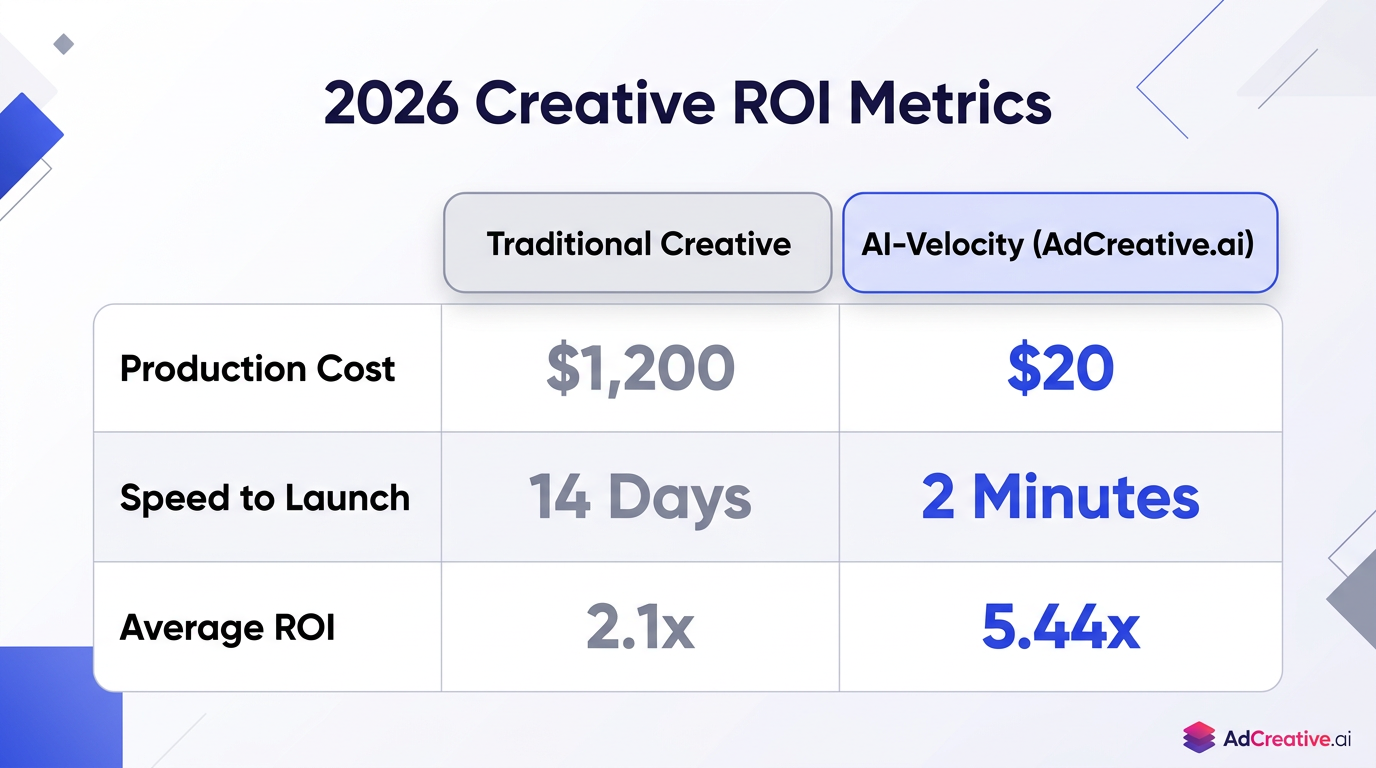
The financial incentive for adopting AI ad generation in 2026 is no longer theoretical. According to data from Amra & Elma, companies are now earning an average of $5.44 for every $1 invested in AI automation platforms. This represents a seismic shift from the manual workflows of 2024. Mature AI programs are not just saving time; they are reporting a 68% increase in lead volume because they can test more variables than any human team could possibly manage. The global market for AI in marketing is projected to reach $41 billion by the end of 2026, growing at a rapid CAGR of 26.7%, per Bayelsa Watch. This growth is fueled by the realization that speed is the ultimate competitive advantage.
"The ROI gap between AI-native teams and traditional agencies is widening; those using autonomous agents see a 37% reduction in costs while 5x-ing their output."
In this high-stakes environment, the risk is no longer the cost of the tools, but the cost of not automating. As Martech legend Scott Brinker notes at Averi, over 90.3% of marketing organizations have now integrated AI agents somewhere in their stack. We have officially moved past the "Copilot" era into the era of the autonomous marketing employee.
Inside AdCreative.ai: Behavioral Signals vs. AI Slop
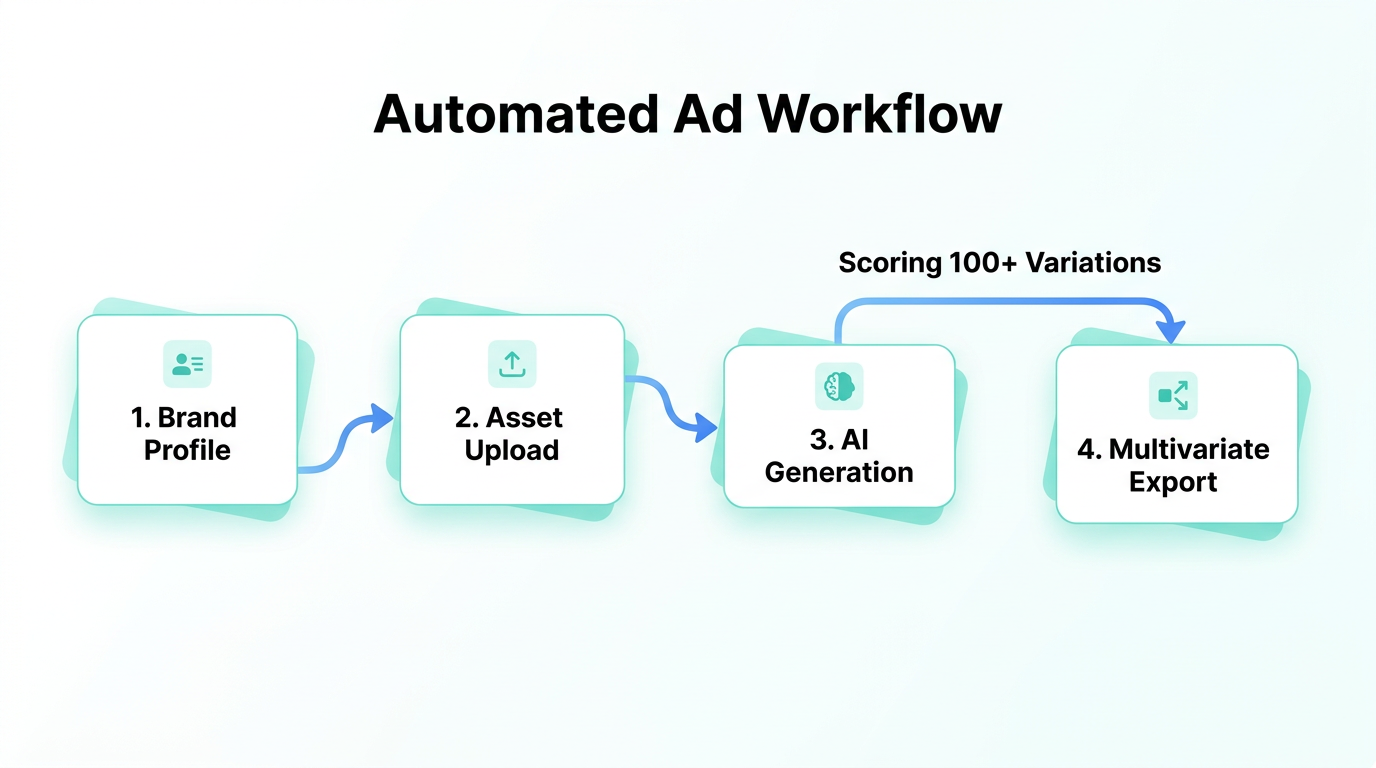
One of the primary concerns for brands in 2026 is the rise of "AI Slop"—generic, repetitive content that erodes customer trust. Research from Funnel.io suggests that 23% of marketers fear AI is creating a sea of sameness. AdCreative.ai avoids this trap by moving beyond basic image generation. It utilizes a sophisticated engine that analyzes behavioral and intent-based signals to generate conversion-optimized ad creative that resonates with specific psychological profiles.
Instead of just making "pretty" images, the platform uses predictive machine learning models to determine which visual layouts, color palettes, and CTA placements will drive action. This data-driven approach is why many practitioners favor AdCreative.ai for their high-velocity performance marketing needs. To ensure these AI-generated ads have the necessary emotional resonance, smart marketers often fuel the creative engine with authentic User-Generated Content (UGC). For example, platforms like Stormy AI allow brands to discover niche creators whose raw, emotional content can be fed into AdCreative.ai to create a hybrid asset that is both data-optimized and human-centric.
| Feature | Traditional Funnel (Legacy) | AI Marketing Funnel (2026) |
|---|---|---|
| Launch Speed | 2–6 Weeks | < 60 Minutes |
| Optimization | Manual A/B Testing | Multivariate Autopilot |
| Targeting | Demographics | Behavior & Intent |
| Decision Logic | Static Rules | Agentic Reasoning |
The Human-in-the-Loop Requirement: Why Nuance Still Wins
Despite the staggering efficiency of AI ad generation in 2026, purely automated systems still hit a ceiling in high-ticket niches. Data from Leads at Scale reveals a fascinating "Revenue Paradox": while AI agents are 54x cheaper than human sales reps, humans still generate significantly more revenue in high-stakes environments due to their ability to handle emotional nuance and cultural context. This is why the 2026 playbook mandates a Human-in-the-Loop editor.
The editor's job is not to build the ad, but to act as a Creative Director, ensuring the AI-generated assets align with the brand's long-term equity. As noted by Primal, only 27% of customers trust AI-only results. Brands that succeed in 2026 are those that use tools like Gumloop to orchestrate workflows where humans provide the strategic hook and AI provides the execution scale.
"AI can execute the play, but only humans can write the script that touches the soul. In 2026, the best performance marketers are architects, not builders."
Eliminating Delays: Setting Up Multivariate Autopilot Testing
The days of waiting two weeks for A/B test results are over. In 2026, automated creative testing happens on Multivariate Autopilot. This means the system doesn't just test Image A vs. Image B; it tests 100 variations of background, copy, and button placement simultaneously, adjusting spend in real-time based on live performance data.
This "agentic" approach—transitioning from the "Assembly Line" philosophy of 2024 to the "Autonomous Employee" philosophy of 2026—allows for real-time optimization. Platforms like AdCreative.ai integrate directly with Meta Ads Manager and TikTok Ads Manager to pause underperforming creatives and double down on winners while the marketing team is asleep. According to SurFox, this speed boost in response and optimization can increase lead qualification probability by up to 21x.
Case Study: Hyper-Personalization at Scale (Starbucks & Absolut)
How do global giants use these tools? Starbucks, using their "Deep Brew AI" engine, reported a 30% higher ROI by hyper-personalizing the nurture stage of their funnel, according to RZLT. They used AI to generate unique creative assets for different customer segments based on their loyalty app behavior.
Similarly, Absolut utilized AI to analyze experiential data from live events, resulting in a 36% revenue uplift per visit by identifying high-intent leads and serving them personalized creative instantly via AnyRoad. These brands aren't just making ads; they are creating Living Brands—dynamic assets that self-adjust tone and visuals in real-time based on the viewer’s psychological profile.
The 50-Minute Funnel Playbook: Launching with AdCreative.ai
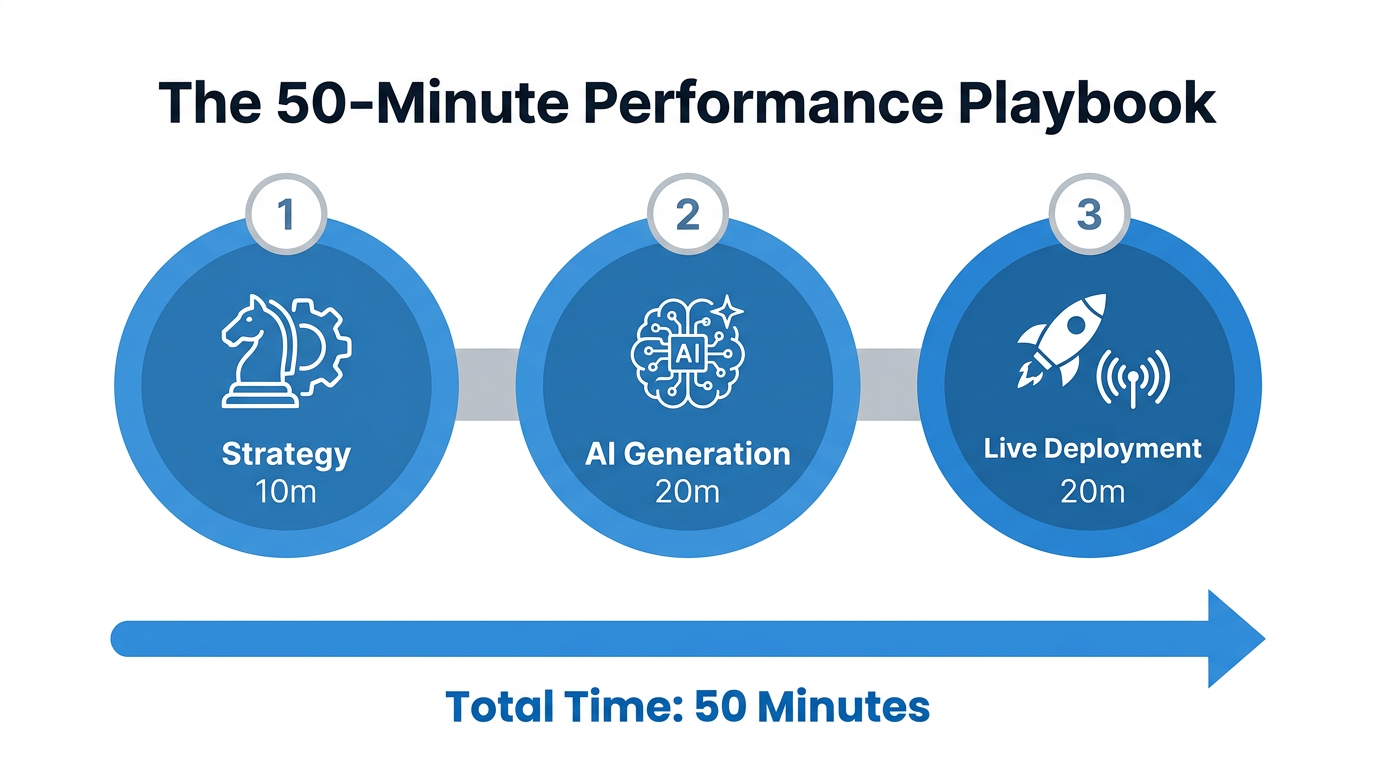
To hit the 50-minute lead time, practitioners use this Trigger-Transform-Transport architecture. Follow these steps to scale your high-velocity performance marketing:
- Minute 0–10: Strategic Blueprinting. Use tools to identify where your audience lives. Prompt an AI-enabled CRM to generate an Ideal Customer Profile (ICP) and funnel stages instantly.
- Minute 10–25: Asset Generation. Use a rapid site builder like 10Web AI or Durable to generate your landing page in 60 seconds. Create your lead magnet using Qyx AI to provide value immediately.
- Minute 25–40: Traffic & Creative. This is where AdCreative.ai shines. Generate 50+ conversion-focused ad variations. If you need authentic hooks, use Stormy AI to find creators who can provide the raw video content that fuels these ads.
- Minute 40–50: Integration & Launch. Connect your stack via Zapier Central so leads flow into your automated outreach agents. Hit "Live" and watch your digital dashboard for real-time adjustments.
By the 50-minute mark, you aren't just "ready to start"—you are collecting live data. As noted by Averis Digital, focusing on high-intent "Survival" keywords during this launch phase can lead to 10–50x higher conversion rates compared to broad demographic targeting.
Conclusion: The Future is High-Velocity
The marketing landscape of 2026 belongs to the fast. By leveraging AdCreative.ai for AI ad generation and automated creative testing, brands can overcome the stagnation of creative fatigue and the generic nature of "AI slop." The key is to balance the 5.44x ROI of autonomous agents with the essential emotional resonance that only a human-in-the-loop can provide. To get started, identify your biggest creative bottleneck today, and replace it with an agentic workflow that scales as fast as your ambition.