In the high-stakes world of digital growth, the traditional manual approach to campaign management is no longer just tedious—it is expensive. According to research from Hashmeta, businesses still anchored to manual processes waste an average of 26% of their ad budget on ineffective targeting and slow optimizations. The solution is the rise of agentic ad ops, a paradigm shift where growth marketers move from being the 'doers' to the 'governors' of their tech stack. By leveraging automated ad management, teams can reclaim 10+ hours per week, allowing them to focus on high-level strategy rather than cleaning CSV files.
Understanding OpenClaw and Agentic Ad Ops
OpenClaw has rapidly become the gold standard for AI marketing agents, boasting over 300,000 GitHub stars as of early 2026. Unlike basic chatbots, OpenClaw is an execution-first platform that uses the Model Context Protocol (MCP) to interact directly with ad platforms like Meta and Google Ads. It represents the jump from AI as an assistant to AI as a worker. As Peter Steinberger, the creator of OpenClaw, famously stated:
"The claw is the law. My mission is to build an agent that even my mum can use to ship code and manage ads."This shift to agentic ad ops allows for paid media workflow automation at a level previously reserved for giant corporations. By using the Ad Context Protocol (AdCP), these agents can negotiate bids and adjust budgets in real-time based on live market intent signals, rather than waiting for a human to log in on Monday morning.
The Hybrid Model: Strategy vs. Execution
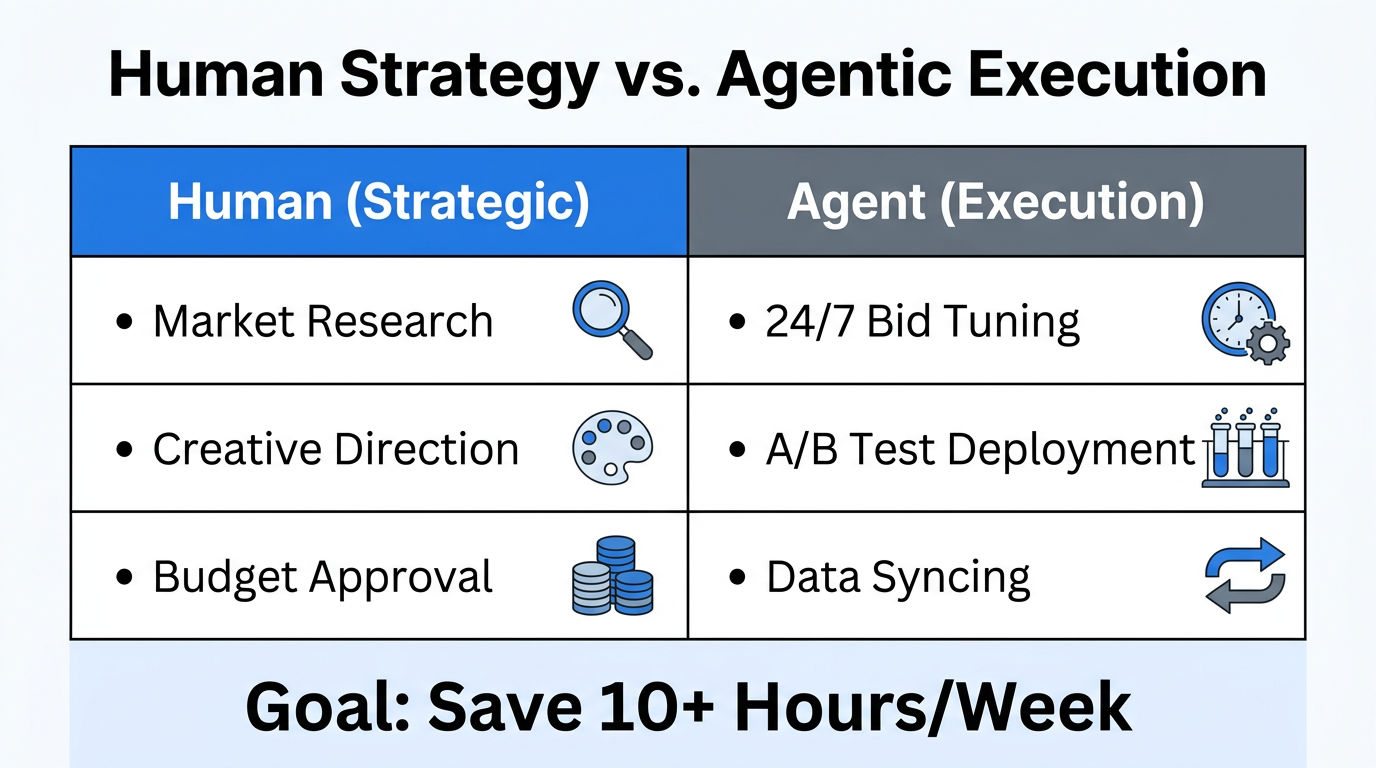
The most successful marketing teams in 2026 do not replace humans with AI; they adopt a Hybrid Model. In this framework, humans handle high-level creative hooks, brand voice, and high-stakes budget calls, while AI agents handle the 'busywork' like bid changes and 4-hour performance audits. As noted by industry experts, this division of labor is essential for scaling without burning out your best talent.
| Function | Manual Method (Human) | Agentic Method (OpenClaw) |
|---|---|---|
| Optimization | Check dashboard every 4 hours | Real-time ROAS triggers |
| Reporting | Manual CSV exports/pivots | Automated natural language summaries |
| Scaling | Incremental manual budget shifts | Demand-led bidding via AdCP |
| Quality Control | Spot checks for 'broken' links | 24/7 Automated Auditor skill |
Early adopters of this hybrid approach, such as those using Stormy AI for creator discovery and OpenClaw for execution, report saving over 10+ hours per week on routine maintenance. This time is better spent on TikTok Ads Manager creative strategy or refining the customer journey in Klaviyo.
Deploying .md Skill Files: The New SOPs
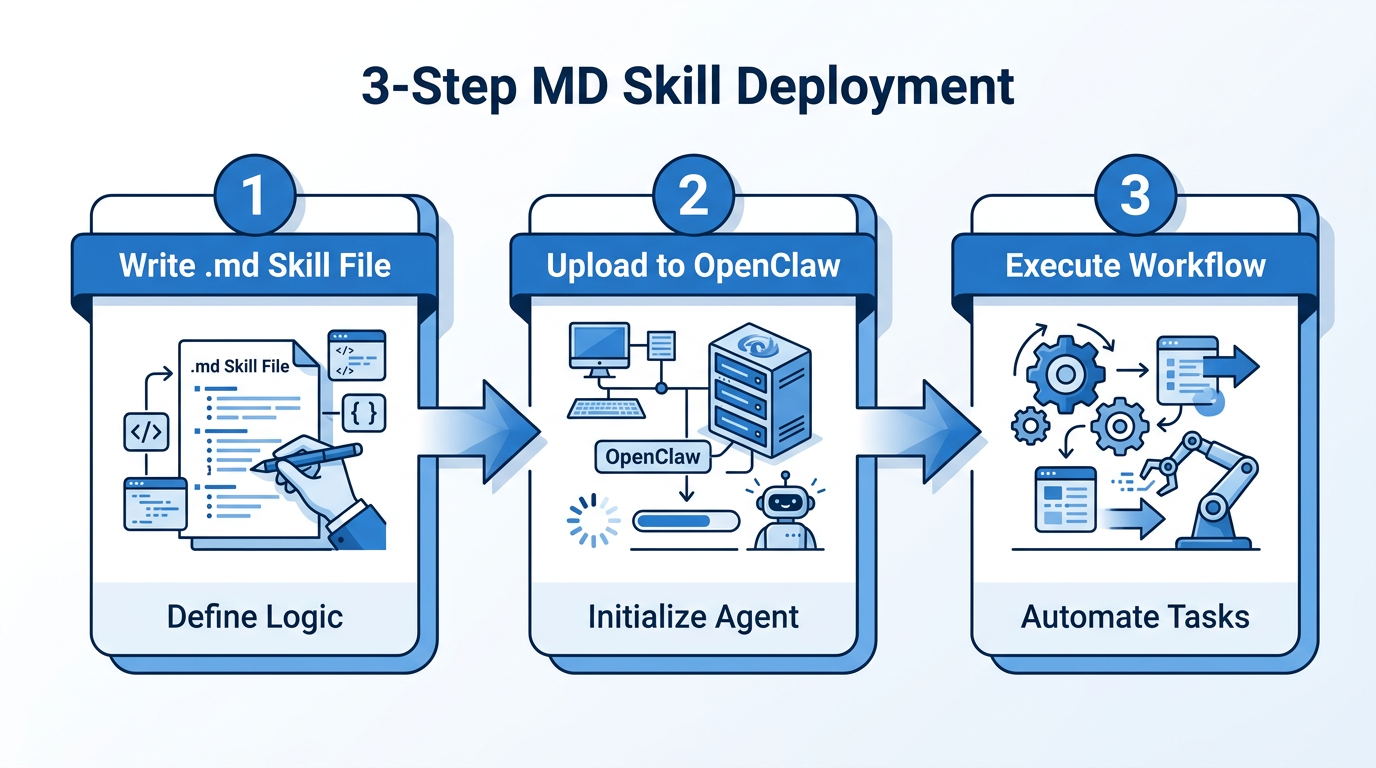
In the era of OpenClaw marketing, the Standard Operating Procedure (SOP) has evolved from a static PDF into an executable .md Skill file. These Markdown files contain the instructions and constraints that govern how the agent interacts with your accounts. Instead of telling a junior media buyer what to do, you deploy a skill from a centralized directory.
How to deploy a 'Skill' for your account:
- Select Your Skill: Download a template for common tasks like 'Keyword Expansion' or 'Bid Capping'.
- Define Parameters: Edit the .md file to specify your target cost-per-conversion and budget limits.
- Load via AdCP: Connect the skill to your Meta Ads Manager via the Ad Context Protocol.
- Monitor via Messaging: Get updates via WhatsApp or Discord as the agent executes the logic.
By using paid media workflow automation, brands have reduced ad production and testing time by 70%, according to data from AI marketing research. The skill file is the brain of your ad operations, ensuring consistency that manual management can never match.
"AI is the single biggest disruptor and enabler of marketing, unlocking precision at scale." — Raja Rajamannar, CMO at MastercardProtecting Margins with ROAS Triggers
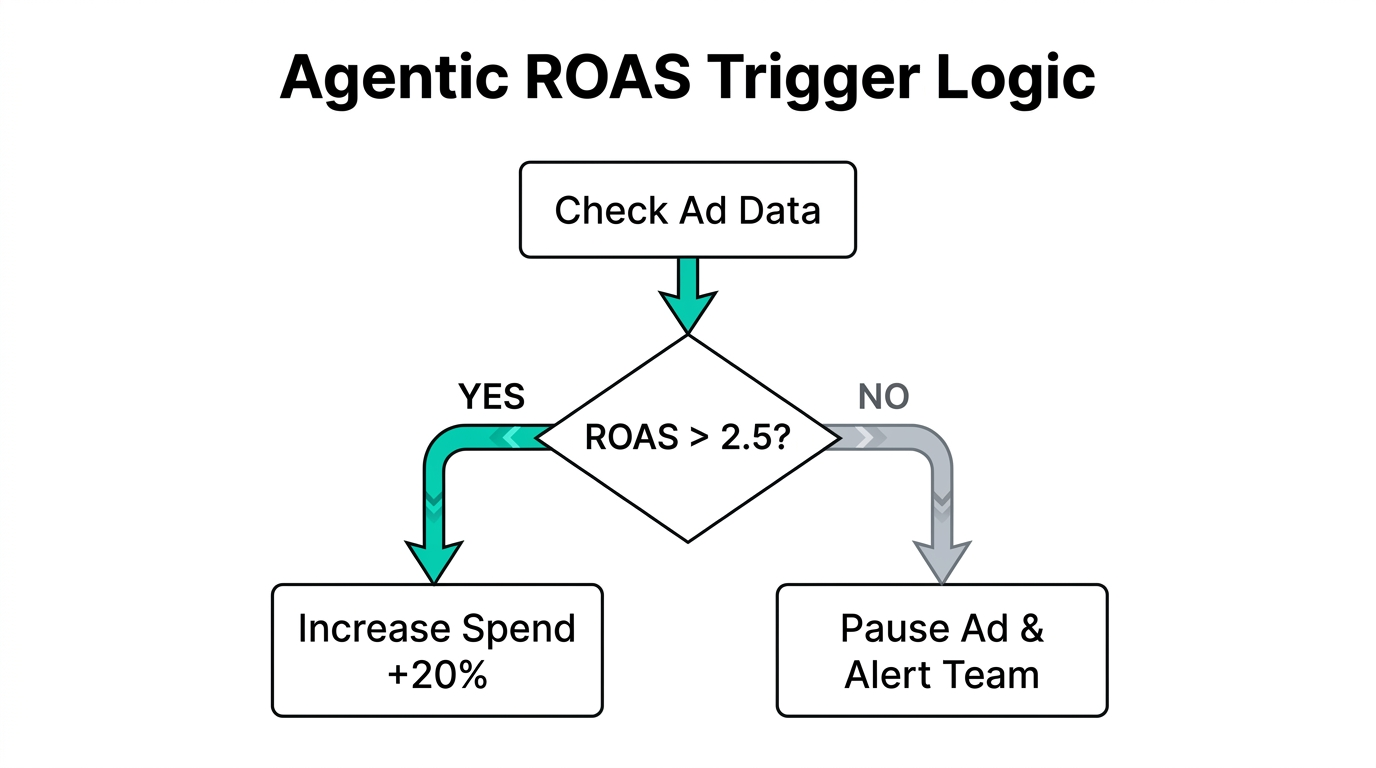
One of the biggest fears in automation is the 'runaway budget' scenario. To prevent this, elite marketers deploy 'Auditor' skills. These act as safety nets that protect your margins while you sleep. For example, as recommended in the Stormy AI strategy guides, you should set a ROAS trigger that automatically pauses any ad set if the return falls below 2.5 over a 72-hour window.
Beyond simple pauses, these agents can perform demand-led bidding. If Apple Search Ads performance spikes, the agent can reallocate budget from underperforming Meta campaigns instantly. This level of cross-platform orchestration, discussed by performance agencies like Farsiight, ensures that your capital is always flowing toward the highest ROI opportunity.
Monitoring Creative Fatigue with Trend Tracking
Even the best AI marketing agents cannot fix bad creative, but they can tell you exactly when your creative stops working. OpenClaw allows you to deploy skills that monitor Click-Through Rate (CTR) trends over 7, 14, and 30-day windows. Spotting fatigue before it kills your ROAS is the difference between a profitable month and a deficit.
The Creative Fatigue Checklist:
- CTR Decay: If CTR drops by 20% week-over-week, trigger a 'Creative Refresh' alert.
- Frequency Capping: Use agents to automatically cap frequency on Google Ads display campaigns.
- Creative Coverage: Brands like L'Oréal have used AI-optimized targeting to expand keyword coverage by 340% while reducing costs.
By integrating these trends into your Notion or Asana project management workflows, you can ensure your design team always knows which assets to replace next.
Common Pitfalls in Agentic Marketing
While the transition to automated ad management is powerful, it is not without risks. Agentic ad ops is not just about automation—it is about orchestration, and poor data quality can lead to 'automated bad decisions at scale.' As experts warn, feeding an agent poor historical data will only accelerate your losses.
"The 'set and forget' trap is the fastest way to turn AI into a liability. AI lacks 'taste' and needs human vision to avoid producing 'slop'."Security is another critical concern. The Register has highlighted that unconfigured agent setups can be significant cybersecurity risks. To mitigate this, consider a local-first setup using a secure VPS or a dedicated machine on DigitalOcean rather than relying on unhardened, shared cloud environments. 41% of marketers already cite data accuracy and privacy as their top challenges in 2025.
Conclusion: The Future is Agentic
The shift from manual clicking to agentic ad ops is inevitable. As the complexity of ad platforms increases, the ability for a human to manage every bid and budget adjustment in real-time disappears. By adopting tools like OpenClaw and integrating them with your existing growth stack—from Google Analytics to AI-powered creator discovery platforms—you can scale your paid media with a level of precision that was impossible just two years ago.
Start by identifying your most repetitive tasks. Is it checking for broken links? Reallocating daily budgets? Deploy your first .md Skill today and begin your transition from a manual operator to a strategic governor of AI marketing agents. The efficiency gains—a potential 73% reduction in management time—are simply too large to ignore.