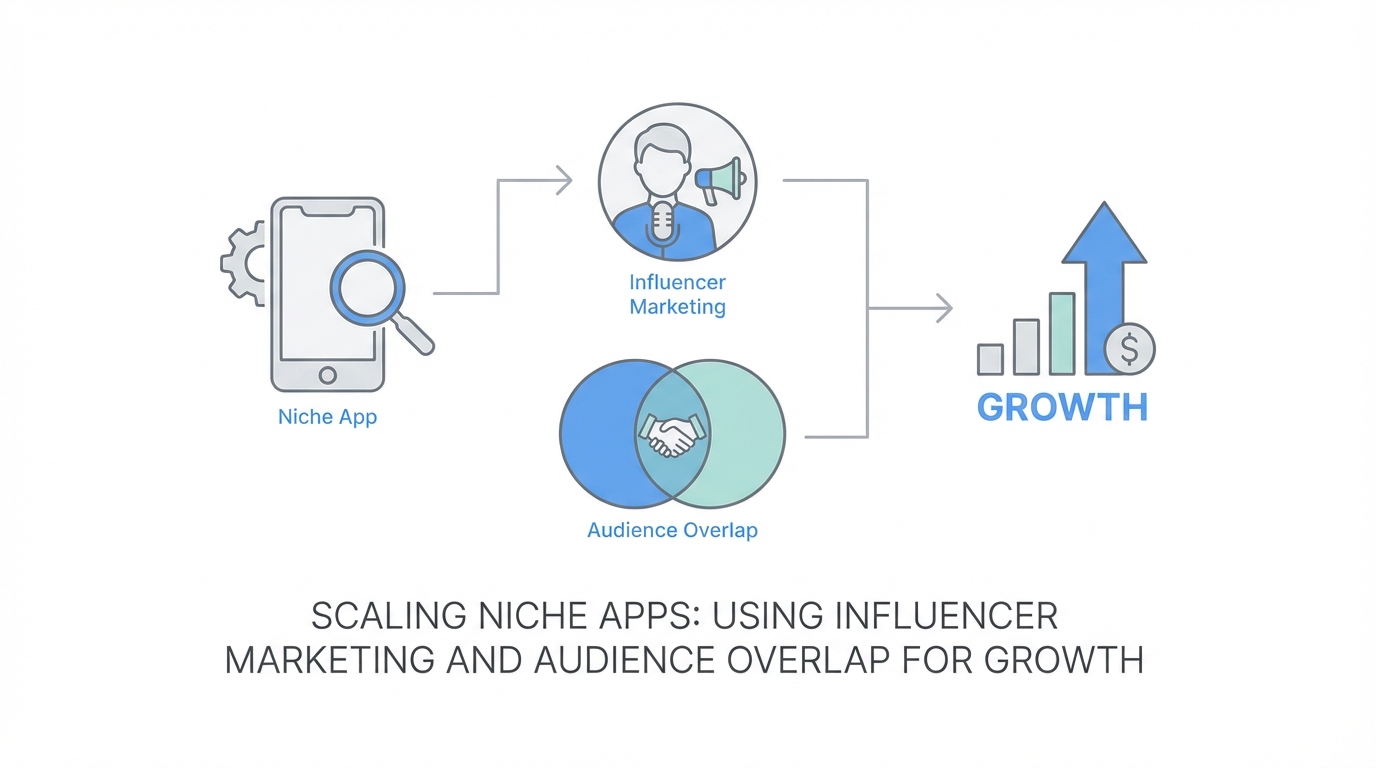
In the crowded ecosystem of the App Store, the temptation for most developers is to cast as wide a net as possible. They aim for the broad categories like "Health & Fitness" or "Productivity," hoping to capture a fraction of a massive market. However, a new breed of founders is proving that the path to a sustainable $120,000 ARR business doesn't lie in going broad, but in going deep. By focusing on hyper-niche problems—like tracking cold plunges or optimizing circadian rhythms—and leveraging a targeted app distribution strategy, developers are finding they can achieve a free-to-paid conversion rate of 8%, nearly double the industry average. This article breaks down how to scale niche applications using influencer marketing for apps and the strategic reuse of audience data.
Why Broad Marketing Fails for Niche Apps
Traditional mobile app growth hacking often relies on heavy spending on platforms like Google Ads or Meta Ads Manager. While these are powerful, they are increasingly expensive and inefficient for products that solve very specific problems. When your app targets a general wellness audience, you are competing with giants who have unlimited budgets. But when your app, like Go Polar, focuses specifically on tracking cold plunges and sauna sessions, the competitive landscape changes entirely.
Broad marketing fails because it lacks relevance. A user looking for a general calorie tracker isn't necessarily interested in their morning light exposure. However, someone who is already deep into the world of biohacking and cold therapy is highly likely to be interested in an app like SunSeek, which helps manage circadian rhythms and vitamin D intake. By focusing on niche audience targeting, you reduce your acquisition costs because your message resonates instantly with the user's specific lifestyle. In the case of Pre, the founder of the Wellness Company, this strategy led to over 20,000 downloads across a portfolio of apps with minimal cold ad spend.
When you target a niche, your metrics reflect the high intent of your users. Pre reported a day 30 free-to-paid retention rate of 61%. This level of loyalty is nearly impossible to achieve with broad-market apps where users often churn after the first week. Niche apps solve "personal problems" that users care deeply about, making them more likely to stick around and eventually convert into one of the 1,500 paying subscribers required to hit six-figure revenues.
Finding the 'Right' Creators for Niche Apps

To scale these types of products, micro-influencer marketing guide principles suggest moving away from the "celebrity" influencer and toward the domain expert. In the health and wellness space, this means finding the creators who are already talking about cold therapy, posture correction, or morning sunlight. These creators have smaller but highly engaged audiences who trust their specific recommendations. Platforms like Stormy AI for finding UGC creators and influencers allow founders to use an AI search engine across TikTok, Instagram, and YouTube to filter through millions of creators to find those who align with these hyper-niche categories, ensuring that every dollar of marketing spend reaches a potential power user.
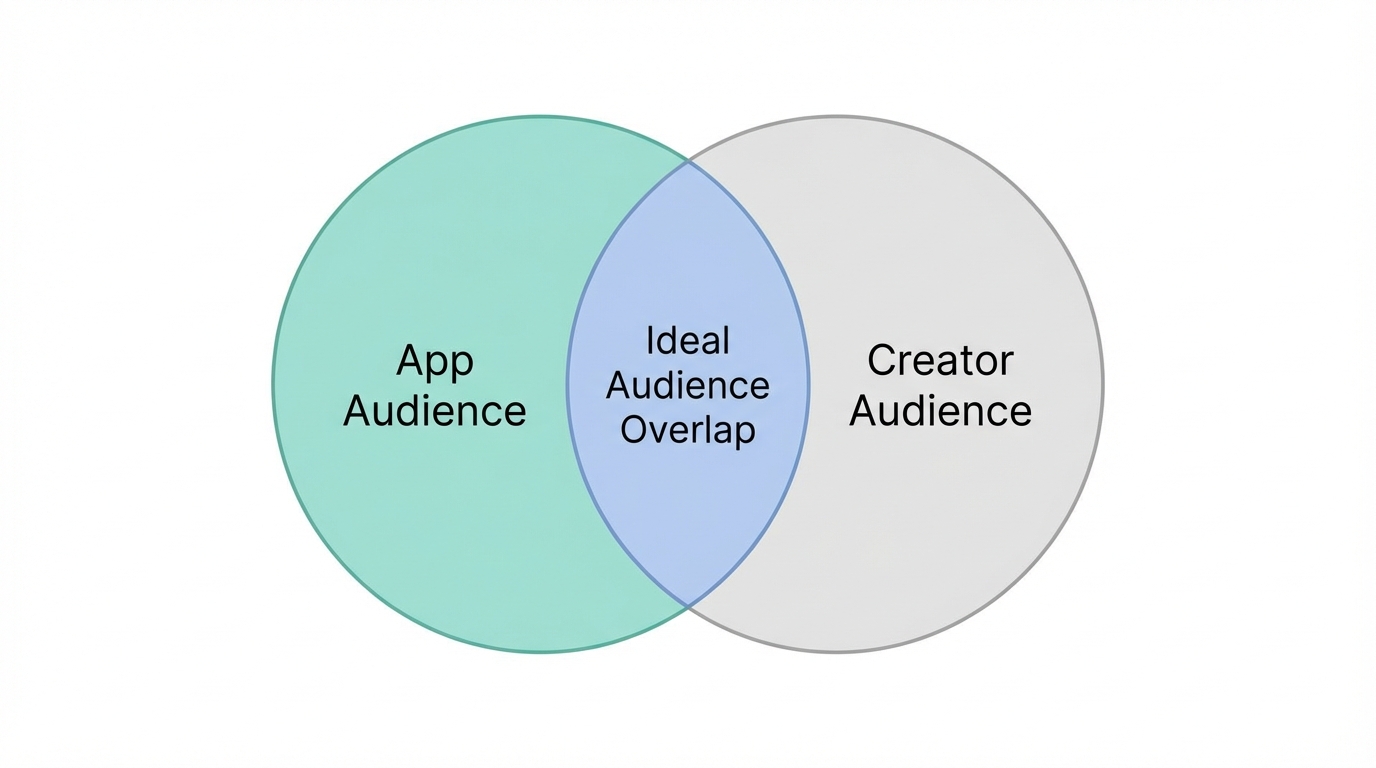
When evaluating creators for influencer marketing for apps, don't just look at follower counts. Look at the overlap between their content and your app's core utility. For an app like Posture AI, which uses computer vision to correct poor posture for desk workers, the ideal creator isn't just a general fitness model. It is a physical therapist or a tech productivity influencer who talks about the physical toll of sitting at a desk all day. This relevance is what drives the 8% conversion rate seen in successful niche portfolios.
The Distribution Engine: A Founder’s Playbook
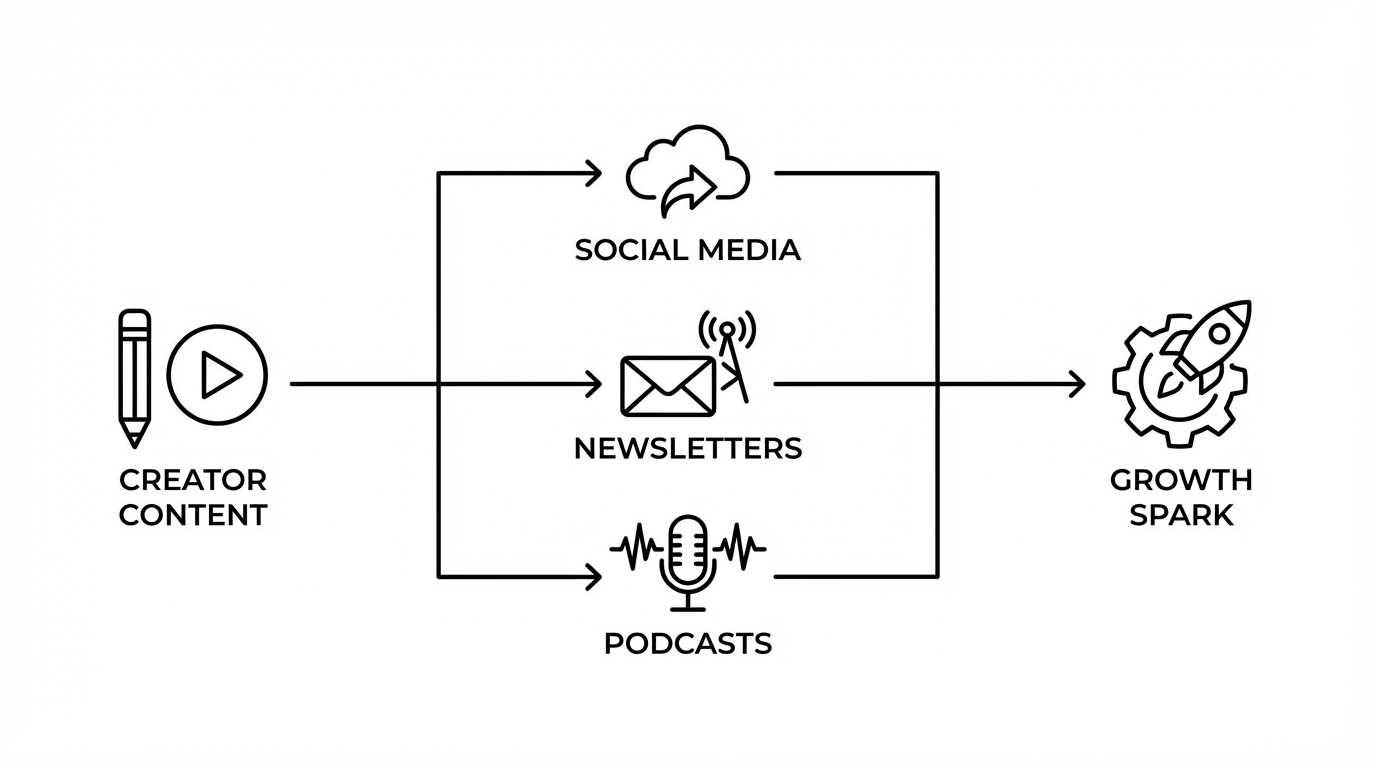
Building a successful app distribution strategy begins long before the app hits the store. According to Pre's methodology, distribution should be considered on "day zero." If you are solving a problem you personally experience, you are your own first influencer. Creating content around the development process and the problem itself builds an organic distribution engine that attracts early adopters without any initial capital outlay.
Step 1: Identify Your Passion and Niche
Success in niche marketing starts with deep domain knowledge. You cannot market a product effectively if you don't understand the nuances of the community. Whether it's health, finance, or a specific hobby, choose a space where you already spend your time. This ensures that your niche audience targeting is based on real insights rather than guesswork.
Step 2: Solve a Personal Pain Point
The best apps are born from frustration. Pre created Go Polar because there wasn't a great app to track specific niche activities like cold showers or saunas on the Apple Watch. By solving his own problem, he ensured the product had a high-quality user experience because he was the primary user. Use tools like Figma to map out these pain points visually before writing a single line of code.
Step 3: Build an MVP Quickly
Don't over-engineer. Use modern tools like Replit or Lovable to ship a minimum viable product (MVP) as fast as possible. The goal is to get the solution into the hands of users to see if the problem is as universal as you think. Speed is the most important asset in mobile app growth hacking.
Step 4: Create Content on Day Zero
While the app is in development, start talking about it. Share the "why" behind the product on platforms like X (Twitter), TikTok, or YouTube. If you are solving a problem you encounter, the content will come naturally. This builds a pre-launch audience that is ready to download and subscribe the moment the app goes live.
Step 5: Put in the Reps
Your first app might not be the winner. Pre's strategy involves building a product studio where each app is a repetition. Each subsequent launch—from Go Polar to SunSeek to Posture AI—becomes more refined. Using a project management tool like Linear can help you stay organized as you manage multiple concurrent development cycles.
The Power of 'Warm Marketing' and Audience Overlap
The most significant advantage of building a portfolio of niche apps is the ability to leverage audience overlap. Once you have acquired a user for one app, you have effectively acquired them for your entire ecosystem. This is what we call "warm marketing." Instead of paying to acquire a new user from a cold audience, you are simply introducing an existing, satisfied customer to a new solution in their interest area.
For example, a user who tracks their cold plunges is likely interested in their overall healthspan and wearable data. This makes them the perfect candidate for an aggregator app like Tempo. By cross-promoting apps within the portfolio, you create a compounding growth effect. You don't have to remarket or create a new audience list from scratch; you already have a direct line to your most valuable customers. This cross-pollination is a core pillar of a modern app distribution strategy.
Tracking Influencer ROI: Moving Beyond Vanity Metrics
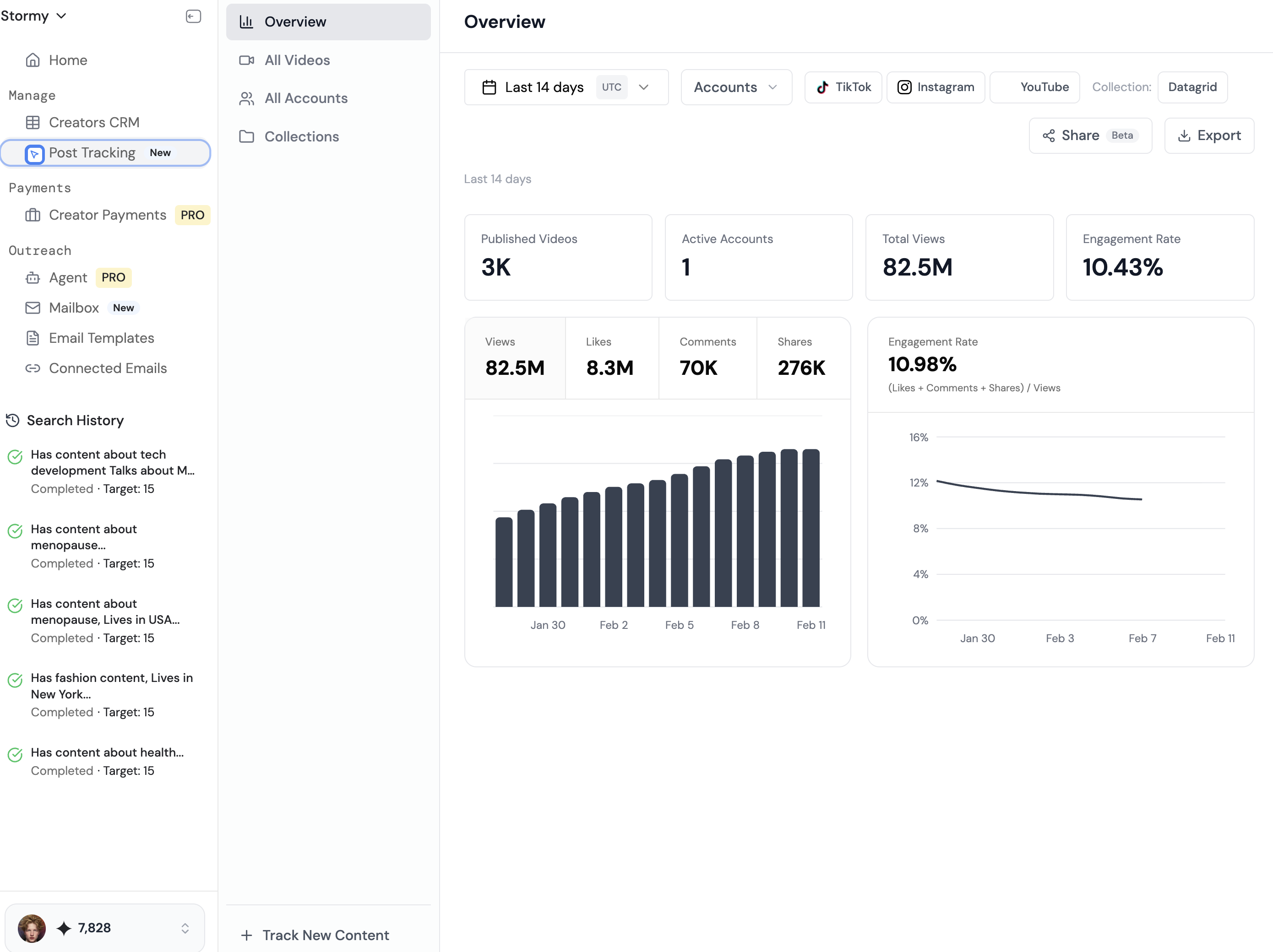
When executing influencer marketing for apps, it is easy to get distracted by likes, views, and comments. However, for niche apps with a subscription model, the only metrics that truly matter are subscription conversions and long-term retention. You need to know exactly which creator driven which subscriber to ensure your ROI remains high.
Using a tool like RevenueCat is essential for managing subscriptions and paywalls across different platforms. While legacy platforms like Tagger or impact.com have existed for years, Stormy AI offers a more modern, AI-native approach to post tracking and analytics, monitoring real-time campaign performance without the bloat of older tools. When combined with deep analytics from PostHog, you can see if users coming from a specific micro-influencer marketing campaign have higher day 30 retention than those from organic search.
Leveraging AI for Hyper-Niche Discovery
As the number of creators grows, finding those who cater to specific health goals like "improving sleep via circadian rhythm" or "optimizing vitamin D through sunlight" becomes a needle-in-a-haystack problem. This is where Stormy AI becomes an indispensable part of your micro-influencer marketing guide. Stormy AI is an all-in-one AI-powered platform for creator discovery and outreach, especially for mobile app marketing and UGC campaigns. By using natural-language search, you can identify creators who aren't just "health influencers," but are specifically active in the sub-cultures your apps serve.
For app developers, this means you can find UGC creators who specialize in mobile app ads, specifically for the health and wellness sector. These creators understand how to demonstrate an app's interface—like showing the lux calculator in SunSeek or the posture scan in Posture AI—in a way that feels authentic and high-converting. Integrating these AI-driven insights into your niche audience targeting allows for a level of precision that traditional agency-led marketing simply cannot match.
Conclusion: Building a Resilient App Business
Scaling a niche app business is about more than just code; it's about community and consistency. By solving personal problems, shipping quickly, and leveraging the power of audience overlap, you can build a portfolio that generates 80-85% margins. The transition from $0 to $120,000 ARR is achievable when you stop trying to please everyone and start focusing on being the absolute best solution for a specific group of people.
Remember the mantra: if you care about it, ship it. Energy and motivation are fleeting, so use the tools available—from Framer for your landing pages to Stormy AI for your creator discovery—to turn your ideas into a reality. Focus on the reps, track your subscription conversions meticulously, and treat every app as a building block for your larger ecosystem. In the world of niche apps, the smallest markets often lead to the most significant successes.