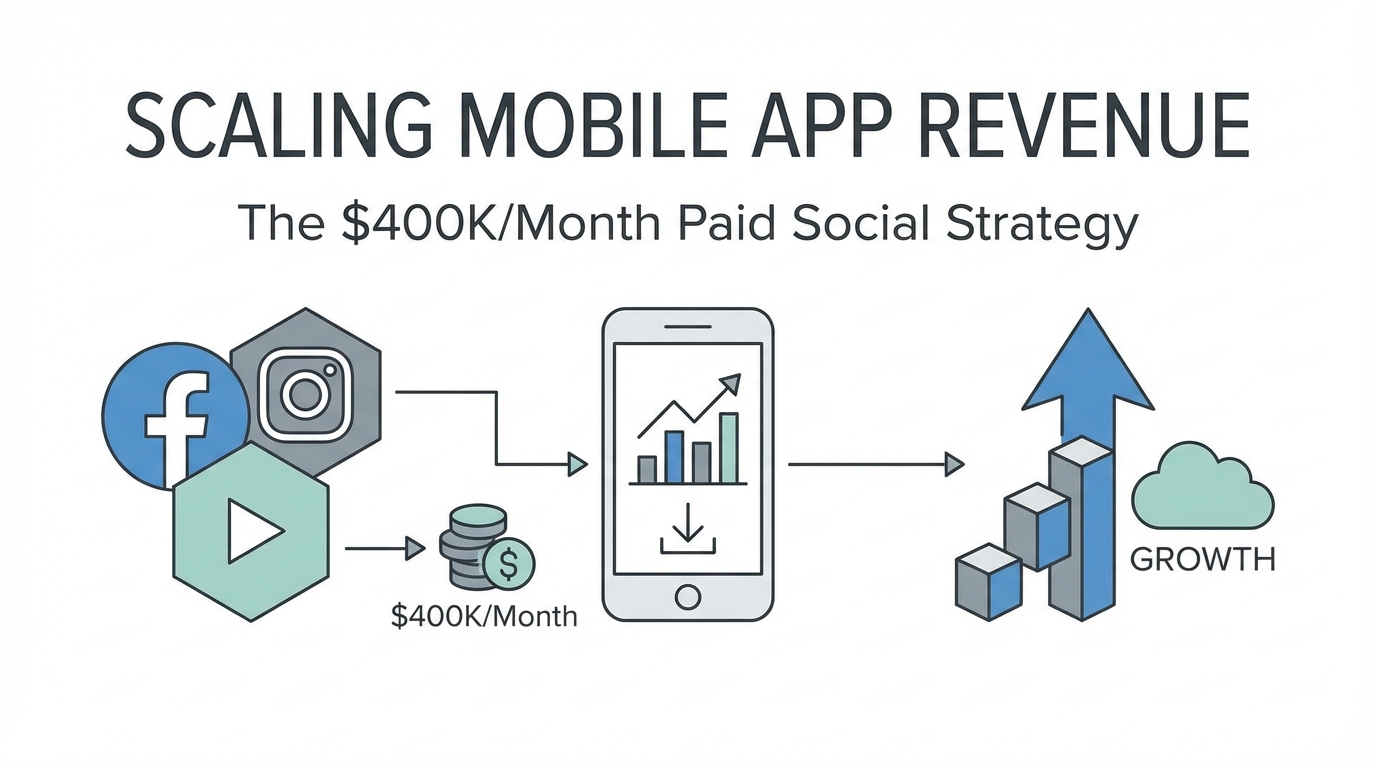
Scaling a mobile app to $440,000 in monthly revenue isn't about having a revolutionary idea that has never been seen before. In fact, for Julian, a developer from Argentina and the co-founder of the AI fitness app Gravel (formerly Gains AI), success came from looking at what was already working in the market and making it significantly better. By focusing on a rigorous user acquisition strategy and a high-volume creative testing process, Julian and his team transformed an MVP built in just two months into a global powerhouse with over 70,000 active subscribers. This article breaks down the exact playbook they used to master mobile app scaling and achieve explosive app revenue growth.
Reverse-Engineering Competitors: The Meta Ads Library Advantage


One of the most common mistakes founders make is trying to reinvent the wheel when it comes to creative strategy. Julian’s approach was the opposite: he looked at market leaders like Fitbod and reverse-engineered their success. While the existing apps had strong user interfaces, Julian noticed a gap in the actual workout logic—the "engine" of the app. He realized that if he could match their UX but provide a superior product experience, he could capture a massive share of the market.
The core tool for this competitive research is the Meta Ads Library. This public database allows you to search for any competitor and see every single ad they are currently running. When you are developing facebook ads for apps, you don't need to guess which hooks or call-to-actions work. By looking at which ads have been active for the longest period (e.g., 3-6 months), you can safely assume those are the creatives that are actually driving a positive return on ad spend (ROAS).
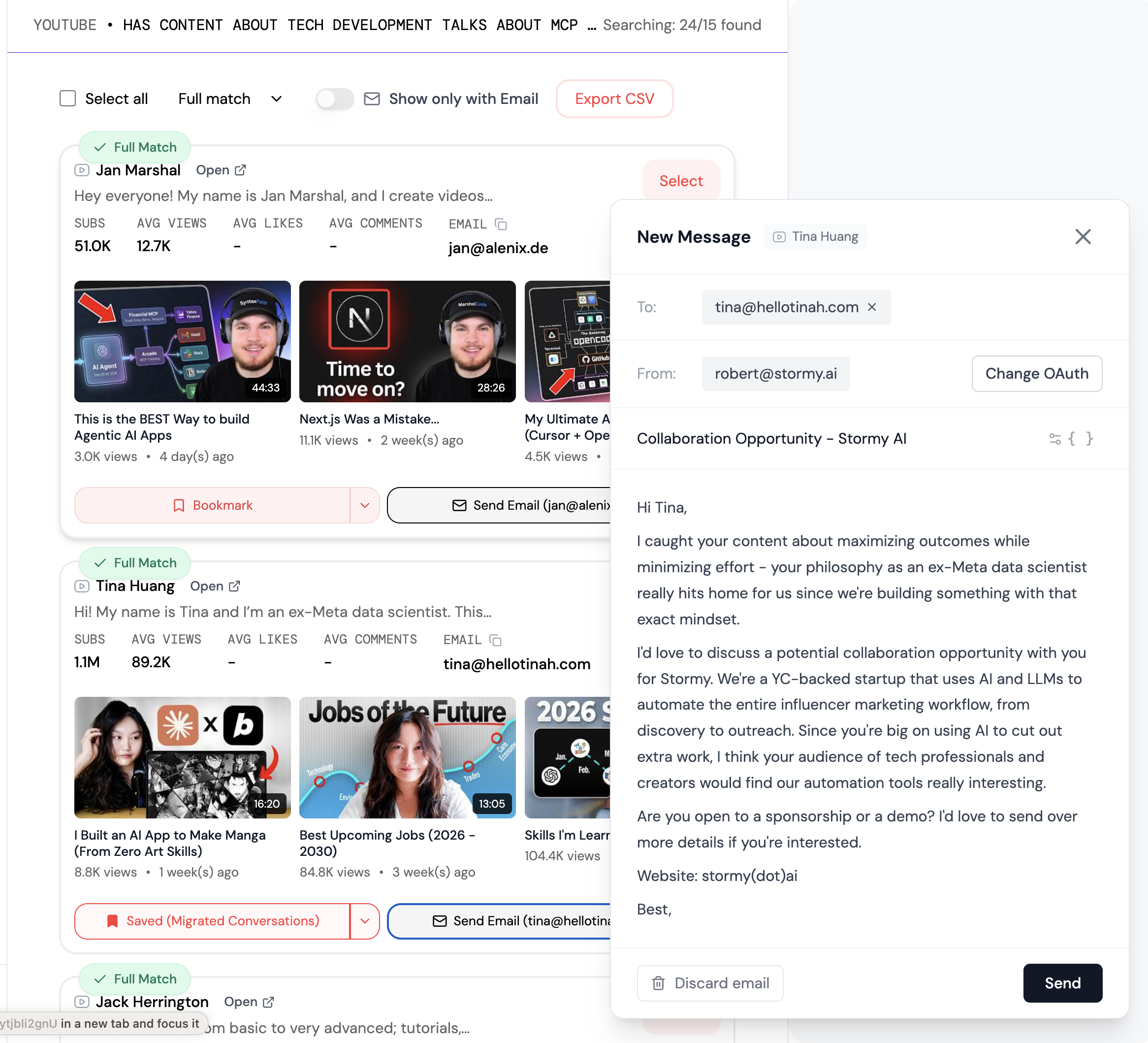
Julian’s team used this data to identify successful patterns in the fitness niche. They looked for common pain points being addressed, the visual style of the videos, and the specific wording of the captions. For brands looking to scale, tools like Stormy AI are incredibly useful for identifying the right creators to execute these proven concepts. You can also use Stormy AI to vet creators and detect fake followers or audience fraud before reaching out. By analyzing what the competition does well, you can build a baseline for your own marketing campaigns without wasting thousands of dollars on unproven concepts.
The 'Copy and Iterate' Playbook: High-Volume Creative Testing
Once you have identified winning themes from the Meta Ads Manager, the next step is implementation. Julian emphasizes that while the quality of the product must be high, the user acquisition strategy relies almost entirely on the volume of creative testing. You cannot rely on one or two "perfect" videos; you need a pipeline of content to combat ad fatigue.
Step 1: Identify Winning Angles
Search for competitors in the fitness or utility app space. Note the difference between high-production brand videos and low-fi User Generated Content (UGC). Julian found that UGC is king for mobile apps because it feels authentic and trustworthy. It doesn’t look like an ad; it looks like a recommendation from a friend.
Step 2: Source Creators at Scale
You don't need a massive budget to start. Julian suggests paying influencers or content creators as little as $50 for a piece of content. To streamline this, developers can use Stormy AI for finding UGC creators and influencers who specialize in mobile app ads and app install campaigns. Stormy's built-in AI agent can even handle automated outreach and follow-ups to get these creators onboarded faster. The goal is to get a wide variety of faces, voices, and environments to see what resonates most with your target demographic.
Step 3: Rapid Iteration
Take a winning video and change the first 3 seconds (the hook). Then, change the background music. Then, change the call-to-action at the end. One single video can be turned into 10 different ad variations. This high-volume approach ensures that the algorithm in TikTok Ads and Meta has enough data to find your ideal customer.
Managing Unit Economics: The 1/3 Rule for Scaling
Scaling to $400K a month requires a deep understanding of your financials. Julian shared that their primary expense is paid social, specifically Meta and TikTok, with a smaller portion allocated to Google Ads and Apple Search Ads. To track the real-world performance of influencers driving this traffic, you can use Stormy AI to monitor post-tracking and engagement analytics in real-time. For Gravel, the golden rule of mobile app scaling is that ad spend should account for roughly 1/3 of total revenue.
If the app is making $440,000, they are likely spending around $140,000 to $150,000 on media buying. This leaves enough margin to cover other critical costs:
- Apple/Google Commission: 15% (for the Small Business Program).
- In-App Subscription Infrastructure: A 1% cut for services like RevenueCat.
- Team Salaries: Scaling from 3 founders to a team of 14 people (roughly $50K-$80K/month).
- Server & AI Costs: Surprisingly low at around $1,000/month due to efficient infrastructure.
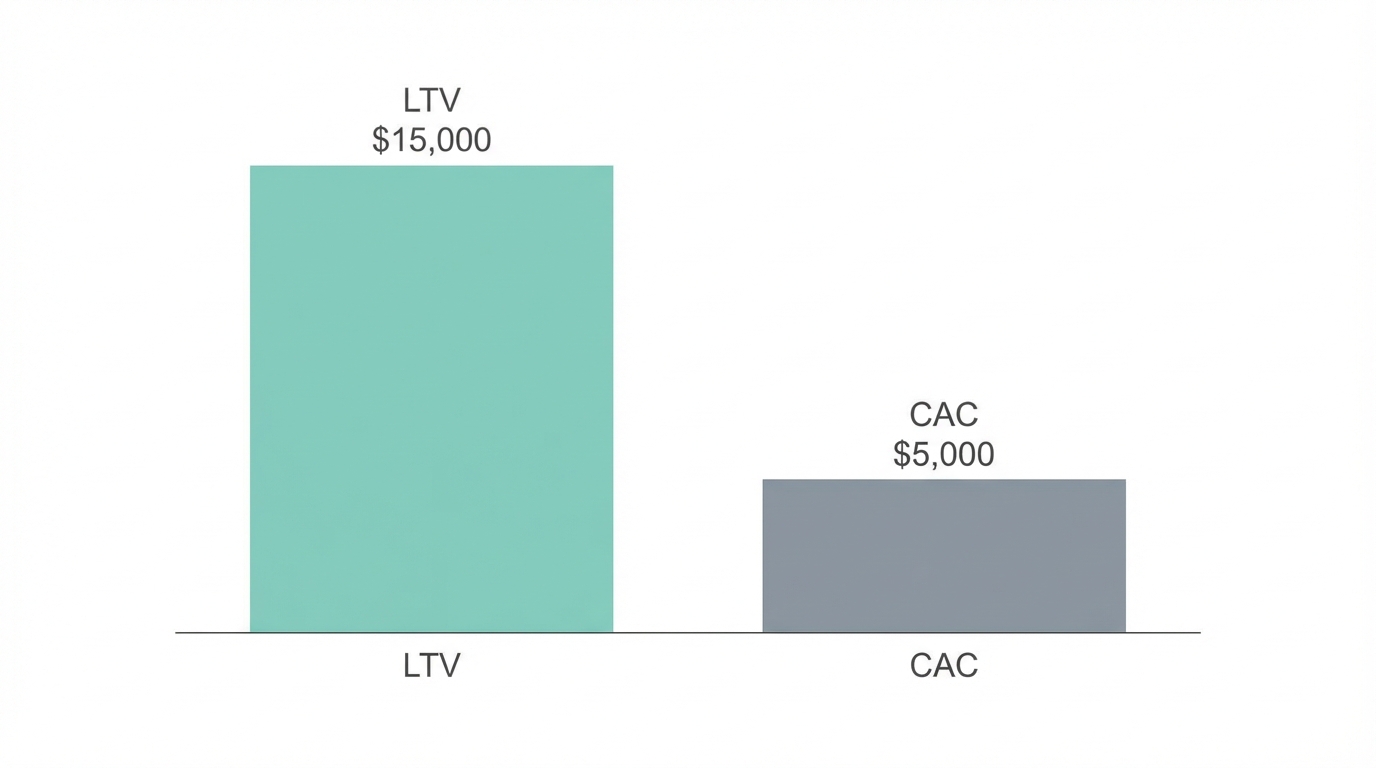
By keeping a close eye on the Lifetime Value (LTV) of a user versus the Customer Acquisition Cost (CAC), Julian was able to reinvest profits back into the ads that were working. If you can spend $1 to make $3, you have a scalable business model that can support app revenue growth over the long term.
The Power of the 'Hard Paywall': Conversion Strategy

One of the most controversial yet effective tactics Julian uses is the "Hard Paywall." Unlike many apps that allow users to explore the features for free before asking for a subscription, Gravel presents a payment screen immediately after the onboarding quiz and before the user ever sees the main dashboard.
Many developers fear that this will drive users away, but Julian’s data shows the opposite. "A lot of users are willing to pay before they even see the product," he explains. The onboarding flow acts as a commitment device. By asking the user questions about their fitness goals, equipment, and experience level, the app builds perceived value. When the custom plan is finally "generated" by the AI, the user feels a sense of ownership, making them much more likely to convert on that initial paywall screen.
This strategy is particularly effective when combined with facebook ads for apps because it ensures that you are only acquiring high-intent users who are serious about the service. It also provides immediate feedback on the success of an ad campaign—Julian noted that they got their first subscription within 10 minutes of turning on their first ad set.
Scalable Infrastructure: React Native and RevenueCat
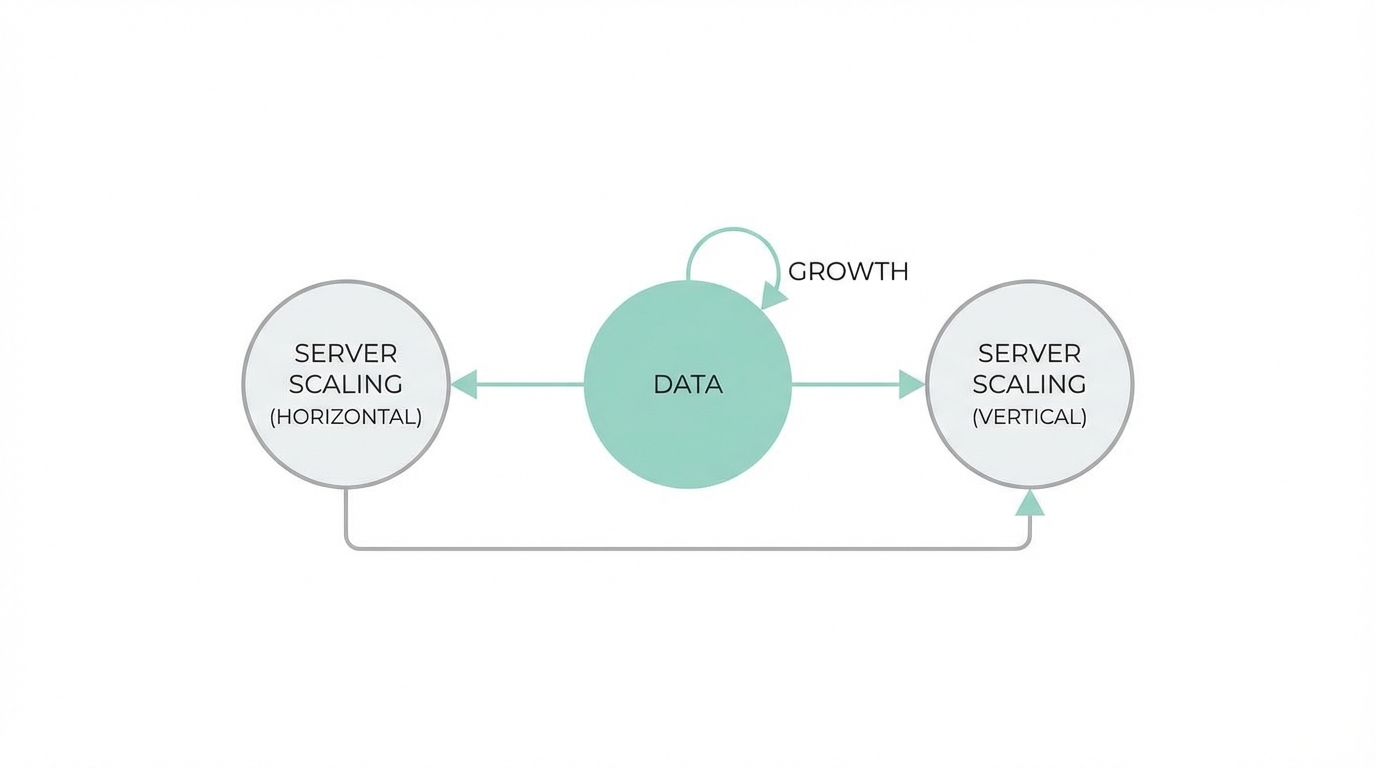
To handle the rapid influx of tens of thousands of subscribers, Julian relied on a modern, scalable tech stack. He chose React Native and Expo for the frontend, allowing him to maintain a single codebase for both iOS and Android. This is crucial for mobile app scaling because it allows for rapid feature deployment across both platforms simultaneously.
On the backend, he utilized .NET for core business logic and relied on RevenueCat to handle the complexities of in-app purchases and subscriptions. Managing edge cases like trial periods, cancellations, and cross-platform syncing is a massive technical debt for most developers; offloading this to a dedicated service allows the team to focus on the user acquisition strategy and product experience instead.
Additionally, Julian emphasizes the importance of localization. By translating the app into Spanish and running ads in South America where the cost-per-click is lower than in the US, they were able to validate the product and build a cash flow base with a daily spend of just $50. Once the unit economics were proven in lower-competition markets, they could confidently scale into more expensive regions like North America.
Conclusion: Actionable Steps for Your App
Julian’s journey from a solo developer to running a $400K/month business provides a clear roadmap for anyone looking to master app revenue growth. Success in the current mobile landscape requires a marriage of high-quality product logic and aggressive, data-driven marketing. To replicate this success, you should:
- Validate with Reddit: Use community platforms like Reddit to get your first few thousand users and iron out bugs before spending a dime on ads.
- Study the Meta Ads Library: Stop guessing what works. Look at your competitors' longest-running ads and use them as a template for your own creative.
- Leverage UGC: Use tools like Stormy AI to source authentic content and manage all your influencer relationships in a centralized AI-powered CRM.
- Don't Fear the Paywall: Test a hard paywall early in your onboarding flow to maximize conversion from your paid traffic.
- Manage the 1/3 Rule: Keep your ad spend around 33% of your revenue to ensure a healthy, profitable business.
By focusing on these pillars, you can move away from the "build it and they will come" mentality and move toward a predictable, scalable system for growth. As Julian says, the road is long and you will face "punches" along the way, but with a solid user acquisition strategy and the right tools, the potential for scale is virtually limitless.