Scaling an AI application today requires more than just a functional API integration or a sleek interface. To move from $20,000 to $500,000 Annual Recurring Revenue (ARR) in a matter of months, founders must embrace an aggressive saas growth hacking mindset that prioritizes speed over perfection. The era of spending twelve months in a basement building a product before finding a single customer is over. Instead, the most successful modern founders are treating software as a series of rapid experiments, leveraging influencer marketing for saas and community-driven platforms to validate demand before writing a single line of backend code. This article breaks down the exact 5-step framework used by serial entrepreneurs to build, scale, and exit multiple AI projects in record time.
Step 1: Sentiment Analysis and Trend Hunting on X


Before you build, you must listen. The most successful AI tools, such as OneTap.ai (an Excel formula generator) or Pitch 2.0, didn't start with a unique technical breakthrough; they started by identifying high-intent complaints on social media. By performing sentiment analysis on X (formerly Twitter), founders can identify specific friction points in existing workflows. Whether it is people struggling with complex spreadsheets or frustrated job seekers unable to draft compelling letters, these digital breadcrumbs indicate a market ready for a solution.
Monitoring trends isn't just about what is popular; it is about timing. As the market shifts, so does the demand for specific AI utilities. For example, during the rise of remote work, tools that summarized long video meetings became essential. Stormy AI is an AI-powered search engine and platform for creator discovery, especially for mobile app marketing and UGC campaigns. Using Stormy AI can help identify which creators are already discussing these pain points through natural-language prompts (e.g., "SaaS influencers talking about productivity"), allowing you to align your product development with the actual conversations happening in the wild. The goal is to catch a trend at its inflection point, ensuring that by the time your product is ready for a soft launch, the market appetite has reached a fever pitch.
Step 2: Validating Demand with Low-Fidelity Landing Pages
Once an idea is identified, the next step is not coding—it is validation. The gold standard for how to scale an ai app starts with a single landing page. Successful founders often use tools like Yep.so to build a conversion-focused page in under an hour. This page should clearly state the value proposition and include an email opt-in for a waitlist or early access. A 15% conversion rate on this initial landing page is generally considered a strong signal that the idea is worth pursuing.
During this stage, the focus is on distribution rather than development. You should share your landing page across your personal social channels and relevant niche communities. Building in public is a powerful strategy here; by sharing your journey, you create a feedback loop that turns potential users into stakeholders. This transparency not only builds trust but also provides a steady stream of qualitative data that will inform your feature roadmap. If the conversion rate lags below 10%, it is a sign to pivot or refine the messaging before investing any further resources.
Step 3: The Build-Feedback Loop: From No-Code to AI-Assisted Coding
For the initial version of your product, speed is your greatest asset. Many founders start with no-code tools like Bubble to get a functional MVP into the hands of users within 30 days. This allows you to test the core logic of your application without getting bogged down in infrastructure. However, as you scale from $20k to $500k ARR, performance and customization often necessitate a move toward actual code. This is where Cursor, an AI-powered code editor, becomes a game-changer. It allows founders—even those with limited technical backgrounds—to iterate on their codebase at the speed of thought, bridging the gap between no-code flexibility and full-stack performance.
This feedback loop approach is critical: build one key feature, send it to your first batch of users, collect feedback, and edit. For instance, the growth of Subgen.ai from a small tool to a $500k ARR powerhouse was driven by this constant iteration. By using tools like Futurebase to manage a public roadmap, you can ensure your users feel heard, which significantly reduces churn and increases the lifetime value (LTV) of each customer.
Step 4: Mastering the Reddit Marketing Strategy

Reddit is often overlooked by SaaS founders because of its strict anti-promotion culture, yet it remains one of the most powerful sources of organic traffic. A successful reddit marketing strategy involves finding subreddits where your target audience hangs out—such as r/entrepreneur, r/sideproject, or niche industry groups—and providing genuine value before ever mentioning your product. Instead of posting ads, you should participate in discussions, answer questions, and share the lessons you've learned while building your tool.
To scale this process without spending all day on the platform, you can use specialized tools like Leit.co to monitor keywords and find relevant conversations where your SaaS can solve a real-time problem. This organic outreach provides social proof that is far more valuable than traditional paid ads. When users see a founder helping others and recommending a tool they actually built, the conversion intent is significantly higher. This "un-marketing" approach is essential for saas growth hacking in communities that are traditionally skeptical of corporate advertising.
Step 5: Leveraging UGC and Influencer Marketing for SaaS
In the world of AI, User-Generated Content (UGC) is the ultimate trust signal. New software tools can feel abstract or intimidating; seeing a real person use the tool to solve a problem demystifies the product and drives adoption. Implementing ugc for software startups involves partnering with creators who can film authentic "how-to" videos or reaction clips. Platforms like MakeUGC.ai allow you to source these creators quickly, ensuring you have a library of video assets for your ads and social channels.
To take this further, influencer marketing for saas should focus on micro-influencers who have high authority within specific niches. Instead of chasing celebrities, find creators on Stormy AI who already have the trust of your target demographic. To ensure you are picking the right partners, use Stormy AI to vet creators—it provides AI-powered quality reports that detect fake followers and engagement fraud in seconds. When an influencer demonstrates how your AI app saves them three hours of work per week, their audience doesn't see an ad; they see a productivity hack. Combining these UGC videos with smart ad platforms like TinyAdz helps automate the distribution of your most successful content, creating a self-sustaining growth engine.
Step 6: CRM and Automated Outreach Strategy
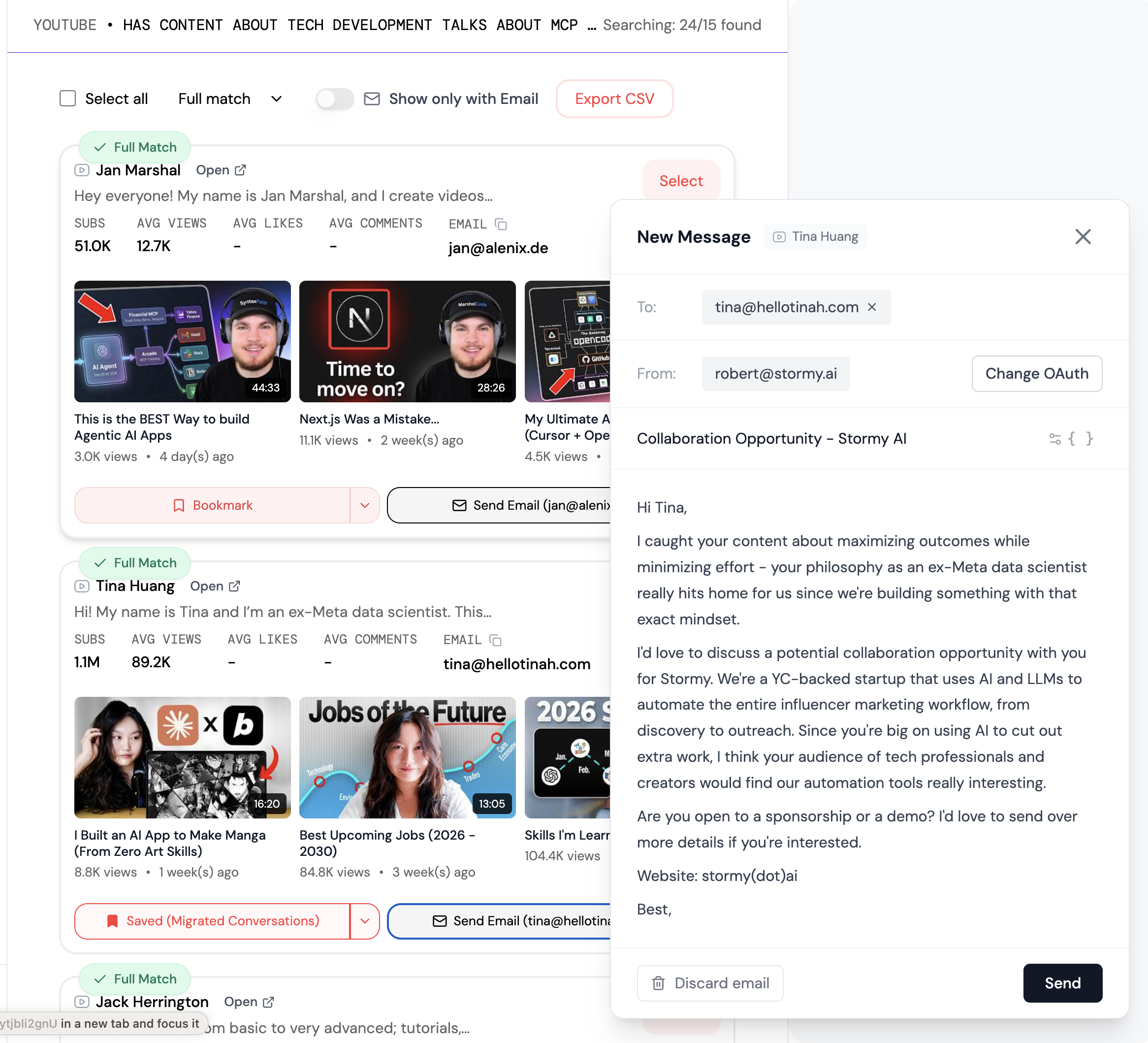
Scaling from a few hundred users to thousands requires a systematic approach to customer acquisition. You cannot rely on organic discovery alone. Implementing a robust automated outreach strategy allows you to target potential partners and B2B customers directly. Start by using Stormy AI to find the email addresses of influencers and decision-makers automatically. Once you have a list, you can launch hyper-personalized outreach campaigns and manage every interaction inside the Stormy AI creator CRM.
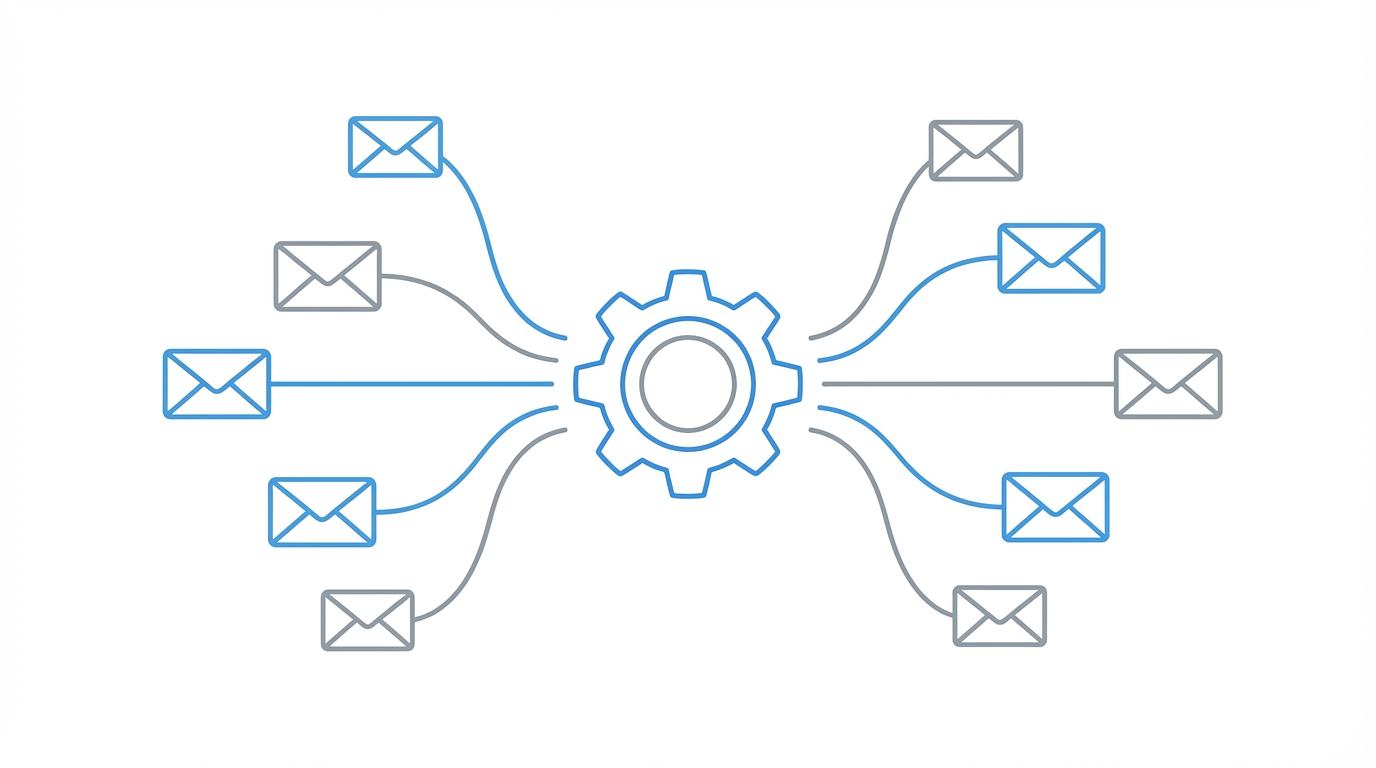
For truly autonomous growth, you can set up an AI agent within Stormy AI that discovers, outreaches, and follows up with creators on a daily schedule while you sleep. Automation tools like Mailtrap can ensure your transactional emails remain high-quality, but for partner acquisition, having an AI that handles the inbox and follow-ups is a game-changer. By automating the mundane tasks of prospecting, you free up your time to focus on high-level strategy and product improvements. This level of operational efficiency is what allows a solo founder or a tiny team to manage a half-million-dollar ARR business without burning out.
Step 7: Packaging Your SaaS for a Seven-Figure Exit
The final stage of the micro-SaaS journey is often the exit. To sell your business for a high multiple, you need to present it as a clean, turnkey asset. Buyers aren't just looking at your ARR; they are looking at your gross margins, churn rate, and customer acquisition cost (CAC). Using Stripe for your financial services provides the transparent, reliable reporting that acquirers demand during due diligence.
Founders like those featured in the Starter Story Build program emphasize that a business is only as valuable as its documentation. Ensure your processes are documented, your tech stack is modern, and your growth channels are proven. Whether you are selling on a marketplace or through a private deal, having a diversified growth engine that includes a reddit marketing strategy and influencer marketing for saas makes your business far more attractive to investors who want to see predictable, scalable results.
Conclusion: The Path to $500k ARR
Scaling an AI app in the current market is a sprint, not a marathon. By following this playbook—validating early with Yep.so, iterating fast with Cursor, and dominating organic channels like Reddit and X—you can bypass the traditional struggles of software startups. The key is to remain adaptable, moving from no-code to code and from organic growth to automated systems as the business matures. Whether you are building your first tool or your tenth, remember that ugc for software startups and a strong influencer presence built through Stormy AI are your most powerful weapons in building a brand that lasts. Now is the time to take your vision, apply these saas growth hacking principles, and start your journey toward a successful exit.