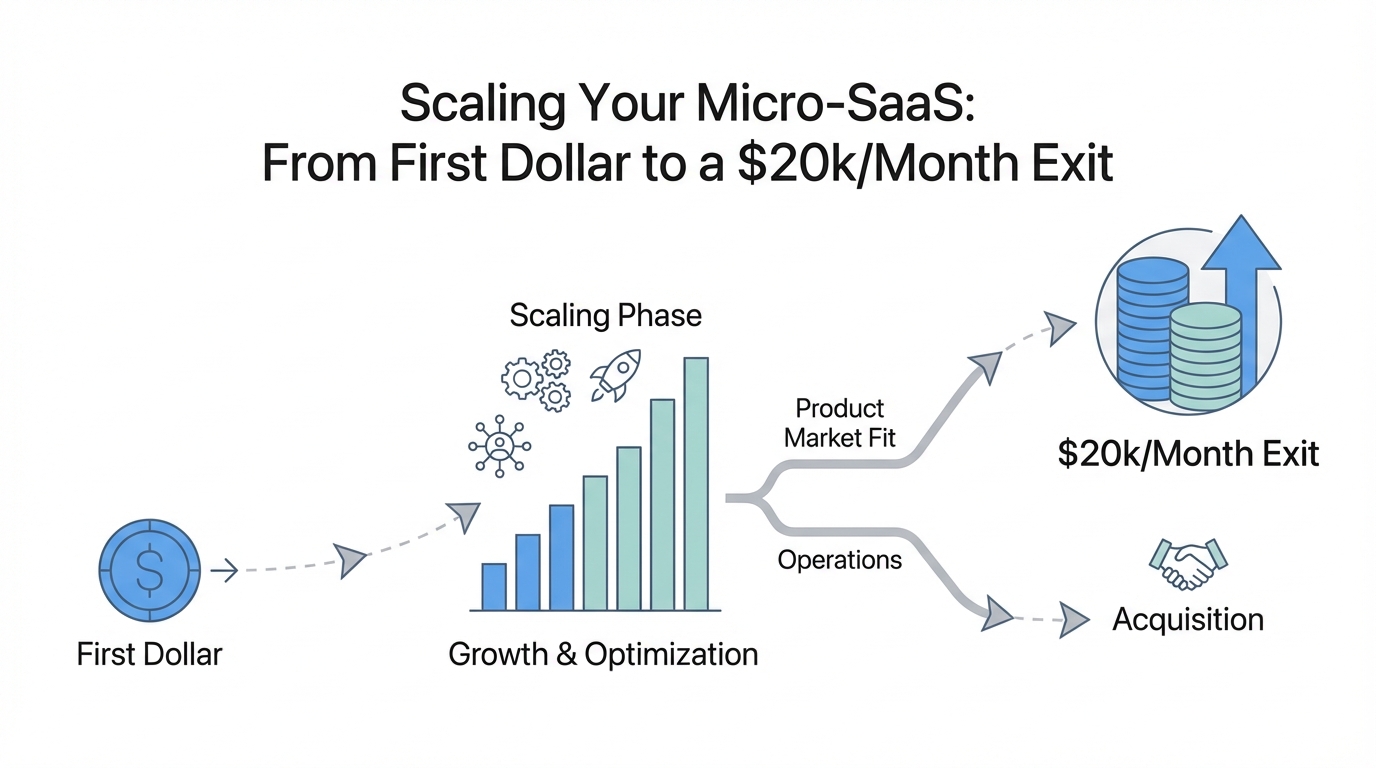
Building a software business used to require a venture capital check, a team of twenty, and a five-year runway. Today, that paradigm has shifted. We are entering the era of the micro-SaaS, where solo founders and tiny teams build high-margin, niche-focused products that generate $10,000 to $50,000 in monthly recurring revenue (MRR). This isn't about becoming the next Salesforce; it’s about capturing a specific "feature of a feature" and optimizing it for profitability and lifestyle. If you've already launched and are looking for saas solo founder tips to reach that elusive $20k/month milestone and eventually sell a saas business, this playbook is for you.
Understanding the Micro-SaaS Dynamics
The core difference between a traditional SaaS and a micro-SaaS is the target. While a giant like Salesforce targets almost every department in every industry, a micro-SaaS solves one acute pain point for a very specific audience. Think of Bank Statement Converter, a tool that simply converts PDF bank statements into Excel formats. It does one thing exceptionally well, yet it generates a staggering $40,000 per month in MRR with a solo founder at the helm. This is the power of the niche.
Micro-SaaS businesses typically enjoy 80% to 90% margins because they don't require heavy sales teams or massive overhead. They are built on profitability from day one. Examples like Cleanvoice, which uses AI to remove filler words from podcasts and earns $20k/month, show that users are willing to pay for tools that save them hours of manual labor. The goal is to build a product that acts as a "wow moment" in a manual workflow, leading to high retention and organic growth.
The Growth Flywheel: Why You Need an Audience-First Strategy
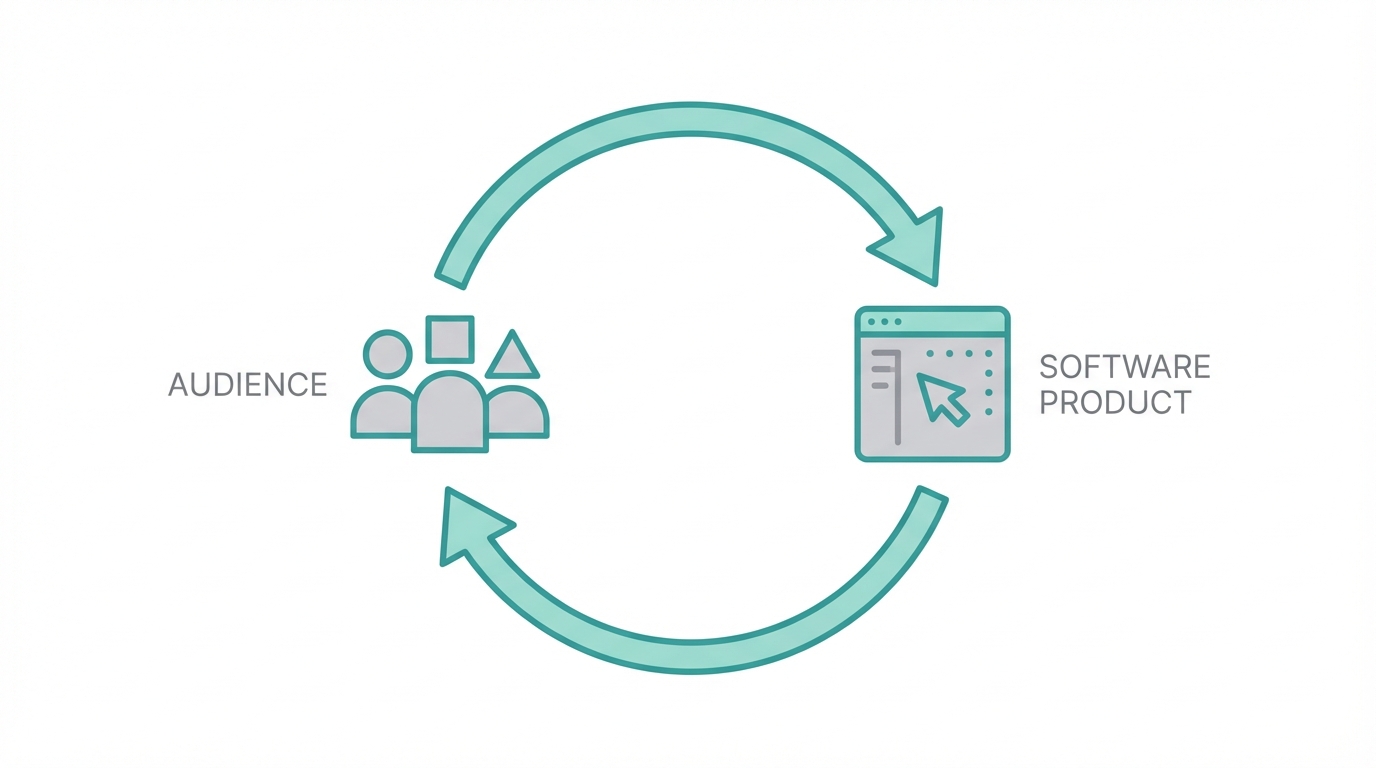
To scale micro saas effectively, you cannot rely solely on paid ads, which can quickly eat into your margins. Instead, successful founders use a growth flywheel that starts with a community. Take BoringMarketing.com as an example; it began as a simple account on X (formerly Twitter) sharing AI workflows. By building an audience first, the founders learned about the acute pains of their followers, which then informed the products they built.
The flywheel works like this: You build an audience, learn their pains, build a solution, generate word-of-mouth, and then reinvest that recurring revenue back into the community through IRL events or promoted content. This creates a sustainable cycle where your users become your best advocates. If you are starting from zero, don't be discouraged. Many successful accounts start with a single post and compound over 12 to 18 months. The reality is that 10,000 monthly site visitors can translate into 150 paying subscribers at a $19/month price point, creating a solid baseline for a lifestyle business.

Pricing Psychology: Why You Should Charge From Day One
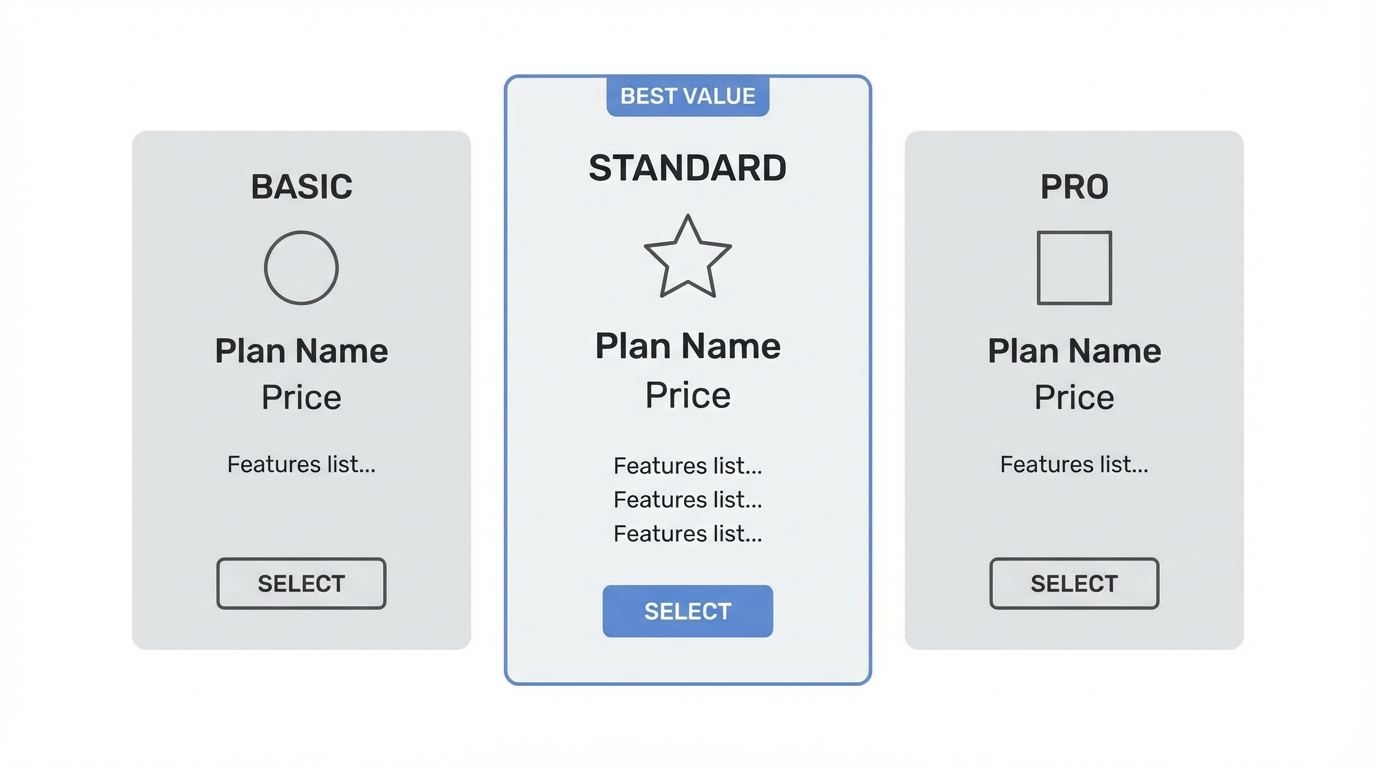
One of the most common mistakes solo founders make is offering their product for free for too long. Charge from day one. If a user isn't willing to pay, they aren't validating your business; they are just consuming your resources. Pricing provides the ultimate feedback loop. You can always offer discounts or seasonal promotions later, but starting with a paid tier establishes value immediately.
Consider implementing usage-based upsells. While flat-rate recurring revenue is the gold standard, usage-based models (like charging per podcast episode processed or per PDF converted) are becoming increasingly popular. This allows users to start small and pay more as they derive more value. You can use financial projection tools or sites like IdeaBrowser.com to see how different pricing models impact your long-term ARR. The key is to ensure you are in the high-pain, high-willingness-to-pay quadrant of the market.
SaaS Churn Reduction: Killing Churn with Continuous Value
In the early stages, your saas churn reduction efforts will define whether you hit the $20k/month mark or plateau. Churn is the silent killer of micro-SaaS. To stop users from canceling, you must ship weekly—if not daily—improvements. Your job as a CEO is to prioritize features that add the most immediate value to your existing user base.
Another way to reduce churn is to build a data moat. When a product becomes a repository for a user's data—like a CRM or a specialized database—it becomes harder to leave. For instance, a tool that helps builders manage city permits across multiple jurisdictions becomes more valuable with every permit filed because it builds a history and a synonym map for local regulations. When managing these types of customer relationships, platforms like Stormy AI streamline creator sourcing and outreach, helping you reach new segments of your niche while your retention stays high.
Operational Efficiency: Building on the Shoulders of Giants
To maintain 90% margins, you cannot afford to reinvent the wheel. You must build on the "shoulders of giants." This means leveraging infrastructure like AWS for hosting, Stripe for payments, and Shopify if you are playing in the e-commerce space. By using these established platforms, you can focus 100% of your energy on the unique value proposition of your micro-SaaS rather than server maintenance or payment security.
Automation is your best friend. From automated customer support bots to AI-driven marketing agents, your goal should be to keep the team small. Solo founders can achieve incredible scale by "vibe coding" or using freelance talent on a time-constrained basis (like a 48-hour MVP sprint). This lean approach ensures that when you do decide to sell, your financials are incredibly attractive to potential buyers who are looking for automated, turnkey operations.
The Affiliate Engine: Scaling with Partners
Once you have a working product and low churn, it's time to pour fuel on the fire. An affiliate engine is one of the most effective ways to scale a micro-SaaS without a massive marketing budget. By offering a 20% recurring commission to partners, you incentivize influencers and industry experts to promote your tool. Systems like Rewardful make it easy to set up and manage these programs.
When scaling through partners, high-quality outreach is essential. This is where Stormy AI excels, allowing you to discover creators in your specific niche—whether it's podcasters, DIY renovators, or B2B tech influencers—and contact them with hyper-personalized emails. Managing these relationships in a specialized Creator CRM ensures that your affiliate engine runs like a well-oiled machine, driving consistent top-of-funnel traffic while you sleep.
Exit Planning: How to Sell Your Micro-SaaS Business
The ultimate goal for many micro-SaaS founders is a liquidity event. Knowing how to sell a saas business starts with understanding multiples. Currently, micro-SaaS companies are selling for anywhere between 3x and 7x of their Annual Recurring Revenue (ARR), depending on growth rates, churn, and how much the founder is required for daily operations.
To maximize your exit price, you should start planning at least six months in advance. This involves cleaning up your books, documenting your automated workflows, and ensuring your churn is under control. Marketplaces for buying and selling small software companies, like Empire Flippers, are more active than ever. Buyers are often looking for "boring" but stable businesses with a clear data moat or a dominant position in a small niche. If your micro-SaaS has reached $20k/month ($240k ARR), you could be looking at a million-dollar exit according to modern SaaS multiples, providing you with the capital to retire or start your next big venture.
Conclusion: The Path to Twenty Thousand
Scaling a micro-SaaS from its first dollar to a $20k/month exit is a marathon, not a sprint. It requires a distribution-first mindset, a relentless focus on solving niche pain points, and a commitment to operational efficiency. By starting with an audience, charging from day one, and building a product that kills churn through continuous value, you can build a life-changing business. Remember to stay lean, build on existing platforms, and keep your eye on the eventual exit. The opportunity to build profitable, sustainable software has never been greater—now is the time to ship.