Scaling Micro-Influencer Partnerships with EspoCRM and Twenty in 2026
Discover how to scale micro-influencer strategy in 2026 using EspoCRM and Twenty. Learn why micro-influencers drive 60% higher engagement and how to manage thousands.
In 2026, the influencer marketing landscape has undergone a tectonic shift. No longer is the industry dominated by the top-heavy celebrity endorsements of the early 2020s. Instead, we have entered the era of the high-volume micro-influencer strategy. With the industry valuation projected to reach a staggering $24.2 billion this year, brands are moving away from the 'quality over quantity' myth and embracing the power of 'massive quality at scale.' The challenge, however, isn't finding these creators; it is managing the thousands of relationships required to move the needle without drowning in administrative debt. This is where lightweight, composable CRMs like EspoCRM and Twenty are becoming the secret weapons for growth-focused marketing teams.
The 2026 Micro-Influencer Imperative: Why Scale Matters
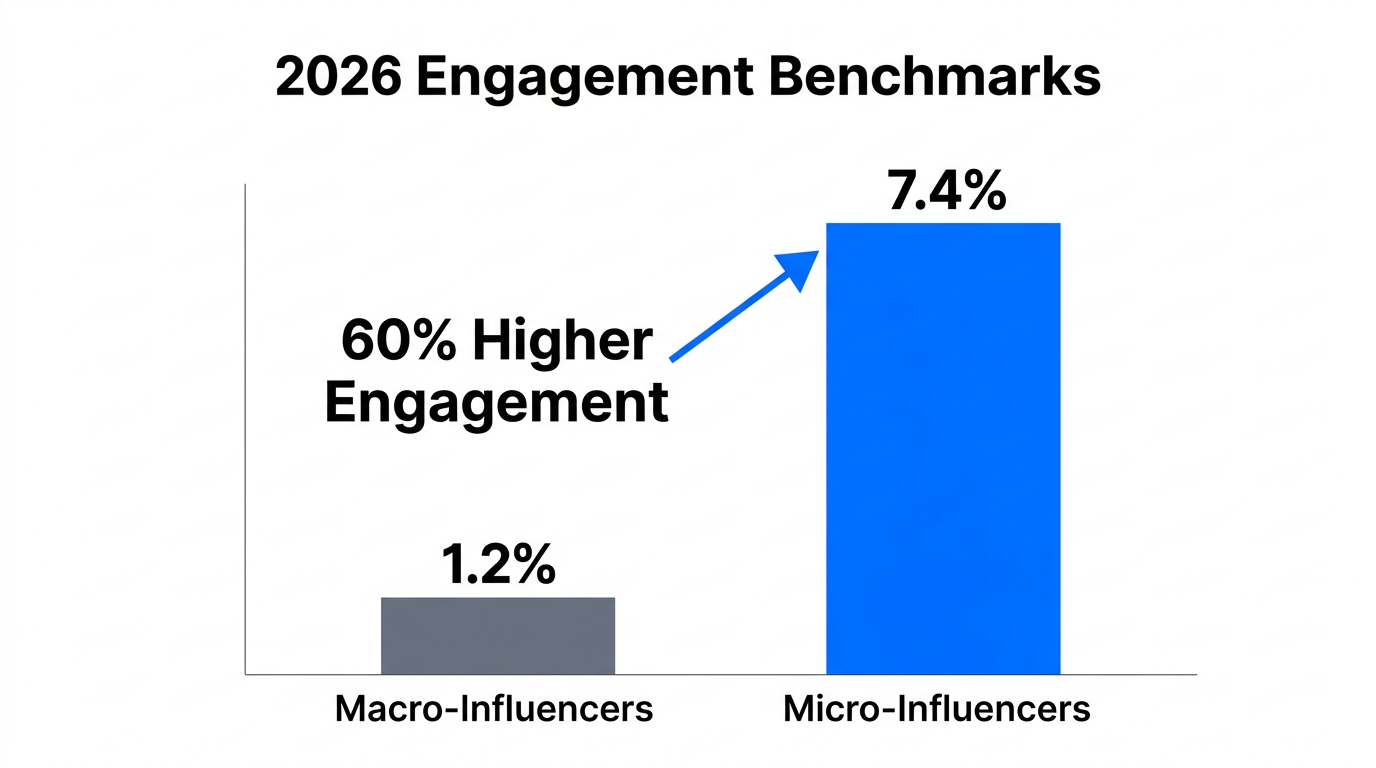
As we navigate 2026, the data is undeniable: micro-influencers (creators with under 100,000 followers) are the engines of conversion. Recent studies show that micro-influencers generate up to 60% more engagement than their celebrity counterparts, according to data from Taboola. This high-energy engagement is the lifeblood of scaling influencer campaigns, especially for brands targeting niche communities on TikTok and Instagram.
With an average ROI of $5.78 for every $1 spent, the financial incentive to scale is clear. However, managing 500 micro-influencers is infinitely more complex than managing five celebrities. This complexity has led to a massive migration; over 2,000 brands in the last year alone have ditched expensive, rigid SaaS platforms to save between $24,000 and $60,000 annually by adopting open-source and composable CRM solutions.
"The future of influencer marketing isn't just about who you hire; it's about how you manage the data of the thousands you interact with daily."
Leveraging EspoCRM’s Entity Manager for Niche Tracking
For brands that need a lightweight but powerful foundation, EspoCRM for influencers has emerged as a top contender. The platform’s standout feature is its Entity Manager, which allows marketing managers to move beyond basic contact cards and create a dedicated 'Influencer' entity. This is critical for tracking content style tags—such as 'Minimalist,' 'High-Energy,' or 'Informative'—which are essential for matching creators to specific campaign vibes.
By utilizing EspoCRM, teams can build custom fields for platform handles, real-time engagement rates, and even historical sentiment analysis. Because it is open-source, brands maintain data sovereignty, ensuring that proprietary creator relationships and private negotiation notes remain on their own servers, fully compliant with the latest GDPR and CCPA standards. This shift toward data ownership is a primary reason why experts like Karim Marucchi argue that open source acts as a hub, allowing for the integration of best-of-breed tools without vendor lock-in.
Automating the 'Gifting' Workflow
One of the biggest bottlenecks in scaling is the physical distribution of products. In EspoCRM, you can set up automated workflows that trigger an order in your shipping system the moment an influencer’s status changes to 'Agreement Signed.' When paired with an ERP like ERPNext, this creates a seamless bridge between marketing and logistics, ensuring your creators get their gear without manual intervention from your team.
Twenty CRM: The Modern Choice for Tech-Forward Brands
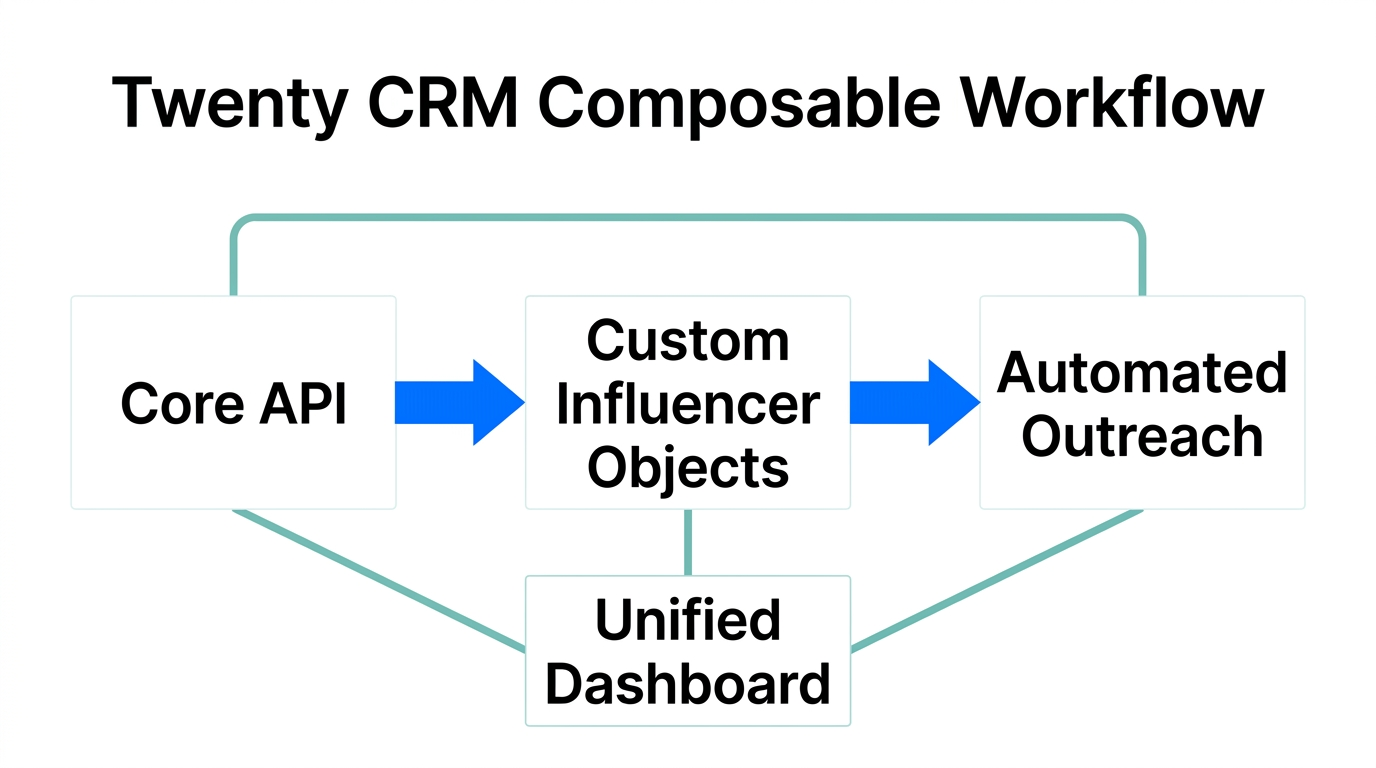
If EspoCRM is the reliable workhorse, Twenty CRM marketing represents the new frontier of 'composable' software. Built with TypeScript and designed for developers, Twenty is the go-to for tech-savvy brands running TikTok-first campaigns. Its modular nature means you can build exactly what you need and nothing you don't, avoiding the 'cluttered database' trap that Vested Marketing warns leads to low user adoption.
Twenty is particularly effective for brands that treat influencer relationship management as a data science problem. By integrating Twenty with open-source AI frameworks like PostHog, marketers can use predictive AI to forecast which micro-influencers will drive the highest conversion rates based on historical interaction data. This is the level of sophistication required to succeed in 2026's competitive landscape.
| Feature | EspoCRM | Twenty CRM |
|---|---|---|
| Architecture | Lightweight PHP | Modern Composable (TypeScript) |
| Primary Strength | Entity Manager & Workflows | Developer Experience & Customization |
| Best For | SMBs & Established Agencies | Tech Startups & Mobile App Marketers |
| Integration Ease | High (Standard APIs) | Excellent (Native Modern Stack) |
"Standard SaaS platforms often lack the flexibility for niche industries. Composable CRMs like Twenty allow us to build a custom engine that evolves as fast as social algorithms."
Enhancing Your Stack with Stormy AI
While a CRM handles the *relationship*, finding the right creators to populate that CRM remains a hurdle. This is where Stormy AI becomes an essential part of the 2026 growth stack. Before you can manage thousands of creators in Twenty or EspoCRM, you need to find them. Stormy AI’s natural-language search allows you to find 'fitness creators in LA with 10K-100K followers' in seconds. More importantly, Stormy AI provides an automated AI agent that can discover, outreach, and follow up with creators while you sleep, feeding your CRM with a steady stream of warm leads. Using Stormy AI for discovery and initial outreach, then transitioning those creators into your own open-source CRM for long-term management, is the gold standard for scaling in 2026.
Case Study: The EA Sports Model for 9.1% Engagement
Electronic Arts (EA) provided a masterclass in scaling influencer campaigns when they pivoted their strategy for *Apex Legends* on TikTok. Instead of relying solely on top-tier gaming celebrities, they utilized a data-driven model to identify and manage hundreds of micro-influencers who resonated with tech-savvy, high-energy audiences. By focusing on niche-specific content styles and decentralized relationship management, they achieved engagement rates as high as 9.1%. This success mirrors the strategy of UK supermarket Iceland, which saw a 70% spike in product popularity by moving to a structured micro-influencer model.
A 2026 Playbook for Managing Thousands of Creators
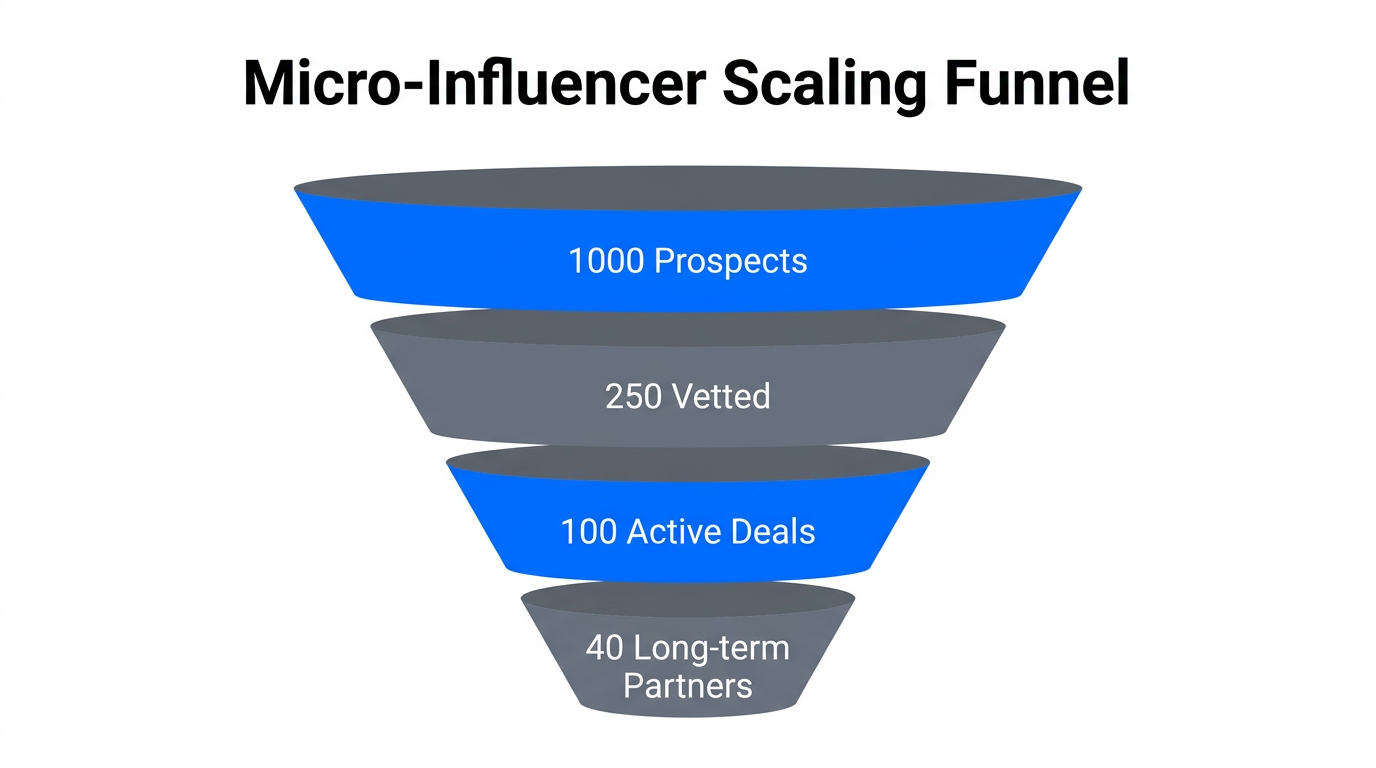
If you are ready to scale, follow this clear, data-backed playbook to manage your influencer relationship management without expanding your headcount:
- Define Custom Entities: Don't just use standard 'Contacts.' Build a specific 'Influencer' entity. Use Phyllo to pull live performance data directly into your dashboard.
- Automate Discovery: Use Stormy AI to identify creators and handle the first three stages of the outreach funnel automatically.
- Segment by Content Style: Use tags to identify content types (e.g., 'UGC Unboxing,' 'Storytelling,' 'Trend-based'). This allows for rapid recruitment when a new campaign launches.
- Connect to the Ecosystem: Ensure your CRM talks to your ad platforms. Brands that link creator performance to TikTok Ads Manager can instantly whitelist the best-performing organic content.
Conclusion: Future-Proofing Your Influence
Scaling to thousands of micro-influencer partnerships in 2026 is no longer a logistical nightmare—it’s a competitive necessity. By leveraging the customization of EspoCRM or the modern composability of Twenty, and powering your discovery engine with Stormy AI, you can build a creator ecosystem that is both massive and manageable. As research from Gartner emphasizes, a robust CRM is about shifting from one-off transactional posts to long-term, symbiotic partnerships that drive sustained growth. Stop renting your creator relationships from expensive SaaS providers and start owning your data today.