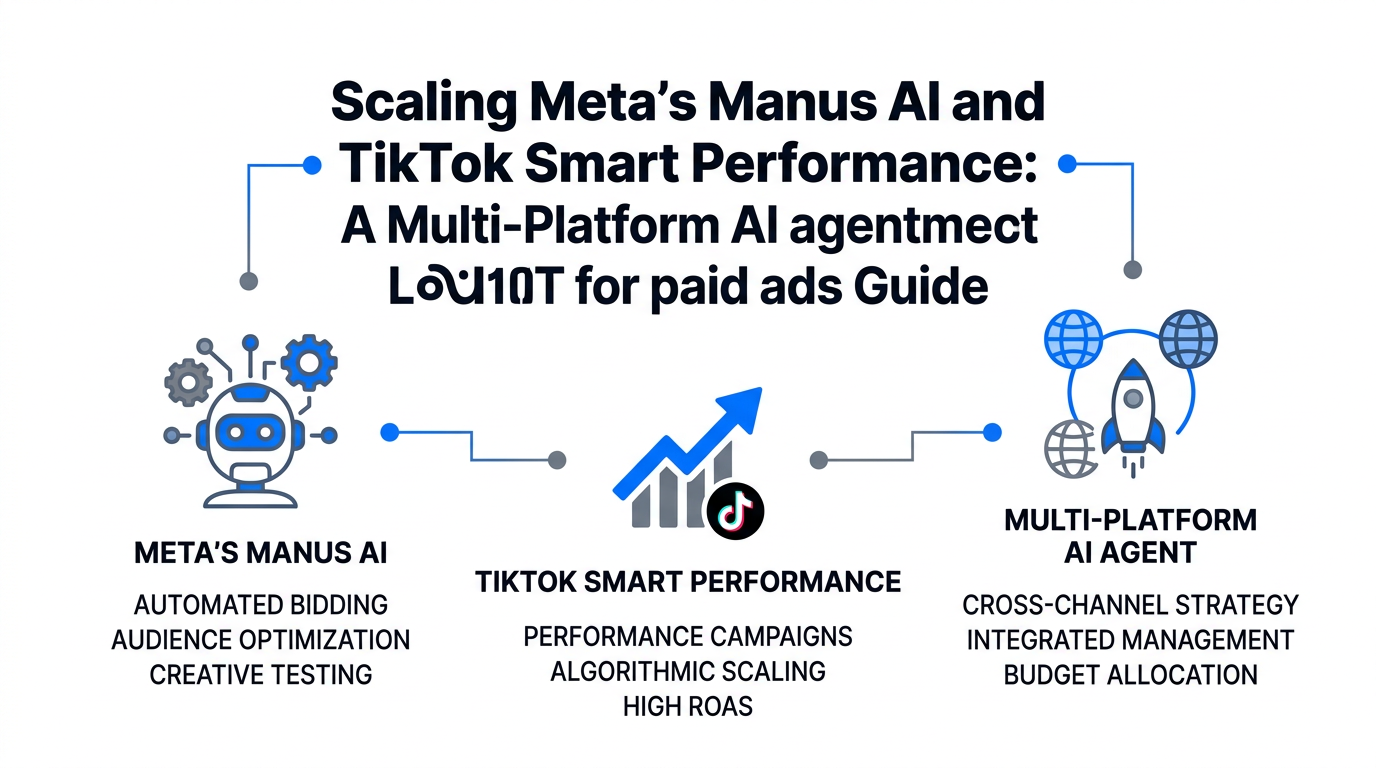
The era of manually toggling ad sets and painstakingly adjusting bids at 2:00 AM is coming to an abrupt end. We are witnessing a fundamental shift in the digital marketing landscape—a transition from "copilots" that suggest changes to autonomous AI agents for paid ads that execute them. According to research from Grand View Research, the global AI in marketing market is projected to skyrocket to $82.23 billion by 2030. This isn't just a trend; it's a structural revolution in how brands reach consumers. For performance marketers, the arrival of platform-native tools like Meta’s Manus AI and TikTok Smart Performance represents a leap toward total campaign autonomy, where the software doesn't just assist the marketer—it works for them.
Understanding Platform-Native Agents: Meta, TikTok, and Pinterest
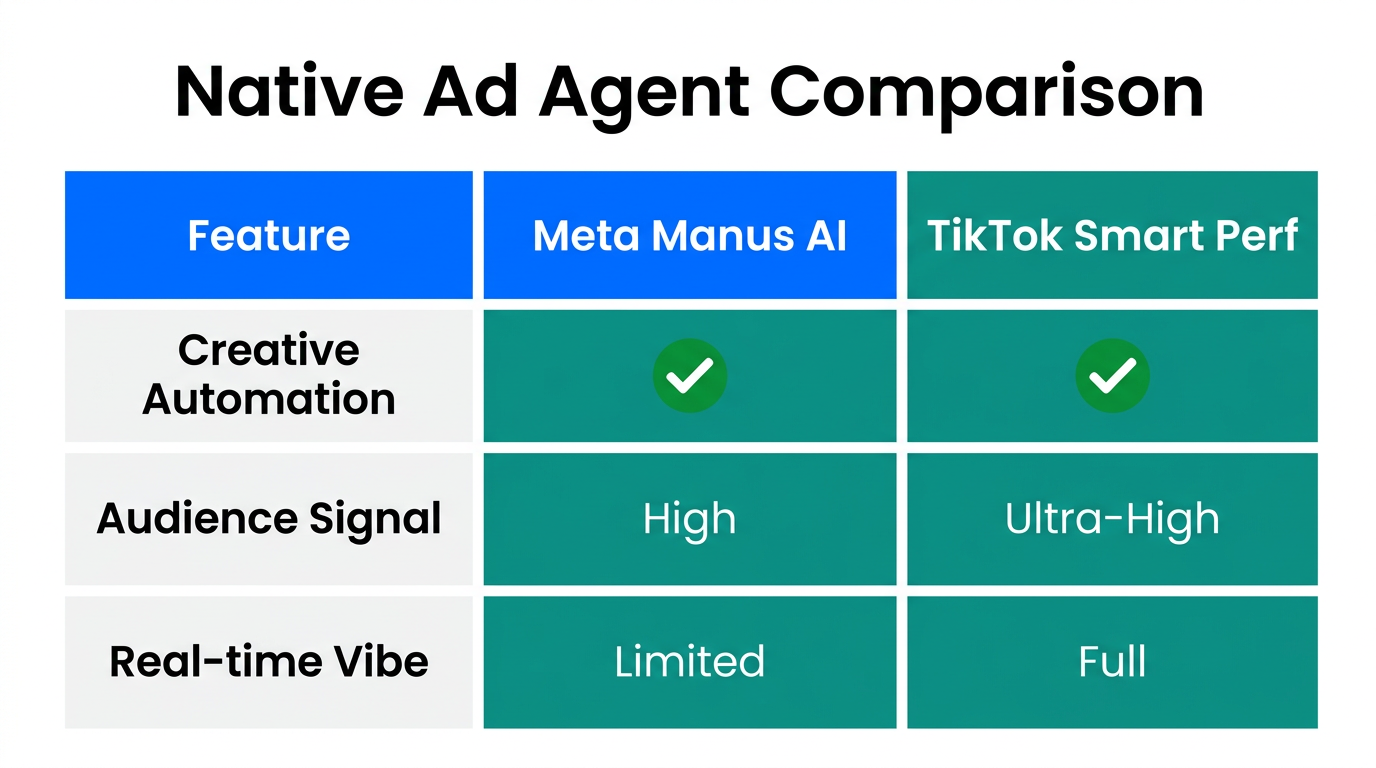
Historically, automation in advertising was limited to simple "if-then" rules. If the Cost Per Acquisition (CPA) rose above $20, then pause the campaign. Today, major social networks are embedding agentic capabilities directly into their dashboards. These native agents operate on a "Perceive-Think-Act" loop, allowing them to monitor performance data, analyze it against historical benchmarks, and make real-time adjustments without human intervention.
Meta’s Manus AI is leading this charge by integrating autonomous research and report building directly within Meta Ads Manager. Instead of spending hours pulling data for a weekly recap, marketers can task Manus AI with identifying why a specific creative is fatigue-testing or finding audience pockets that haven't been saturated. Similarly, Pinterest Performance+ has shown a 10% boost in CPA efficiency by automating targeting and bidding logic for e-commerce brands.
TikTok Smart Performance, perhaps the most aggressive of the trio, focuses on the "vibe" of the platform. It automates creative delivery and targeting specifically for Gen Z and Millennial audiences. By analyzing which hooks are trending in the moment, the AI agent for paid ads can rotate creatives to ensure the brand stays relevant without a creative director needing to sign off on every minor iteration.
"The Agent Revolution is moving software from something we use to something that works for us, fundamentally changing the center of the marketing tech stack."
Mastering 'Vibe Marketing' and Social Sentiments
Modern consumers, particularly on platforms like TikTok and Instagram, are highly sensitive to authenticity. "Vibe Marketing"—the practice of aligning ad content with the current aesthetic and emotional mood of a social feed—is notoriously difficult to scale manually. By the time a human team identifies a trend, designs a creative, and gets approval, the trend has often passed. This is where social media ad automation through agents becomes a competitive necessity.
AI agents can scan social sentiments in real-time. If a specific audio track or visual style begins to trend, the agent can signal a Creative Generation tool like AdCreative.ai or Jasper to spin up variations of existing assets that mimic that vibe. This level of hyper-personalization is why 88% of organizations are now exploring or piloting AI agents, as reported by SellersCommerce.
For brands relying heavily on User-Generated Content (UGC), platforms like Stormy AI streamline creator sourcing and outreach, providing the essential raw material for these agents. While TikTok Smart Performance optimizes the delivery, it is crucial to discover and vet the creators who produce the high-quality content that feeds the machine. By using AI to search for influencers in specific niches (e.g., "fitness creators in LA"), you ensure the agent has the best possible assets to work with.
The 24/7 Monitor: Perceive, Think, Act
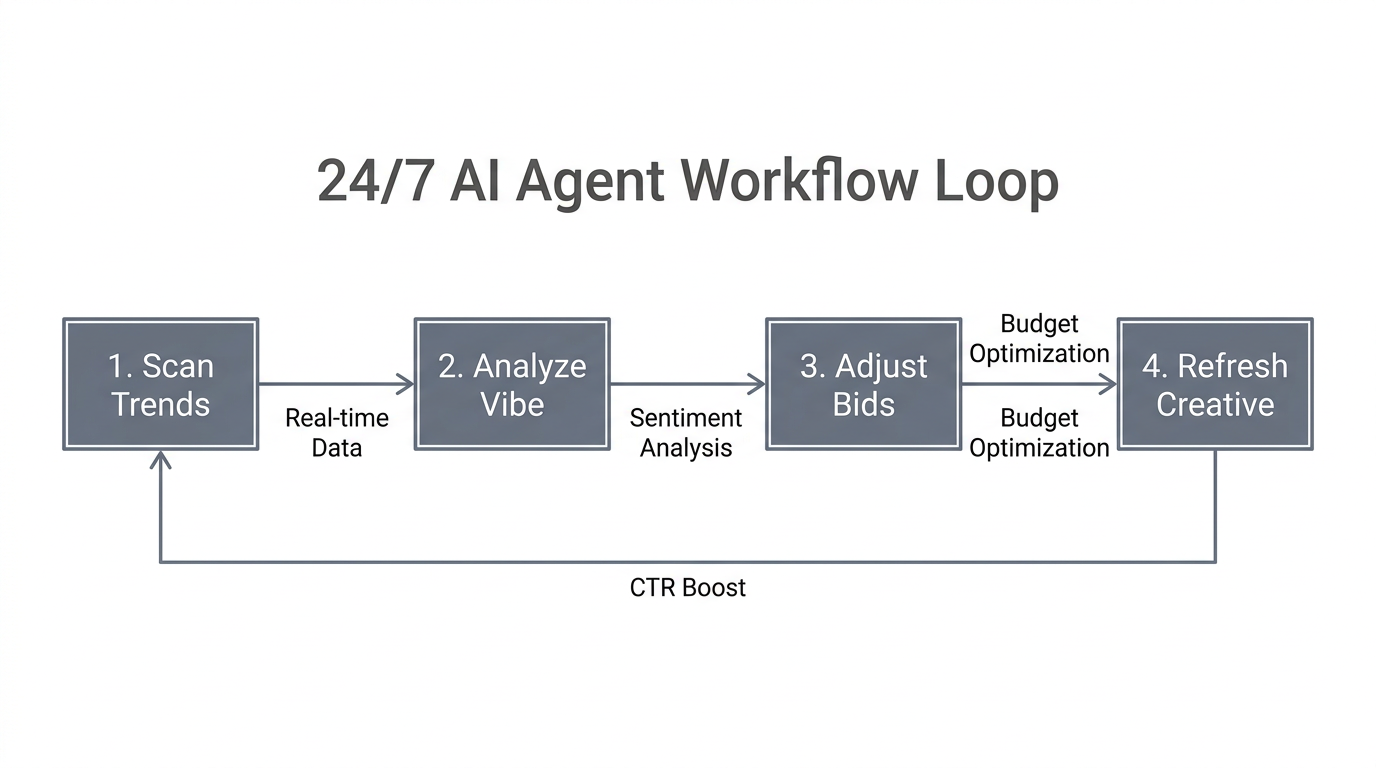
To successfully implement an AI agent for paid ads, you must understand the operational framework they follow. Unlike standard software, agents don't wait for a command; they are "always-on" monitors. This workflow is broken down into three distinct phases:
- Perceive: The agent connects to live data streams via APIs, such as the Meta Ads Manager or Google Ads API. It sees exactly what is happening with every penny spent.
- Think: Using Large Language Models (LLMs) like Claude 3.5 or GPT-4o, the agent analyzes the data. For example, it might ask: "Is the 30% efficiency gain we saw this morning due to the new creative or a specific audience segment?"
- Act: The agent autonomously executes changes—shifting budget from underperforming ads to winners or pausing a campaign that has hit its budget cap.
| Platform Agent | Core Strength | Target Audience | Reported Efficiency |
|---|---|---|---|
| Meta’s Manus AI | Autonomous research & reporting | Broad Facebook/IG demo | High efficiency in data analysis |
| TikTok Smart Performance | Creative delivery & vibe-matching | Gen Z / Millennials | Up to 30% reduction in CPA |
| Pinterest Performance+ | E-commerce targeting automation | High-intent shoppers | 10% boost in CPA |
Enterprises are also moving toward Multi-Agent Orchestration. Instead of one agent doing everything, teams of agents are being deployed. One agent might handle creative analytics using Motion, while another orchestrates cross-platform budget reallocations using n8n.io or Make.com.
Overcoming the 'Autonomy Paradox' with Guardrails
As agents become more capable, marketers face the "Autonomy Paradox": the more freedom you give the AI, the more risk you assume. Without strict human-in-the-loop (HITL) guardrails, an autonomous agent could technically spend an entire monthly budget in a few hours if it incorrectly identifies a "viral" opportunity.
To avoid "drift"—where the AI's logic slowly diverges from your brand's core goals—it is essential to feed the agent a robust system prompt. This should include your Brand Style Guide to prevent the LLM from generating generic, "hallmark-style" copy. Furthermore, ensure your data is not siloed. Training an agent only on ad clicks while ignoring CRM data from Salesforce leads to "Optimization for Clicks" rather than "Optimization for Revenue."
"61% of employees using AI agents report an increase in efficiency, but the winners will be those who master the human-in-the-loop oversight model."
Reducing CPA: Actionable Workflows for 2025
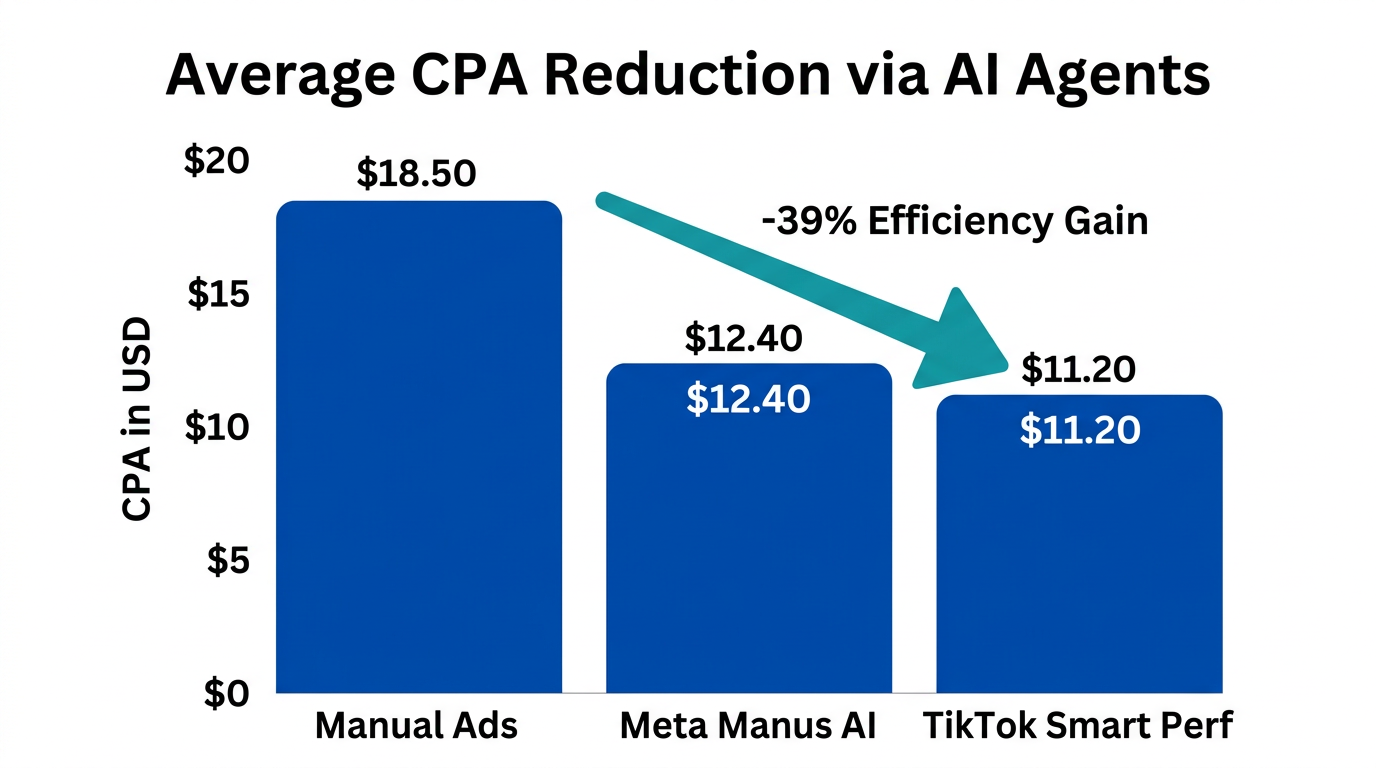
The bottom line for any social media ad automation strategy is cost reduction. We have seen real-world examples of major brands achieving staggering results by leaning into agentic workflows. Unilever reduced their Cost-Per-Acquisition (CPA) by 30% by leveraging AI-powered targeting agents to find audience clusters that traditional manual targeting missed. Similarly, Coca-Cola achieved a 20% increase in conversion rates by using agents that adjusted spend based on real-time event triggers like local weather or trending social topics.
The CPA Reduction Playbook
- Deploy Low-Code Agents: Use tools like Relevance AI or Zapier Central to build custom agents that monitor your KPIs 24/7.
- Connect to UGC Sourcing: Use an AI-powered engine like Stormy AI to maintain a constant flow of fresh creator content. Freshness is the #1 signal for the TikTok algorithm.
- Set Performance Hooks: Program your agent to trigger a "Creative Refresh" notification whenever the click-through rate (CTR) drops below a specific threshold for 48 hours.
- Integrate Post-Click Data: Connect tools like AppsFlyer or Adjust so the agent understands which ads lead to high-value app installs, not just cheap clicks.
By following these steps, smaller teams can achieve the same results as enterprise-level agencies. For instance, a job marketplace recently used Nyra AI to launch complex campaigns in hours rather than weeks, resulting in a 26% CTR on top keywords. Speed is the new currency of performance marketing.
The Future of Advertising is Agentic
Leveraging Meta’s Manus AI, TikTok Smart Performance, and Pinterest Performance+ is no longer optional for brands that want to remain competitive in a high-velocity digital economy. These tools allow you to scale your "Vibe Marketing" efforts, maintain a 24/7 watch over your budget, and significantly reduce your CPA. However, the most successful marketers will be those who balance this autonomy with strict guardrails and high-quality creative inputs.
As you build out your AI-driven growth stack, remember that the quality of your output is only as good as your input. Pair your autonomous ad agents with robust creator discovery via Stormy AI to ensure your campaigns are always fueled by the most engaging, high-performing UGC. The tools are ready; the question is whether you are prepared to hand over the keys to the machine and step into the role of the strategic architect.