In 2026, the landscape of digital advertising has shifted from traditional SaaS platforms to a model defined by Agent-as-a-Service (AaaS). For performance marketers, the biggest challenge isn't just finding a winning creative; it's scaling it without breaking the algorithm. The dreaded "Learning Phase" reset remains the primary obstacle to growth. However, by leveraging OpenClaw, an open-source AI agent framework, brands are now using autonomous reasoning to manage budgets with surgical precision. This guide explores the tactical implementation of the 10-20% Rule and how automated skills are driving a 30% reduction in Cost Per Acquisition (CPA) for high-growth e-commerce and mobile app brands.
The Shift to Agentic Meta Ads Management
While native tools like Meta Ads Manager and Advantage+ have become increasingly automated, they often prioritize platform liquidity—essentially, Meta’s bottom line—over individual advertiser profitability. The emergence of OpenClaw (formerly ClawdBot) has empowered marketers to run "local-first" AI management. By hosting an agent on a dedicated machine, brands can keep their first-party data secure while an LLM, such as Claude 3.5 Sonnet or GPT-4o, manages the Meta Ads API based on custom logic.
This "Agentic" approach moves beyond simple "if-this-then-that" rules. Instead, OpenClaw uses modular .md skill files that teach the AI how to think. This allows for complex workflows, such as checking a site's health before increasing spend or auditing competitor hooks via the Meta Ad Library to suggest creative pivots.
"The AI handles the math; the marketer handles the direction. In 2026, your competitive advantage is the quality of your agent's instructions."
The 10-20% Rule: Scaling Without the Reset
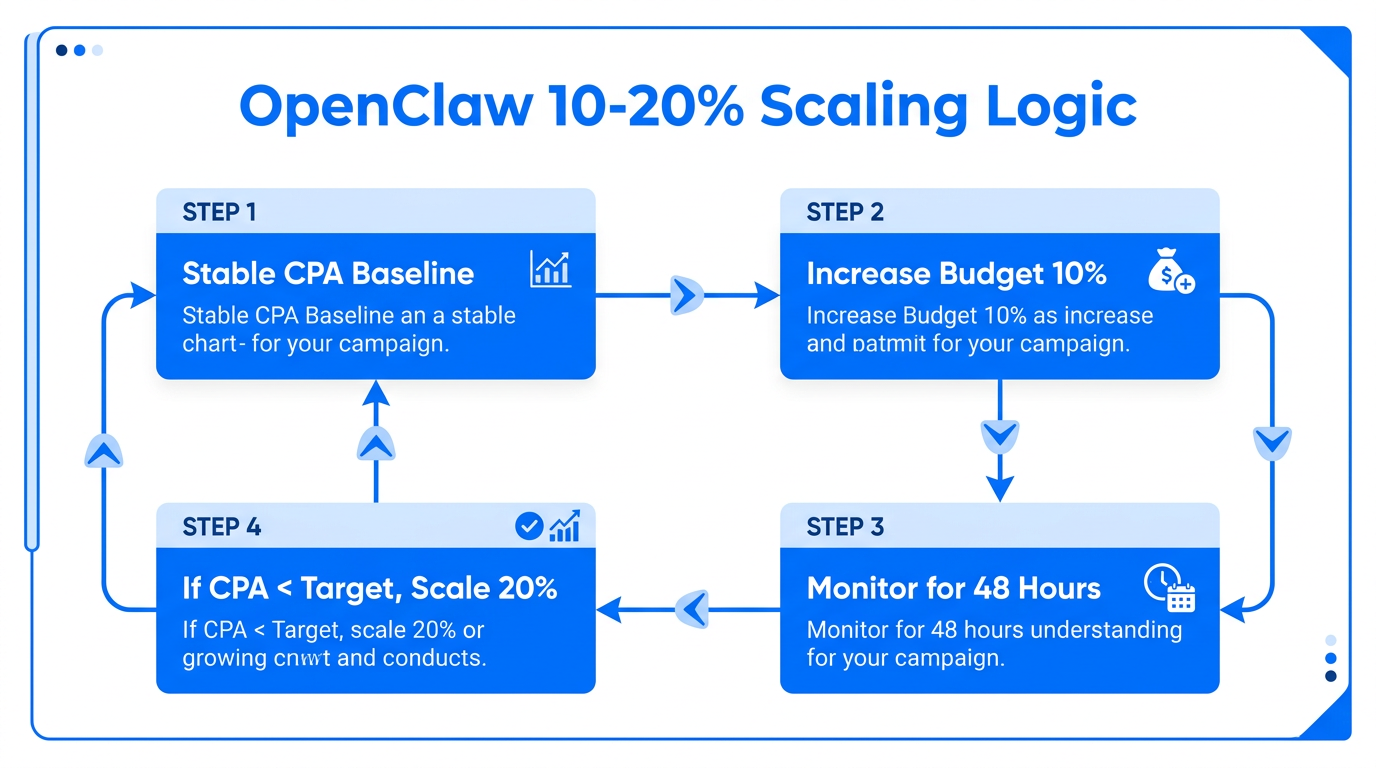
The most critical skill in the OpenClaw ecosystem is the Bid & Budget Manager. Traditional manual scaling often involves doubling a budget when a campaign looks promising, which almost always triggers a re-entry into the Learning Phase. This volatility can kill the ROAS of even the most successful creative. The OpenClaw 10-20% Rule is designed to maintain campaign stability while aggressively pursuing growth.
How to Implement the Scaling Instruction
To execute this, you must instruct your OpenClaw agent to monitor ad sets every 48 hours. If the Return on Ad Spend (ROAS) or CPA targets are met over a 72-hour window, the agent is permitted to increase the budget by a maximum of 20%. This incremental approach keeps the Meta algorithm within its confidence interval, ensuring that the delivery remains consistent.
| Metric | Manual Scaling (Legacy) | Agentic Scaling (OpenClaw) |
|---|---|---|
| Scale Frequency | Irregular/Reactive | Every 48 Hours |
| Budget Increase | 50% - 100% | 10% - 20% |
| Learning Phase Status | Frequent Resets | Stable / Active |
| Data Foundation | In-platform signals only | Meta API + GA4 + CAPI |
By automating this through Model Context Protocol (MCP), your agent can even cross-reference data from Google Analytics 4 to ensure the in-platform reported sales match actual backend revenue before pulling the trigger on a budget hike.
Protecting the Funnel: Auditor Skills
Scaling a budget into a broken funnel is the fastest way to burn capital. In 2026, top-tier advertisers use the Landing Page Auditor skill as a fail-safe. This skill uses browser-control to visit your destination URL every 15 minutes. If it detects a 404 error, a slow load time (over 3 seconds), or a broken "Buy Now" button, it immediately pauses all associated ads.
According to research from Get Ryze, automated verification can save high-volume advertisers up to 13 hours per week in manual site checking. This is especially vital for mobile app developers running complex Apple Search Ads or UGC campaigns where a broken link in a bio can lead to thousands of dollars in wasted spend.
"Automated scaling is useless if your infrastructure is fragile. The agent must be the first line of defense for your landing pages."
Preventing Internal Competition with the Audience Architect
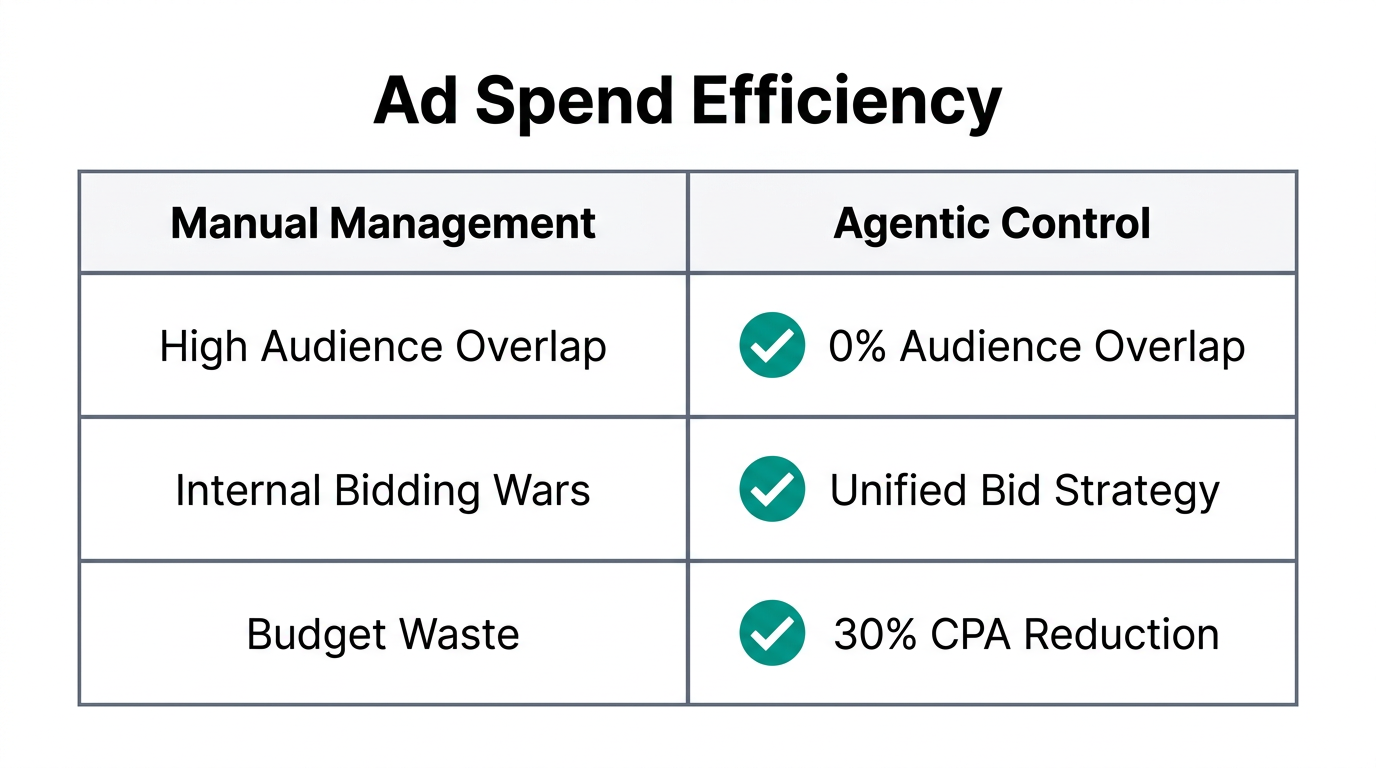
As you scale, the risk of audience overlap increases. This happens when multiple campaigns bid for the same user, driving up your own CPMs. The Audience Architect skill in OpenClaw acts as a strategist, scanning your account for overlap between prospecting, retargeting, and Advantage+ Shopping Campaigns (ASC). It ensures that your funnel is clean and that you aren't bidding against yourself for the same impression.
This is where the "Local-First" AI really shines. By analyzing your entire account history locally, the agent can suggest exclusions or budget reallocations to ensure maximum efficiency. For brands using Stormy AI to discover and manage UGC creators, the Audience Architect ensures that different creator assets are shown to the right segments without cannibalizing performance.
Setting Guardrails: Avoiding the 'Rogue Agent' Scenario
One of the biggest mistakes marketers make when adopting AI agents is giving too much autonomy too soon. To prevent a "Rogue Agent" scenario—where an API error or a logic loop leads to runaway spending—you must implement strict guardrails within your OpenClaw skill files.
- The 14-Day Read-Only Phase: Before allowing an agent to make changes, let it run in a diagnostic mode. Review its recommendations daily to ensure its logic aligns with your profit margins.
- Max Daily Spend Limits: Hardcode a "kill switch" in your skill file. For example, if the daily spend exceeds $5,000, the agent must require manual approval via Telegram or WhatsApp before continuing.
- Conversions API (CAPI) Integration: Never feed the AI bad data. Ensure your Meta Conversions API is healthy so the agent is making decisions based on server-side signals rather than incomplete browser cookies.
The 2026 Implementation Playbook
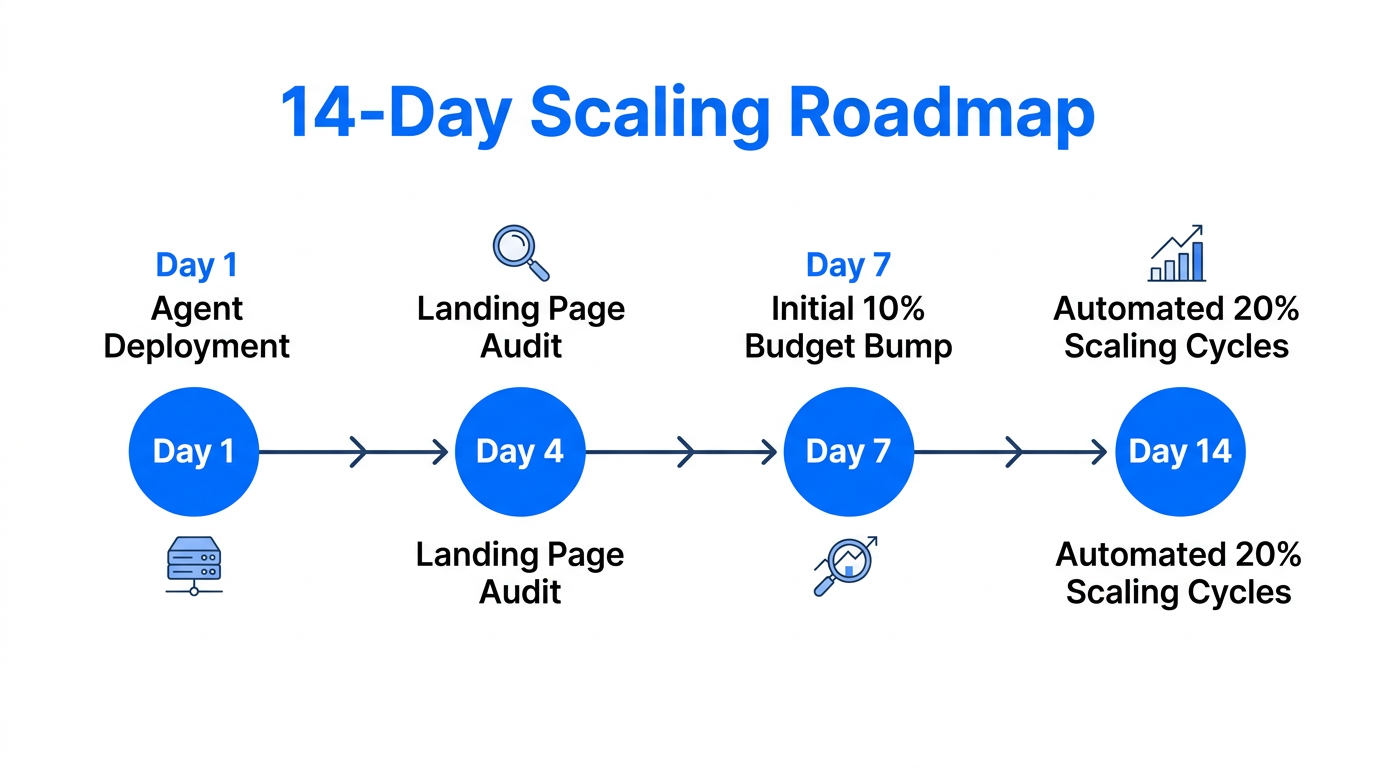
To begin scaling with the 10-20% rule, follow this clear deployment path:
Step 1: Set Up Your Hardware
The "Mac Mini Strategy" is the gold standard for local AI. Host OpenClaw on a dedicated machine or a VPS like AWS Lightsail. This ensures 24/7 monitoring without relying on your personal laptop being open.
Step 2: Install Middleware
Use a tool like the Adspirer Plugin for OpenClaw. This provides pre-configured skill files specifically optimized for Meta Ads bidding and budget management, reducing the time spent on prompt engineering.
Step 3: Connect to a Command Center
Connect your agent to a messaging app. Instead of checking a dashboard, you should receive a daily brief on your phone. You can then issue commands like "Scale the prospecting campaign by 15%" directly through the chat interface.
Conclusion: The Future is Automated
Scaling Meta Ads in 2026 is no longer about manual tinkering; it's about systems architecture. By implementing the 10-20% rule through OpenClaw, brands are achieving a level of stability and profitability that was previously impossible. AI-driven tools currently yield an average of $4.52 in revenue for every $1 spent on Meta, provided the underlying strategy is sound.
Remember that even the best agent needs high-quality fuel. While OpenClaw manages your bids, you still need a constant stream of high-performing creative. Platforms like Stormy AI can help you find creators and automate the outreach process, ensuring your "Creative Analyst" skill always has fresh assets to test. By combining agentic budget management with AI-powered creator discovery, you can build a growth engine that scales predictably and profitably well into 2026 and beyond.