In 2026, the most significant business breakthroughs aren’t happening in Silicon Valley laboratories; they are happening in the front offices of local pizza shops, dance studios, and home service providers. For years, local SMBs (Small and Medium Businesses) struggled with the "labor trap"—the inability to grow because they couldn't afford enough staff to handle the phones without eating into their margins. Today, the integration of AI-powered phone ordering systems and global call centers is fundamentally rewriting the economics of local business. By automating the most tedious aspects of customer interaction, these businesses are unlocking massive revenue that previously vanished into missed calls and busy signals.
The Hidden Million-Dollar Opportunity in Plain Sight
Most entrepreneurs believe that to build a million-dollar business, they need a grand, innovative tech product. However, as 2026 has proven, million-dollar businesses are often hidden in plain sight, operating as simple local services. Whether it’s a high-demand dance studio generating $1.25 million in top-line revenue or a niche service like Lap of Love dominating the at-home pet care market, the path to scale is through operational efficiency rather than reinvention.
Consider the math behind a standard local service. A dance studio with 300 students paying $250 per month generates $75,000 in monthly sales before adding the "plus-plus" revenue—the uniforms, recital tickets, and photo packages. When you optimize the OpEx, these businesses can net between $500,000 and $700,000 in EBITDA annually. The bottleneck for these businesses has never been demand; it has always been the administrative friction of managing that demand. This is where Taro restaurant automation and similar AI layers come into play.
"You don't have to do something really grand or innovative to build a million-dollar business. You just have to provide a service people love and scale it in the right way."
The Taro Model: Recovering 10-20% of Lost Revenue
 33:00
33:00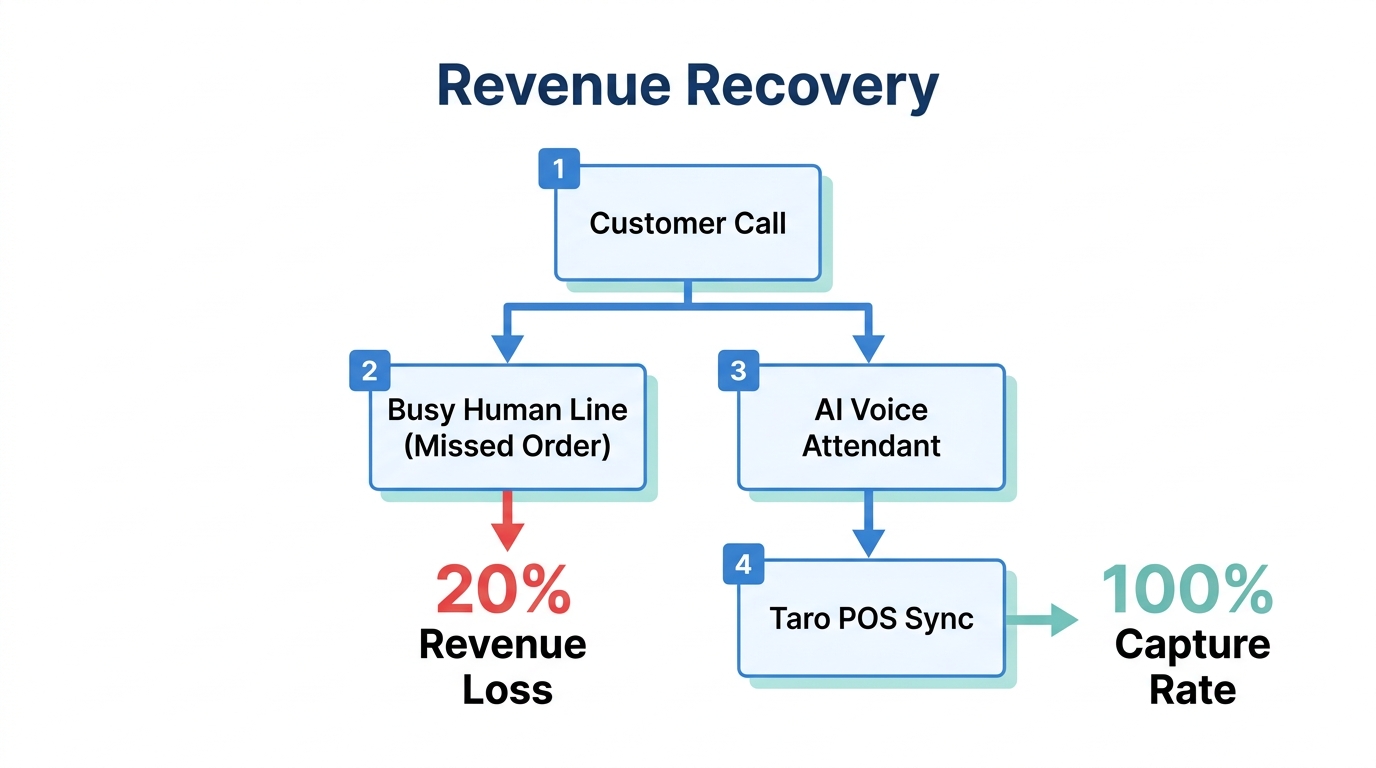
For a local restaurant or service provider, a ringing phone is both an opportunity and a distraction. In a busy environment, staff often prioritize the customer in front of them over the one on the line. Research shows that most restaurants lose 10-20% of their potential revenue simply by missing phone calls or putting customers on hold for too long. In 2026, the "Taro Model"—named after the platform Tarro (Technology All Restaurants Run On)—solves this by routing phone orders to AI-enhanced call centers.
Tarro acts as the "Adidas of online phone ordering." By using a combination of LLMs (Large Language Models) and offshore human agents, they ensure that no call goes unanswered. The value proposition for a local business is simple: "We will do this for 10% cheaper than your local labor cost and increase your revenue by 20%." In an industry where margins are razor-thin, this is an undeniable advantage. These systems have scaled to 100-million-dollar run rates by servicing over 3,000 restaurants across the U.S., proving that AI phone ordering systems are no longer a luxury but a necessity for local survival.
| Feature | Traditional Phone Handling | Taro AI-Powered System |
|---|---|---|
| Response Rate | Depends on staff availability | 100% Instant Pickup |
| Labor Cost | $15-$25/hr per staffer | Variable (approx. 10% lower) |
| Revenue Capture | 10-20% leakage from missed calls | Full capture of all inbound leads |
| Data Integration | Manual entry / Paper notes | Direct POS & CRM sync |
AI Accent-Changing Technology and 24/7 Support
27:30A common friction point in global outsourcing has been the cultural and linguistic gap. In 2026, this has been solved by AI accent-changing technology like Sanas. This technology allows a call center agent in the Philippines or India to have their voice remixed on the fly. To the customer in Wichita, the agent sounds like "Steve from Wichita." This isn't about deception; it’s about reducing cognitive friction and ensuring the customer feels comfortable during the transaction.
Furthermore, LLMs now handle 50% to 70% of routine inquiries—such as checking order status or operating hours—without human intervention. The AI agent only routes the call to a human when the request becomes complex or requires emotional intelligence. This hybrid model allows local businesses to provide 24/7 high-quality customer support at a fraction of the cost of a single full-time local employee. This level of local business operational efficiency was unimaginable just five years ago.
"AI is making call centers need half as many people as before, and the rest is just profit that falls directly to the bottom line."
The Amish Precursor: "AWS for the Offline"
16:00Interestingly, the roots of this movement can be seen in how the Amish community has interacted with the modern world. Despite religious restrictions on personal technology, Amish entrepreneurs remain some of the most successful small business owners in the country. They use services like IBYFAX—an internet-to-fax gateway—to manage digital orders without ever looking at a computer screen.
By using an "English layer" (a non-Amish intermediary or a technological bridge), they maintain their lifestyle while participating in the global economy. This "Middleman as a Service" model is the exact blueprint for modern AI phone ordering systems. Whether you are an Amish furniture maker on DYS Builders or a local pizza shop, the goal is the same: use a technological buffer to handle the digital noise so you can focus on the craft of your business.
A Step-by-Step Guide to Integrating AI-Powered Phone Sales
19:00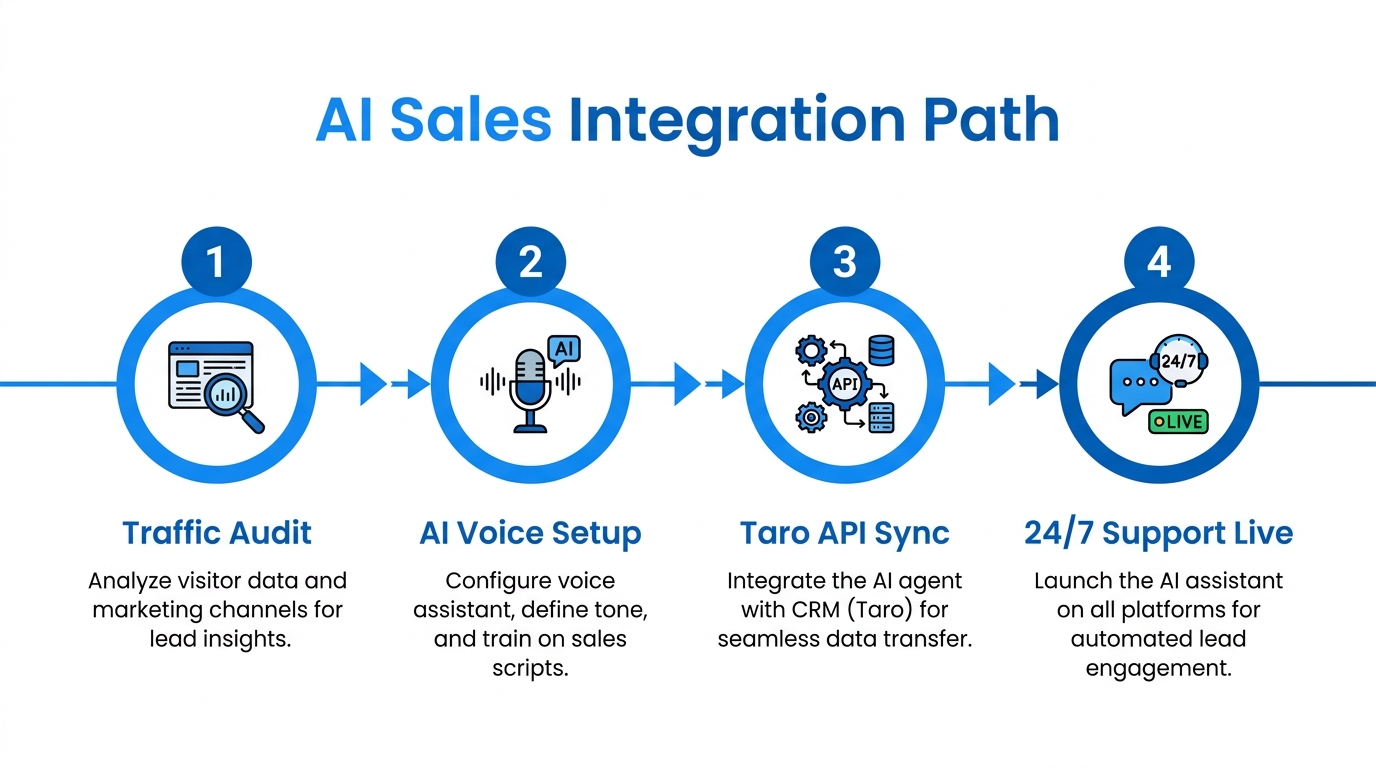
If you are a brick-and-mortar business owner looking to scale in 2026, the transition to an automated phone system should follow a clear playbook. You cannot simply flip a switch; you must integrate these tools into your existing workflow.
Step 1: Audit Your Missed Call Volume
Use a tool like Meta Ads Manager or your existing phone provider's analytics to see how many calls come in during peak hours versus how many are actually answered. You can also benchmark this against your Google Ads conversion data to see where leads are dropping off. This data is your baseline for potential revenue recovery.
Step 2: Deploy an All-in-One Operating System
Modern platforms like Owner.com allow local businesses to own their digital presence. By using an integrated system, you ensure that when someone searches for your business, they find your website first—not a third-party delivery app that takes a 15% cut. Pair this with Taro restaurant automation to handle the phone side of the equation.
Step 3: Implement AI Voice Routing
Set up an AI agent to handle the "Tier 1" questions (hours, location, order status). This frees up your in-house staff to focus on production and quality control. You can manage these settings through a central dashboard, similar to how you would manage relationships in Stormy AI.
Step 4: Scale via UGC and Local Discovery
Once your operations are automated, you need more leads to feed the machine. This is where high-leverage marketing comes in. Platforms like Stormy AI are essential here; you can use Stormy to discover local UGC creators in your city who can film testimonials and "day in the life" content for your business. When you combine efficient operations with AI-powered creator discovery, you create a flywheel of consistent, scalable growth.
The Economics of Outsourcing Local Operations in 2026
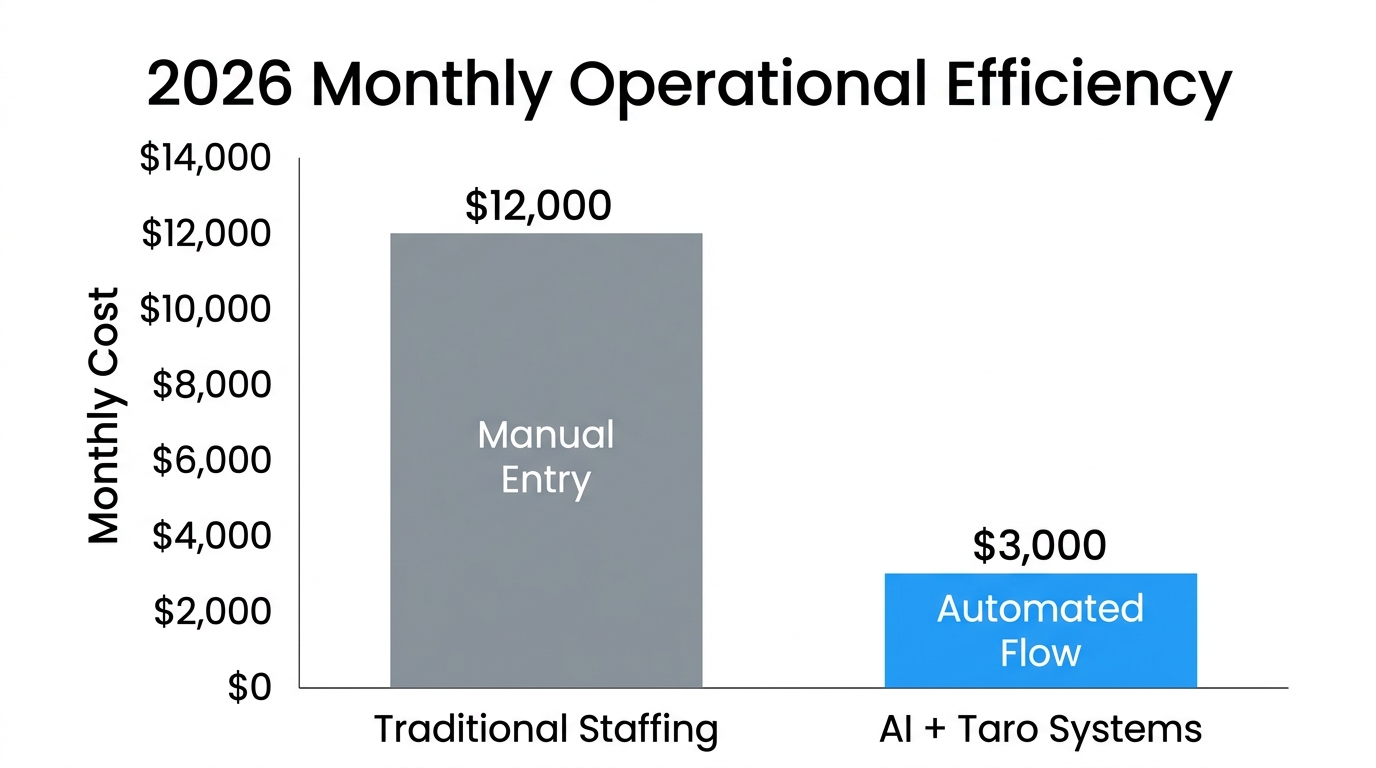
The shift toward global call centers and AI isn't just a tech trend; it's a structural change in the labor market. In 2026, the cost of a high-tier Filipino agent sourced through platforms like OnlineJobs.ph, equipped with AI accent-enhancement, is approximately $8-$12 per hour, compared to $20+ for a local hire who may have higher turnover rates. When you factor in that the AI agent never takes a sick day and can handle infinite concurrent calls, the ROI becomes undeniable.
For businesses like Lap of Love, which handles 10,000 customers a month, this centralized call center model is what allows them to maintain a 500-1,000 dollar price point while ensuring a compassionate, high-touch customer experience. They use the call center to qualify leads and schedule local veterinarians, effectively decoupling the "administration" from the "service."