Imagine building a seven-figure media empire while working a 9-to-5 job, only to be fired when your boss discovers your side hustle. For Matt, the founder of Swim University, this wasn't just a hypothetical scenario—it was the catalyst for building a $1 million-a-year business with just three employees. By mastering scaling a business through extreme operational efficiency and a "lifestyle-first" mindset, Matt turned a boring niche—pool and hot tub care—into a content engine that generates over $100,000 a month. The secret isn't a massive team or a complex corporate structure; it is a meticulously organized system built on lifestyle business model principles using Asana and Google Drive.
The Philosophy of Lifestyle Over Maximum Growth
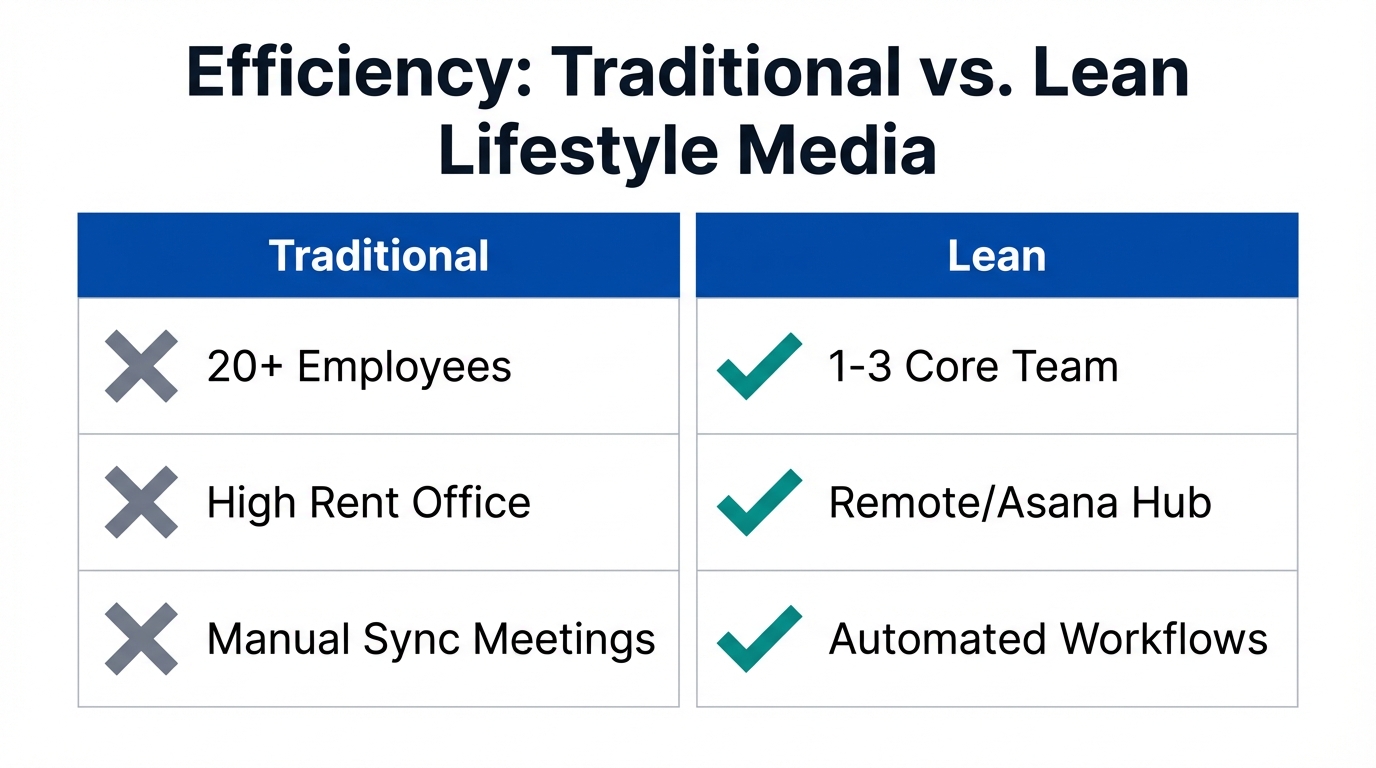
Most entrepreneurs are obsessed with the idea of "scaling up" in the traditional sense: more employees, bigger offices, and higher overhead. However, Matt's approach focuses on entrepreneurship tips that prioritize freedom and simplicity. By running a "family business" consisting of himself, his wife, and his brother, he avoids the management debt that plagues larger agencies. This lean model ensures that every dollar earned contributes directly to the bottom line rather than being swallowed by administrative costs.
| Feature | Traditional Agency Model | Lifestyle Media Model |
|---|---|---|
| Headcount | 10-50+ Employees | 1-3 Core Members |
| Primary Goal | Maximum Revenue & Exit | Freedom & Lifestyle |
| Overhead | High (Rent, Benefits, Software) | Low (SaaS & Contractors) |
| Decision Speed | Slow (Meetings/Approvals) | Instant (AI-Assisted) |
This model is built on the realization that content operations are the heartbeat of the business. Matt's success proves that if you own the audience through SEO and YouTube, you don't need a sales team to hit seven figures. You just need a centralized hub for collaborative content that never stops moving.
"I don't think about money as the outcome because there's a million things I could have done to make way more money than I'm making now, but it would have been a nightmare to manage."
Organizing Everything in Asana: From Trash to Credit Cards
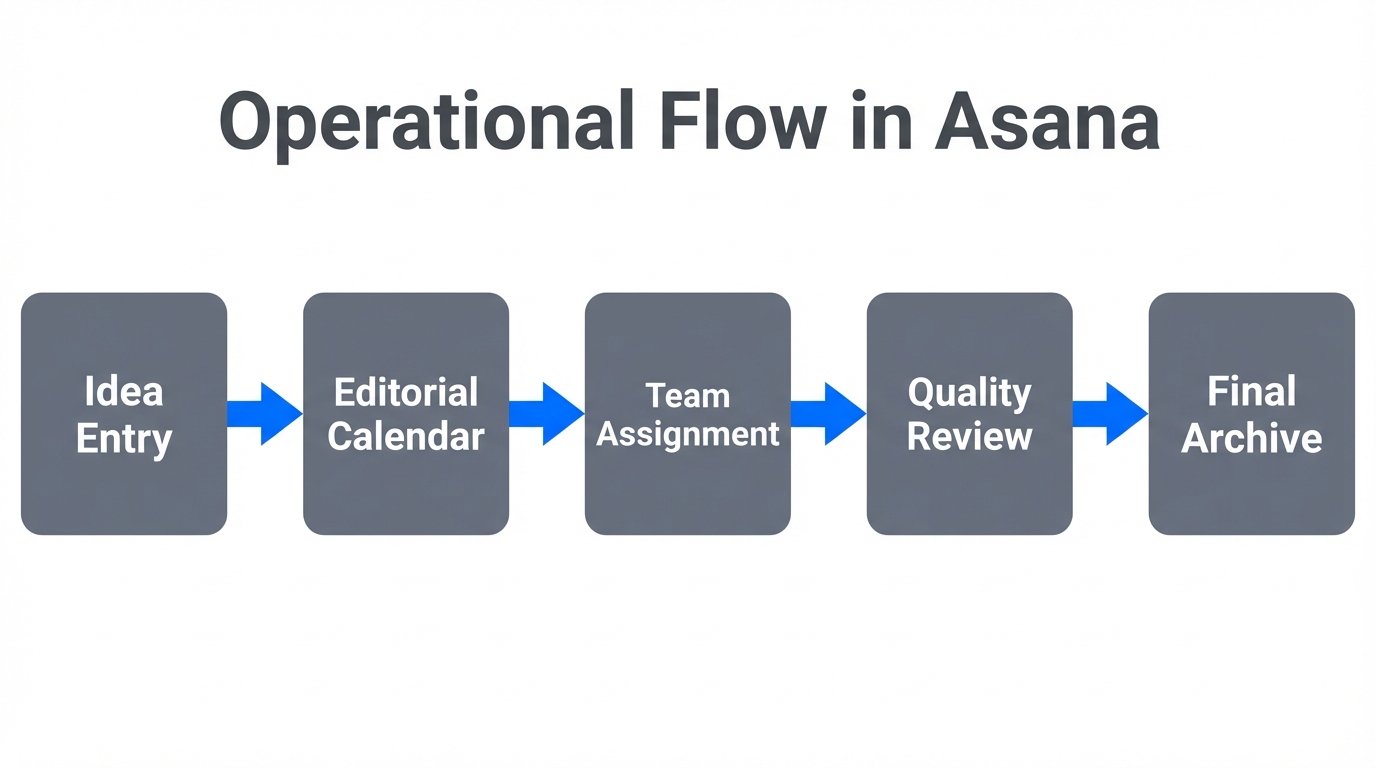
To maintain a lean team, you must have an "operational brain" that tracks every recurring task. In Matt's business, that brain is Asana. He doesn't just use it for high-level project management; he uses it for every aspect of life and business. This includes everything from tracking pool chemistry scripts to personal chores like taking out the trash and paying credit cards.
By putting every recurring task into a system, you eliminate the mental load of "remembering what to do." This is a critical entrepreneurship tip: the more you automate your memory, the more creative energy you have for the core content engine. In Asana, tasks are categorized by their function, and the team knows exactly what is expected of them without a single internal meeting. This level of clarity is what allows a three-person team to manage a YouTube channel with 225,000 subscribers and an email list of 100,000 people.
- Content Pipeline: Every video moves through stages: Scripting, Filming, Editing, Publishing.
- Administrative Tasks: Monthly accounting, tax prep, and software renewals are all automated.
- Household Integration: Merging business and personal tasks ensures that the "lifestyle" part of a lifestyle business actually works.
Google Drive as a Centralized Hub for Collaborative Production
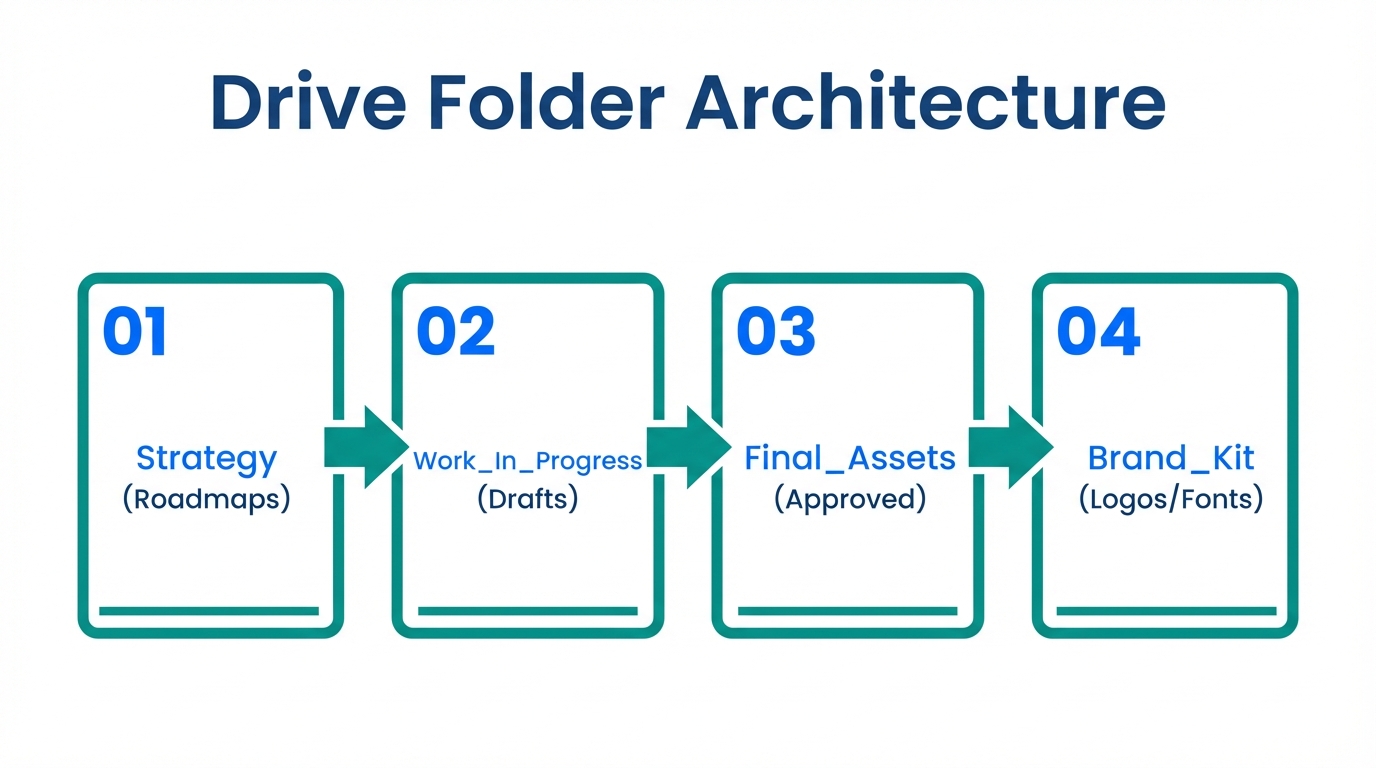
While Asana manages the when, Google Drive manages the what. For a media company, files are the ultimate asset. Matt uses a structured folder system to ensure that scripts, video raw files, and blog drafts are accessible to everyone at all times. This prevents the "where is that file?" friction that kills productivity in small teams.
The workflow is simple: His wife Steph writes the long-form scripts in Google Docs, Matt records them, and his brother edits the clips. By using Google Drive as a live, collaborative environment, they can work asynchronously. This is essential for scaling a business without a physical office. They also rely on modern SEO plugins like Rank Math to ensure their written content, often derived directly from these scripts, ranks on the first page of Google.
"Every time I make content—whether that's a blog post or a video or a short form or an email—the business moves. When I don't, that's when it suffers."
Focusing on the Core Content Engine
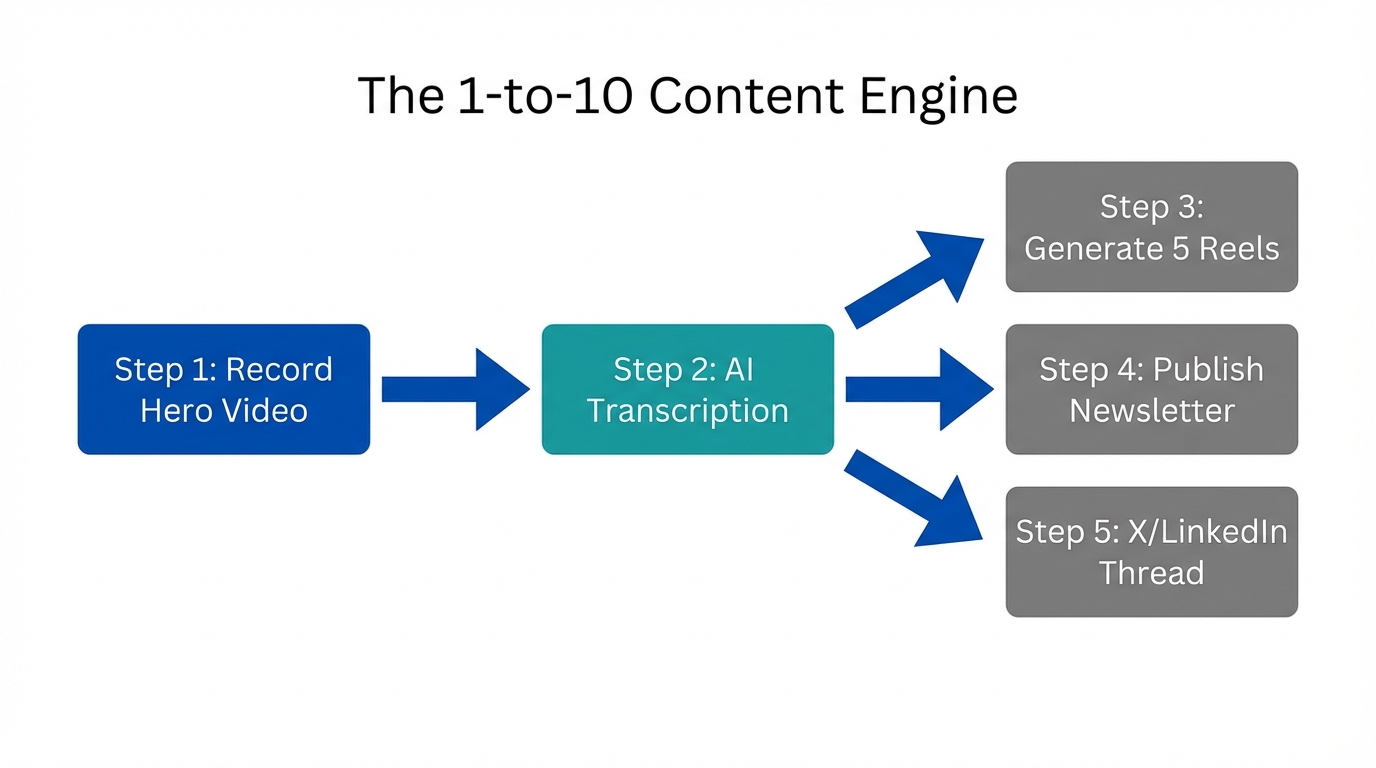
The biggest threat to entrepreneurship is "Shiny Object Syndrome." Matt admits to trying to build social networks for dogs and other side projects, but he realized that the real money comes from doubling down on the core engine. For Swim University, that engine is a simple, repeatable cycle:
- Create one long-form video per week (typically a PowerPoint-style educational guide).
- Repurpose that video into three short-form clips for TikTok, Instagram, and YouTube Shorts.
- Convert the script into a search-optimized blog post using WordPress.
- Broadcast the new content to a 100,000-subscriber email list via Klaviyo.
This "content-first" approach drives their monetization, which includes Amazon affiliate links managed by Lasso and high-ticket video courses. By staying focused on this cycle, they hit $1 million in annual revenue without needing a massive marketing department. For brands looking to replicate this at scale, platforms like Stormy AI can help source and manage UGC creators to keep the content engine fueled without the founder having to be on camera 24/7.
Using AI as a Virtual Business Partner
Even with a small team, making high-level strategic decisions can be lonely. Matt treats ChatGPT as a virtual business partner, using it to talk through ideas, analyze data, and refine his marketing strategies. AI allows a small team to perform the deep analysis that previously required an entire department of analysts.
As AI continues to evolve, scaling a business becomes less about hiring people and more about finding the right AI-powered tools. For example, while Matt manages his own creator relationships, modern platforms like Stormy AI allow businesses to automate the discovery and outreach process for influencers, making it possible to run massive campaigns with the same lean headcount Matt uses for his family business. Whether it's using ChatGPT for brainstorming or an AI agent for influencer discovery, the goal is the same: Operational Excellence.
Conclusion: The Path to a Seven-Figure Lifestyle
Scaling a media business doesn't require a 50-person office in a major city. It requires a clear niche, a repeatable content engine, and rigid organization. By putting every task into Asana and every asset into Google Drive, Matt created a business that supports his life rather than consuming it. The key is the content engine—keep producing, keep refining, and stay focused on the boring stuff that works. Whether you are teaching people how to clean pools or building the next big SaaS, the blueprint is the same: systems over status, and content over everything.