Scaling Influencer ROI: AI Profit Margin Analysis for Shopify Brands with Triple Whale
Learn how to use Triple Whale Moby AI and influencer marketing ROI 2026 strategies to boost your Shopify profit margins and Marketing Efficiency Ratio (MER).
In 2026, the landscape of e-commerce has shifted from a "growth at all costs" mentality to a disciplined focus on sustainable margin protection. For Shopify merchants, the era of vanity metrics is over. It is no longer enough to boast a high ROAS (Return on Ad Spend) if your net margins are being eroded by rising 3PL fees, shipping costs, and inefficient creator spend. To thrive, brands are turning to unified intelligence to gain a granular view of their bottom line. By leveraging tools like Triple Whale Moby AI, forward-thinking brands are finally solving the hardest puzzle in digital marketing: accurate Shopify influencer attribution.
As we navigate this year, influencer marketing ROI 2026 is defined by the Marketing Efficiency Ratio (MER)—a holistic metric that accounts for every dollar spent across the ecosystem. This article explores how AI-driven profit tracking is revolutionizing how brands collaborate with creators, ensuring that every partnership contributes to a healthy 10%+ net margin.
The New Profit Benchmarks of 2026
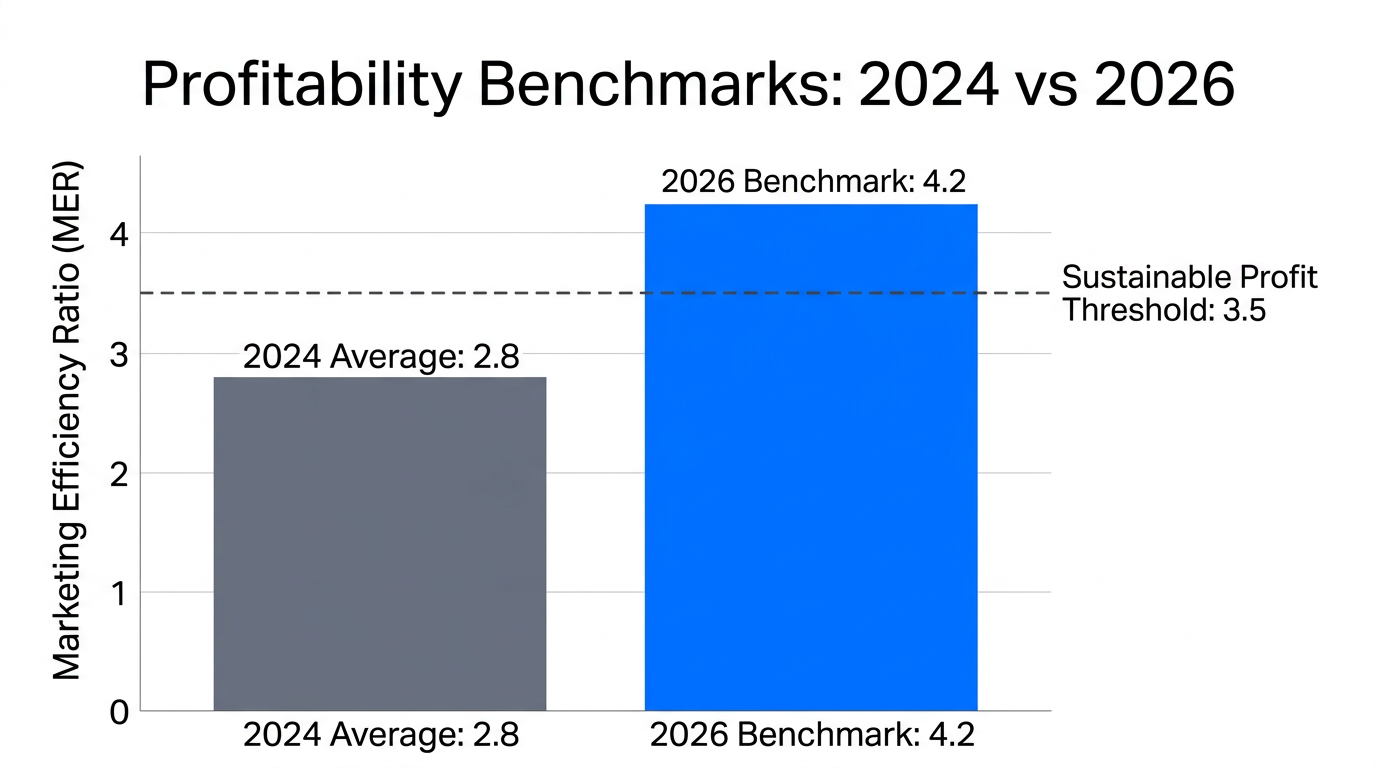
The standard for a "healthy" Shopify store has evolved significantly. According to recent data from anchorgroup.tech, top-performing stores in 2026 are achieving 20%+ net margins by using AI to minimize operational overhead. Meanwhile, any net margin falling below 5% is now considered high-risk, primarily due to the volatility of shipping (8–15% of revenue) and the 15–30% of revenue typically allocated to ad costs.
We are also witnessing the rise of "Agentic Commerce." It is estimated that 45% of consumers now use AI agents to facilitate their buying journey. With the co-launch of the Universal Commerce Protocol (UCP) by Shopify and Google, AI agents can now complete checkouts directly. For brands, this means influencer content must be optimized not just for human eyes, but for AI discovery, which has seen a 15x increase in search-driven orders since early 2025.
"2026 is the 'year of the builders' where AI agents handle the complexity of commerce, allowing merchants to focus on brand and strategy." — Harley Finkelstein, President of Shopify
Moving Beyond Promo Codes: AI-Driven Attribution
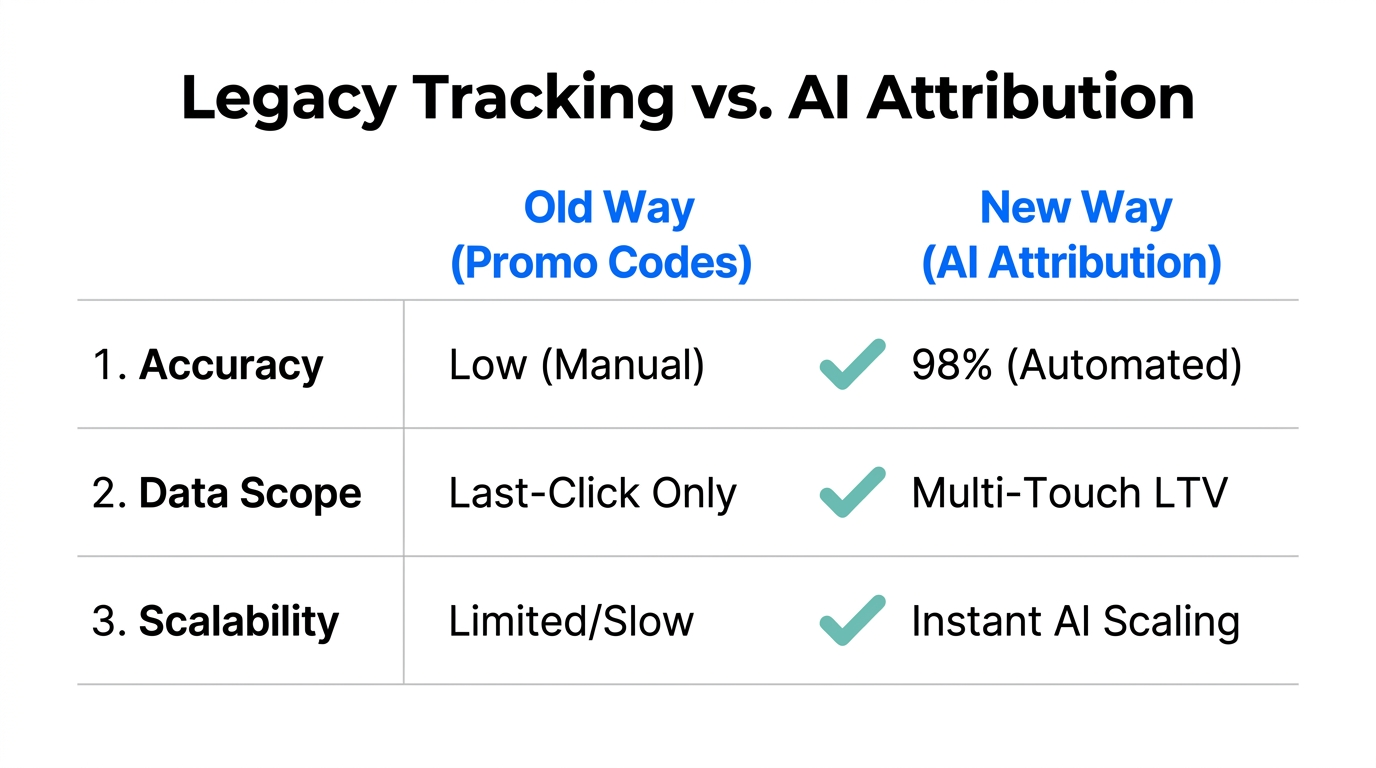
For years, brands relied on brittle promo codes and UTM parameters to track creator success. However, these methods fail to capture the full customer journey. In a world where a user might see a TikTok, search for the product via an AI agent like Perplexity, and then purchase via a LinkedIn recommendation, traditional attribution breaks down.
This is where AI-driven attribution for influencer-led customer acquisition becomes vital. By utilizing Triple Whale Moby AI, brands can move toward POAS (Profit on Ad Spend). Unlike ROAS, which only looks at top-line revenue, POAS connects your Shopify store, Meta Ads, and even accounting software like QuickBooks to calculate the True Contribution Margin. This calculation factors in Stripe fees, returns, and even the cost of product gifting automatically.
To truly understand the difference between legacy tracking and 2026 AI analytics, consider the following comparison:
| Metric | Legacy Tracking (2024) | AI Profit Tracking (2026) |
|---|---|---|
| Primary Focus | ROAS (Revenue) | POAS (Profit) |
| Attribution Method | Last-Click / Promo Codes | Fractional AI Attribution |
| Cost Inclusion | Ad Spend Only | COGS, 3PL, Returns, Gifting |
| Optimization Goal | Scale at any cost | Sustainable MER Growth |
Leveraging Moby AI for Unified Intelligence
One of the biggest hurdles for Shopify merchants is "Tool Sprawl." Paying for a dozen disconnected platforms that don't share data is a margin killer. Experts like Logan Brown, Product Manager at Triple Whale, argue that value in 2026 lies in repeatable rules that AI can apply at scale to protect those margins.
Triple Whale’s Moby AI agents act as digital workers. They don't just display data; they interpret it. Instead of spending hours in spreadsheets, a growth lead can ask Moby, "Which influencers had the highest contribution margin after accounting for return rates in Q1?" and get an instant, actionable answer. This connected intelligence allows human teams to focus on creative strategy while the AI handles the heavy lifting of data synthesis.
Brands like Ekster have mastered this workflow. By deploying Moby AI agents, they reduced reporting time by 65% and improved their Marketing Efficiency Ratio (MER) by 20% year-over-year. This wasn't achieved by spending more, but by spending smarter—identifying which creators drove high-LTV customers versus those who merely drove one-off, discounted sales.
"The value in 2026 is not in expert opinions but in repeatable rules that AI can apply at scale to protect margins." — Logan Brown, Triple Whale
Calculating the True Cost of Influence
A common mistake in AI profit tracking for creators is ignoring the "hidden costs." When you send a $100 product to a creator, the cost isn't just the COGS. You must account for:
- 3PL & Fulfillment: Picking, packing, and shipping the gift.
- Return Buffers: Influencer audiences often have different return profiles than organic or search audiences.
- Platform Fees: Every transaction via Shopify or Stripe takes a percentage.
By using tools like Luca AI or ProfitHelm, these costs are pulled directly into your dashboard. This prevents the "Dashboard Trap" where a merchant thinks they are profitable because Meta says they have a 4.0x ROAS, while their bank account says otherwise. Transitioning to POAS ensures that you only scale creator partnerships that are actually putting money in the bank.
The 2026 Workflow: From Discovery to Profit
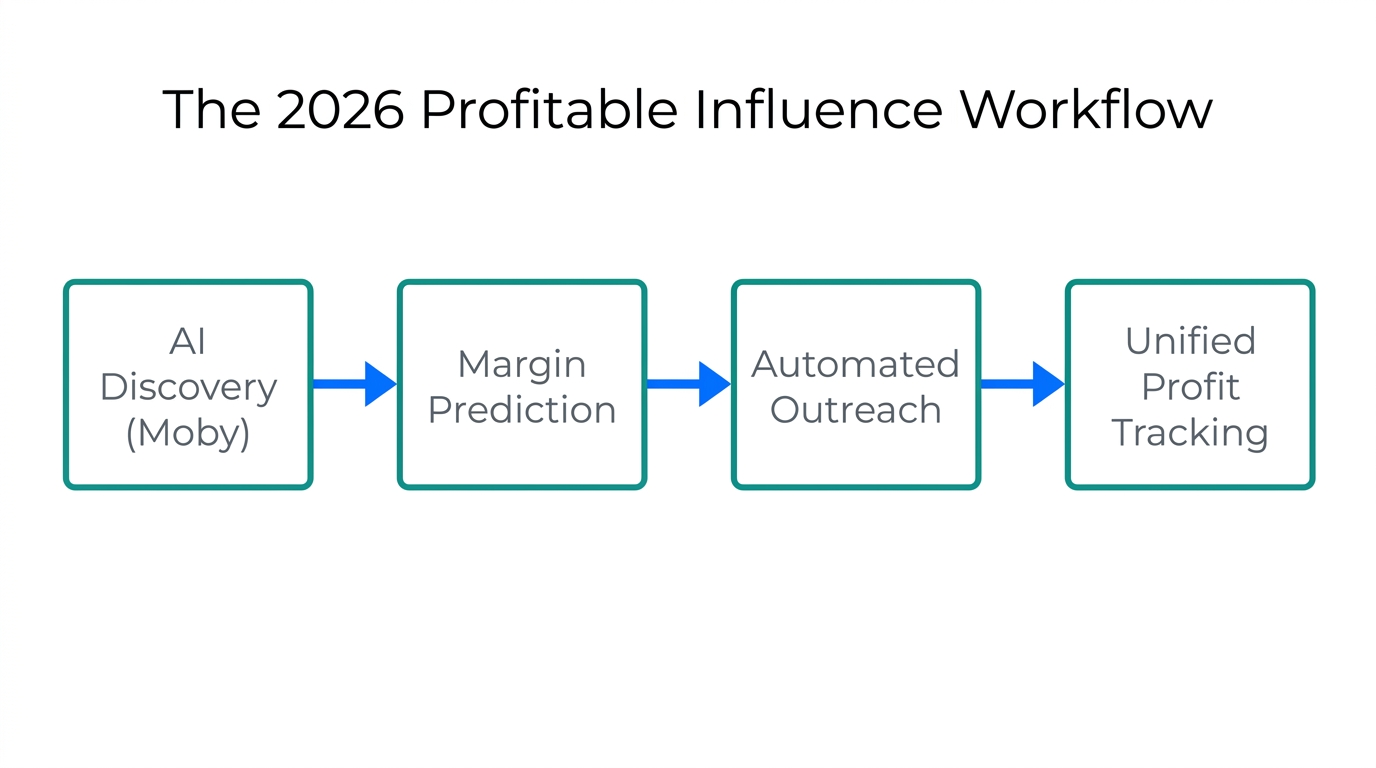
To successfully scale influencer ROI this year, your growth stack needs to be integrated. Here is a step-by-step playbook for a modern Shopify brand:
Step 1: Intelligent Creator Sourcing
Before you can measure profit, you need the right partners. Platforms like Stormy AI allow you to use natural language prompts to find creators who align with your niche across TikTok, YouTube, and Instagram. Instead of manual searching, you can use an AI agent to discover and outreach to creators on a daily schedule, ensuring a consistent pipeline of UGC (user-generated content) for your ad campaigns.
Step 2: Automated Vetting
Use AI to detect fake followers and engagement fraud. Before sending product, ensure the creator's audience demographics match your target Shopify customers. This reduces the waste of gifting products to accounts with low-quality reach.
Step 3: Unified Data Integration
Connect your influencer management tool with Triple Whale. Ensure that every creator has a unique tracking identity that Moby AI can recognize across different touchpoints. This is the foundation of AI profit tracking for creators.
Step 4: Real-Time Optimization with Moby
Set up repeatable rules. For example: "If a creator's contribution margin drops below 15% over a 30-day window, flag for contract renegotiation." This prevents "zombie campaigns" from eating your budget.
"Connected intelligence—where people, data, and digital workers operate together—is the only viable operating model for 2026." — Aruna Ravichandran, CMO, Cisco
Conclusion: The Future of Profitable Influence
In 2026, the brands that win aren't just the ones with the best creative, but the ones with the best data infrastructure. By moving away from siloed metrics and embracing the unified intelligence of Triple Whale Moby AI, you can ensure your influencer marketing budget is an investment, not an expense.
Remember, your Marketing Efficiency Ratio (MER) is the ultimate heartbeat of your business. By tracking every cost—from 3PL fees to creator gifts—and utilizing AI to attribute sales across the entire customer journey, you can protect your margins while scaling your brand to new heights. Start by integrating your discovery process on Stormy AI and measuring the results with Triple Whale to master the science of influencer marketing ROI 2026.