In the fast-paced creator economy of 2026, the brands winning the market share are no longer those with the biggest budgets, but those with the fastest iteration cycles. We have moved beyond the era of manual spreadsheet tracking and 'gut-feeling' content choices. The emergence of Andrej Karpathy’s Auto Research framework has introduced a paradigm shift: autonomous loops that act as a 'super nerd robot intern' working 24/7 to refine your influencer marketing strategy 2026. By treating every creator partnership as a scientific experiment, brands can now scale UGC optimization with algorithmic precision, identifying high-performing niches before the competition even realizes they exist.
The Karpathy Framework Applied to Creators
Understand the fundamentals of Andrej Karpathy's Auto Research framework for creator workflows.
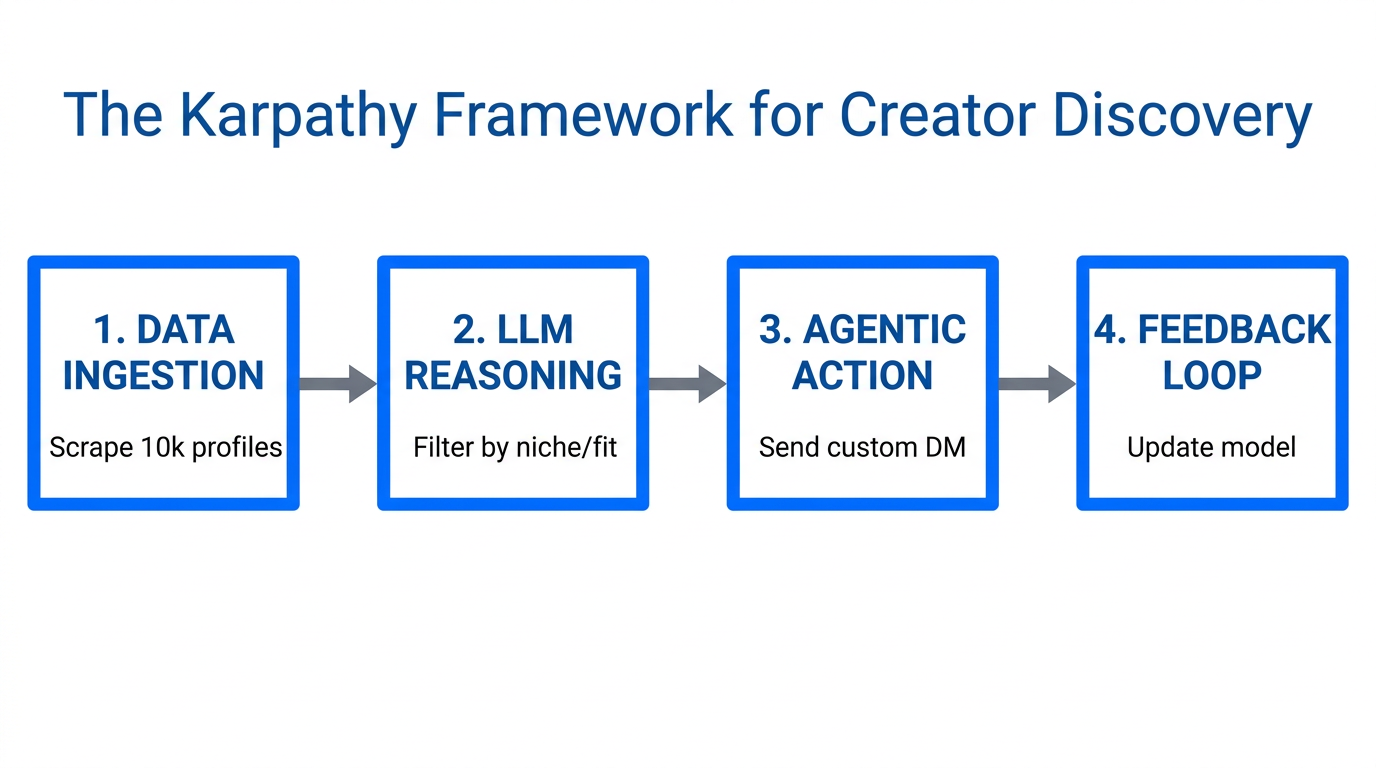
At its core, Auto Research is a loop designed to optimize a specific goal through autonomous experimentation. As Karpathy recently explained in his latest technical updates, the process involves setting a goal, allowing an AI agent to plan and act, reading the resulting metrics, and then refining the plan in a continuous cycle. In the context of the creator economy, this means moving away from one-off campaigns and toward an 'always-on' research engine. Whether you are running TikTok Ads or managing a roster of YouTube creators, this framework ensures your strategy evolves as fast as the algorithms do.
"Auto Research is like having a super nerd robot intern that runs experiments for you all night without you doing the boring stuff—keeping only the winners."Autonomous Niche Discovery: Finding Blue Oceans
How to deploy autonomous niche agents to identify and test profitable market opportunities.One of the most powerful applications of Auto Research for creators is identifying emerging sub-cultures and niches. Traditional social media analytics 2026 often report on what is already popular, which leads to saturated markets and high Customer Acquisition Costs (CAC). By deploying an autonomous niche agent, brands can scan platforms like TikTok and Instagram for micro-trends that haven't yet reached mainstream awareness.
An Auto Research loop can be programmed to find 'top 5 rising creator niches in sustainable tech' and generate a report by morning. This allows marketing teams to secure partnerships with rising stars at a fraction of the cost of established influencers. By the time your competitors see the trend on their dashboards, your creator economy growth strategy has already matured within that niche. This 'research as a service' model is becoming a staple for top-tier agencies who offer 'always fresh' dashboards to their clients.
Automating UGC Hook Optimization and A/B Testing
Leveraging AI for continuous AB testing of marketing hooks and creative asset performance.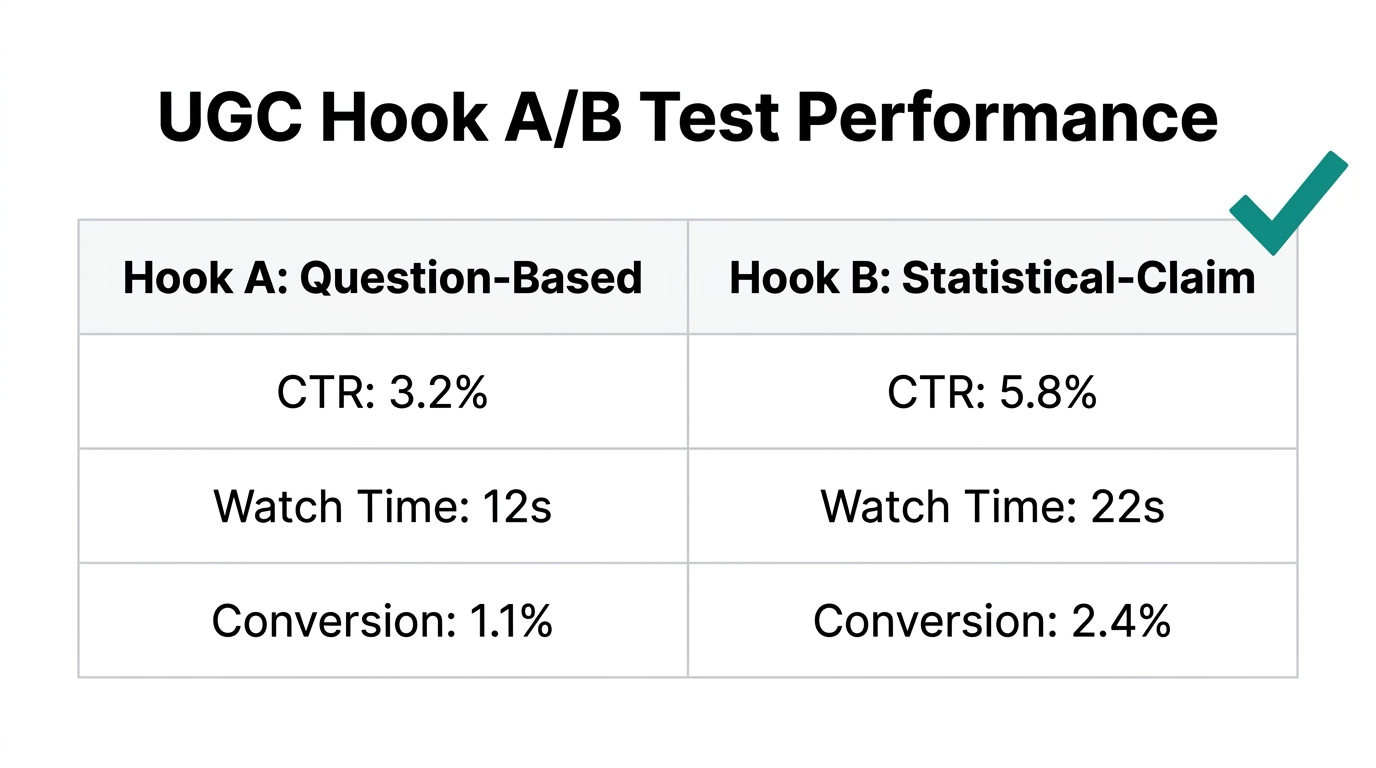
User-Generated Content (UGC) is the lifeblood of modern performance marketing, but identifying which 'hook' actually converts is often a manual slog. Using Karpathy's framework, you can now run 100x more tests than traditional teams. An Auto Research agent can write variants of headlines, analyze hook structures from high-performing videos on Meta Ads Manager, and push those variants to small test audiences to measure conversion.
| Optimization Metric | Manual Workflow (2024) | Auto Research Workflow (2026) |
|---|---|---|
| Hook Testing | 3-5 variants per week | Hundreds of variants overnight |
| Data Analysis | Bi-weekly manual reports | Real-time autonomous refinement |
| Creative Iteration | Static, based on history | Dynamic, based on current trend-drift |
As Shopify CEO Toby Lütke noted, this logic works perfectly for optimizing any software-driven process. By creating a 'markdown foundation' for your UGC requirements and letting an agent 'let it rip,' you can discover content structures that lower CAC significantly. The agent measures which version beats the current 'control' and automatically promotes the winner, asking the AI for even newer ideas to test against the new champion.
Optimizing Influencer Outreach Loops
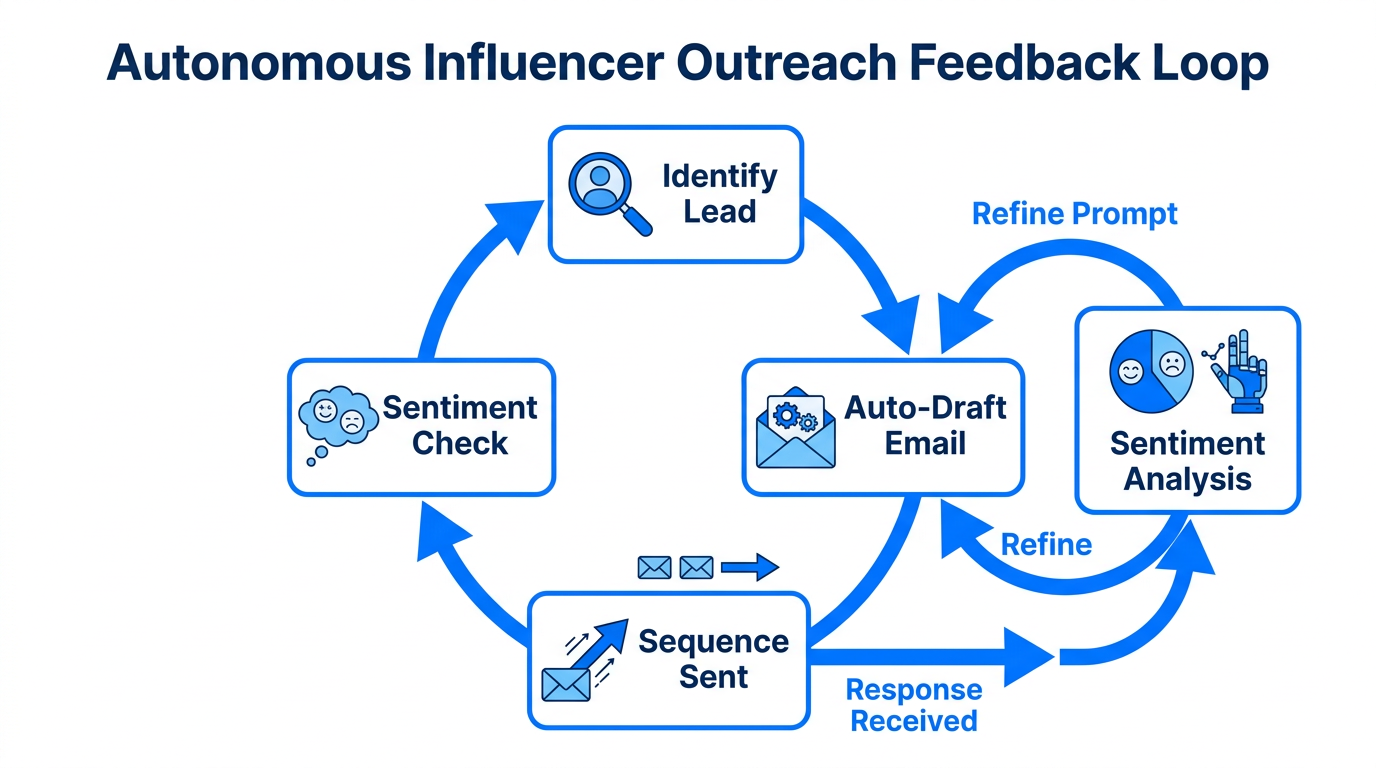
Even the best influencer marketing strategy 2026 fails if the outreach doesn't convert creators into partners. Many brands suffer from 'leaky bucket' syndrome—sending thousands of emails with low response rates. Auto Research can be applied to your CRM, such as Stormy AI, to test rules and messaging sequences autonomously. The agent 'auto-grades' leads based on their likelihood to buy or partner, suggests the best next action, and drafts hyper-personalized follow-ups.
For agencies, this means offering a 'done-for-you' outreach shop where the 'optimize' button handles the heavy lifting. Using platforms like Stormy AI, which integrates AI-powered discovery and personalized outreach, marketers can feed the Auto Research findings directly into their active campaigns. This ensures that the creators you are contacting are not just relevant, but are being reached with the exact message that has been algorithmically proven to convert.
"The pitch for 2026 is simple: We do 100 times more testing than other shops for the same or lower fee, powered by autonomous research loops."Predictive ROI and Competitor Analysis
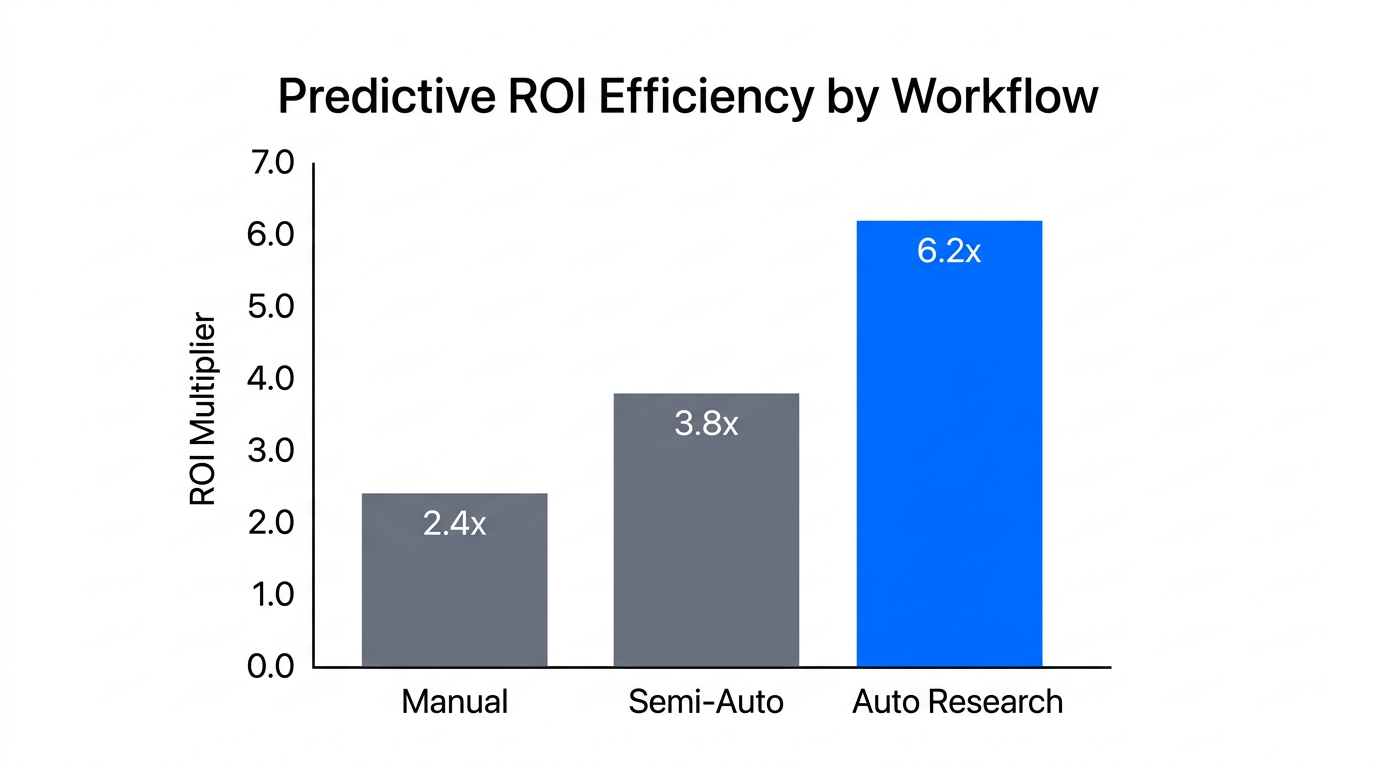
Predicting the Return on Investment (ROI) for a creator campaign has historically been a guessing game. However, by pointing an Auto Research agent at competitor filings, product reviews, and public ad libraries, brands can build predictive models with surprising accuracy. These agents can chew through documents and maintain a 'living memo' for marketing executives, identifying gaps in competitor pricing or creator rosters.
For instance, an agent can be tasked to 'monitor the top 10 competitors in the mobile app space and report on their UGC spending patterns.' By combining this with data from Sensor Tower or AppsFlyer, marketers can see a holistic view of the market's efficiency. This allows for better capital allocation, moving budgets toward creators and platforms that are currently undervalued by the rest of the market.
Setting Up Your Autonomous Marketing Stack
Technical requirements and setup guide for running your own autonomous research stack.Implementing Auto Research requires a shift in technical thinking. While you don't need to be a coding genius, you do need a basic understanding of the 'agent-first' collaboration model. Andrej Karpathy recently highlighted the growth of platforms like GitHub as hubs for agents—a platform where swarms of AI agents can collaborate on codebases and research tasks without the need for manual 'pull requests' or human intervention at every step.
Step 1: Define Your Goal
Clearly state the KPI you want to optimize. For creator marketing, this might be 'Lowering the CPA of our TikTok Shop affiliate program' or 'Increasing the average view duration of our YouTube integrations.'
Step 2: Provide Access
Give your agent access to the necessary data sources. This includes social media APIs, your internal CRM, and research documents. If you are focused on UGC optimization, the agent needs to see the raw video files and their performance metrics.
Step 3: Run the Training Loop
Using a tool like Claude to assist with the setup, you can clone the Auto Research repositories and run training experiments on a cloud GPU. The agent will begin testing different combinations of creator profiles, hook scripts, and posting times.
Step 4: Promote the Winners
Once the loop identifies a configuration that outperforms your current benchmarks, promote it to your main campaign. This is where you move from research to execution, using tools like Stormy AI to scale the discovered strategy across thousands of influencers instantly.
Conclusion: The Future of Creator Marketing
The creator economy growth we are witnessing in 2026 is driven by those who embrace the 'optimization button.' Karpathy’s Auto Research isn't just a tool for AI scientists; it is a blueprint for the modern marketer. By automating the 'boring stuff'—the niche scouting, the hook testing, and the lead grading—human marketers are freed to focus on high-impact creative decisions and relationship building.
As we move deeper into this autonomous era, the competitive advantage will lie in the depth and speed of your experiments. Whether you are a startup founder or a senior agency lead, the goal remains the same: run more tests, find the winners, and scale before the market catches up. If you're ready to start discovery and outreach with the power of AI, explore how platforms like Stormy AI can integrate into your new autonomous workflow today.