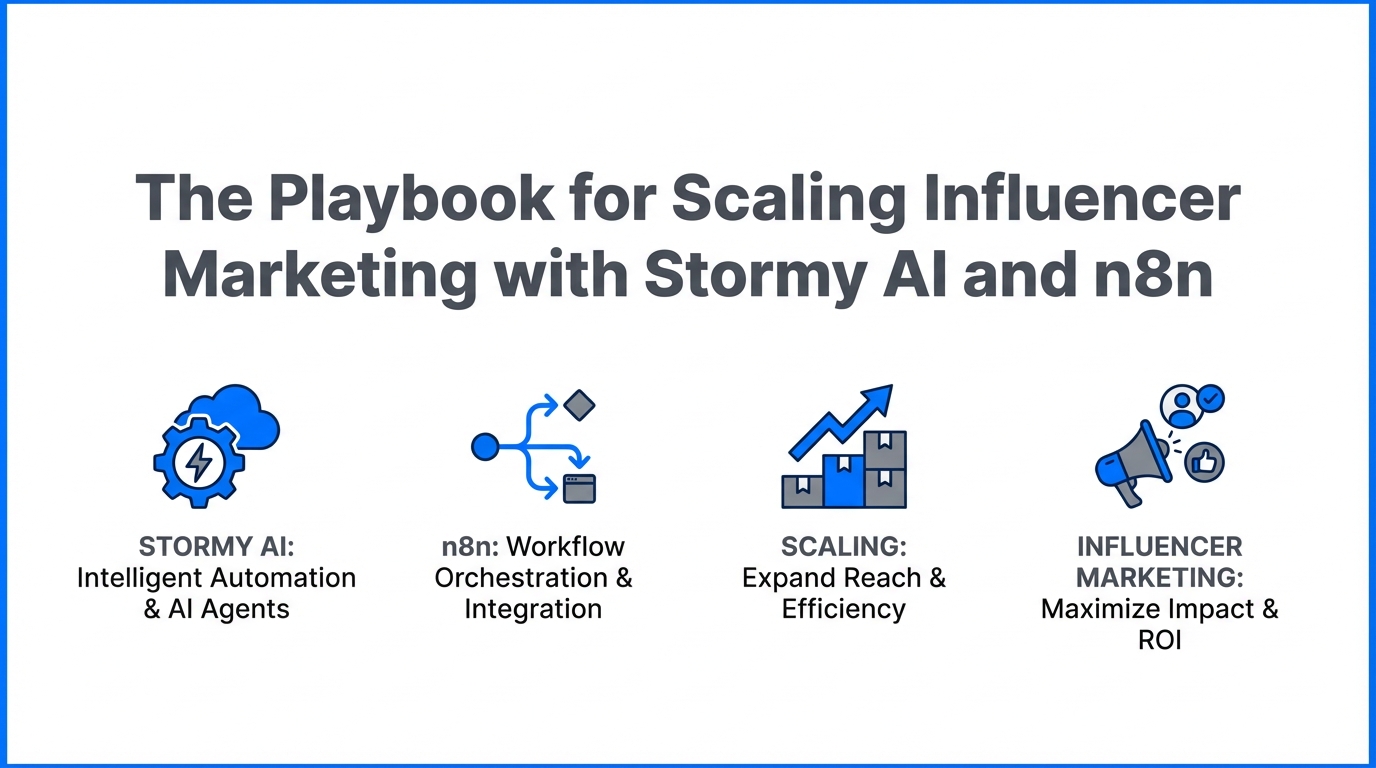
In the rapidly evolving digital landscape, the difference between a high-growth brand and a stagnant one often comes down to the efficiency of their systems. Influencer marketing, once a game of manual spreadsheets and painstaking outreach, has transformed into a high-stakes data science. As we move into 2026, the industry is no longer just about finding 'famous' people; it is about building a scalable, automated engine that can discover, vet, and manage thousands of creators simultaneously. This guide provides the definitive playbook for using Agentic Orchestration to dominate the creator economy.
Why Influencer Marketing Requires 'Agentic Orchestration' in 2026
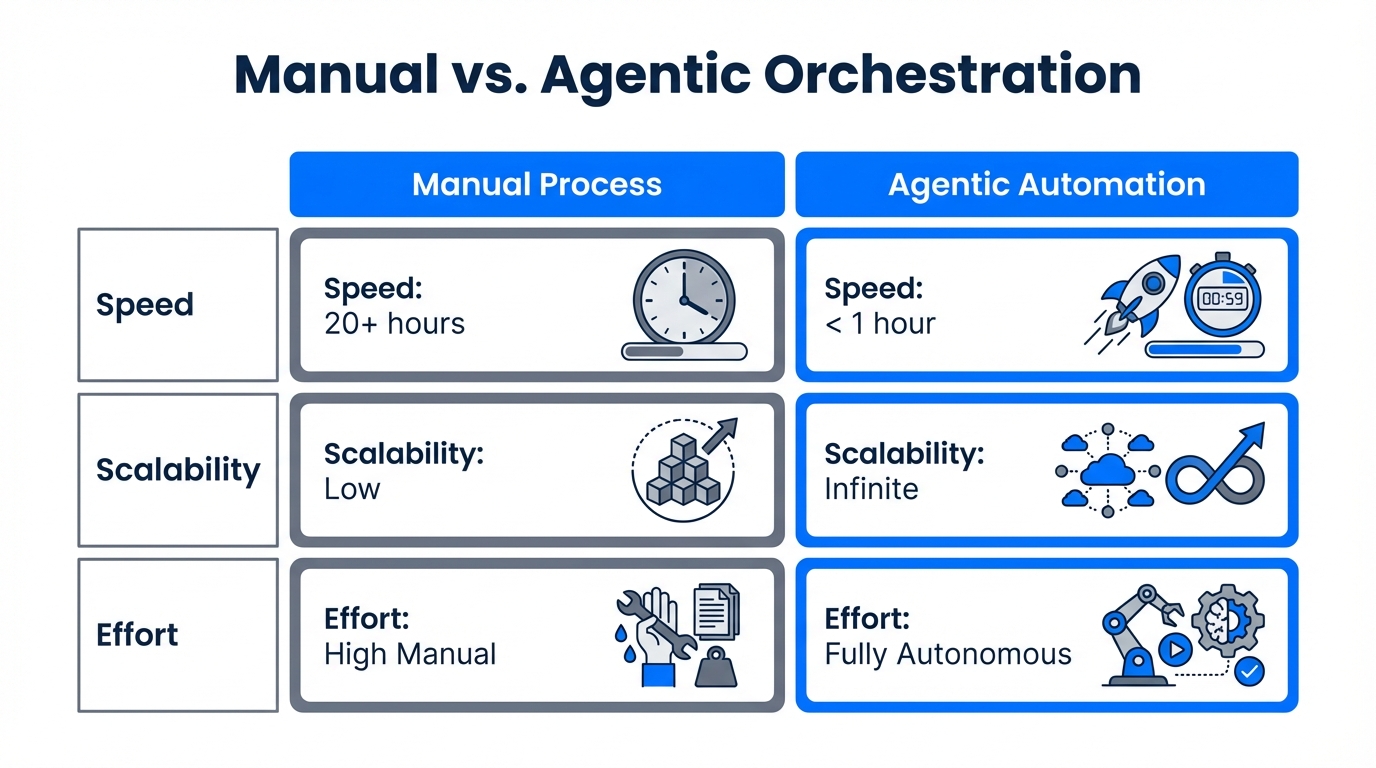
The influencer marketing industry is projected to reach a staggering $32.55 billion by the end of 2025, and this trajectory is only accelerating as we head into 2026, according to the latest industry benchmark reports. With this growth comes a fundamental shift in how brands must operate. We are moving away from simple "Zapier-style" triggers toward "Agentic AI" systems like Claude that can autonomously perceive campaign structures and make executive decisions.
This shift is driven by a focus on the bottom line. Research indicates that 74% of brands are reallocating their budgets into creator programs in 2026, pivoting away from vanity metrics like likes and follows toward harder KPIs such as Customer Acquisition Cost (CAC) and overall ROI, as noted by legacy tracking platforms like Impact.com. To compete in this environment, brands need more than just tools; they need an orchestrated workflow that connects discovery to data enrichment and project management.
"The industry is moving from simple automation to autonomous agents that can 'see' the strategy and execute the grind while you sleep."The Power Stack: Discovery and Orchestration
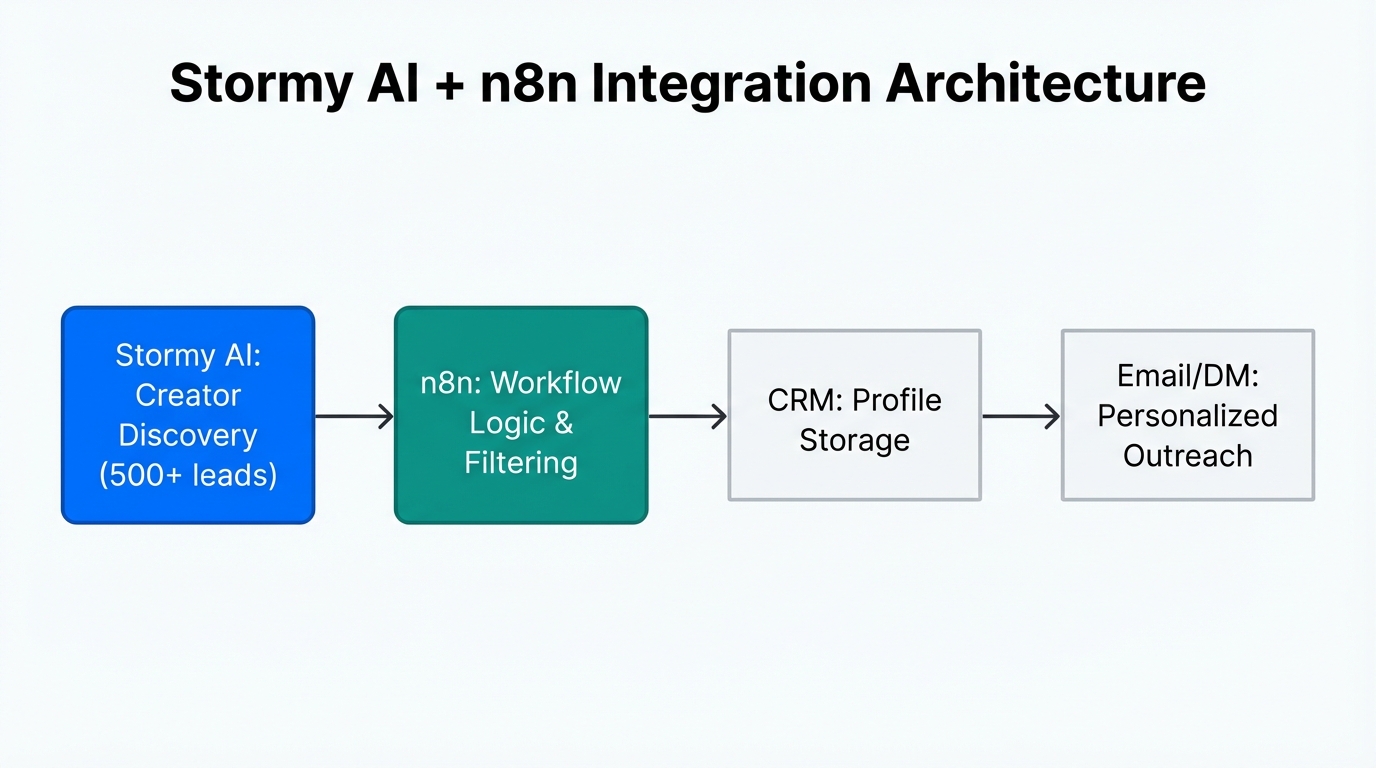
To build an automated influencer marketing engine, you need two primary components: a discovery agent and an orchestration brain. This is where the combination of specialized AI discovery and a low-code workflow tool like n8n becomes a competitive advantage.
While traditional platforms often keep data siloed, an open stack allows you to move information seamlessly. You can pull creator data from a search engine, enrich it with real-time engagement metrics via RapidAPI, and then trigger tasks in your project management software. This connectivity ensures that your creative team is only looking at influencers who have already passed a rigorous, automated vetting process.
| Feature | Manual Workflow | Automated Engine |
|---|---|---|
| Discovery Time | 10-20 hours per week | Instant (Natural Language) |
| Vetting Process | Human profile review | AI Scoring & Metric API |
| Outreach | Copy-paste emails | Hyper-personalized AI Agent |
| Negotiation | Back-and-forth emails | Multi-round Automated Bidding |
Step-by-Step Workflow: Building the Engine
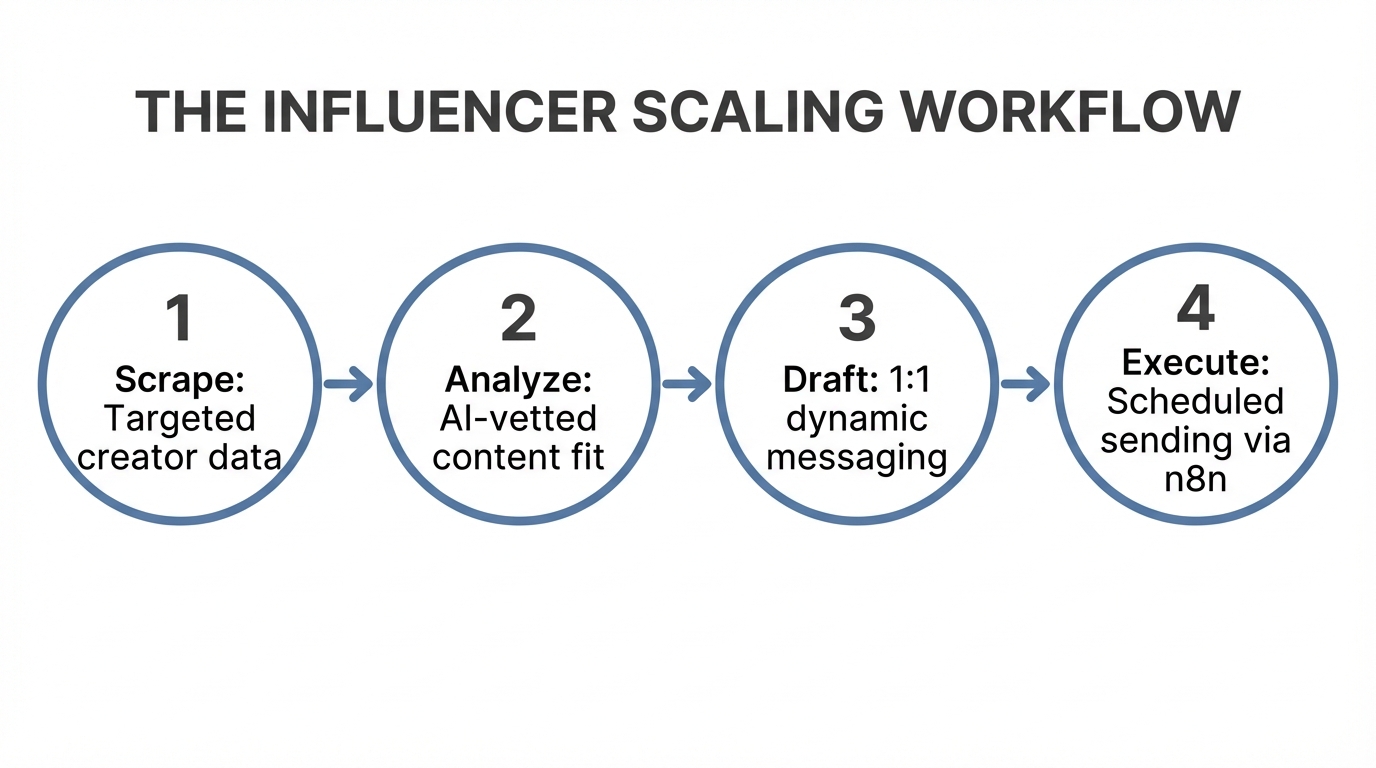
Building an automated creator economy growth strategy involves four distinct stages. By following this sequence, you can transition from a manual 'spray and pray' approach to a precision-guided marketing machine.
Step 1: Automated Discovery with Natural Language
The first step is moving away from rigid filters (like "Location: New York, Followers > 10k") and toward psychographic prompts. Instead of basic demographics, your system should search for context. For example, a growth marketer might use a prompt like: "Find US-based fitness YouTubers who talk about organic supplements and have 50k–150k subscribers."
This level of specificity ensures that the creators being fed into your funnel are already aligned with your brand values. By using modern discovery tools, you can identify niche creators who might be missed by legacy platforms that only index the top 1% of influencers.
Step 2: Connecting the Orchestration Brain (n8n)
Once you have identified your list of creators, you need to move that data into your broader marketing ecosystem. This is where n8n serves as the "orchestration brain." There are three primary ways to handle this technical setup:
- Webhook Triggers: Configure your discovery tool to send a webhook to n8n whenever a "Deal is Signed" or a "New Response" is received.
- HTTP Request Nodes: Use n8n to pull creator data directly from an API using your credentials.
- Spreadsheet Sync: If you prefer a human-in-the-loop approach, export your CRM data to Google Sheets and let n8n monitor the sheet for new rows to initiate downstream tasks.
Using platforms like Stormy AI allows you to bridge the gap between discovery and these automated workflows, ensuring your outreach is handled by AI agents that can even manage multi-round bidding. In fact, automated negotiation agents can reduce influencer fees by up to 43% by using real-time market data to guide the conversation, according to recent research into AI negotiation logic.
"Influencer marketing is still stuck in spreadsheets. You should be able to describe your campaign once and have the AI agent work for you while you sleep." — Robert, Founder of StormyStep 3: Deep Vetting and AI Scoring
Not every influencer who matches your prompt is a good fit. To scale without wasting budget, your n8n workflow should include an enrichment and scoring step. You can use specialized social media endpoints via RapidAPI to fetch real-time engagement rates and audience quality scores.
Next, pass that raw data through an AI agent node using GPT-4o via OpenAI. Ask the AI to score the influencer on a scale of 1-10 based on their content style, sentiment, and alignment with your specific brand voice. This automated vetting prevents you from ever reaching out to creators with fake followers or low-quality engagement.
Step 4: Transition to Automated Project Management
Finally, your workflow should push qualified influencers into your project management system. Instead of manual entry, use n8n to automatically create records in Airtable as your "Source of Truth." From there, you can trigger tasks in ClickUp for your creative team to review content drafts once the creator has accepted the deal.
Common Mistakes to Avoid in Automation
While automation is a superpower, it must be wielded correctly. One of the most common errors is Over-Automation Without Review. Sending thousands of AI-generated emails without any human oversight can lead to what is known as "AI Slop," which can significantly damage your brand reputation. To fix this, always include a "Wait for Approval" node in n8n for high-value creator outreach.
Another critical mistake is Ignoring Compliance. You must ensure that your workflows respect GDPR and include necessary "Ad" disclosures in creator contracts as required by the FTC. Leveraging tools like Stormy AI can help source and manage UGC creators at scale while maintaining compliance through built-in email finder tools and standardized contract templates.
"Virtual Influencers and automated mascots will become the new brand standard, drastically lowering costs and increasing control." — Gary VaynerchukLastly, don't fall into the trap of Vanity Metric Obsession. Choosing influencers based purely on follower count is a recipe for a high CAC. Instead, build a "Weighted Scoring" formula within n8n that prioritizes engagement quality (e.g., 60% weight) over reach (40% weight). This ensures you are paying for actual attention, not just empty numbers.
Conclusion: The Future of Creator Marketing
The brands that win in 2026 will be those that treat influencer marketing as a core engineering challenge rather than a side project for the social media team. By combining the natural language discovery of Stormy AI with the orchestration power of n8n, you can build a system that out-works and out-negotiates your competition. The era of the manual spreadsheet is over; the era of the marketing agent has begun. Start by automating your vetting process, then your outreach, and finally your entire deal-flow to unlock true creator economy growth.