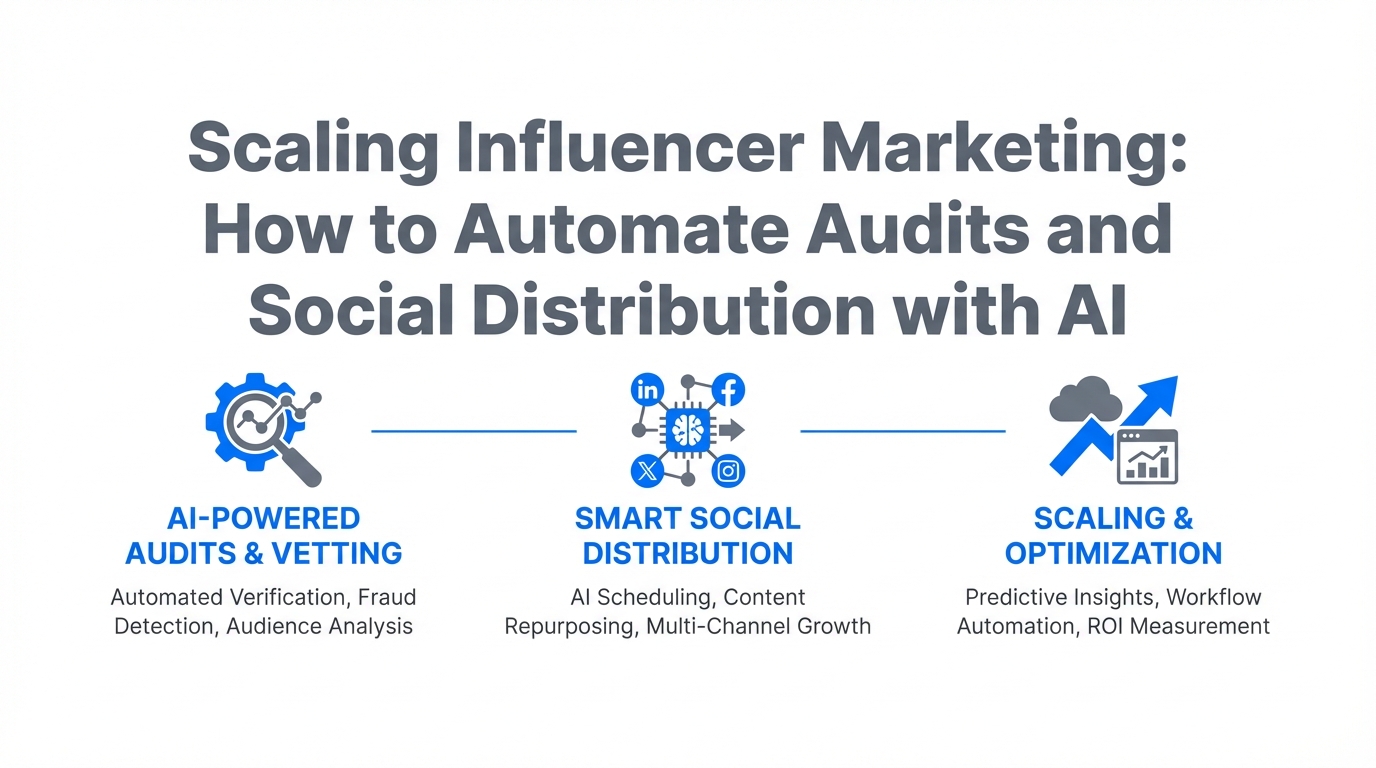
The era of "Chat AI"—where marketers spend hours nudging chatbots to write better subject lines—is rapidly coming to a close. We are entering the age of Action AI, where autonomous agents execute end-to-end workflows without human intervention. According to recent data from Anthropic, a staggering 79% of Claude Code interactions are now categorized as automation rather than mere augmentation. For growth teams, this means the bottleneck is no longer human creativity, but the speed at which we can deploy systems to manage the creator economy. This guide explores how to leverage influencer marketing automation and AI influencer audits to scale your ROI without scaling your headcount.
The Shift to Agentic Marketing: From Copilots to Agents
For years, marketing technology has functioned as a set of tools that humans operate. However, Snowflake's 2026 predictions highlight a pivotal shift toward "Agentic AI," where humans move "hands off the keyboard" for campaign deployment. This isn't just a marginal improvement; it's a fundamental restructuring of how marketing departments function. Industry experts at Gartner suggest that agentic AI marks the "end of channel-based marketing," replacing siloed efforts with autonomous engagement spanning the entire customer journey.
As the creator economy tools evolve, the winners won't be the ones with the largest budgets, but those with the most efficient automated content distribution pipelines. By 2027, Forrester predicts that 50% of marketing teams will employ AI agent orchestration as their core operational model. To stay competitive, brands must move beyond manual spreadsheets and embrace influencer marketing ROI through automation.
Scaling Creative Output: The Anthropic Variation Method
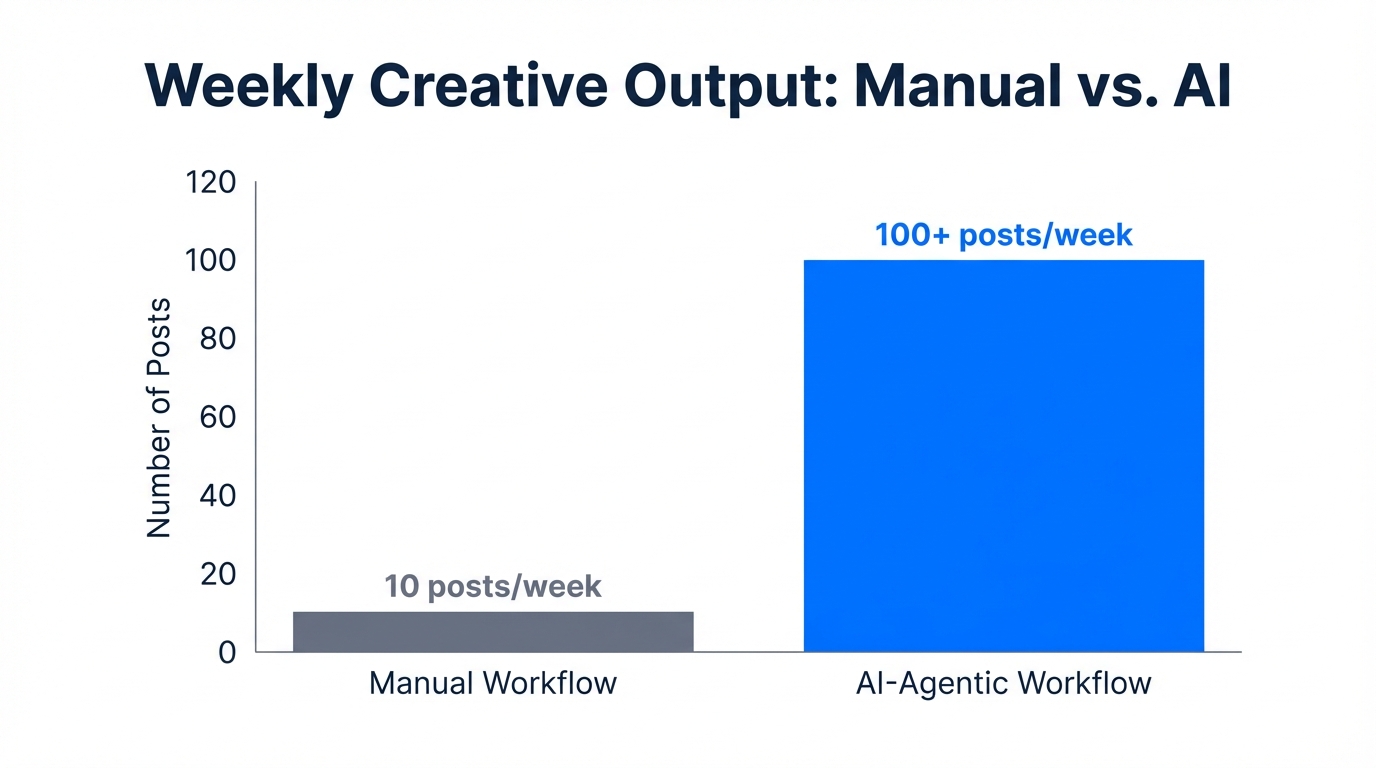
One of the biggest hurdles in influencer marketing is the manual labor required to adapt creator content for paid social. The Anthropic growth team solved this by turning to Claude Code to build internal tools. Austin Lau, a non-technical growth marketer at Anthropic, used AI to cut his ad creative generation time from 30 minutes down to 30 seconds. By developing a custom Figma plugin via VS Code and Claude, the team can now generate hundreds of ad variations with a single click.
"The new edge in marketing is not hustle, but leverage—the ability to turn a single strategy into an autonomous system that runs while you sleep."
This approach allows brands to take a single piece of high-performing User-Generated Content (UGC) and instantly spin off dozens of variations optimized for TikTok Ads Manager or Meta Ads Manager. Instead of waiting days for a design team to resize and re-caption assets, marketers can use AI to handle character count validation and formatting in real-time. This level of automated content distribution ensures that your best creative assets reach every possible audience segment without delay.
Stormy AI Case Study: Slashing Influencer Audit Times
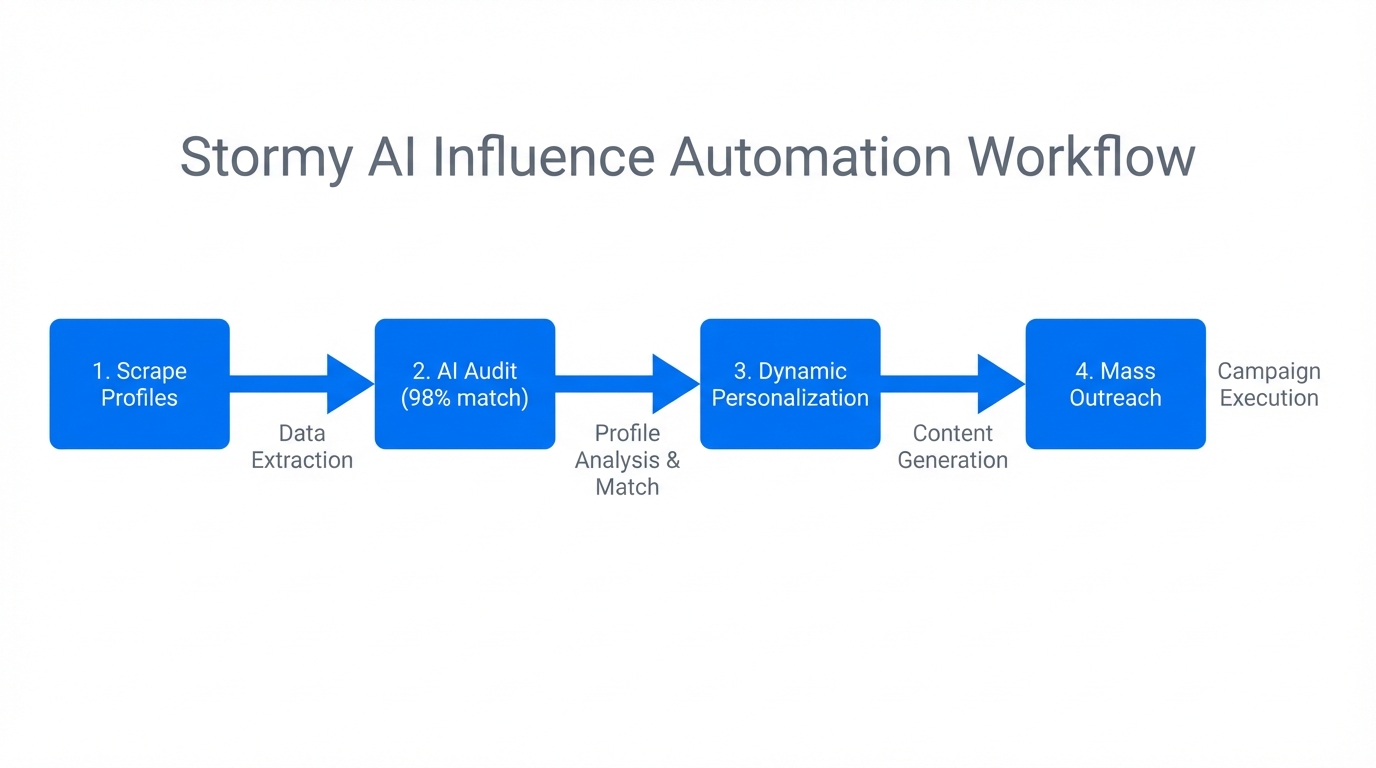
Identifying the right creators is often the most time-consuming part of any campaign. Traditionally, performing AI influencer audits to verify audience quality, engagement rates, and brand fit could take hours per creator. While legacy tools like impact.com or Tagger provided basic databases, they often lack the real-time AI reasoning needed for deep vetting. For agencies managing dozens of clients, manual vetting becomes an insurmountable barrier to growth. However, by using agentic workflows, platforms like Stormy AI have successfully reduced 8-hour manual influencer audits to 2-hour automated workflows.
| Workflow Metric | Manual Process | AI-Automated (Stormy AI) |
|---|---|---|
| Audit Duration | 8 Hours | 2 Hours |
| Audience Vetting | Manual Spot Checks | AI Fraud Detection |
| Contextual Fit | Human Subjective Review | NLP Persona Matching |
| Consistency | Variable | 18% Higher Consistency |
This efficiency gain is driven by "sub-agents" that specialize in different parts of the audit. One agent might scrape the creator's latest 50 videos using Apify MCP to analyze sentiment, while another queries internal datasets to check if the brand has collaborated with the creator previously. By unifying these data points, influencer marketing automation platforms allow teams to vet hundreds of creators in the time it used to take to vet ten. This allows teams to focus on the influencer marketing ROI that actually drives business growth.
Real-Time Discovery with Apify and Zapier MCP
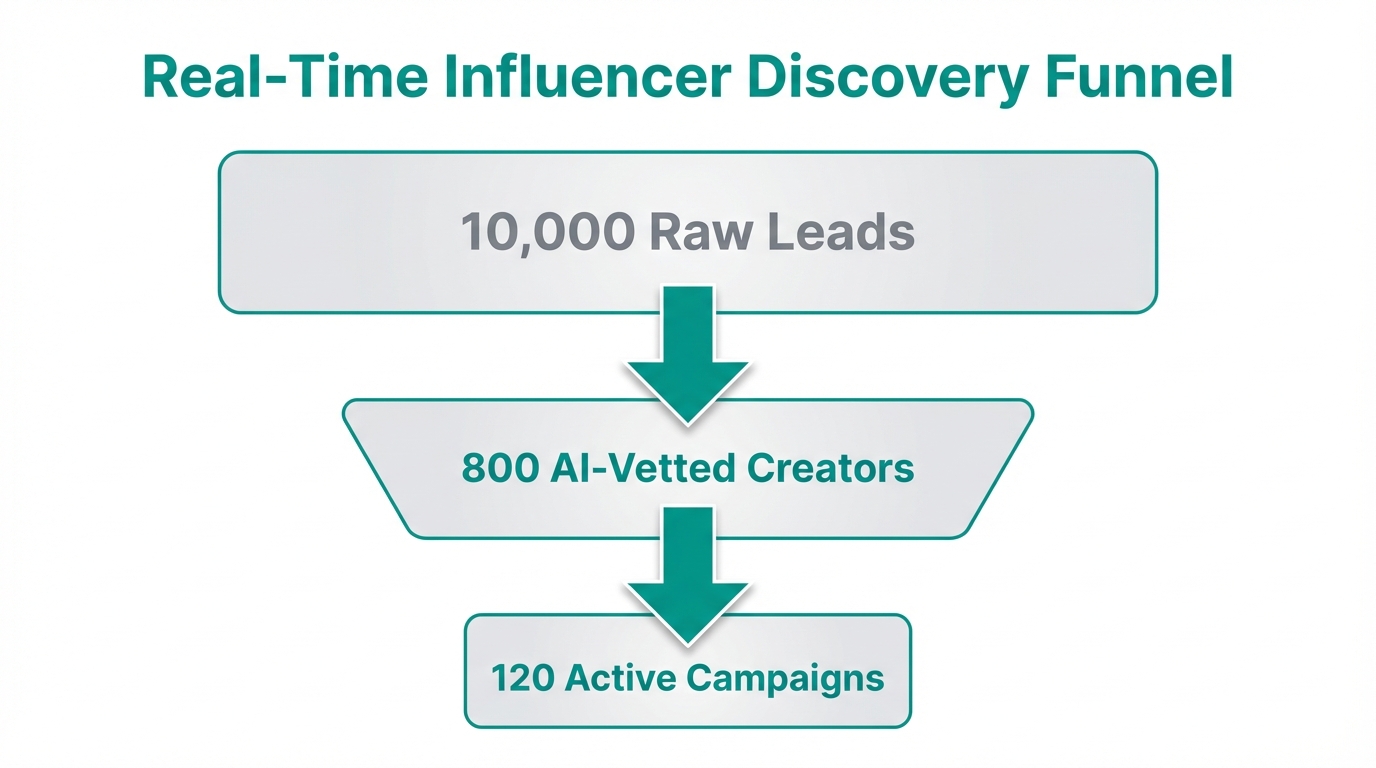
To automate effectively, your AI agents need access to live web data. The Model Context Protocol (MCP) has emerged as the standard for connecting LLMs to external data sources. For competitive research and influencer discovery, using the Apify MCP allows you to run web scrapers directly from your terminal. You can command your agent to "Find the top 20 trending wellness creators on TikTok in Los Angeles and summarize their engagement rates in a CSV."
Once the creators are identified and vetted, the next step is outreach and distribution. This is where Zapier MCP becomes invaluable. Zapier has deployed internal agents to handle complex tasks like lead nurturing and multi-platform social posting. By bridging Claude with 8,000+ apps, you can create a workflow where:
- Step 1: An agent identifies a high-potential creator via Apify.
- Step 2: The agent drafts a personalized outreach email in your Stormy AI outreach suite.
- Step 3: Upon a reply, Zapier triggers a sequence to ship a sample product via Shopify.
- Step 4: Once the post is live, the agent tracks engagement and logs it into PostHog for performance analysis.
The 'Fail Predictably' Philosophy
Geoffrey Huntley, a pioneer in modern automation techniques and open-source contributor, advocates for a philosophy known as "Fail Predictably." In the world of influencer marketing automation, this means treating your marketing funnel like a codebase. Instead of launching one massive campaign and hoping it works, you set up AI influencer audits and loops that iterate until success criteria are met. If a creator's content isn't hitting the desired engagement KPI, the AI system should automatically flag it, analyze the creative gaps, and suggest a new brief for the next iteration.
"It is far better to fail predictably than to succeed unpredictably. Predictable failure allows you to build an automated loop that iterates until success is inevitable."
By treating influencer collaborations as data points in an iterative loop, brands can achieve a more stable and predictable influencer marketing ROI. This engineering-mindset shift is what separates high-growth startups from legacy brands. You aren't just buying a post; you are refining an algorithm for brand growth.
Implementation: Establishing Your Marketing Source of Truth
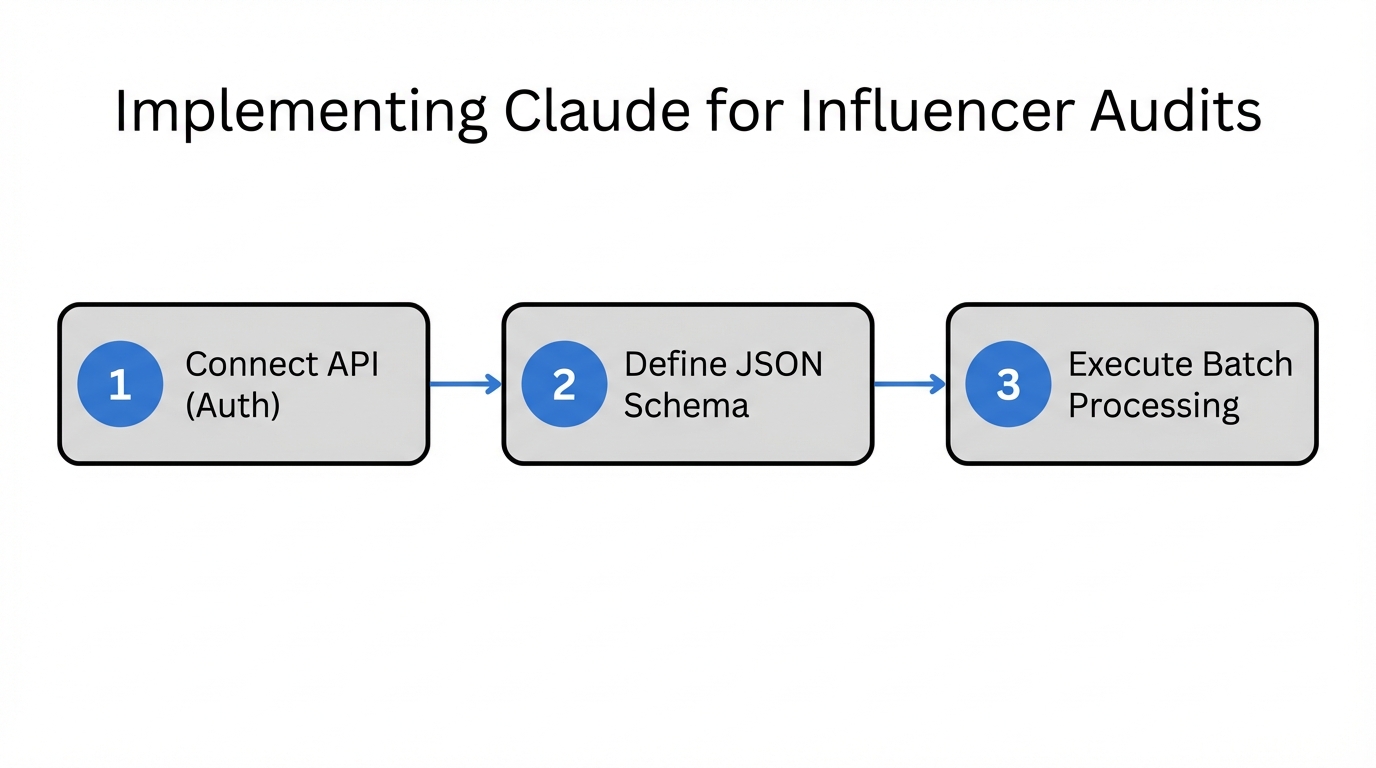
To start your automation journey, you need to provide your AI with a persistent context. We recommend creating a CLAUDE.md file in your marketing project folder. This serves as the "Source of Truth" for your brand. When you use Claude Code, the AI reads this file automatically to understand your parameters without you having to re-prompt every time.
Your CLAUDE.md should include:
- Brand Voice Guidelines: Tone, style, and prohibited language.
- Target Personas: Detailed demographics for your ideal customer.
- SEO Keywords: Core terms like influencer marketing automation and creator economy tools.
- Slash Commands: Custom shortcuts like
/auditto trigger a creator vetting script or/postto draft social captions.
This prevents the "Context Death Spiral"—the common mistake of repeatedly copy-pasting guidelines into new chat tabs. Instead, your influencer marketing automation system remains grounded in your brand's unique identity. You can even connect this to Syncari to ensure your customer data is unified before your agents begin their outreach.
Conclusion: The Future of Creator Ops
Scaling influencer marketing in 2026 and beyond requires a move from manual management to automated content distribution. By implementing AI influencer audits and leveraging the power of MCP-connected agents, brands can achieve levels of output that were previously impossible. Whether it's reducing audit times by 75% like the workflows seen on Stormy AI or generating 100x more ad variations like the Anthropic growth team, the path to growth is paved with automation. Start small: automate one friction-filled task today—like ad copy validation or creator vetting—and build your agentic marketing stack from there.