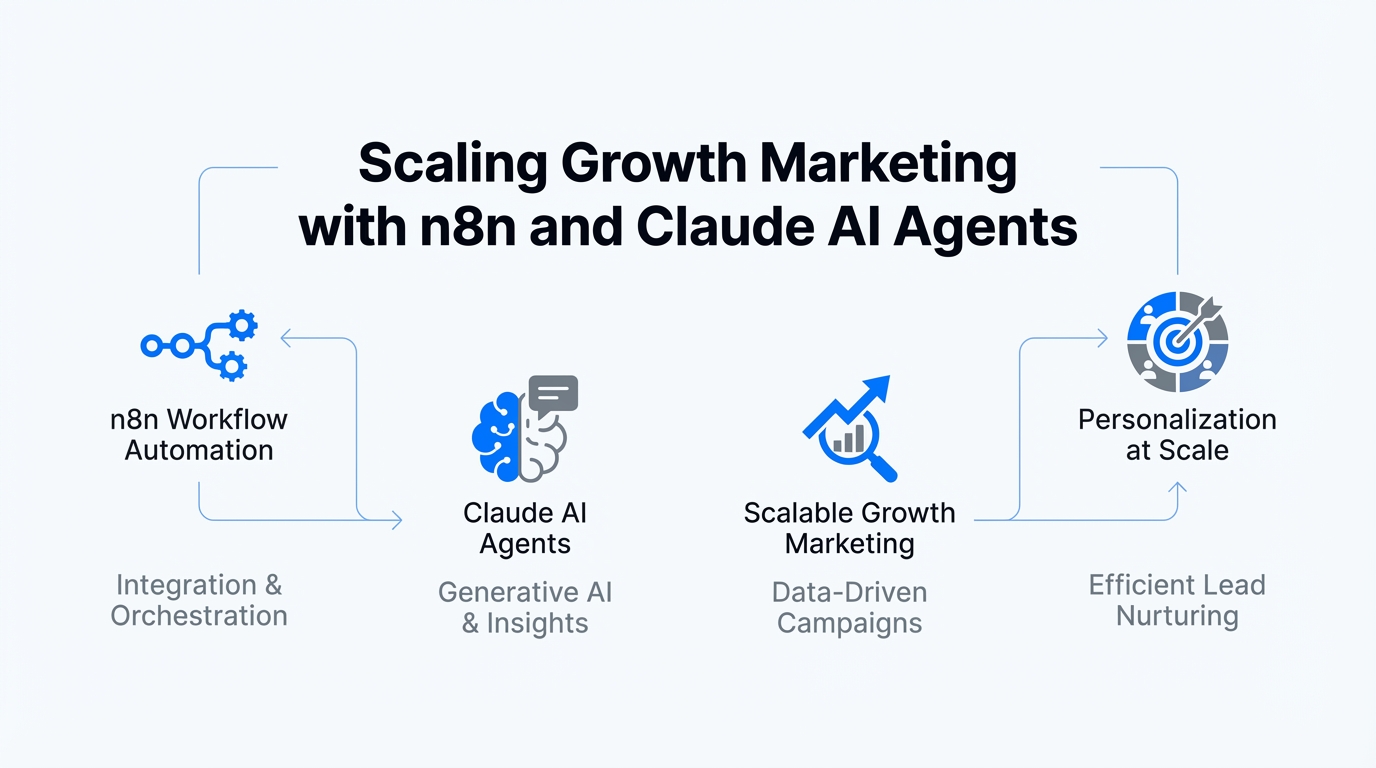
The era of linear automation is coming to an abrupt end. For years, growth marketers have relied on simple "If This, Then That" (IFTTT) workflows to move data between apps. You know the drill: a lead comes in via a Facebook form, and Zapier pushes it to your CRM. It’s functional, but it isn’t intelligent. Today, the frontier has shifted toward autonomous AI agents—models that don't just follow a single path, but use tools in a loop until a complex goal is achieved. By combining the visual orchestration of n8n marketing automation with the reasoning power of Claude AI growth marketing strategies, founders can now build self-correcting systems that handle market research, content distribution, and lead generation while they sleep.
The Agentic Shift: Why n8n Beats Zapier for AI Marketing
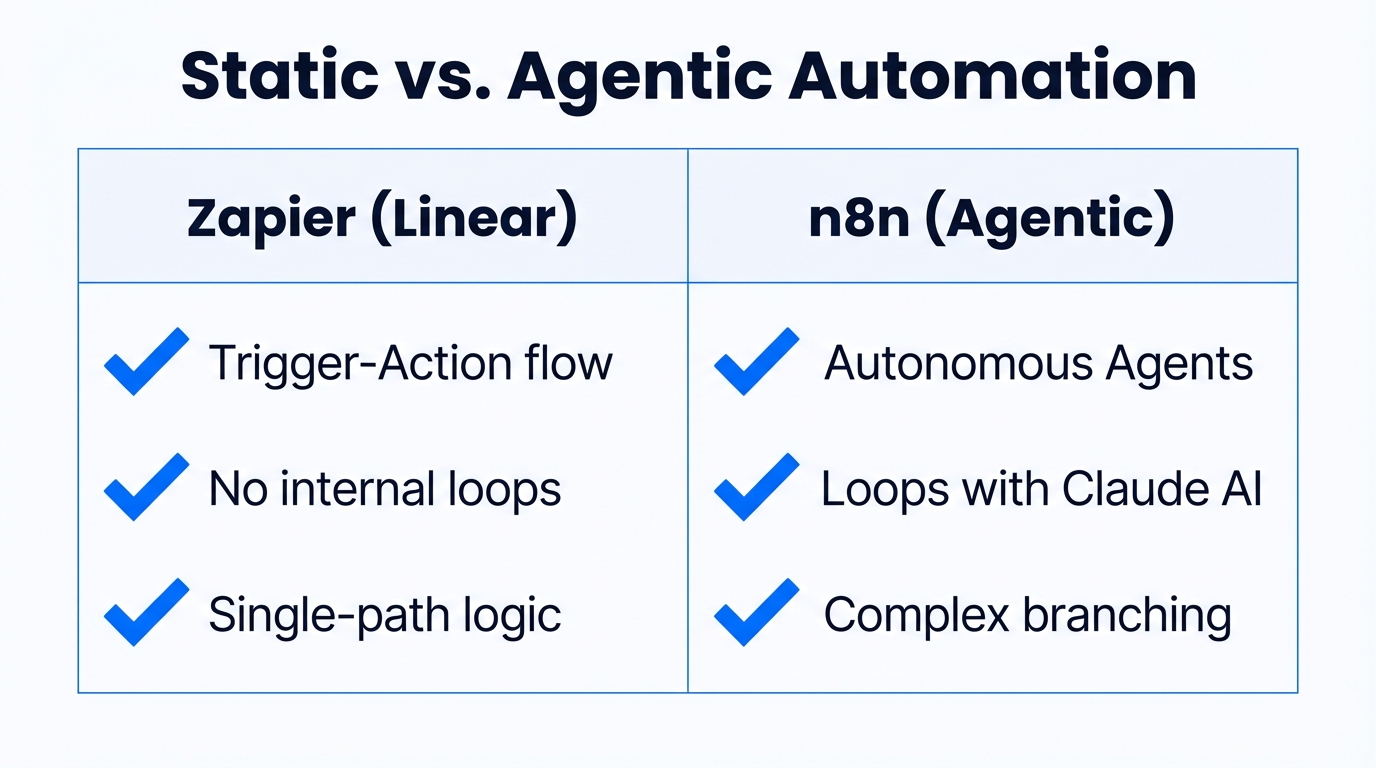
To understand why top-tier growth leads are migrating to n8n, we have to define what an "agent" actually is. As Riley Brown notes, the best definition of an AI agent is simply "models using tools in a loop." Unlike a standard automation that fires once and stops, an agent can spend 30 seconds or 30 minutes on a task, deciding which tools to call and how many times to iterate until the output meets a specific quality threshold.
While Zapier is excellent for simple data transfers, n8n provides a specialized AI Agent node. This node allows non-technical users to build systems where Claude 3.5 Sonnet acts as the brain, choosing between tools like web scrapers, database connectors, and custom APIs. This flexibility is what separates a "boring" automation from a high-leverage growth engine. In n8n, you aren't just mapping fields; you are architecting a digital employee.
| Feature | Standard Automation (Zapier) | AI Agent (n8n + Claude) |
|---|---|---|
| Logic Flow | Linear / Branching | Iterative / Looping |
| Tool Usage | Pre-defined steps | Dynamic tool selection |
| Problem Solving | Fails on unexpected input | Self-corrects and retries |
| Cost Efficiency | Higher per-task (Task-based) | Lower at scale (Self-hosted/Usage) |
"AI agents are models using tools in a loop. They can spend as much time as they want in a step, using tools over and over again until the result is perfect."
Scraping Reddit and Social Media for High-Intent Pain Points
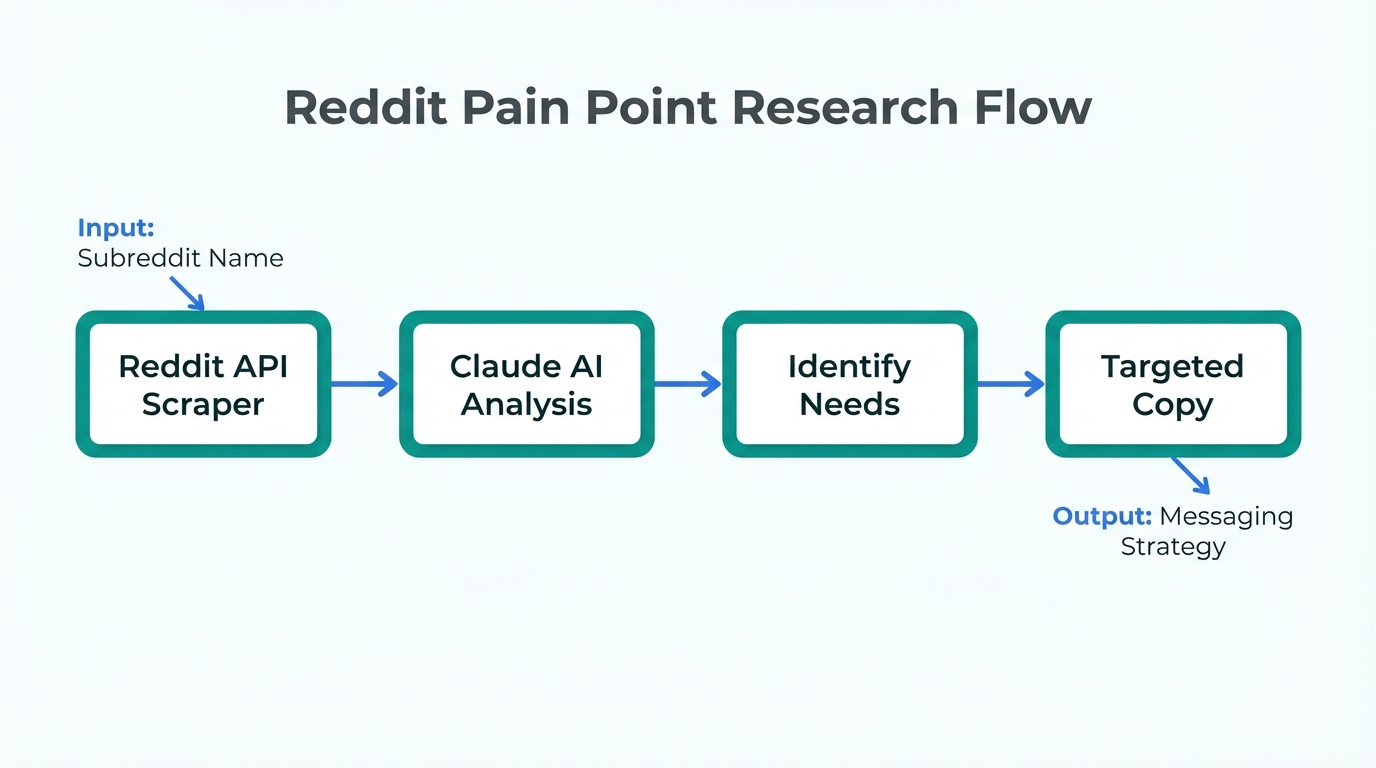
One of the most powerful applications of n8n marketing automation is identifying customer pain points before your competitors do. By using Claude in combination with a tool like Firecrawl—which allows AI to crawl the web without being blocked—you can build an agent that monitors subreddits and social threads for specific keywords.
Instead of just getting a list of links, an AI agent can read every comment in a thread, identify the emotional sentiment, and categorize the specific problem the user is facing. For example, if you are building a tool for Shopify store owners, your agent can scrape r/shopify, find users complaining about high shipping costs, and automatically generate a personalized outreach draft that addresses their specific complaint. This is AI lead generation agents in action: moving from broad scraping to hyper-personalized, context-aware discovery.
Setting Up a 'Trend Search' Agent Using Firecrawl and Claude
Founders often struggle with what to build next. By using Firecrawl and Claude, you can build a Trend Search agent that functions similarly to Idea Browser. This agent scans platforms like Google Trends, X, and Reddit to find emerging spikes in search volume or user complaints.
To set this up in n8n, you create a workflow that triggers every morning. The agent first calls the Firecrawl tool to pull the top 20 trending topics in a niche. Then, it passes those topics to Claude with a system prompt like: "Identify which of these trends represent a massive unmet need with high commercial intent." The result is a curated report delivered to your inbox, saving you hours of manual market research. This process of automated market research allows you to spot opportunities months before the rest of the market catches on.
Guide to the 'Idea Browser' Workflow: Trends to Inbox
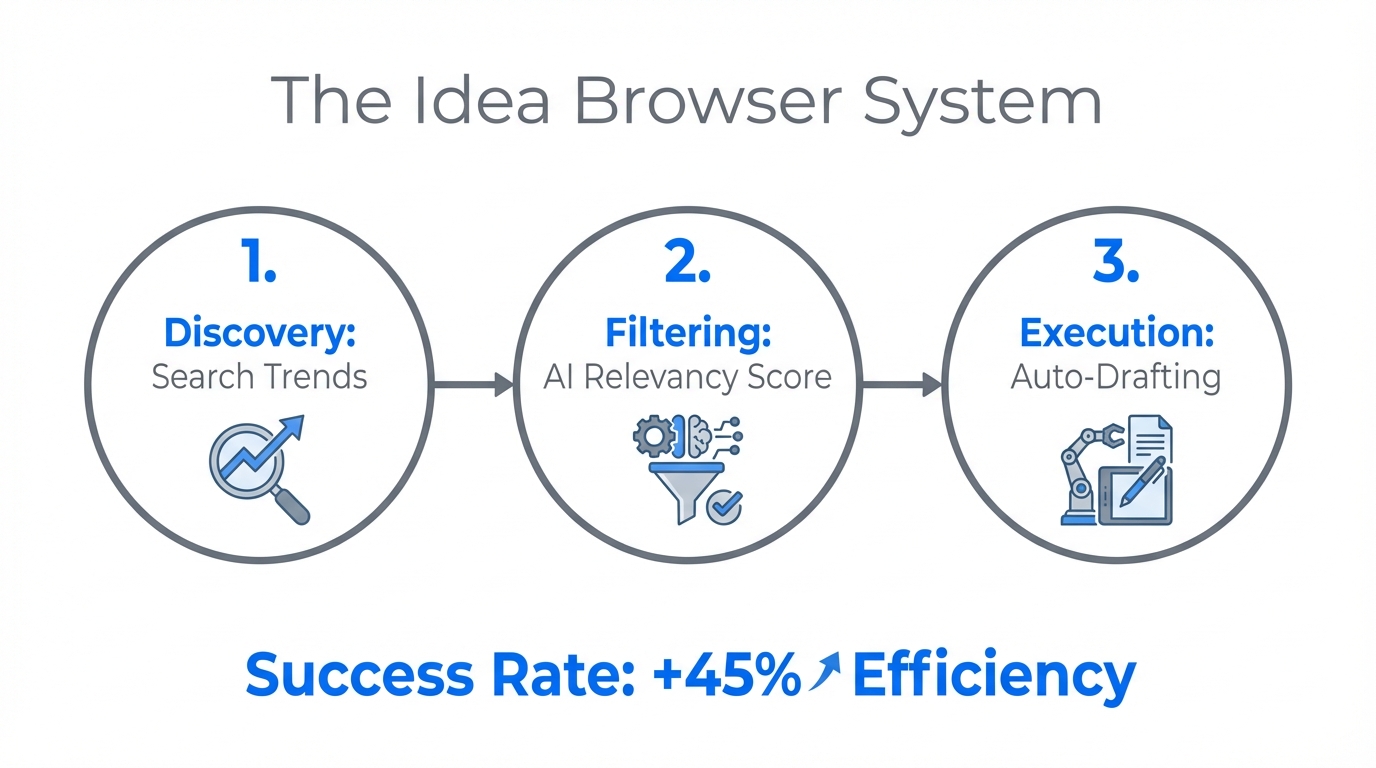
If you want to replicate the success of platforms like Idea Browser, you need a structured workflow that moves from data collection to synthesis. Here is the playbook for building your own Idea Browser using n8n and Claude:
- Step 1: Data Acquisition: Use Firecrawl or the Docker MCP toolkit to scrape high-signal forums. Focus on "I wish there was an app for..." or "Why is [Competitor] so expensive?"
- Step 2: Filtering & Analysis: Feed the raw text into Claude 3.5 Sonnet. Ask the model to score each idea based on feasibility and market demand.
- Step 3: Verification: Have the agent perform a second search (the loop) to see if a dominant solution already exists. If the market is underserved, it passes to the next stage.
- Step 4: Delivery: Use the Notion node in n8n to log the idea into a database and send a notification via Slack or Klaviyo to your email.
Once you have identified a winning trend or a high-potential user group, the next logical step is distribution. For instance, if your agent identifies a surge in demand for UGC (user-generated content) for mobile apps, you can use platforms like Stormy AI to instantly discover and vet the right creators to execute on those trends. Sourcing the right influencers is the final piece of the growth puzzle once the AI has identified the opportunity.
"The era of the 'Idea Guy' is back because AI has collapsed the cost of execution. Your job is now to be the quarterback of these agents."
Docker, MCP, and the Notion Agent Stack
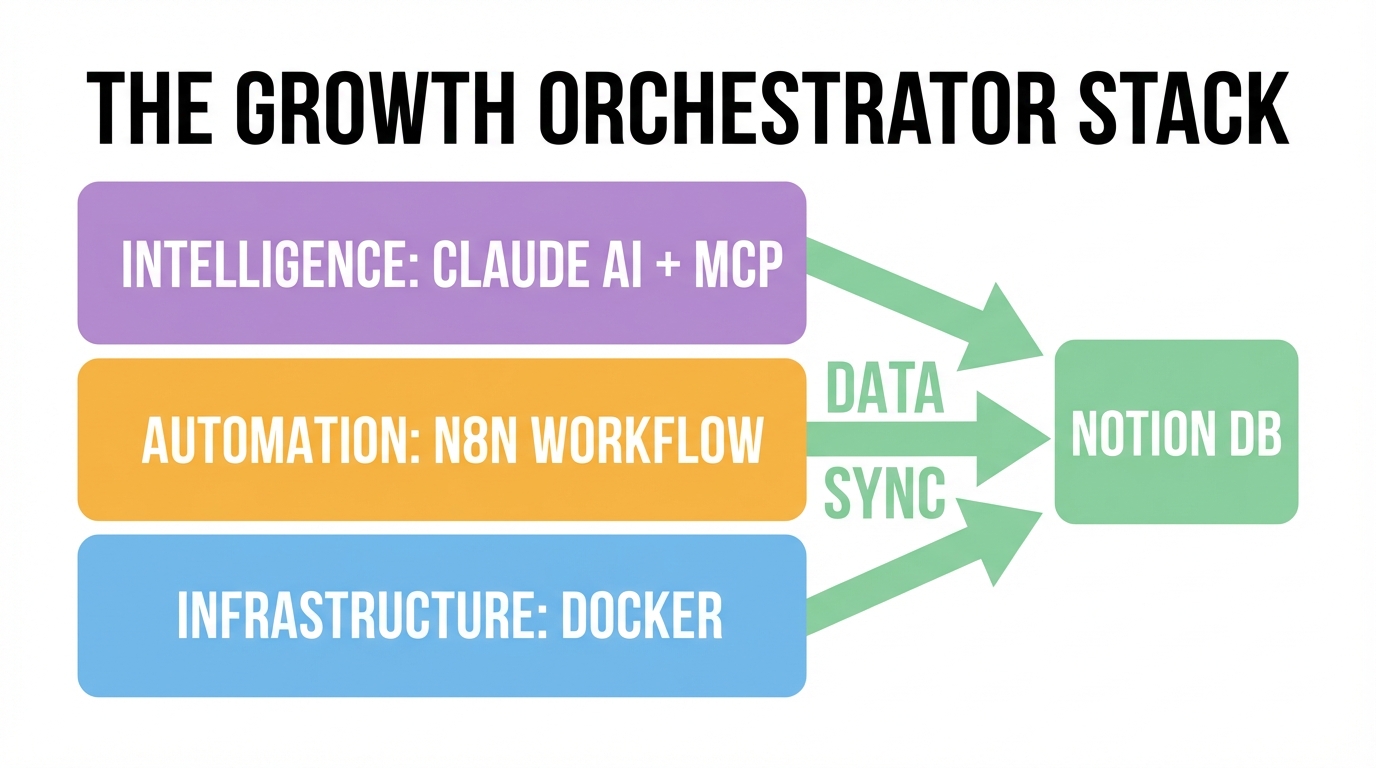
One of the biggest technical hurdles in building AI agents has been giving them access to your actual work environment. This is where the Model Context Protocol (MCP) and Docker come in. By running an MCP server via Docker, you can give Claude direct access to your Notion workspace.
This allows for a revolutionary workflow: you can tell Claude, "Look at my hook database in Notion, find my best performing short-form content styles, and write five new scripts about [New Trend]." Because the agent has access to your SOPs and historical data, the output is hyper-aligned with your brand voice. You are no longer copy-pasting prompts; you are giving an agent full access to your marketing brain stored in Notion.
Why 'Orchestration' is the Essential New GTM Skill
As AI becomes more commoditized, the value moves from the person who can write a prompt to the person who can orchestrate a system. Growth leads at top startups are no longer just running ads; they are building "little AI employees" using tools like Glyph and n8n. These workflows handle the heavy lifting—from summarizing YouTube trends to generating photorealistic thumbnails via AI.
For example, you can create a workflow where Claude researches a topic, sends the findings to Glyph to generate a custom image, and then schedules the post on Buffer. Managing this tech stack requires a mix of marketing intuition and systems thinking. This is why platforms like Stormy AI streamline creator sourcing and outreach, allowing these automated systems to connect with real humans (creators) at scale, bridging the gap between AI research and human-led distribution.
Conclusion: The Power of Janky Beginnings
Setting up n8n marketing automation with Docker and MCP can feel "janky" at first. You might deal with connection timeouts or API key errors. However, as Riley Brown points out, the most leverage in technology comes from mastering tools when they are in their early, unpolished stages. By the time these agents are perfectly seamless and integrated into every platform, the competitive advantage for growth marketers will have vanished.
Start small: build one agent that scrapes a single subreddit and sends the summary to your Slack. Once you see the power of Claude AI growth marketing in a loop, you’ll never go back to linear Zapier tasks again. The future belongs to the orchestrators who can build, manage, and scale these agentic systems to outpace the competition.