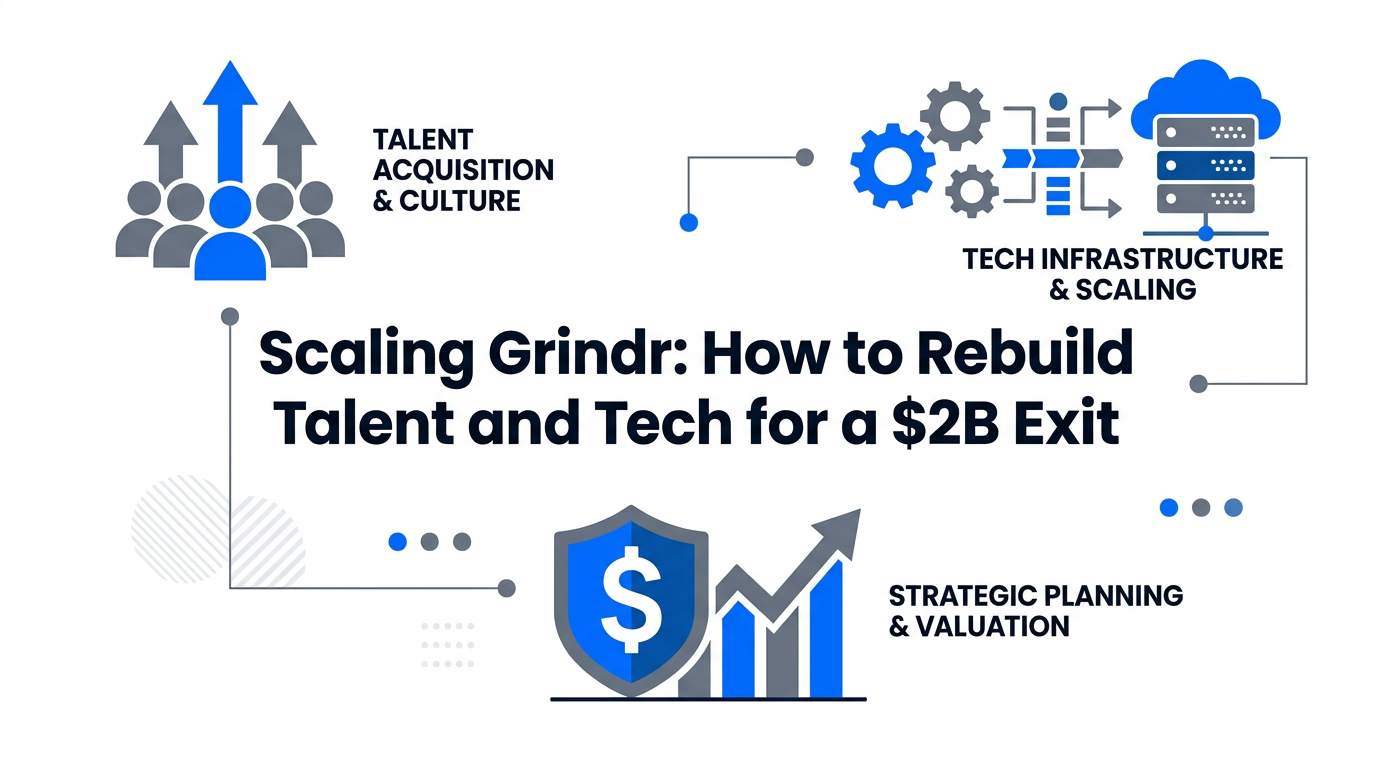
When Rick Bratton and Jeff Mangelsdorf acquired Grindr in 2020, they didn't find a polished diamond. They found an iconic brand buried under a 1.8-star app store rating, a decaying tech stack, and a culture of fear. Despite these hurdles, the platform was generating $100 million in revenue and $45 million in profit. To the outside world, it was a PR nightmare entangled in geopolitical forced sales; to seasoned operators, it was the ultimate arbitrage opportunity. In just two and a half years, they transformed the business into a $2 billion public entity on the New York Stock Exchange. This is the playbook for scaling tech companies by aggressively resetting talent, fixing technical debt, and building a mission-driven culture.
The Valuation Gap: Finding Opportunity in "Hairy" Problems
The acquisition of Grindr was born from a unique glitch in the system. Forced by the Committee on Foreign Investment in the United States (CFIUS) to sell due to national security concerns regarding its previous Chinese ownership, the company was essentially radioactive to traditional buyers. Many institutional investors were deterred by the platform's association with the LGBTQ+ community or its looming legal battles over data privacy. This "latent homophobia," as the founders described it, created a 50% discount on the purchase price.
While competitors stayed away, the new leadership team saw a dominant market player with users in over 190 countries. They recognized that the 1.8-star rating (effectively a 0.8 when you consider one star is the minimum) wasn't a death sentence—it was proof of a product so essential to its community that users stayed despite the friction. To bridge this gap, they had to move from a "black box" management style to a professionalized, transparent growth engine. Modern growth teams often use tools like Meta Ads Manager to quantify user sentiment, but for Grindr, the feedback was already screaming from the App Store reviews.
"How are you doing $100M in revenue with a 1.8-star rating? We saw that and just saw opportunity."The Talent Reset: Why Firing 70% of Staff Was Necessary
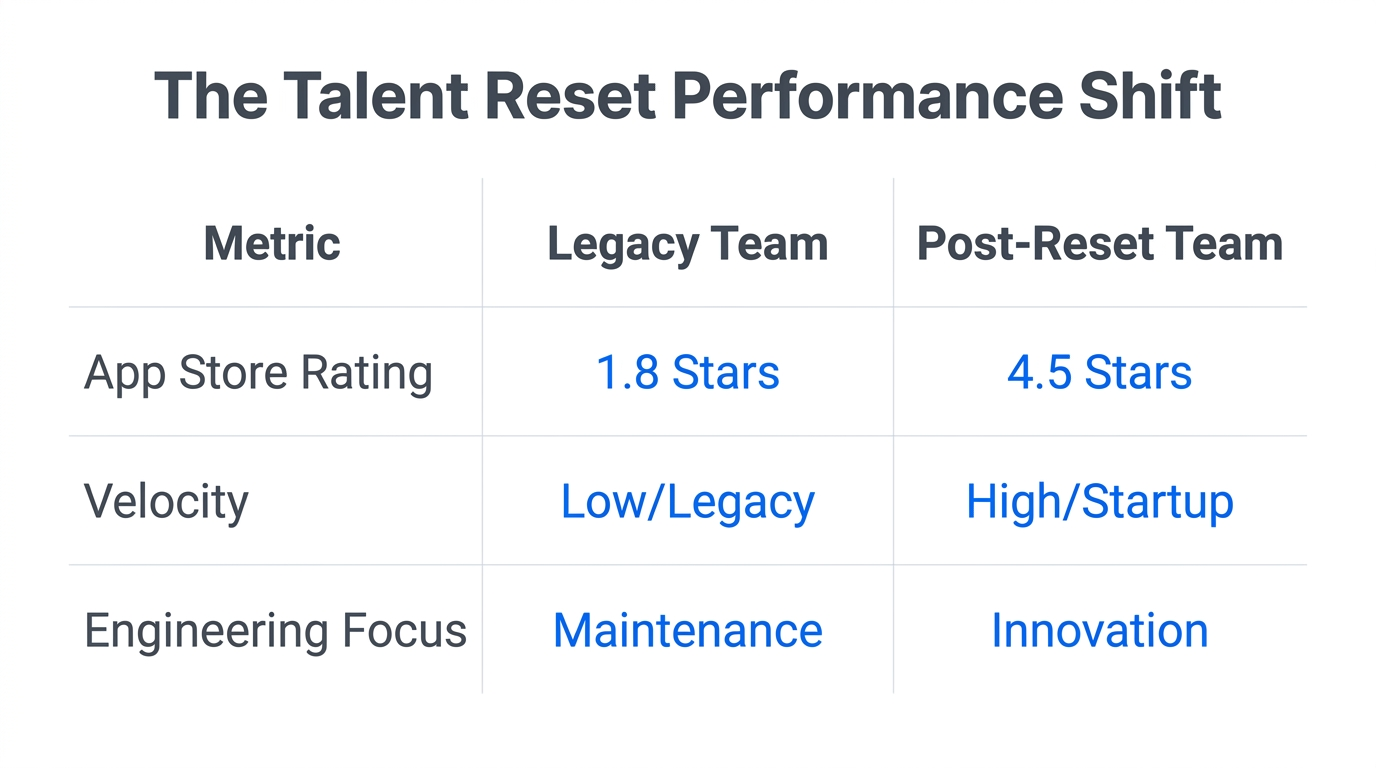
One of the most jarring moves in the Grindr turnaround was the decision to replace 70% of the workforce, primarily the engineering team. The existing staff had managed the app through its early growth, but they lacked the experience required for global high-scale distribution. The culture had become stagnant, ruled by fear and a lack of equity participation.
Moving from Generalists to Scale Experts
Scaling a mobile app from 5 million to 20 million users requires a completely different technical and operational architecture. The founders realized that their existing team didn't know how to handle complex international moderation in 57 languages or the legal nuances of accounting across 193 jurisdictions. They didn't just need "good" engineers; they needed engineers who had "seen the movie" before at places like Google or Yahoo.
- Skillset Alignment: They hired a Head of Global Privacy and Safety who had 18 years of experience at Yahoo, instantly bringing credibility to their conversations with 13 state attorney generals.
- Mission Alignment: They focused on startup talent strategy by recruiting people who were actually part of the community they served.
- Diversity as a Superpower: By the time the founders exited, 70% of new hires were from minority groups, creating a team that understood the product's impact on a visceral level.
Cleaning 'Tech Decay': Stability as a Growth Lever
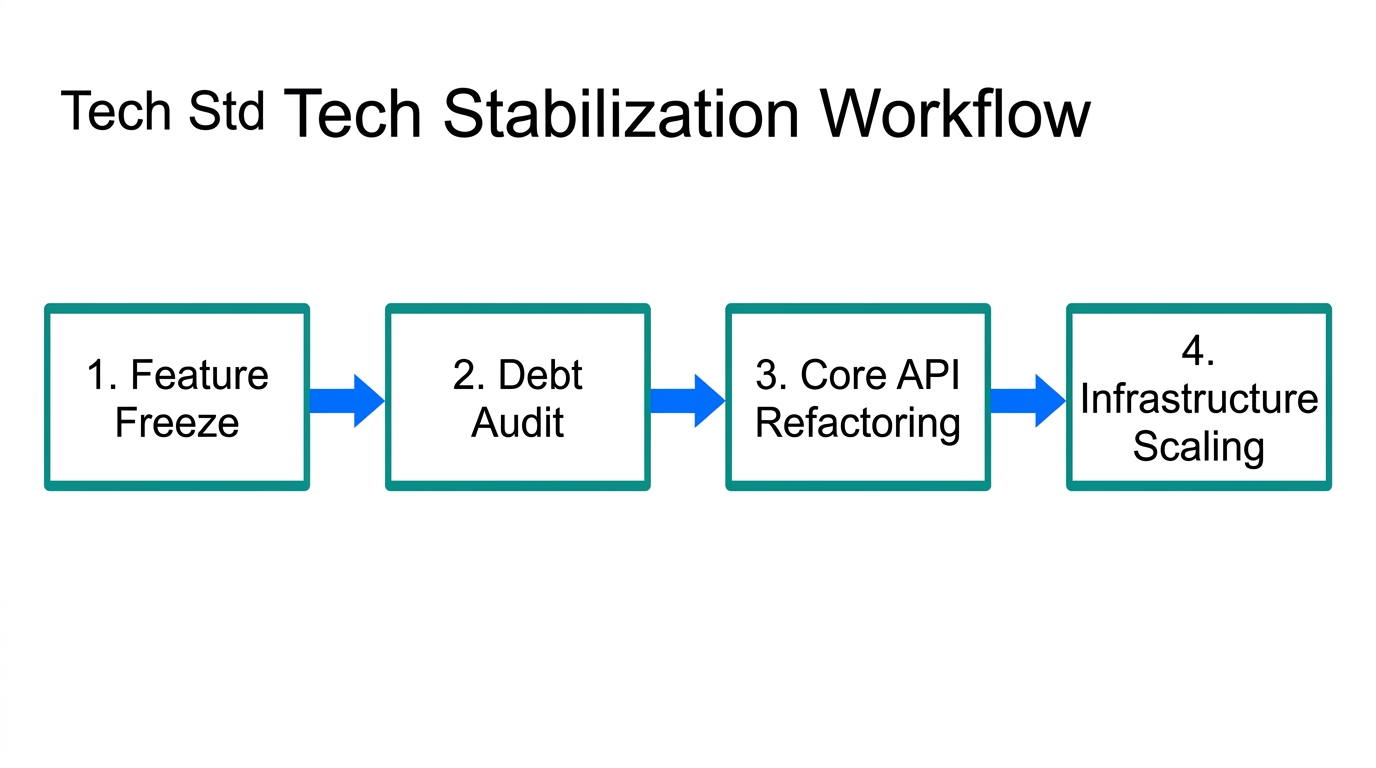
The tech stack at Grindr had suffered from years of neglect. Tech decay isn't just about old code; it's about the inability to ship new features because the foundation is crumbling. Before they could double revenue, they had to stop the bleeding. The app was losing users to uninstalls and stability issues that could have been avoided with modern app store optimization and quality assurance workflows.
| Category | The Decayed State (Pre-Acquisition) | The Scale State (Post-Turnaround) |
|---|---|---|
| Infrastructure | Crumbling, legacy servers | Modernized for 20M+ users |
| Release Cycle | Slow, error-prone releases | Agile, rapid iterations |
| Safety Features | Reactive and manual | AI-driven global moderation |
| Revenue Model | Uniform pricing globally | Dynamic, market-specific pricing |
Stabilizing the platform meant doing the "unsexy" work: fixing buy buttons that didn't work, optimizing for low-bandwidth environments in developing nations, and building a web version of the app to bypass app store friction. This focus on stability allowed the team to eventually apply the "Tinder Playbook"—introducing features like "Boost" and tiered subscriptions—with high confidence that the system wouldn't crash under the new load. For brands today, finding the right creators to communicate these improvements is key; platforms like Stormy AI can help source and manage UGC creators at scale to rebuild trust with a frustrated user base.
Leveraging 'Mission-Driven' Recruiting to Out-Compete Big Tech
In the hyper-competitive world of founder leadership, how does a mid-sized dating app compete with the salaries of Asana or Netflix? The answer was Purpose. Grindr provides essential health and safety information to LGBTQ+ individuals in countries where such information is censored. This includes trans healthcare databases in India and sexual health education in 57 different languages.
By framing the company as a global safety net rather than just a dating app, they were able to attract top-tier talent who wanted to do "something for the community." This mission-driven approach allowed them to recruit the Head of Privacy away from retirement and pull senior talent from trillion-dollar tech giants. It turned brand building into a recruiting tool, proving that impact is a better retainer than equity alone.
"Grinder doesn't just match people; it saves lives by educating on safety in 57 languages. That is a mission Tinder will never have."Turning Safety and Trust into a Competitive Moat
At the time of purchase, Grindr was being sued for data leakage regarding users' HIV status—a feature that was actually designed to save lives by promoting transparency but was handled poorly from a data perspective. Instead of hiding from the controversy, the new leadership leaned into Trust and Safety as their primary product differentiator.
By installing a professionalized safety team, they resolved inquiries from 12 of the 13 attorney generals almost instantly. They transformed the platform from a perceived privacy risk into a leader in global health advocacy. This shift didn't just appease regulators; it increased user retention and lifetime value (LTV). Users are more willing to pay for a premium subscription when they feel the platform is actively protecting their identity and well-being.
The Playbook for the $2B Exit: Operations Over Ideas
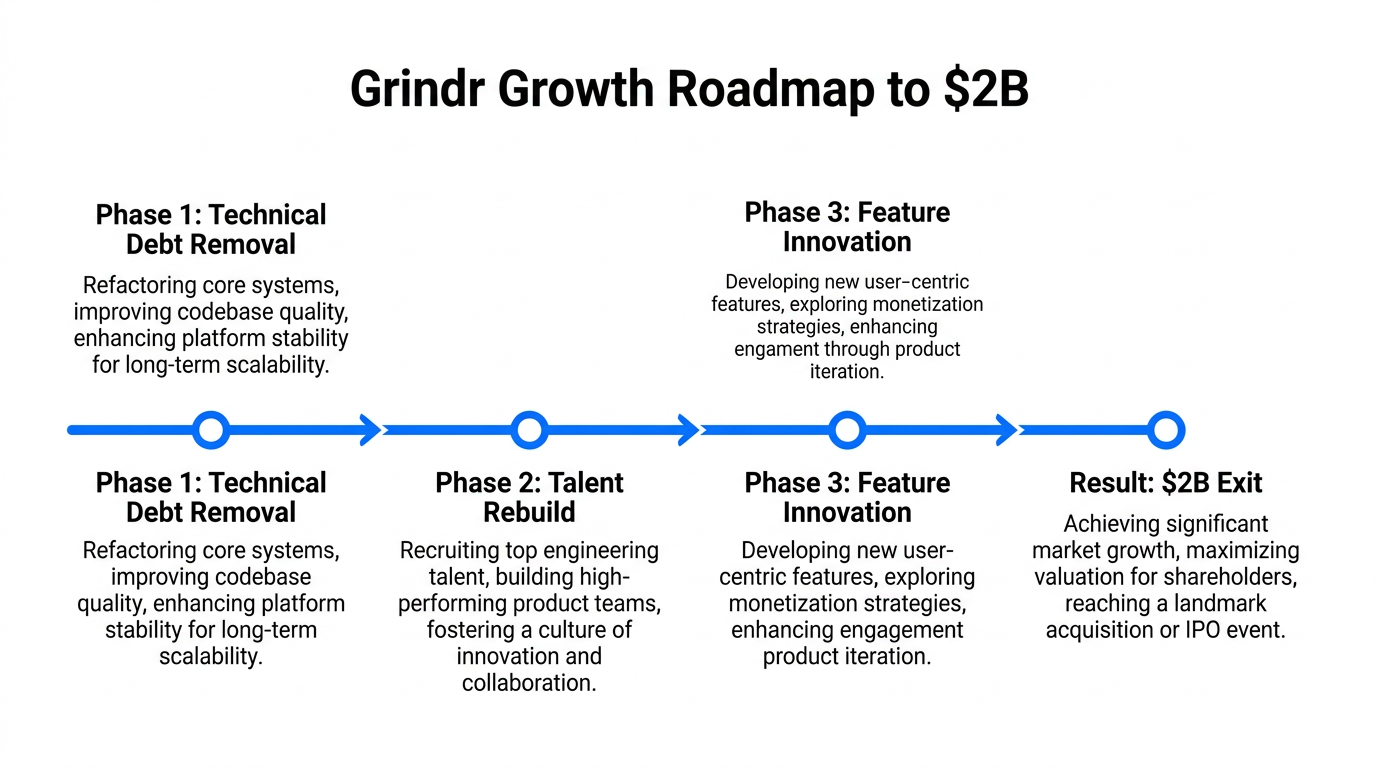
The founders’ strategy was a masterclass in risk reduction. While venture capitalists often chase "lottery tickets" with unproven markets, this private equity approach focused on buying a business with proven demand and fixing the execution. They used a serialized three-part process:
- Reset the Talent: Clear out the old guard and bring in scale-ready experts.
- Fix the Tech Stack: Eradicate tech decay to allow for product innovation.
- Drive the Revenue: Apply proven monetization strategies (like dynamic pricing and feature parity).
They even improved basic marketing fundamentals, such as reducing uninstall rates by 10% and improving conversion on individual screens. For smaller businesses looking to emulate this, integrating a productivity hub like Notion for general operations can provide the data clarity needed to spot these micro-inefficiencies. By the time they took the company public, revenue had doubled from $100 million to $200 million, all while cleaning up a decade's worth of technical and cultural debt.
Conclusion: Scaling Beyond the Fog of War
Scaling a company like Grindr requires founder leadership that remains emotionally level through the "fog of war." As Jeff Mangelsdorf noted, the key to success is being skeptical of the highs and persistent through the lows. By focusing on talent, tech stability, and mission, the team turned a 1.8-star app into a multibillion-dollar success story. Whether you are building from scratch or stepping into a turnaround, the lesson is clear: startup talent strategy is not just about hiring; it's about aligning the right people with a mission they would work for, even without the big paycheck. To find those voices and creators who can help tell your brand's new story, consider using an AI-powered engine like Stormy AI to discover the creators that fit your niche and can drive the high-scale distribution your product deserves.