In 2026, the barrier between a local brand and a global powerhouse has been flattened by a new breed of logistics technology. The e-commerce fulfillment market has reached a staggering $154.31 billion, according to Mordor Intelligence, and the winners are no longer just the brands with the biggest budgets, but those with the smartest operations. For North American Shopify merchants, expanding into the EU and UK used to mean navigating a nightmare of VAT, duties, and 14-day shipping times. Today, that playbook has changed. By leveraging ShipBob’s Foreign-Trade Zone (FTZ) warehouses and ShipStation’s heavy freight integrations, you can now offer sub-3-day delivery to London or Berlin as easily as you do to New York.
The FTZ Revolution: Importing Duty-Free with ShipBob
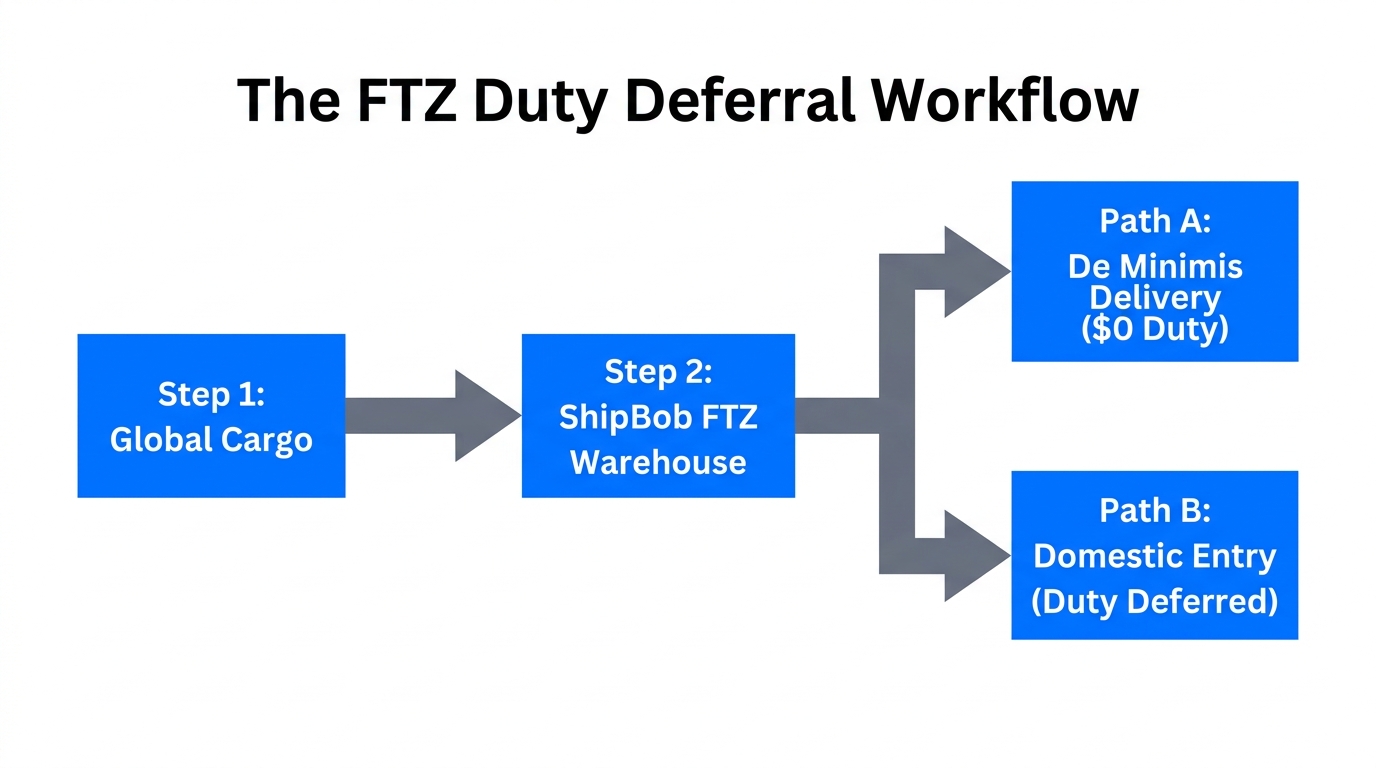
One of the most significant shifts in 2026 is the mainstreaming of Foreign-Trade Zones (FTZ) for DTC brands. Previously reserved for enterprise giants, ShipBob’s launch of FTZ warehouses allows brands to import goods into the US duty-free. Duties and taxes are only triggered at the point of sale. For a brand expanding globally, this means you can stage inventory in a US FTZ and then divert it to EU or UK hubs without being double-taxed on the initial import.
Using a Stormy AI employee allows you to manage this complexity without a dedicated logistics team. Stormy AI monitors your inventory levels across FTZ hubs, tracks the De Minimis thresholds for each target country, and automatically flags when you need to restock a specific region to avoid stockouts. This is critical because 2026 market data shows that 57% of e-commerce companies now outsource to 3PLs specifically to leverage these tax-advantaged zones.
"The FTZ strategy isn't just about saving 10% on duties; it's about cash flow. Why pay the government before your customer pays you?"
Navigating the EU 'Fit for 55' Requirements
Expanding into Europe in 2026 requires more than just a shipping label; it requires a carbon strategy. The EU’s 'Fit for 55' package now mandates that shipping companies purchase carbon allowances. To help merchants stay compliant, both ShipStation and ShipBob have integrated Carbon-Tracking Dashboards. These tools allow you to see the exact footprint of every order at checkout, a feature that has become a non-negotiable requirement for European consumers.
ShipStation reports that over 25% of consumers now use AI-led discovery agents to shortlist products based on sustainability scores and Estimated Delivery Dates (EDD). If your Shopify store doesn't display real-time carbon offsets or localized delivery speeds, you are likely losing 15-20% of your potential EU conversion rate. Stormy AI can act as your sustainability officer, pulling monthly carbon reports from ShipStation and dropping them into a shared workbook so you can claim your "Green Shipping" badges on Shopify automatically.
Heavy Freight: Leveraging the Auctane & WWEX Merger
For brands selling larger items—think furniture, fitness equipment, or the "sexy" versions of boring products like the Dyson-style home goods mentioned by Shopify's President—international shipping used to be cost-prohibitive. However, the 2026 Auctane & WWEX merger has integrated heavy freight (LTL/FTL) directly into the ShipStation interface.
This means you can now compare ShipStation international carrier rates for a 5lb parcel and a 500lb pallet in the same dashboard. This consolidation is saving mid-market accounts an average of $2,700 per month by eliminating fragmented logistics tools. Stormy AI drives this process by automatically rate-shopping between traditional carriers like UPS and heavy freight partners in the WWEX network, ensuring you never overpay for a cross-border shipment.
| Feature | ShipStation (In-House) | ShipBob (3PL) |
|---|---|---|
| Best For | Control & Customization | Global Scale & Speed |
| Storage Fees | N/A | $40/pallet (US) / £32/pallet (UK) |
| Freight Integration | Native LTL/FTL (WWEX) | Standard Freight Receiving |
| AI Capabilities | Rate Selection Intelligence | Inventory Placement (IPP) |
The Local Hub Strategy: Sub-3 Day Delivery in the UK & EU
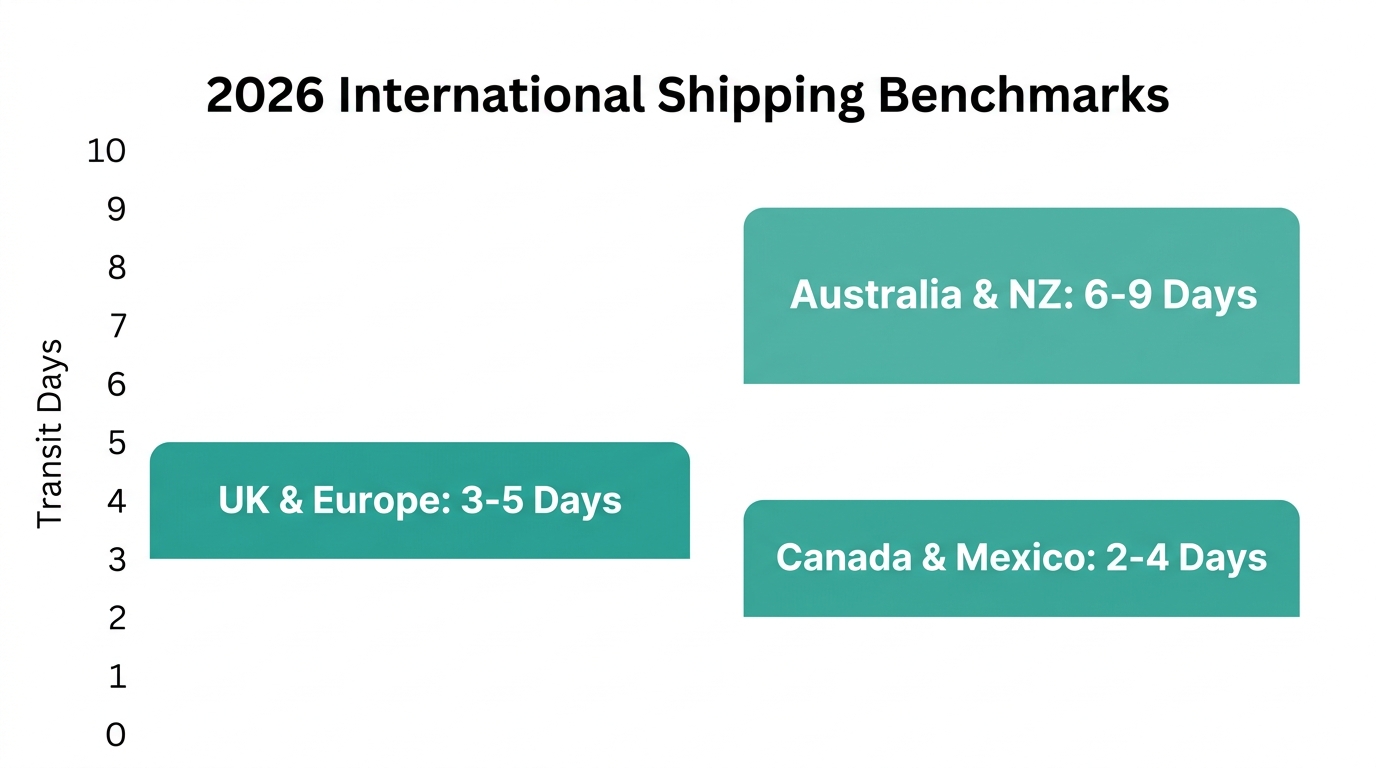
Speed is the ultimate conversion lever in 2026. According to ShipBob benchmarks, brands displaying a "2-Day Express" label at checkout saw an 18.4% increase in cart conversion. Achieving this internationally requires moving away from cross-border shipping and toward localized "dark stores" and regional hubs.
Case studies from brands like Stonehenge Health and Aroma360 show that by using 4+ ShipBob warehouses, they reduced delivery times from 6.1 days to just 2.5 days. Stonehenge Health specifically saved $1 million in a single year by optimizing their inventory placement. Stormy AI manages this "Inventory Placement Program" (IPP) by analyzing your Shopify order history, identifying where your EU customers are clustered, and drafting a replenishment plan to move stock to ShipBob’s London or Poland hubs before the peak season hits.
"In 2026, 'International Shipping' is a misnomer. If you aren't fulfilling locally, you aren't competing locally."
Tactical Setup: The 2026 De Minimis Playbook
To optimize your cross-border tax obligations, you must master De Minimis shipping strategies. This involves shipping individual orders directly to customers from an FTZ or international hub to stay below the tax threshold of the destination country. In 2026, these regulations have become more complex, with different thresholds for the UK, EU, and Canada.
Step-by-Step Tactical Setup:
- Identify Thresholds: Use Stormy AI to pull the latest De Minimis limits for your top 10 export countries from a live CBP or global trade database.
- Configure ShipStation: Set up Routing Rules in ShipStation to automatically flag any order that exceeds the threshold, allowing for a manual review of duties (DDP vs. DDU).
- Sync with ShipBob: Ensure your ShipBob "Inventory Placement" tags are updated so that orders are routed to the hub that minimizes the shipping distance and tax exposure.
- Monitor with Stormy: Ask Stormy AI to run a weekly audit of your shipping spend vs. duties paid to ensure your strategy is actually saving money.
The Hybrid Model: When to Use Both ShipStation and ShipBob
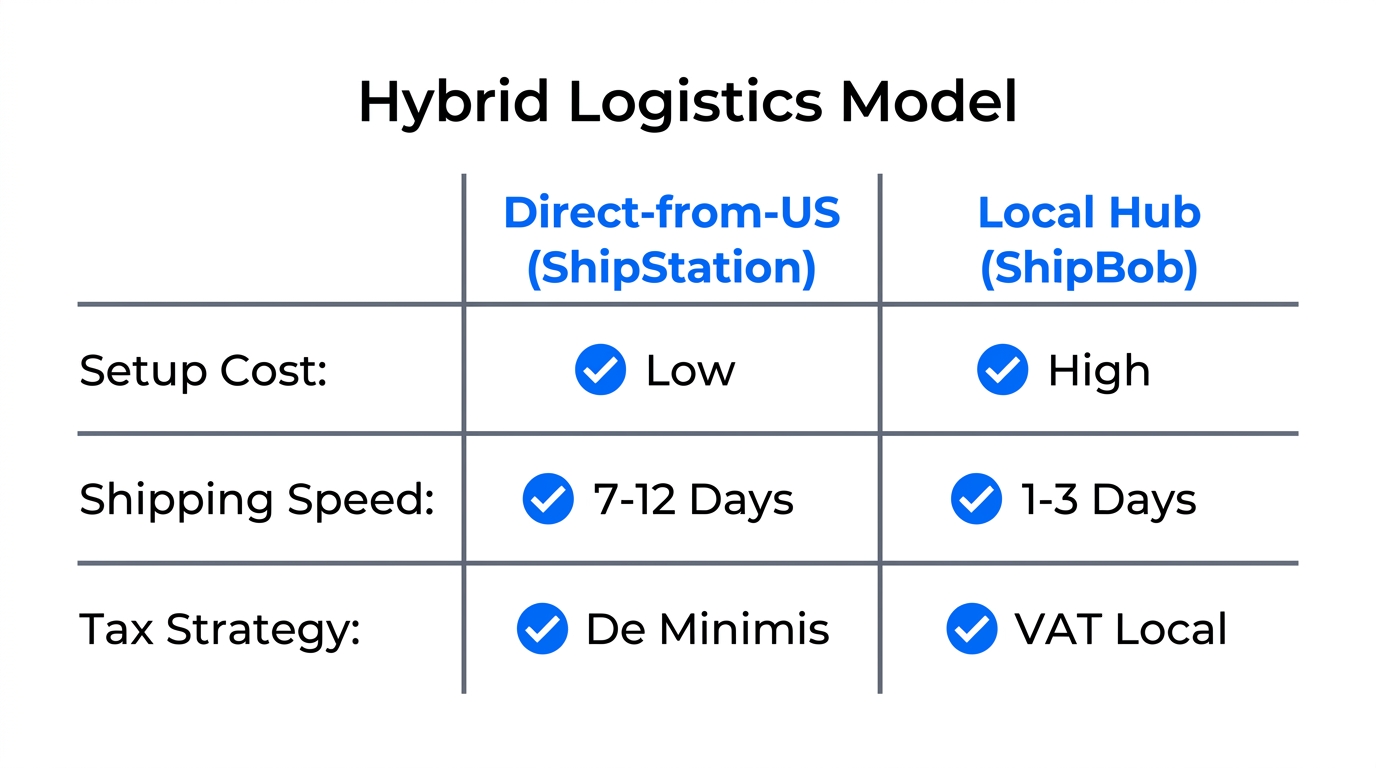
Many successful 2026 brands don't choose one or the other; they use a hybrid strategy. They use ShipStation to manage Amazon FBM and custom "made-to-order" items from their own office, while using ShipBob for their core DTC catalog and international expansion.
The risk here is double-billing. You don't want to pay for a ShipStation label for an order that ShipBob is already fulfilling. This is where Stormy AI excels as an autonomous employee. Stormy can automatically tag orders in Shopify as "ShipBob-Fulfilled" or "In-House," ensuring the correct routing rules are triggered in ShipStation. This prevents the "hidden fees" and complex billing issues that often plague high-volume merchants.
The Bottom Line for 2026 Global Growth
Global expansion is no longer a project for "someday." With the right stack—Shopify as your storefront, ShipBob as your global muscle, ShipStation as your shipping brain, and Stormy AI as the employee that runs it all—you can scale into the EU and UK with minimal overhead. The data is clear: brands that localize fulfillment and automate their back office see a 10-20% reduction in shipping costs and a massive lift in customer trust.
Don't let the "messy back office" of international logistics stop your growth. Hire an AI ecommerce employee like Stormy AI to handle the spreadsheets, the supplier follow-ups, and the rate-shopping, so you can focus on building the next $100M brand.