In 2026, the era of the "manual media buyer" is officially dead. If you are still logging into the Meta Ads Manager UI to manually upload images and adjust budgets, you are operating at a massive disadvantage. The modern performance marketer has transitioned from a button-pusher to an agent jockey—someone who manages swarms of AI agents built with tools like Claude Code to conduct research, generate creative at scale, and optimize campaigns autonomously.
This tactical playbook breaks down how to use Claude Code, MCPs (Model Context Protocol), and the Facebook Ads API to build a fully autonomous marketing engine. By the end of this guide, you will understand how to move from ideation to thousands of live ad variations in under 30 minutes, all while you sleep. The key is shifting your focus from the creative itself to the underlying infrastructure that generates the creative.
Step 1: Automated Market Research via Perplexity API
Learn how to use Perplexity to scrape Reddit for market research insights.
Before writing a single line of ad copy, you must understand the customer's psyche. In 2026, we no longer guess. We use the Perplexity API to scrape social dialogue across Reddit, YouTube comments, and niche forums to identify pain points and desired outcomes. Traditional market research takes weeks; an AI agent does it in seconds.
By feeding Claude Code a specific niche—for example, "growth marketers struggling with data unification"—the agent can crawl the web to find the exact vocabulary your target audience uses. This ensures your ads aren't just "pretty," but psychologically resonant. You are looking for the gap between what people have and what they wish they had.
"The best ads perform because they speak to the social dialogue already happening in the customer's head. AI allows us to scrape that dialogue in real-time and turn it into creative instantly."Once the research is complete, the agent categorizes these insights into "Angles." These angles serve as the prompts for your bulk creative generation. Platforms like Stormy AI can further assist in this phase by identifying which high-performing creators are already dominating these conversations, allowing you to bridge the gap between organic trends and paid performance.
Step 2: Bulk Creative Generation with React Templates
Building a custom bulk Facebook ad generator using AI and React components.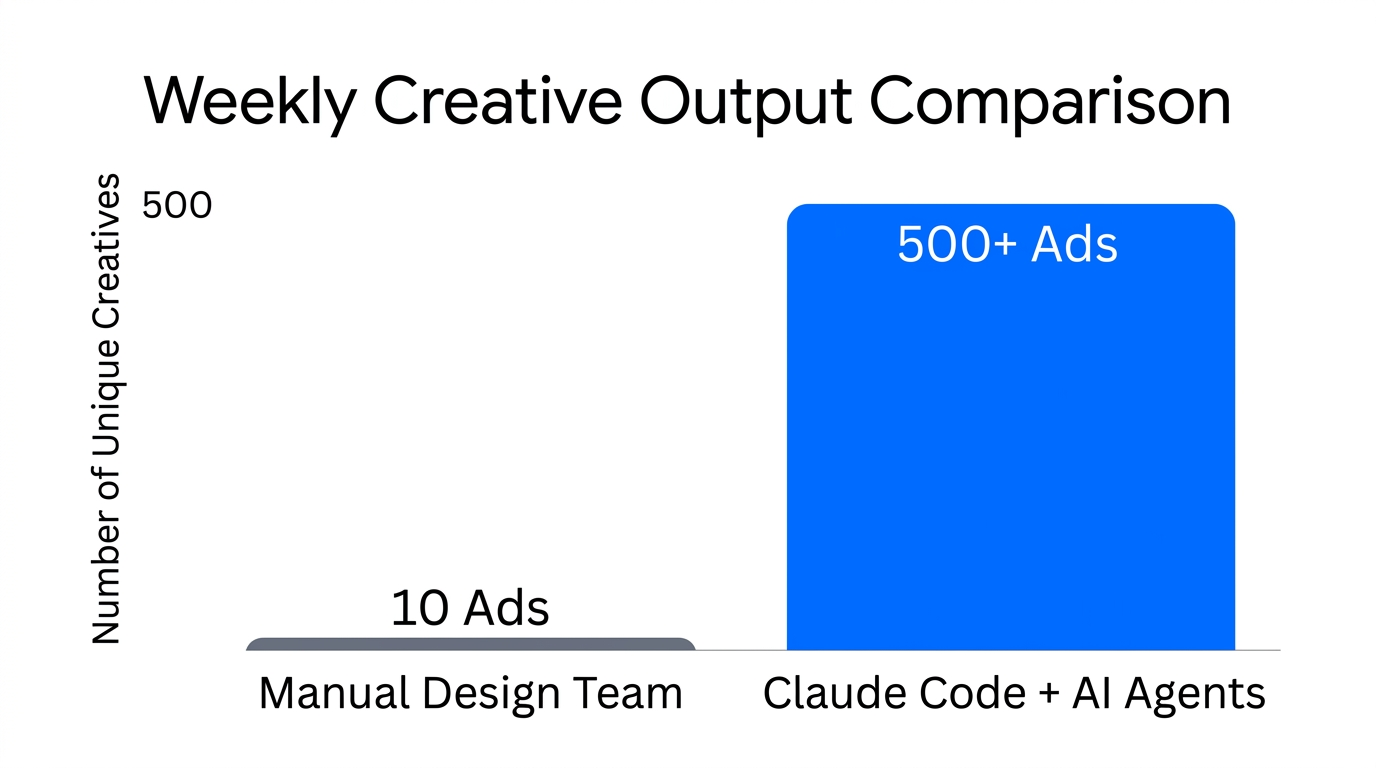
The biggest bottleneck in performance marketing has always been the design team. In 2026, we bypass Figma entirely for high-volume testing. Instead, we use Claude Code to build React-based ad templates. These are essentially small web components built with React that look like ads (e.g., the classic "Before/After" or "Twitter Quote" format).
- Zero Marginal Cost: Generating 1,000 variations of a React component costs pennies in tokens, compared to thousands of dollars in designer hours.
- Dynamic Variables: You can programmatically swap headlines, background textures, and CTA buttons based on the research from Step 1.
- PNG Conversion: Using tools like HTML to Canvas, your agent can render these React components into 1080x1080 PNGs ready for upload.
As noted in recent growth engineering workflows, using code to generate ads allows for infinite malleability and speed. If you find a winning background texture, your agent can remix it across 50 new headlines in seconds.
Step 3: Automated Deployment via Facebook Ads API
Connecting AI-generated creative directly to advertising platforms for automated bulk uploads.Uploading 100 ads manually is a recipe for burnout. In the 2026 workflow, Claude Code interacts directly with the Facebook Ads API. You simply provide the agent with a local folder of your generated images and a specific Ad Set URL.
| Workflow Phase | Traditional Method (2024) | Autonomous Method (2026) |
|---|---|---|
| Research | Manual Reddit browsing | Perplexity API Scraper |
| Creative | Figma / Photoshop | React-to-PNG Templates |
| Uploading | Drag-and-drop UI | API Bulk Upload |
| Optimization | Checking Dashboards | MCP-driven Cron Jobs |
The agent handles the heavy lifting: creating the drafts, attaching the creative, and setting the tracking parameters. This allows the human marketer to stay in "Plan Mode," overseeing the strategy while the agents handle the execution. For those managing complex influencer-led campaigns, using the Stormy AI Creator CRM helps sync these paid efforts with your organic creator partnerships, ensuring a unified brand voice across all touchpoints.
Step 4: Real-time Optimization with MCPs and GA4
Automatically identify and disable low-performing ads based on real-time CPM data.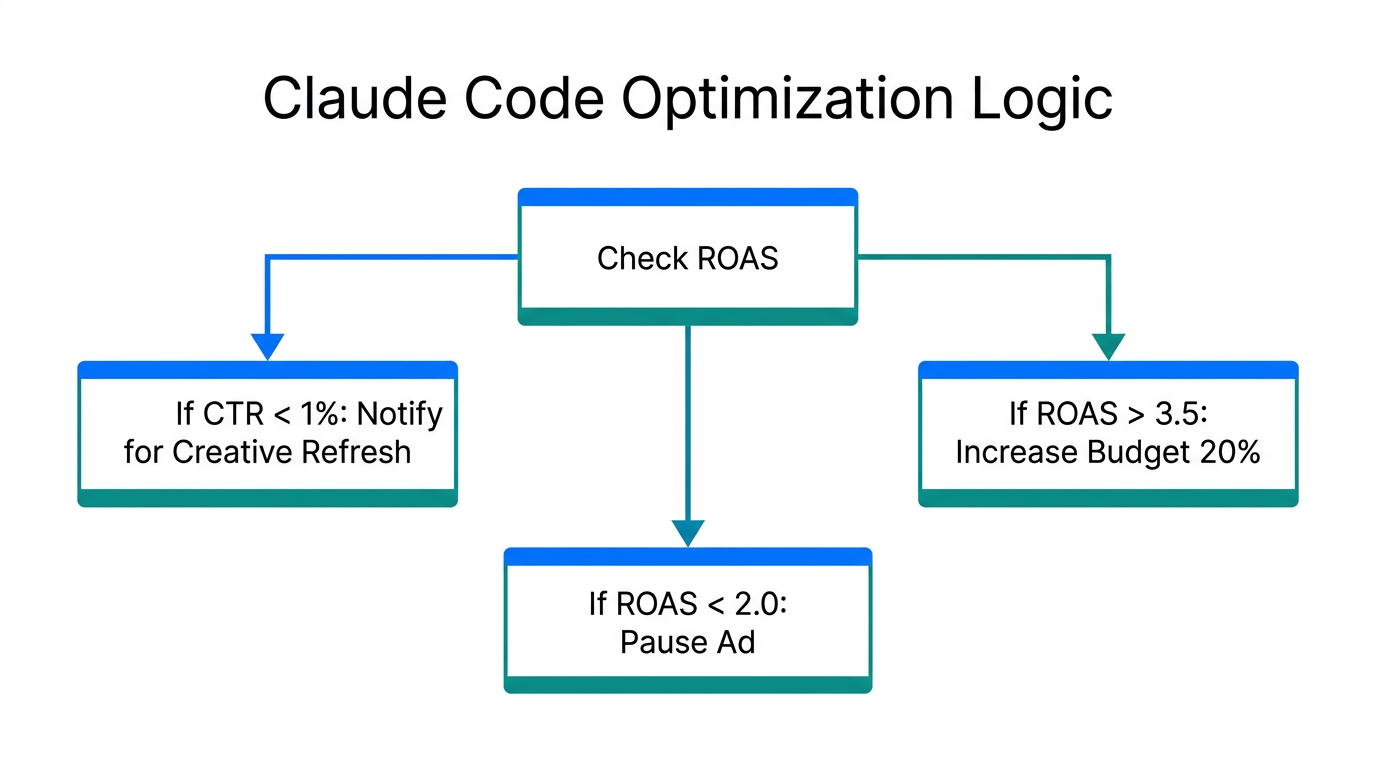
In 2026, we don't wait for weekly reports. We use Model Context Protocol (MCP), an open standard available on GitHub, to bridge the gap between our LLMs and our live data. By connecting Google Analytics 4 and Meta's data via an MCP, Claude Code can analyze performance in real-time.
You can wake up and ask your agent: "Which ads have a CPM 20% higher than the average?" The agent doesn't just answer; it uses the Facebook Ads API to turn those ads off immediately. This real-time pruning prevents budget bleed and ensures your spend is always flowing toward the highest-probability winners. Using Railway to host these agents ensures they run 24/7 without needing your laptop to be open.
"Autonomous marketing is the dream: an agent that works 24/7, managing your budget, killing losers, and scaling winners while you focus on the next big strategy."Step 5: The 'Test & Promote' Autonomous Loop
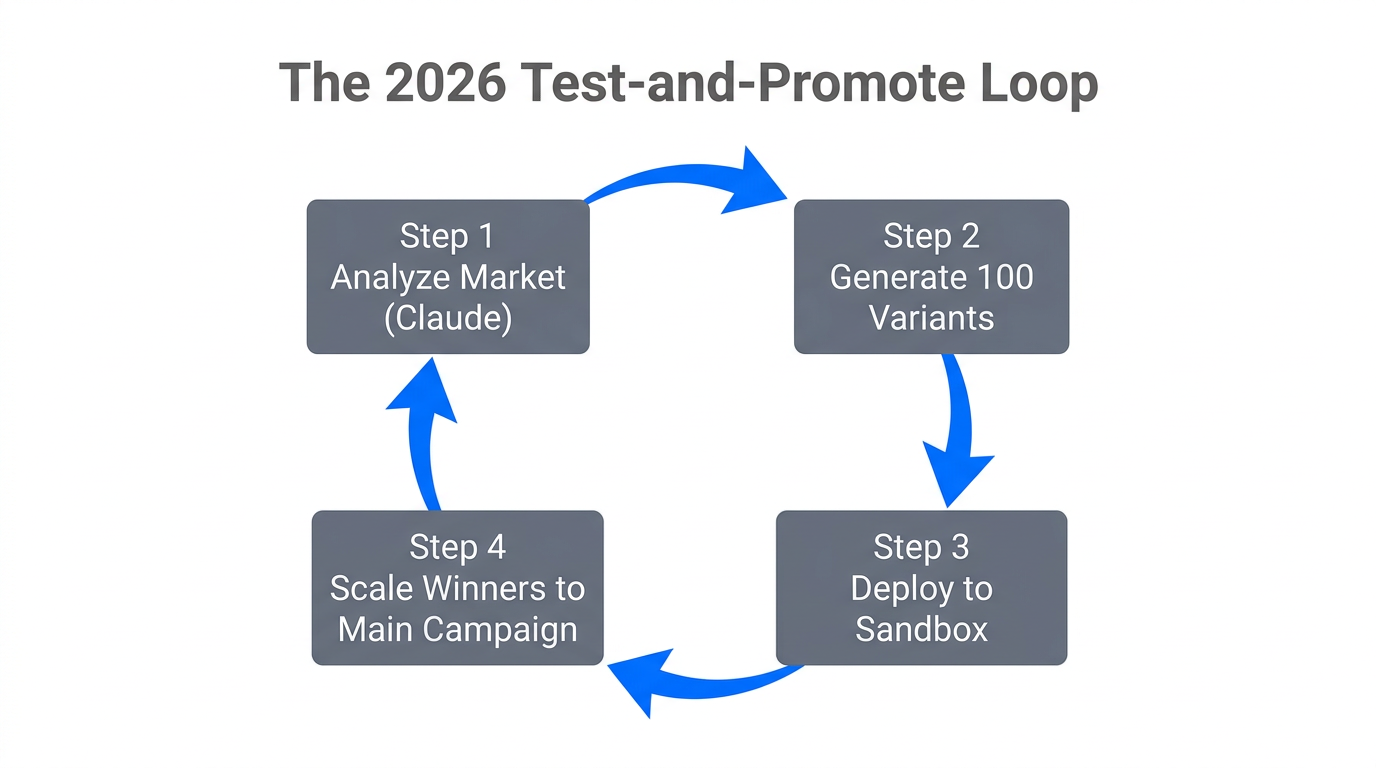
The final stage of social media analytics automation is the Test & Promote Cron Job. This is a recurring script that follows a simple logic:
- Test: Deploy 50 new "ugly" ads into a low-budget testing ad set.
- Analyze: After 48 hours, check the CPC and conversion rates via MCP.
- Promote: Automatically move the top 3 performers into a "Scaled" ad set with a dedicated high budget.
- Kill: Pause everything else.
This agent swarm approach allows a single marketer to manage the output of a ten-person agency. By utilizing tools like Notion for documentation and automating the middle work, you can maintain a lean, highly profitable operation.
The Future of Performance Marketing
The transition to AI-driven Facebook ads automation isn't just about speed; it's about domain expertise. As tools like Claude Code make the "how" easier, the "what" becomes more valuable. Your ability to describe a problem, your vocabulary in marketing psychology, and your knowledge of the tech stack are your new competitive advantages.
By connecting platforms like Instantly AI for outreach and Stormy AI for creator discovery into this automated ecosystem, you aren't just running ads—you are building an autonomous growth machine. Start small: automate one report, then one ad upload, and eventually, the entire loop. The future belongs to the agent jockeys.