In 2026, the marketing landscape has undergone a seismic shift. We are no longer just marketing to human beings; we are marketing to the sophisticated algorithms and personal AI assistants they've empowered to shop on their behalf. This is the era of agentic commerce, where AI agents evaluate brands based on real-time data, programmatic value, and seamless integration. For enterprise CMOs, staying relevant requires a complete overhaul of traditional retention strategies. By leveraging the combined power of Talon.One and LoyaltyLion, brands can build a high-velocity, data-rich ecosystem that AI agents find irresistible.
Understanding Agentic Commerce: How AI Agents Evaluate Loyalty in 2026
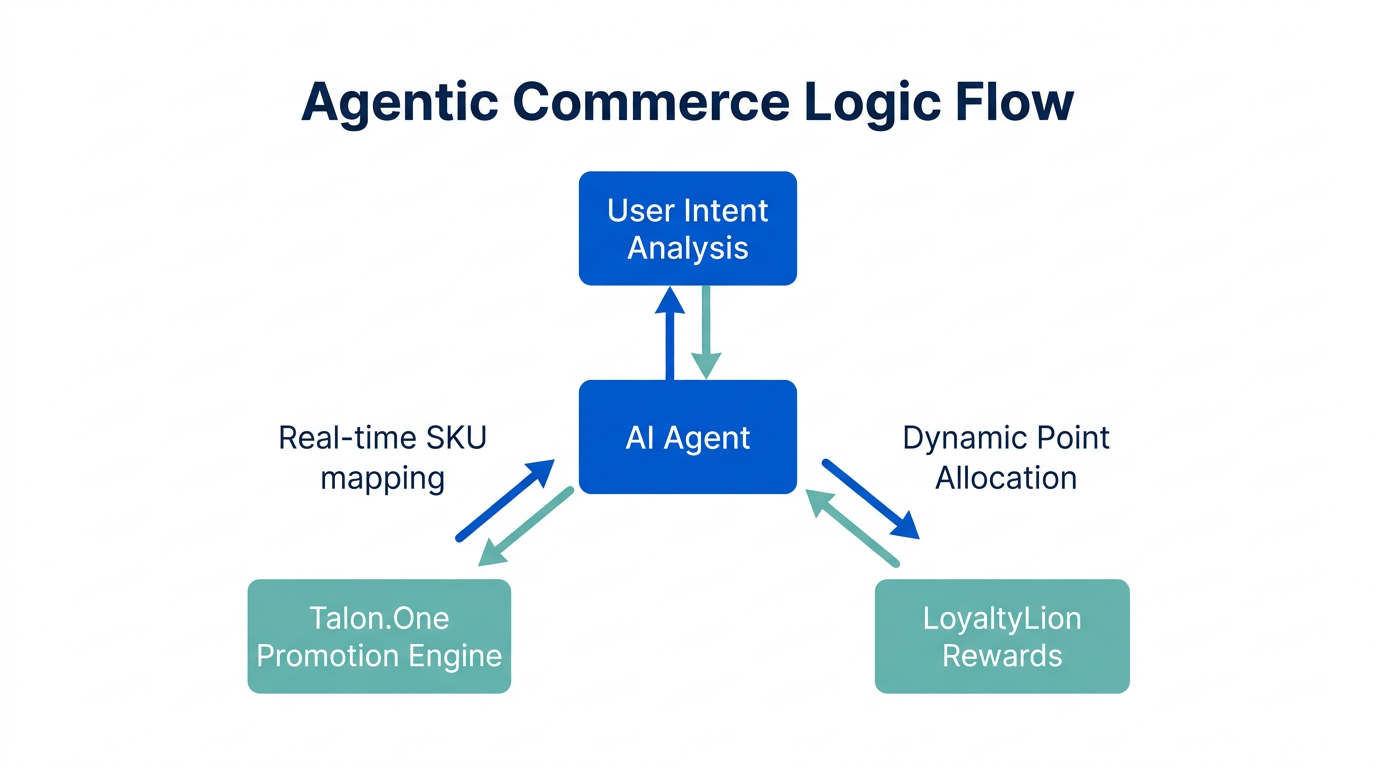
Agentic commerce refers to a world where personal shopping assistants—autonomous AI agents—choose products and brands based on a set of user-defined parameters. These parameters often include price, but increasingly focus on a loyalty program's real-time value, speed, and data availability. According to research by Loyalty & Reward Co, these agents don't just look for discounts; they look for the most efficient path to maximizing a user's total utility across all their brand relationships.
If your loyalty data is siloed or updated in batches, an AI agent will likely bypass your brand. In 2026, real-time data availability is the price of entry. When an agent queries a brand's API to see if a purchase will trigger a tier upgrade or a specific reward, the response must be instantaneous. This is where LoyaltyLion enterprise loyalty setups excel, providing the granular, real-time behavior tracking necessary for agentic evaluation.
"AI agents are the new gatekeepers of retail. If your loyalty program cannot communicate its value to an algorithm in milliseconds, your brand effectively doesn't exist to the modern consumer."
Integration Playbook: Talon.One and LoyaltyLion for Real-Time Rewards
Scaling at the enterprise level requires moving beyond "points for purchases." The winning strategy for 2026 involves Talon.One promotion automation paired with LoyaltyLion’s engagement engine. This combination allows brands to deliver rewards based on complex, multi-dimensional behaviors rather than just transaction volume.
For example, using Talon.One, a brand can automate a personalized bonus that triggers exactly three days before a customer is predicted to churn. This predictive capability, highlighted by Appstle, can reduce customer churn by 15–30%. When these promotions are pushed through LoyaltyLion, they feel like an organic part of the customer's journey, rather than a desperate marketing blast.
| Feature | Traditional Loyalty | Agentic-Ready Loyalty (2026) |
|---|---|---|
| Data Processing | Batch/Delayed | Real-Time API-First |
| Trigger Logic | Manual Campaigns | Predictive AI Automation |
| Segmentation | Demographic-Based | Behavioral Micro-Segmentation |
| Primary Target | Human Decision Maker | AI Personal Assistant |
To succeed, enterprise brands should use Zinrelo or similar platforms to move away from demographic tiers and toward micro-segmentation. By analyzing browsing patterns and product affinity, brands can offer rewards like "early access to beauty drops" only to those segments that an AI agent has flagged as high-intent beauty buyers.
Scaling AOV: How Puma Achieved a 19% Increase with Predictive AI
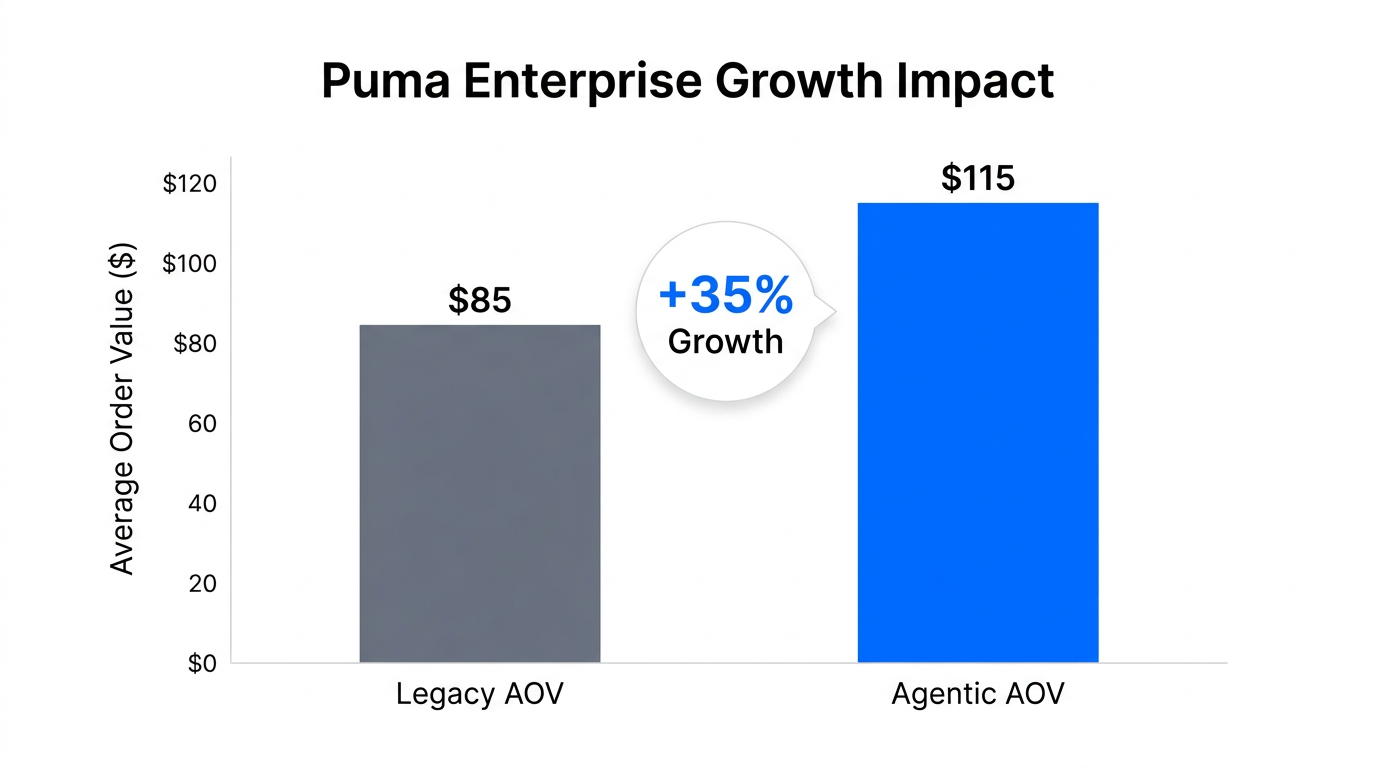
While theoretical frameworks are helpful, real-world data proves the impact of these technologies. Puma, working with Google Cloud and Talon.One, utilized predictive AI to analyze customer behavior and optimize their promotion engine. The result was a staggering 19% increase in Average Order Value (AOV).
This was achieved by moving beyond blanket discounts and using AI ecommerce growth strategies that identified the exact incentive needed to push a customer toward a larger basket size. Whether it was a tiered discount or a value-added service (like free express shipping), the offer was calibrated to the individual's likelihood to convert. Research from Envive AI shows that AI-powered personalization can drive 40% more revenue than standard, non-intelligent loyalty programs.
"The Puma case study proves that when you stop guessing and start predicting, the ROI follows. A 19% AOV lift is transformative at the enterprise scale."
Privacy-First Loyalty: Building Trust in the Age of AI
As we lean into AI, we must acknowledge the growing concern over data privacy. In 2026, 71% of consumers express worry about how AI misuses their data, according to reports on Medium. For enterprise brands, the risk of a privacy breach is not just legal; it's a total destruction of brand equity. Consent-first data models are no longer optional; they are the foundation of 2026 brand loyalty.
Implementing LoyaltyLion's privacy-focused features allows brands to build emotional loyalty. By being transparent about how data is used to improve the shopping experience, brands can move from transactional relationships to deep-seated trust. Consumers are increasingly willing to share data if they perceive it as "care" rather than "promotion," a sentiment echoed by researcher Hasan Beyari.
To support this ecosystem, many brands are turning to AI-powered creator sourcing. When launching new loyalty perks, platforms like Stormy AI can help brands find the right UGC creators to explain complex loyalty benefits to their target audience in an authentic, trustworthy way. This bridge between high-tech loyalty and human-led content is vital for maintaining brand warmth.
The Amazon and Starbucks Model: A Unified Loyalty Powerhouse
The gold standards for unified loyalty remain Amazon and Starbucks. Amazon's AI engine, which drives 35% of its total sales, is a masterclass in analyzing browsing time and purchase history to provide instant, relevant value within its Prime ecosystem. Similarly, Starbucks utilizes its "Deep Brew" AI platform to personalize rewards for specific cohorts, seamlessly syncing online and offline behavior.
Enterprise brands can emulate this by using a customer data platform (CDP) for loyalty that integrates every touchpoint. Whether a customer is scanning a code in-store or browsing on a mobile app, the loyalty engine must react. Tools like Capillary Tech and Annex Cloud are specifically designed to handle this level of enterprise-grade scale and complexity.
The 2026 Enterprise Loyalty Playbook: Step-by-Step
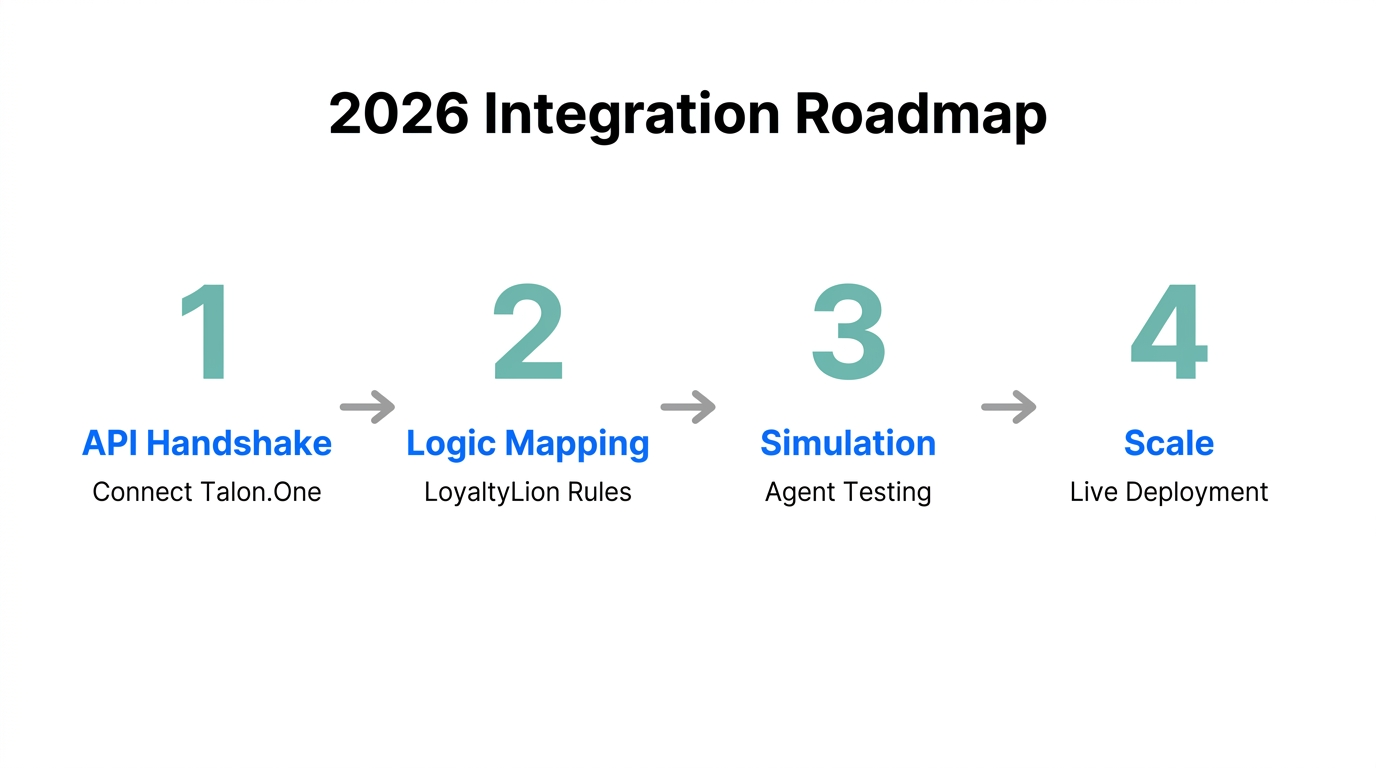
- Audit Your Data Pipeline: Ensure your loyalty data is accessible via real-time APIs. If it takes more than 100ms to return a user's loyalty status, you are not ready for agentic commerce.
- Deploy Talon.One for Promotion Automation: Move away from hard-coded discounts. Implement Talon.One to create dynamic, rule-based promotions that react to real-time events.
- Enhance LoyaltyLion with AI: Use LoyaltyLion to track non-transactional engagement like social shares and reviews. According to Shopr, emotional loyalty is up 34%—rewarding these actions is key.
- Activate Predictive Churn Prevention: Integrate Appstle or Raleon to identify at-risk customers months before they actually leave.
- Humanize the Tech: Use Stormy AI to discover and manage UGC creators who can translate your AI-driven perks into relatable, human content.
"Loyalty in 2026 is a living ecosystem. If it doesn't adapt to behavior in real-time, it's not a strategy—it's a liability."
Conclusion: Preparing for the Agentic Future
The rise of AI personal assistants doesn't mean the end of brand loyalty; it means the end of lazy loyalty. For the enterprise CMO, the goal is clear: create a system that is so fast, so rewarding, and so data-transparent that both humans and their AI agents choose your brand every time. By integrating Talon.One promotion automation with LoyaltyLion enterprise loyalty frameworks, you aren't just building a program—you're building a future-proof AI ecommerce growth engine.
Success in 2026 belongs to those who view loyalty as a dynamic, real-time conversation. Whether you are aiming for the 19% AOV lift seen by Puma or the 5.2x ROI reported by Envive AI, the path forward is paved with predictive intelligence and seamless integration. Start today, and ensure your brand is the first choice of the next generation of shoppers—human and machine alike.